


There is a problem with music. It has to do with the fact that, if you go to a live show tonight, almost everything you hear will be prerecorded. Today, “Live” = a backing track playing on large speakers, while an artist half-sings along on an elevated surface.
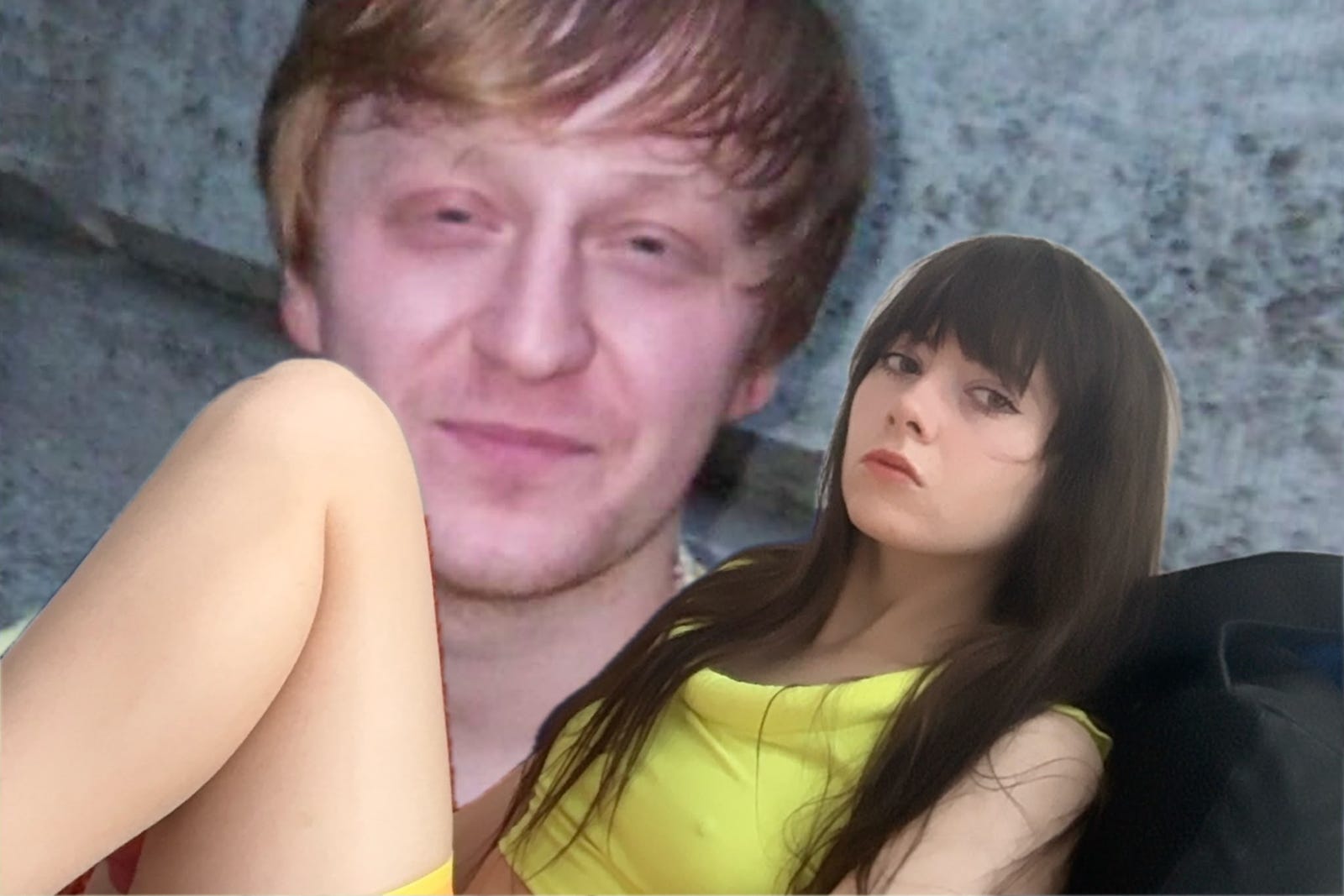
“Glorified Karaoke,” Leo deems it. We’re speaking three days before the release of Flowers Powers, the latest mixtape from his band Worldpeace DMT. “Live music is boring,” agrees Rowan Miles, the band’s only other member, a singer-songwriter you might know from her other group, The Femcels.
It’s not that Worldpeace DMT is above a backing track, or blames artists for using one. “We can’t afford a full band,” Leo says. But the backing track thing is a symptom of a more general disease in contemporary music: artificiality.
Today’s music landscape is a digital hall of mirrors, a network of prerecorded sounds, an echo chamber of references. True instrumental literacy and songwriting competency is low among most emerging acts.
Digital-first music isn’t inherently bad, and not every artist needs these skills to make great music. But it is clear that we are seeing a decline in genuine musicianship, and it is leaving contemporary listeners wallowing in stale sound, a version of a version of an idea someone else had years ago.
Worldpeace DMT is a rare bright streak in this greyness. The product of a scene outsider (Leo) and a scene darling (Rowan), their songs are often complex and multi-instrumental, informed by Leo’s classical music background and unique abstract-orchestral approach to songwriting, and bring a refreshing electronic meets ‘60s sound into the underground space.
On Flowers Powers, the tape that released yesterday, their sound is less electronic than previous work, more stripped and acoustic. It bears marks of twee, the ‘60s, the ‘70s, and the ‘80s, and its instrumentalism shines through.
Ahead of its release, we picked the shared Worldpeace DMT brain on how they got together, why they’re moving on from the hippie thing, and where they’re taking the sound next. Read on.
Welcome: What is Worldpeace DMT? How would you describe the kind of music you make?
Rowan: It’s a big chicken that sits on a little egg.
Leo: Comedy rock. Song-based music.
W: Take me through the evolution of the group. How did Worldpeace DMT come into being?
Leo: I’d been writing classical music for a couple years but decided I wanted to take a break from music and try reading some books. Eventually I came back to it though. I’d made some friends who were putting on club nights in London and they needed people to open for them so I started making this bespoke abstract electronic music to play before them. I didn’t really know anything about club music but it seemed to resonate with the small group of people that heard it.
What I really wanted to do though was be a songwriter, and to challenge myself to sing, which was something I was quite nervous about.
Rowan: What made you nervous about that?
Leo: The music that I’d made up until starting Worldpeace DMT had always meant more to me than it ever meant to anyone else, and I was scared to lose that. I remember playing the more song oriented stuff I’d started writing to a friend, and telling them I know people are really not going to like this. But then I met Rowan and that gave me a lot of confidence.
Rowan: And then he tricked me into being in his band as well.
How did the two of you meet?
Leo: We met through Ike from Bassvictim.
W: What were your first impressions of each other?
Leo: The first time we met was in a club.
Rowan: Oh yeah, I was with Cobrasnake.
Leo: I didn’t have many friends at the time, and I was quite timid. I was sitting near her and thought that she was really cool, and not someone who was going to want to talk to someone like me.
Then like a week later, she turned up at my flat with this song, and I helped demo it. And that was when we first spoke to each other, I played you my song and you played me yours.
Rowan: We recorded “Say The Sky is Grey,” and Leo played “Numbers” and I think the first thing I said was “are you excited to be famous?” because I thought it was so good. I had never heard anything like it before to be honest.
W: When did it become clear you were a band, rather than just collaborators?
Leo: I don’t think we even started working together with the intention of it being a band.
Rowan: It was more like helping each other out basically.
Leo: Yeah, and then at a certain point we’d worked on enough songs that we just threw it all into a playlist and were like, “Oh, this is an album.”
Rowan: I think the only thing that holds a group together is like a name. I think it’s always been like that. Friends play with each other. When you choose a band name, you get married to the person.
Leo: We are also both in other bands. Everyone needs two in case one doesn’t work.
Rowan: And we both love ‘60s music. That joint interest holds together our collaboration. And trying to make songs better than everyone else.
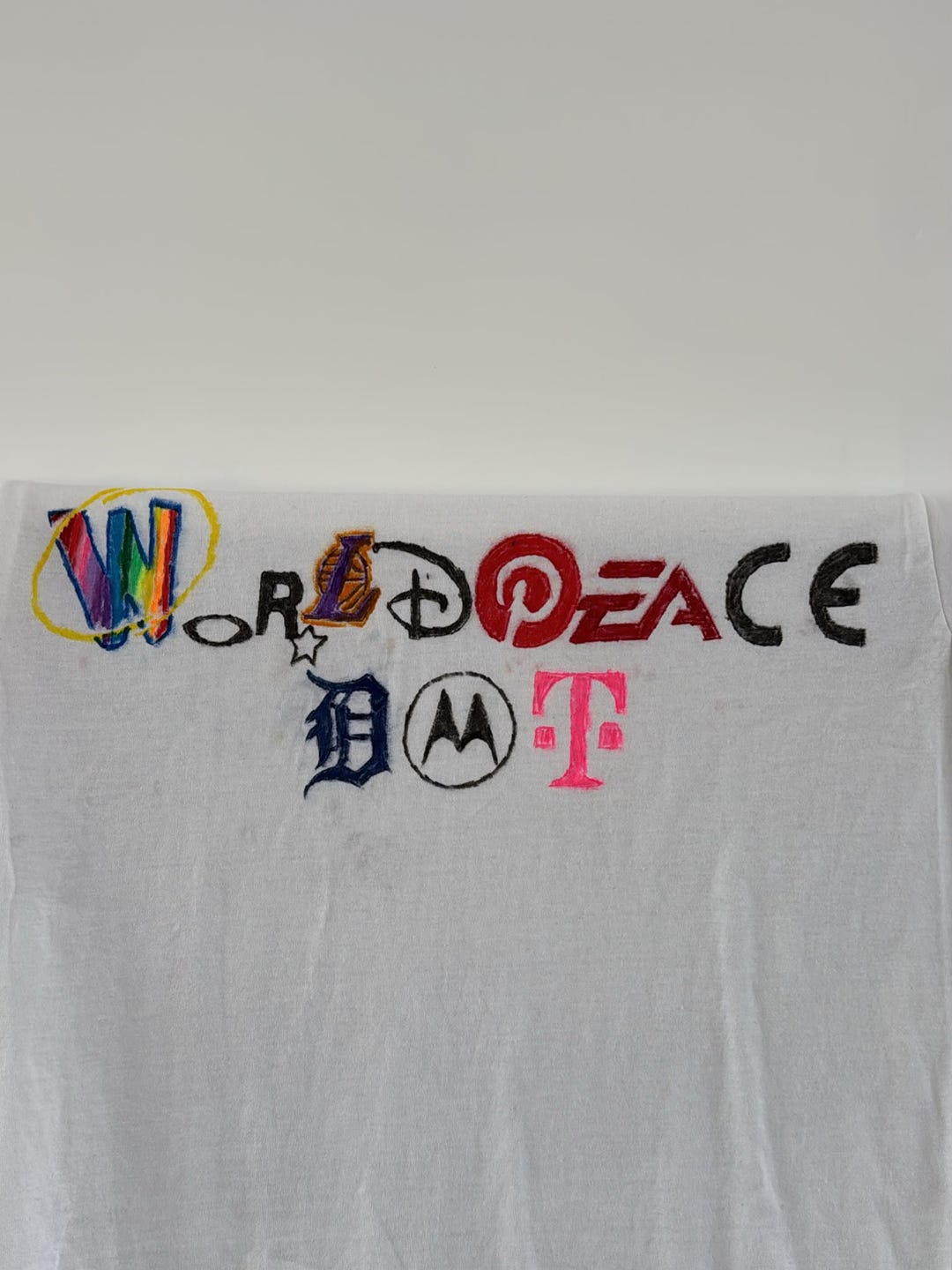
W: Where does the name Worldpeace DMT come from?
Leo: I just picked it randomly. But it went on to inform quite a lot. A name comes to you in the same way in which a melody might come to you, like a gift.
I was lucky that people remembered the name and liked it. Honestly far more than the music at the start. It was its own type of publicity. It gave the project fans from the get-go.
Rowan: It’s like the opposite of The Femcels, where everyone instantly hated it. But it was still good publicity.
W: What is the group policy on psychedelics?
Leo: We don’t do a lot of psychedelics. It’s not really to do with that. But the name did kind of go on to inform some of the sonic choices. Obviously we were referencing ‘60s music, and then elements of psychedelia crept into the production. So it was kind of like the name came first, and then told us what to do, which was cool.
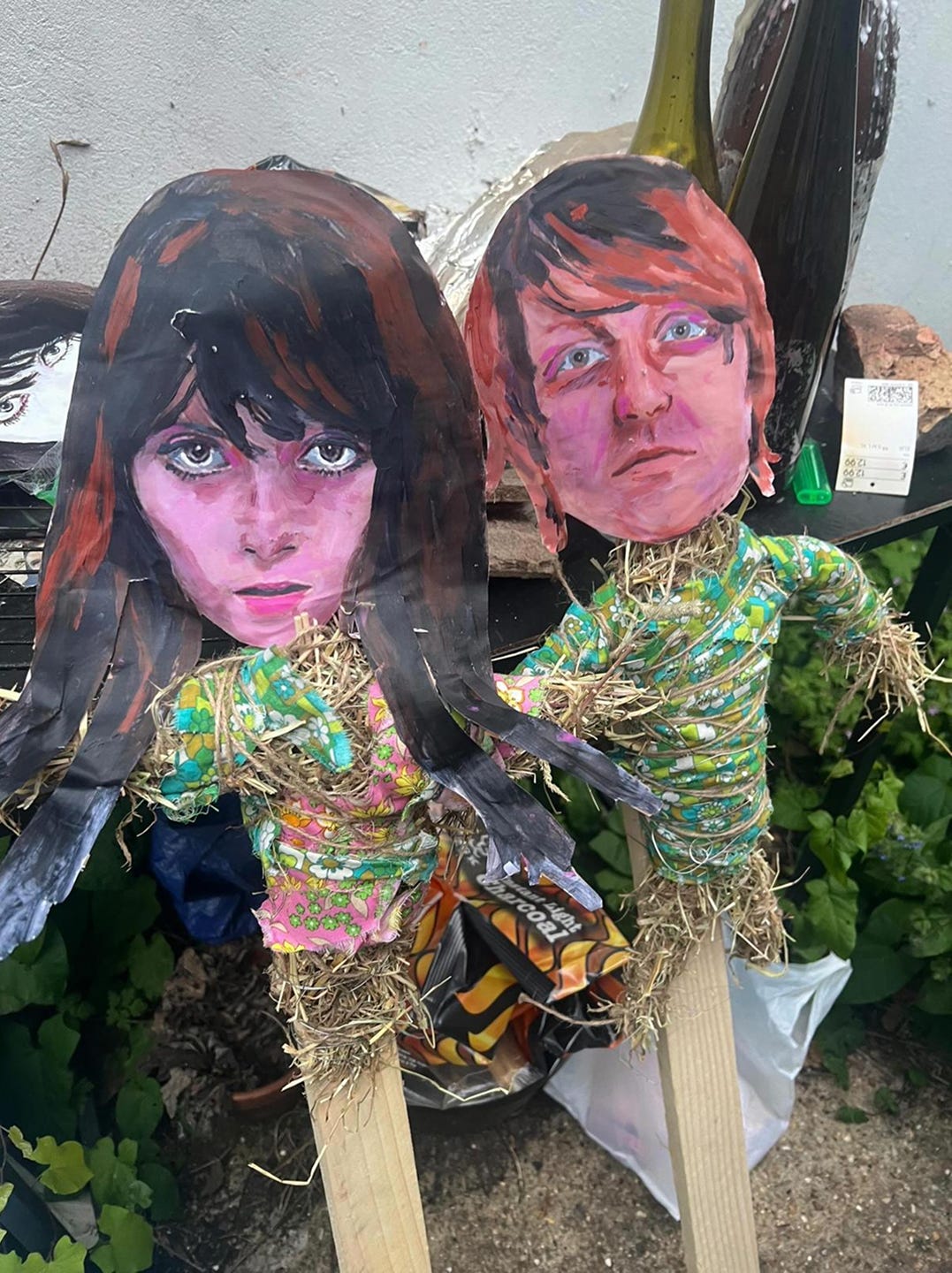
W: Do you see there being a resurgence of ‘60s hippie sensibility more broadly in culture?
Rowan: There’s no hope anymore really. I would say
Leo: I hope not. I’m over it. I’m done. We’re moving on to the 70s.
Rowan: Please, no. I think we should skip to the 80s.
Leo: Yeah, honestly, I’ve been fucking with the 80s really hard. But we haven’t got any plans to fly a flag for some kind of hippie resurgence.
Rowan: I don’t think we would have been hippies, I think I would have been in the freak scene, like Frank Zappa and all those guys. They kind of hated hippies, but they were like hippies, just weirder. I guess hippies are phony, right?
Leo: A lot of it seems really cringe in retrospect.
Rowan: But I would live on a commune.
Leo: I wouldn’t live on a commune.
Rowan: Really?
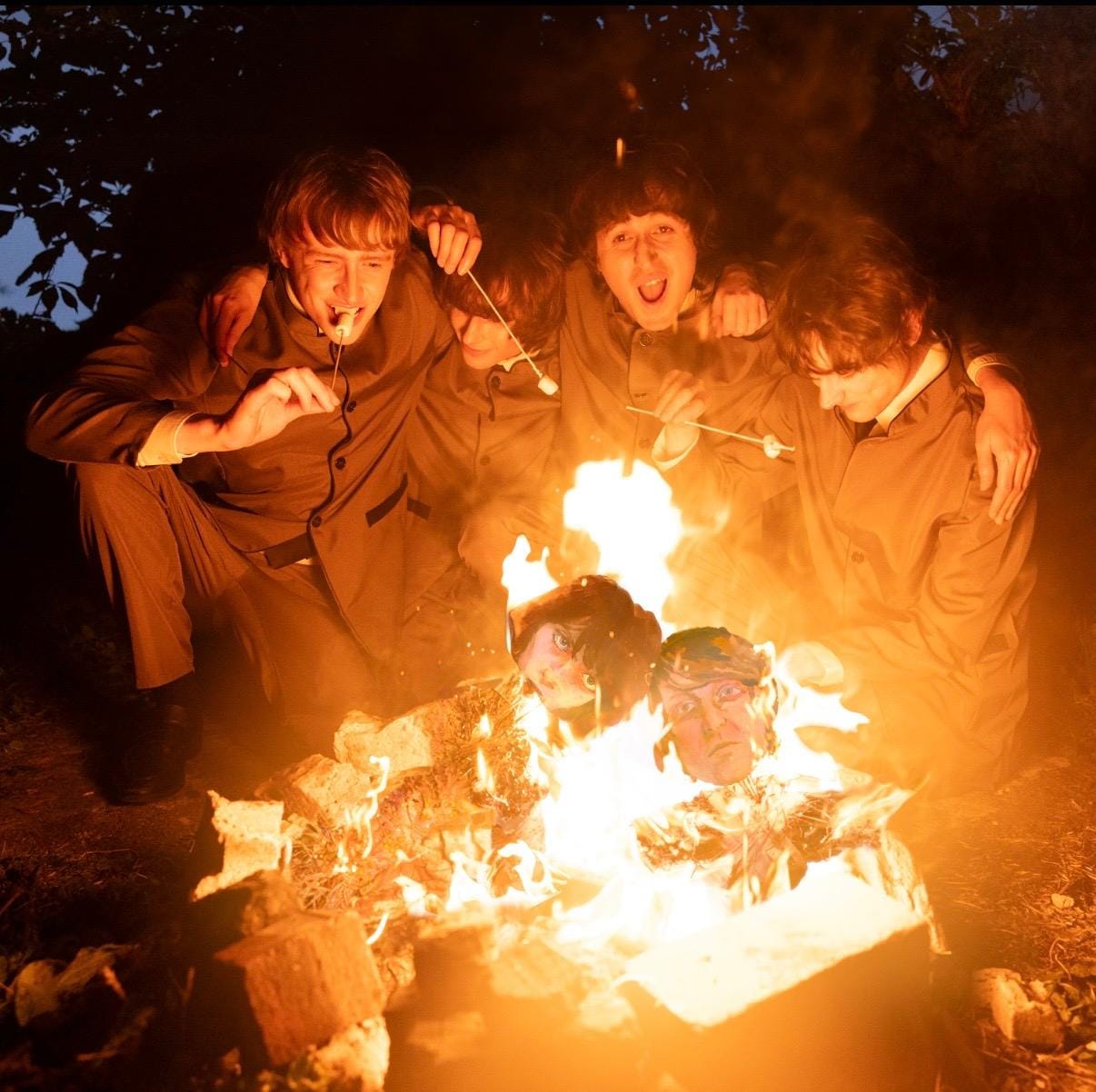
W: I ask because there’s a general search right now for where culture generally, but music specifically, is feeling fresh. Worldpeace DMT gets brought up a lot, and is often associated with a New Hippie sort of aesthetic.
Leo: We were the first to start it, and we’re going to be the first to leave as well.
I feel like, for us, the song is the most important thing, and we can dress that song in whichever way feels interesting to us. But I don’t want to hang around anywhere for too long. You need to know when it’s time to do something different. I don’t want to make the first album four times. What do you think Rowan?
Rowan: Give the people what they want.
Leo: Yeah. Maybe we should do that.
W: There’s also a rich history of your band doing covers. From Lil Wayne’s “Lollipop,” to “Big Yellow Taxi” on this new project. What draws you to covers?
Rowan: Back in the day songs were so good that if it was released that year like six other people would just record and release a cover of the song. I feel like no songs are that good anymore.
Leo: It’s a bit like doing homework. When you’re playing your own songs, you’re limited to the songs that you’ve been able to write. But when you’re doing a cover, you’re able to play the best songs ever written. And it’s fun to play songs of that caliber. I feel like we’re going to do a covers album one day. It’s just an inevitability.
How do you approach live performance?
Leo: So far, performing live has been a type of glorified karaoke, which has been necessary financially, because we can’t afford a full band.
The music is made very slowly and intricately. So it’s been a challenge for us to work out how to replicate that live.
We’ve so far adopted the method most other people in this scene use, which is playing a backing track and singing. We actually do sing live. Some people don’t even do that, but we do sing, and I play guitar and Rowan’s started playing percussion. A big ambition for us is to try to put together a show which feels more genuinely live.
Rowan: When we practice a song, we always play it acoustically in rehearsal before we do the backing track.
Leo: But I think, more broadly, this is a challenge for young people. The backing track has become so ubiquitous amongst underground musicians. Of course I understand why: it’s functional, portable, and cheap.
I think most truly live bands are making really bad music, and the combination of a great project that also performs genuinely live—there really aren’t many of them. I think that’s something we really want to challenge ourselves to do.
Rowan: I forgot to mention we both hate live music. Watching live music is so boring, and you just space out.
Leo: Yeah, I hate live music. I mean, I have this issue with a lot of things, whether it’s like a film or live music. I’m always waiting for it to end.
Rowan: Yeah, me too. Maybe it’s just more we’re just people that prefer creating things to watching things.
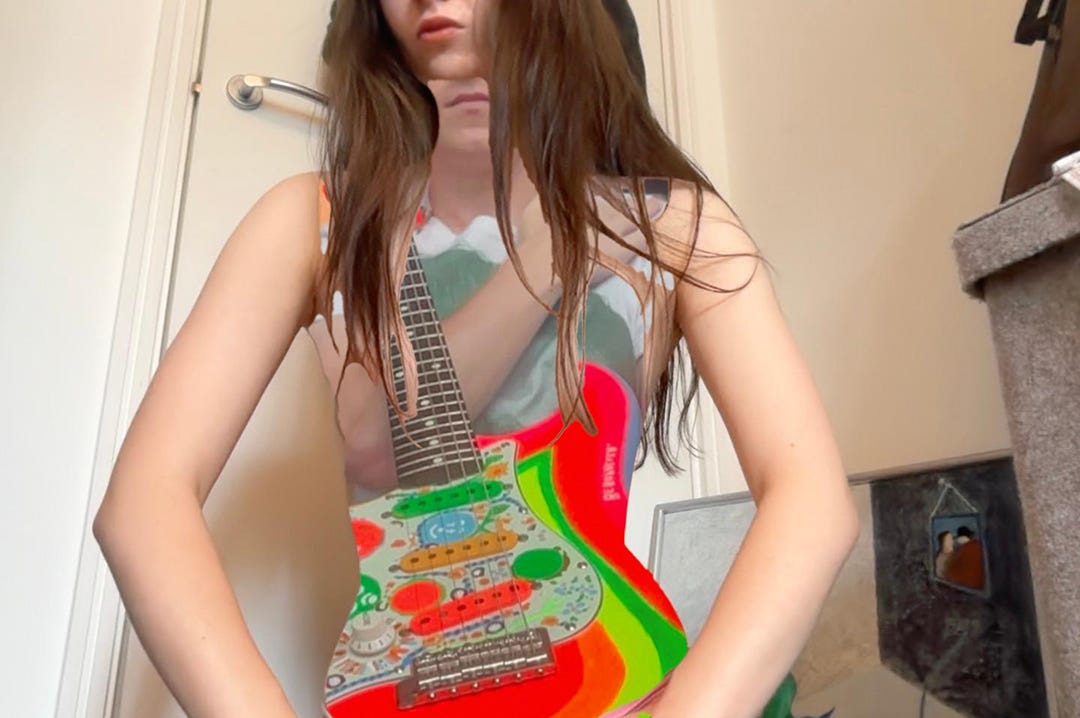
W: Is there any sort of live music that is an exception to that?
Leo: I saw Morrissey live. That was actually really good. But more so in just the ridiculousness of seeing him in the flesh.
Rowan: What was he doing?
Leo: He was just Morrissey. He was awesome. It was really cool. But I was still kind of waiting for it to end. I saw Kanye headline Glastonbury on his Yeezus run, and I was waiting for it to end.
Rowan: I saw Brian Wilson perform Pet Sounds with a full orchestra, and I was waiting for it to end. I was even crying at some point. Even if I’m crying, I’m still waiting for it to end.
W: What in your daily life are you not waiting for to end?
Rowan: Hanging out with friends. YouTube
Leo: Bad things.
W: What about creating music?
Leo: Yeah, hours can go by and I haven’t noticed. But I mean, that’s not always good.
Rowan: It can be fucking boring, too.
Leo: It can be really boring. I mean I’m slightly bitter about the fact that I’m most likely going to spend the majority of my life in front of a laptop. I’m always thinking about ways to challenge myself to try making music where I’m not manning a laptop.
W: What kind of stuff are we watching on YouTube?
Rowan: I watch a lot of history stuff.
Leo: What did we watch that was really crazy? Oh, “The Last 24 hours in Führer’s Bunker.”
Rowan: That shit was crazy. We both love “The Rest Is History.” I’m also loving Fun. Then there’s Tor’s Cabinet of Curiosities. He’s really good. He has two really good Beach Boys videos.
Leo: Another interesting point is that Rowan grew up online and I grew up completely offline.
Rowan: No, I didn’t grow up online.
Leo: Did you not?
Rowan: I wasn’t allowed to use the internet until I was like 17.
Leo: But then you went kind of crazy with it.
Rowan: Yeah.
Leo: Rowan has very much taught me about the online world.
W: So what do you think is next for the two of you?
Rowan: We’re releasing a mixtape called Flowers Powers. And then we’re releasing an album in October.
Leo: We wrote a couple albums this year and have had to divide up what we wrote. Some of it went in the bin, some of it went on this mixtape, and some of it is going to go into what is our actual second album in October. Then we’ll be touring.
W: How is the Worldpeace DMT sound going to be evolving on these next projects? How’s it going to be different from what we’ve heard before?
Leo: I really have no perspective on this because obviously people around us have heard the music we’ve been making and a lot of people are like, “Geez, it’s so different.” And I really am just like, “Are you sure?”
Rowan: There’s more choir. There’s loads of choirs on it and also loads of strings. We maxed out on the budget.
Leo: But still somehow made it on my laptop. I wasn’t allowed to leave my laptop. How’s it different, Rowan?
Rowan: I don’t know how it’s different.
Leo: People will tell. People can decide.
Rowan: I can’t even remember what’s on the album.
W: Tell me your favorite item of clothing, and album that’s had a large impact on you as a person.
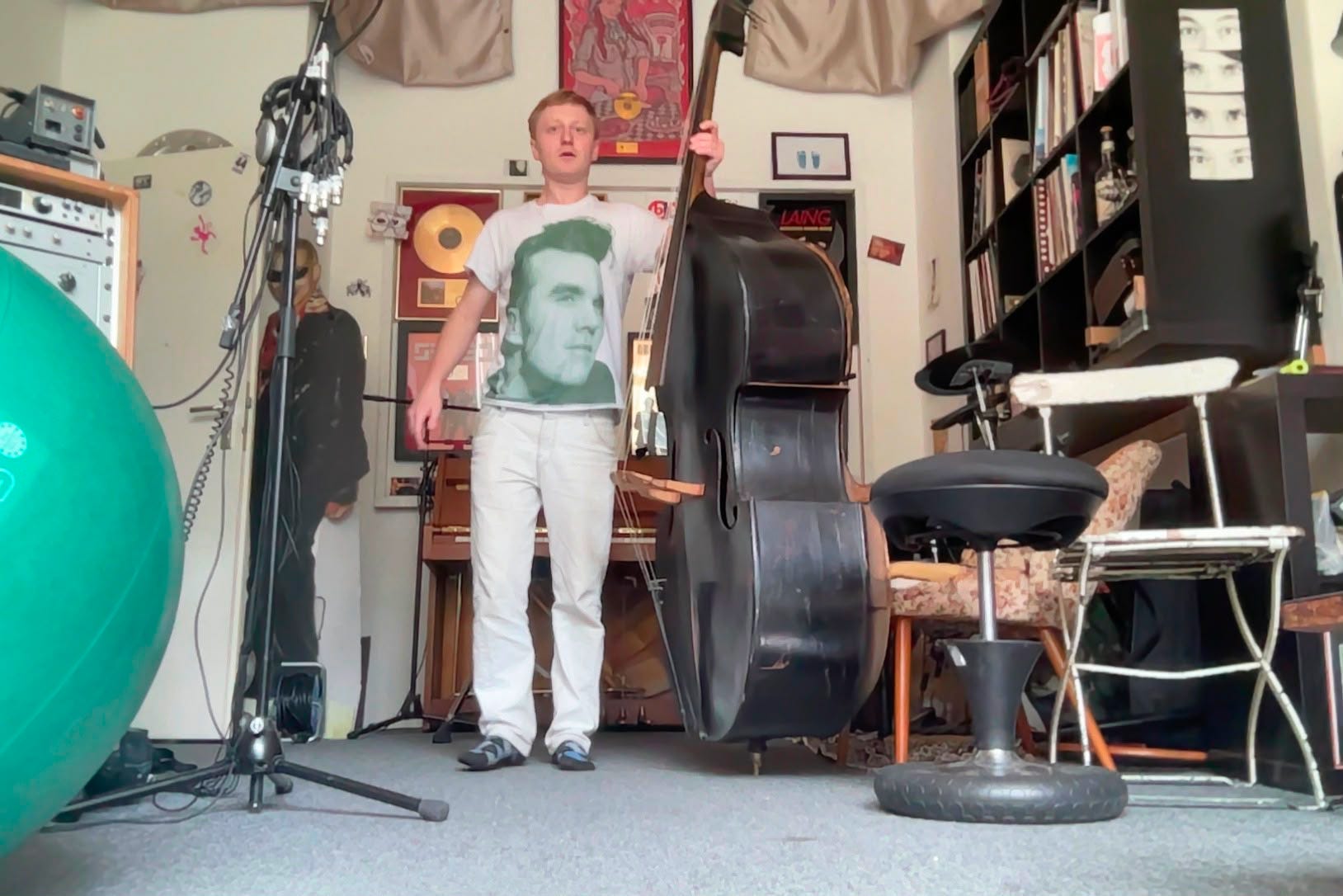
Leo: I sort of only have my current outfit that I’m wearing, which will last about 6 months. It’s a Morrissey t-shirt, which I bought at the concert, and a pair of white jeans, which many people who came to see our tour would have seen me wear. Those two things are going to serve me well. When I lose one of them, I’ll replace them with something else.
For the album, The Velvet Underground & Nico.
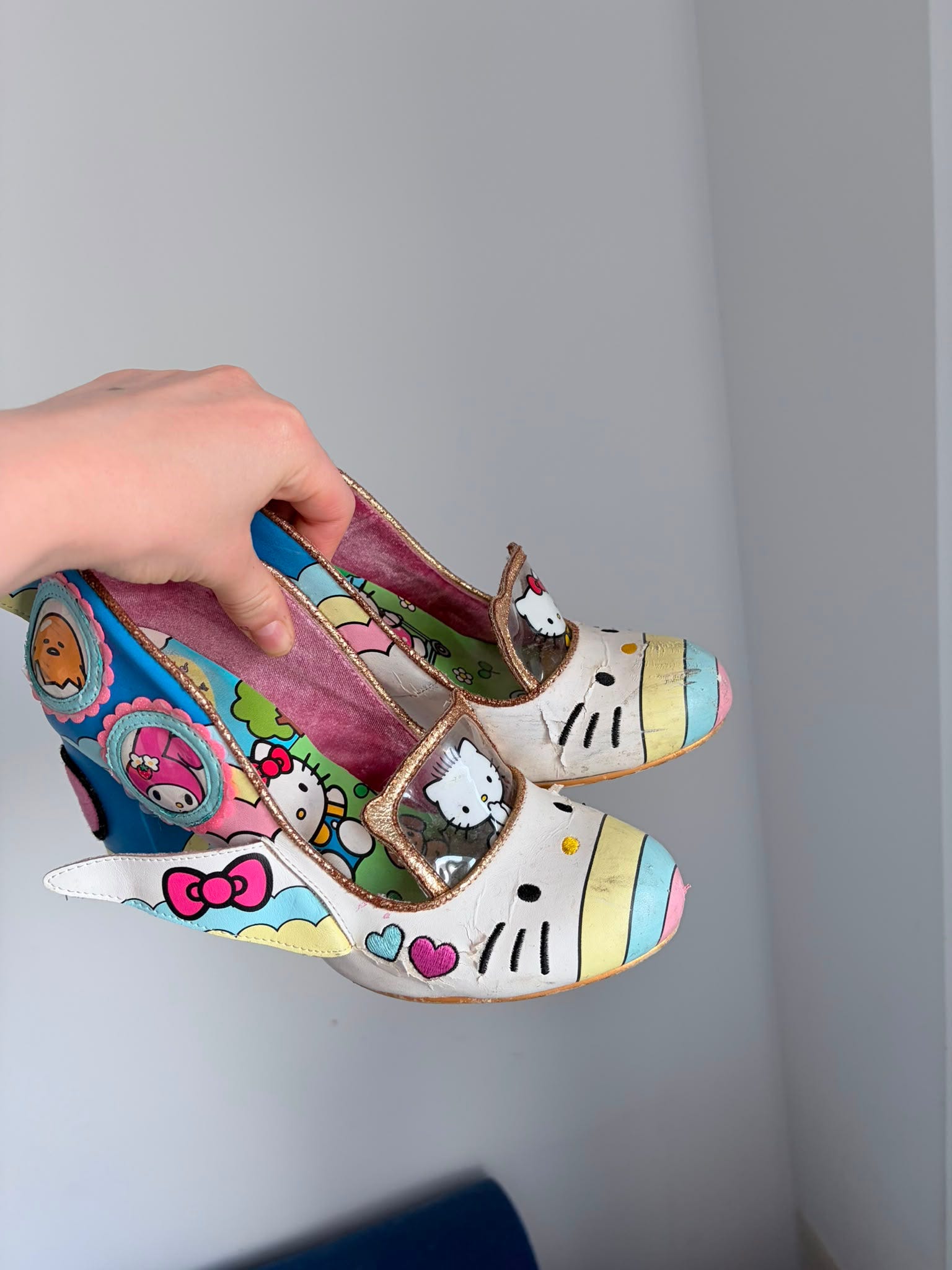
Rowan: Mine’s my Hello Kitty airplane shoes. They’re pretty cool. For the album, the first one I thought of was The Roches’ self-titled album. I think it’s the perfect album.
they're such a breath of fresh air in modern music