

Venice Biennale: The Good, The Bad, The Noteworthy
Recap and selects
Reporting and photos by Bryan Munguia
Globalization’s favorite culture orgy, the Venice Biennale, entered its 61st edition over the weekend, once again transforming the floating lagoon of Venice into the international epicenter of contemporary art.
It’s for good reason that they call the Venice Biennale the “Art Olympics.” Every two years, it invites countries from around the world to stage exhibitions showcasing the best art their nation has to offer. It runs for a whopping six months, and it is arguably the best litmus test for what’s happening in global art.
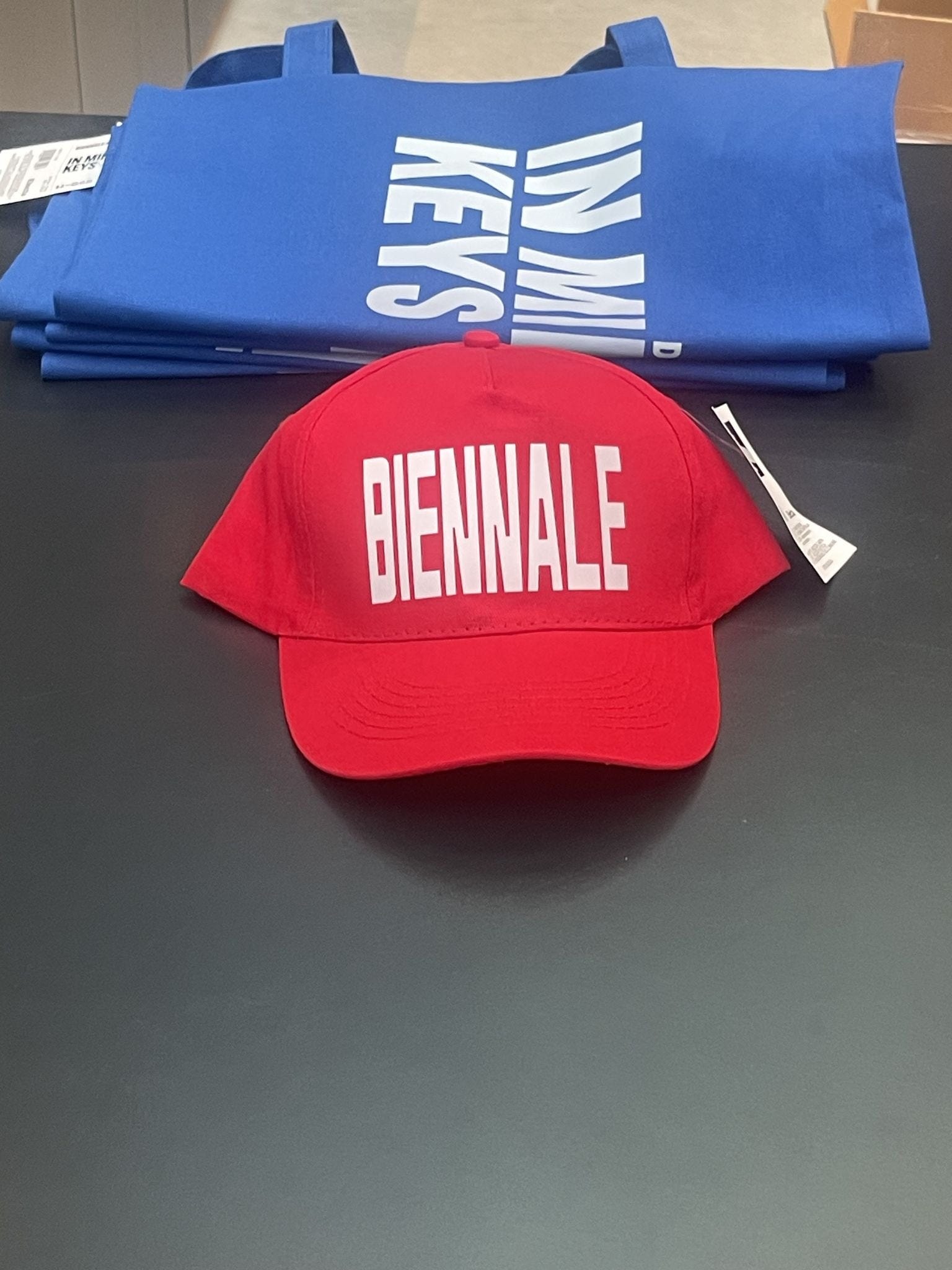
The Biennale’s official exhibition is staged in the Giardini (landscaped garden housing permanent national pavilions built over the last century) and the Arsenale (a former naval shipyard transformed into an art complex), but a glut of collateral exhibitions spill into the rest of the city as well. At the center of this circus is the Biennale’s official main exhibition, curated by a single artistic director appointed by the organization itself. It’s considered one of the most important exhibitions in the world and a high honor for a curator’s career. This year’s exhibition, In Minor Keys, was curated by Koyo Kouoh, who tragically and suddenly passed away before she could see her magnum opus fully realized.
After drifting through the Biennale’s preview week, it became clear to me that the defining theme of the Biennale this year is death. Not just Kouoh’s, but that of the Venice Biennale as we know it. The exhibition’s cultural universalism is facing increasing contradictions: as exhausted art professionals flooded the archipelago for private dinners, vaporetto rides, and unapologetic networking, protests over the inclusion of Israel and Russia erupted, with many calling for “death to the Biennale.” The jury entrusted with assigning prestigious prizes at the exhibition resigned over the same issue days before the preview opening. Transcultural kumbaya isn’t working anymore.
Despite all this, the mood on the ground still felt quite optimistic. After years of overtly political themes choking artistic spirit, there’s a shift away from identity-for-identity’s-sake in art. It’s a pivot that echoes writer Dean Kissick’s contentious essay “The Painted Protest,” which argues that much contemporary art collapses into moral signaling rather than transcendental beauty. This year’s Biennale, despite centering marginality and diasporic perspectives, avoids direct political sloganeering.
After all, everyone can see the world is fragmented. The urgent question at this year’s Biennale is whether art can still connect those fragments. Some artists and curators are doing genuinely intelligent things in this context. Most are not. To save you the trip to Italy to find out which is which, here are, in my view, the good, the bad, the ugly, and the noteworthy of this year’s Venice Biennale.
THE GOOD
HELTER SKELTER, Arthur Jafa and Richard Prince, Fondazione Prada
The best shows in Venice typically take place outside the official Biennale. My favorite of the week was, without a doubt, HELTER SKELTER, pairing Arthur Jafa and Richard Prince at Fondazione Prada.
Despite their different racial and social backgrounds, Arthur Jafa and Richard Prince are mutual oracles of Americana. Jafa captures the joy and violence of Black experience, while Prince dissects the seductive machinery of white American mythmaking. These two masters of appropriation art melt into each other effortlessly. Curator Nancy Spector recalled Jafa describing Prince as “the Blackest white guy he’s ever met.”
Jafa’s LOML video piece was a standout. Two spectral blobs of fluid light merge and separate while a slowed-down version of “Someone in the Dark” by Michael Jackson scores the choreography. Projections of light become projections of my personal life. Pain, shame, love, guilt, rejection, pleasure, joy. The human condition feels completely understood by this abstracted melancholy.
These two American punks serve a masterclass in good political art; it reveals something about the world beyond superficial signifiers. A curator mentioned to me that this should have been the American Pavilion, and I couldn’t agree more.
GRASS BABIES, MOON BABIES, Ei Arakawa-Nash, Japan Pavilion
Arguably, the most absurd exhibition at the Venice Biennale is Ei Arakawa-Nash’s uncanny baby-doll takeover of the Japan Pavilion. At first, I genuinely thought I was hallucinating as I saw every visitor carrying a baby doll. When I reach the front of the queue, I’m handed my own, which is weighted disturbingly accurately, and instructed to babysit the doll while visiting the pavilion.
I become attached almost immediately. Upstairs in the main exhibition, babies are everywhere. Some rest sculpturally on rafters and ropes, but most are nestled in the arms of art world professionals. Somewhere along the way, I genuinely projected care onto this inanimate object, and when it is time to return it I hesitate. This is partially Arakawa-Nash’s point: creating a temporary space for collective care while exposing how socially constructed those emotional registers really are.
**SPEED ROUND**
Other standouts, quickly:
BASIC FAILURE, Sanya Kantarovsky, Istituto Veneto di Scienze, Lettere ed Arti, Palazzo Loredan
Paintings that capture a certain style of taboo attractive to a curious subconscious. Placed in the Palazzo’s ornate interior, which was the perfect home for them. Staring at Kantarovsky’s work feels like a boyish tease to the psyche.
STILL JOY–FROM UKRAINE INTO THE WORLD
One of the best curated national presentations. A cohort of young Ukrainian artists packs a poetic punch. One standout was Ryan Gander’s animatronic puppet, slumped atop a pile of trash, mimicking the artist’s morning reflections on anxieties of the present.
CANICULA, Fondazione In Between Art and Film
Eight commissioned filmic artworks exploring systems under extreme political and psychological pressure. Highlights include Yuyan Wang’s soulful montages of robotics occupying natural, organic forms, and Roman Khimei and Yarema Malaschuka’s work showing a cast of Ukrainian actors playing former Soviet roles. Collectively, hauntingly timely material.
SCREEN MELANCHOLY, Li Yi-Fan, Taiwan Pavilion
A digital lecture-performance fused with installation plays in this palazzo, unpacking the ethics and mechanics of animation and 3D modeling through a work that is equally funny and unnerving. It’s also one of the only films at the Biennale that manages to hold an audience completely captive for an entire hour.
THE BAD
Russian Pavilion
This experience made me feel like one of those Model UN kids. I passed by a squad of armed Italian policemen on my way into the pavilion. War crimes and the G word are definitely the elephant in the room.
I must report that this pavilion is incredibly strange, and not in a good way. The works, I think, are a few floral sculptures suspended throughout the pavilion that look disenchanted under dimmed lighting. It looks like something made by an expensive florist. To twist the knife, there’s also a DJ blasting Brazilian Baile Funk. A few young people dance in weird papier-mache masks, and one girl is balancing on a giant red ball.
A cryptic sign now lives in the pavilion, saying it was a “happening” and more of an if-you-know-you-know sort of ordeal. Why participate?
CALL ME THE BREEZE, Alma Allen, United States Pavilion
The US tends to be the world’s scapegoat, but we do it to ourselves. The unanimous worst pavilion goes to the United States, and the nonsense sculptures by Alma Allen therein. To Allen’s credit, he had only about four months to put together a show after a previous artist’s proposal fell through.
I spend less than five minutes here because there isn’t much dialogue to be had with these blobs of shiny decorative metal. The US tried to get away with a commercial gallery exhibition in a national pavilion setting.
THE NOTEWORTHY
Beyond simple “good” or “bad,” here are a few exhibitions in Venice that can’t go unmentioned
SEAWORLD VENICE, Florentina Holzinger, Austrian Pavilion
It doesn’t get much more spectacular than Florentina Holzinger’s hyper-butch dystopia, SEAWORLD VENICE, at the Austrian Pavilion. An on-the-nose metaphor of Venice’s environmental crisis becomes the stage of chaotic scenes completed by nude female performers. The performers’ bodies feel mechanical, caught somewhere between hard and soft, woman and machine. It’s a universe somewhere between Waterworld and femme-dom Mad Max.
In one section, performers scale a totemic altar and strike poses that feel somewhere between religious ceremony, indoor climbing, and Balenciaga fashion campaign. On the other side of the room, another performer rides a jet ski in hypnotic circles. As the speed intensifies, the still water begins to grow into something genuinely cinematic. Ripples become waves. The room starts simulating a storm. Yes, there’s even a splash zone if you’re standing close enough.
Everywhere you look, there’s performance happening. Outside, visitors become participants in the installation with port-a-potties filtering their pee into a freshwater tank where another performer is stoically sitting. Apparently, the NO SHITTING signs posted near the toilets are due to someone recently defecating and clogging up the system.
No one is respecting the pavilion’s no-photo policy, which only reinforces the sense that this presentation is more simulation than reality. On opening day, a performer used her own body to ring a church bell at the top of every hour. The piece proves the human body can still command more attention than almost any other artistic medium.
It’s also Austria, reminding everyone of its legacy of avant-garde performance art rooted in the brutality of Viennese Actionism. This isn’t that, of course. It’s closer to a techno-fetish Cirque du Soleil than something genuinely transgressive. Still, it remains oddly sincere in capturing the absurdity of contemporary political spectacle.
THINGS TO COME, Maja Malou Lyse, Danish Pavilion
The Danish Pavilion is designed specifically for the porn-sick. I and what felt like every gay guy in Venice found ourselves captured inside Maja Malou Lyse’s laboratory-like immersive installation, which wraps the pavilion in videos of professional porn actors performing oddly dissociative acts. In the sterile clinical environment, we collectively giggle at the campy porn scenes. In one video, an actress rhythmically bounces her augmented breasts against a stark white backdrop. In another, an actress guides us through a sperm bank like some VR roleplay blown out of the headset.
The work directly references real Danish sperm bank studies claiming VR headsets used during collection increased motile sperm counts by 50%. We already know pornography has a firm grip on the psyche, but it’s strange to consider its ability to alter the reproductive efficiency of the human species. Inside Malou Lyse’s universe, pornstars are anointed as deities for a technocratic future.
Like Florentina Holzinger, Malou Lyse uses immersion to create a meta-reflection between viewers and the technologies shaping them. I, however, wasn’t necessarily contemplating pornography’s relationship to fertility while inside the pavilion. I mostly stayed for the immaculate corporate bimbo atmosphere.
IN MINOR KEYS
I obviously have to mention the Biennale’s main exhibition, exhibited across the labyrinthine halls of the Arsenale and Giardini. Much of the work in the show leans toward quiet atmospheres of mourning, spirituality, memory, ritual, slowness, and diasporic reflection. You move through dimly lit installations, meditative films, suspended fabrics, sonic environments, and fragile gestures attempting to produce intimacy against the overwhelming machinery of contemporary life.
The thing about this exhibition, however, is that every art professional I speak to seems to agree that the resonance here falls flat. Framed through the metaphor of musical “minor keys,” the exhibition asks viewers to slow down, resist, listen, and contemplate through works centered on marginality and spirit. In theory, this makes sense. But when you place so much emphasis on inserting diasporic voices into a Western institutional complex, much of that sacral charge weakens. It converts into spectacle, failing to produce the cohesive prose the exhibition is so desperately reaching toward.
My favorite work was Carrie Schneider’s large-scale filmic appropriations from the French New Wavefilm La Jetée (1962). The industrial presence of the work in the Arsenale, combined with the warped repetition of the film roll and its tunnel-like distortions, produces something omniscient. The image is like an apparition, suspended between memory and machinery. Here, I genuinely feel the phenomenon that the Biennale’s exhibition claims to be.


https://www.versobooks.com/blogs/news/art-has-nothing-to-do-with-the-un-internationalism-as-rhetoric-at-the-venice-biennale