




Written by Hannah Morgan
People say culture is a pendulum. It swings back and forth, one era reacting to the last, and thereby informing the next.
But the cultural expression of any given moment is not the product of a single pendulum, but many: from maximalist to minimalist, colorful to dark, absurd to rational, all of them swinging at once, competing for influence.
Right now, one of these back-and-forth tensions is shaping the direction of underground music. It is swinging away from a cold and stilted self-seriousness, and toward a soft, earnest sentimentality.
The result, which has been taking shape for over a year, is the emergence of a subgenre that is defining contemporary indie electronica: Laptop Twee.
Laptop Twee was coined by blogger and musician Friends& to describe a burgeoning movement that combines (1) the innocent, simple, melody-driven and lo-fi ethos of twee music with (2) the production tools and sounds of bedroom laptop production.
It has been percolating for years, and recently exploded into nearly mainstream popularity on the backs of artists like ear and Bassvictim. We’ve all heard the music, and plenty of thought-fluencers have made clicky reels ‘breaking down’ its emergence
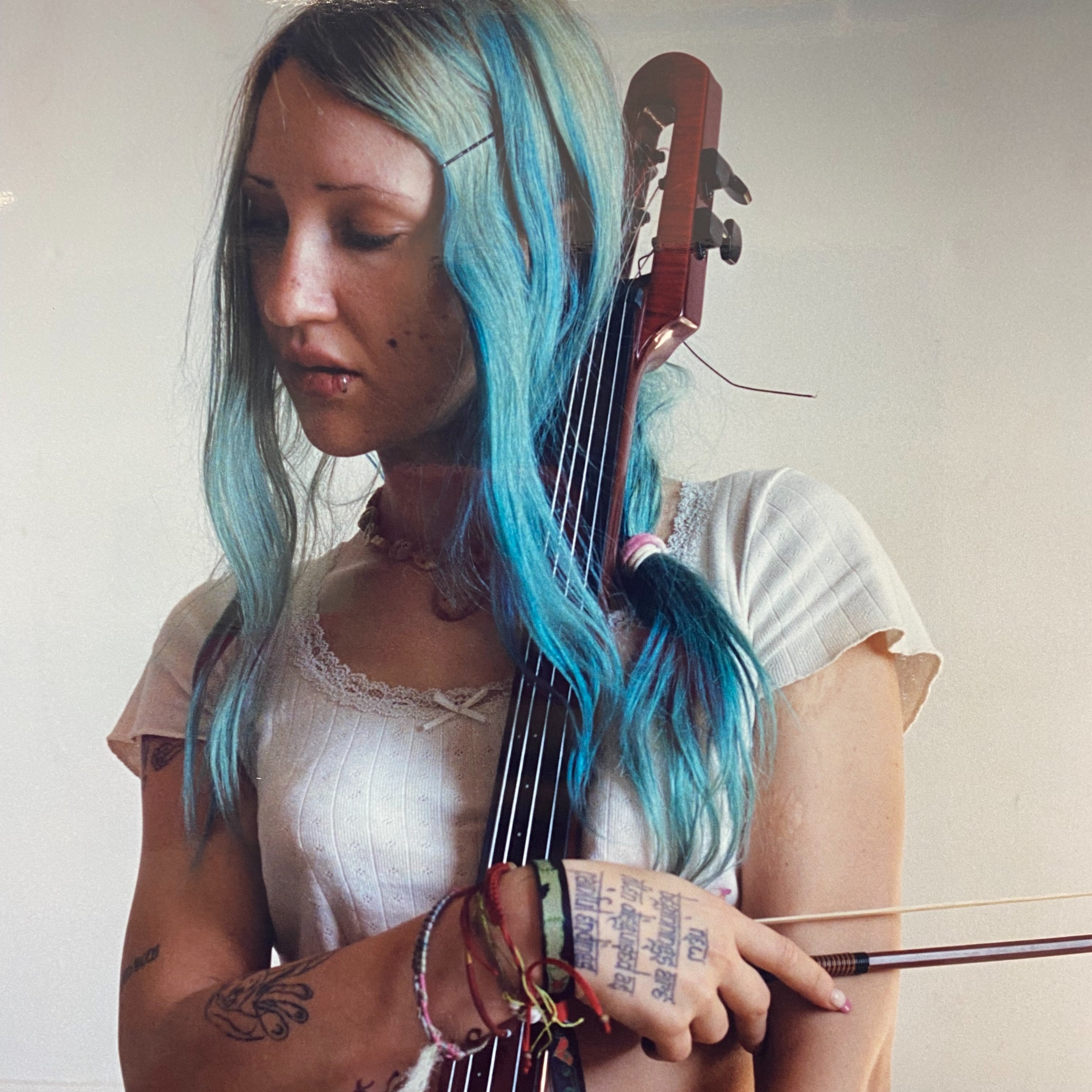
But truly understanding Laptop Twee requires us to begin much earlier, tracing the lineage of twee music from its 1980s emergence in response to a harsh post-punk scene, through its 2010s revival in response to increasing ironic detachment in underground culture.
By understanding these past precedents, we can see that Laptop Twee is not a standalone modern subgenre, but a predictable reaction against the colder, more detached cultural era of the early 2020s, and a third major chapter in one single twee story, this time shaped by our era’s defining technological tool.
Laptop Twee is a microcosm for understanding how culture changes as a whole over time. Read on for the bigger picture


First, we should understand what we mean by ‘twee.’ It is most commonly understood as a music genre, but has come to be associated with a more general set of aesthetic signifiers as well.
Sonically, twee began as a genre of innocent and unpolished music under the indie pop umbrella. It has historically1 been defined by: lo-fi vocals, simple melodies and chords played on guitars and ukuleles, unpolished sounds (think tape hiss and jangly strings), and deeply personal diaristic lyrics (think Beat Happening or The Pastels).
But ‘twee’ today can also refer to a fashion sensibility: vintage silhouettes, Mary Janes, floral patterns, stripes, colorful tights (in contemporary dress, think Zooey Deschanel or Alexa Chung).
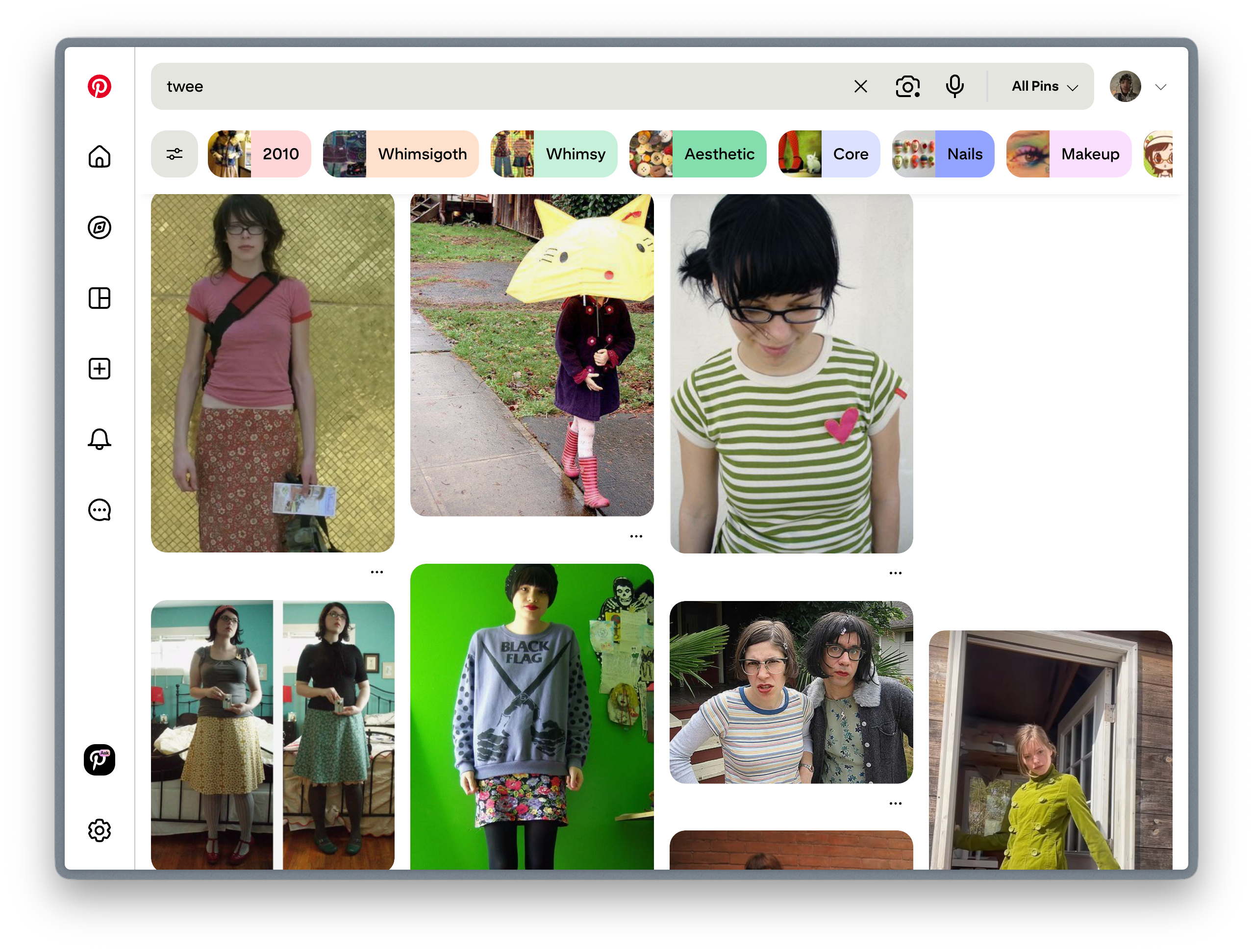
There is also a more general design aesthetic associated with twee: letterpress graphics, pastel colors, scrapbook layouts, retro homage (think Wes Anderson or Tavi Gevinson)
Philosophically, Twee is founded on sincerity and sentimentalism. It prefers sincerity to irony, and favors unpolished, childlike, homemade approaches to creativity.
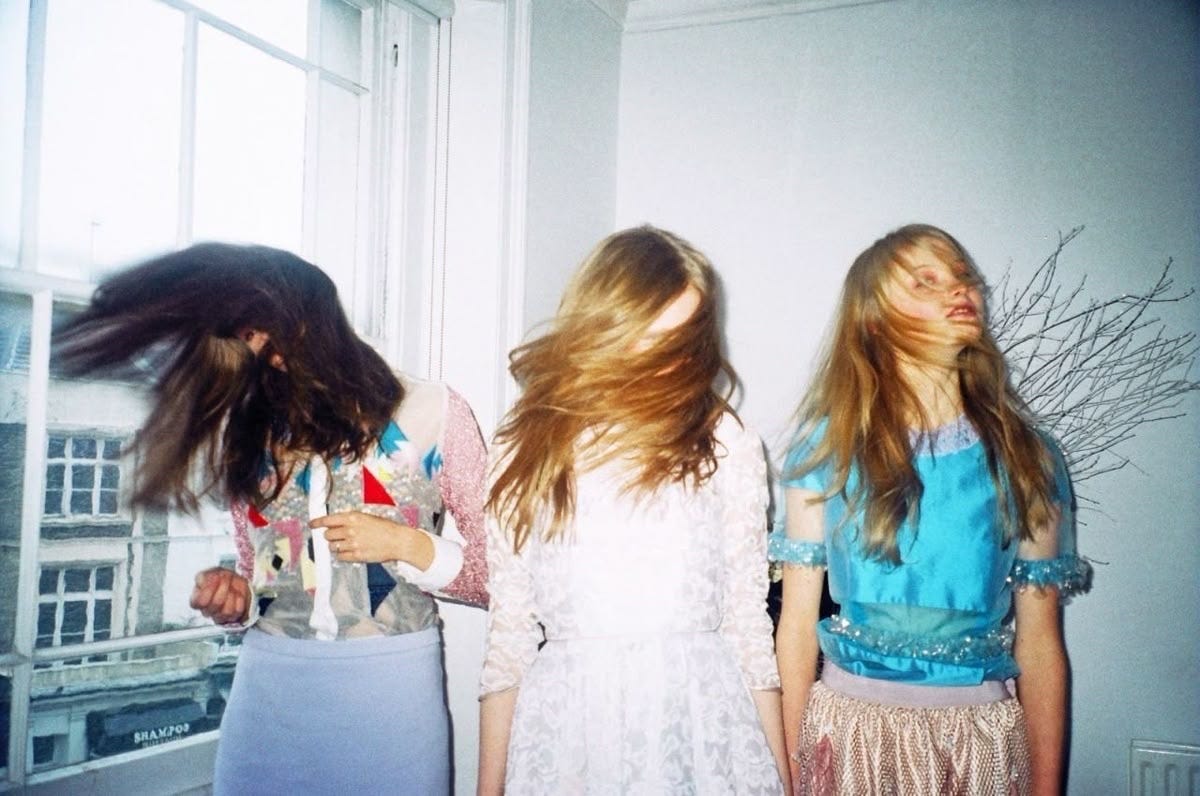
Twee is fundamentally a countercultural reaction, and it has had two major iterations before this present resurgence.
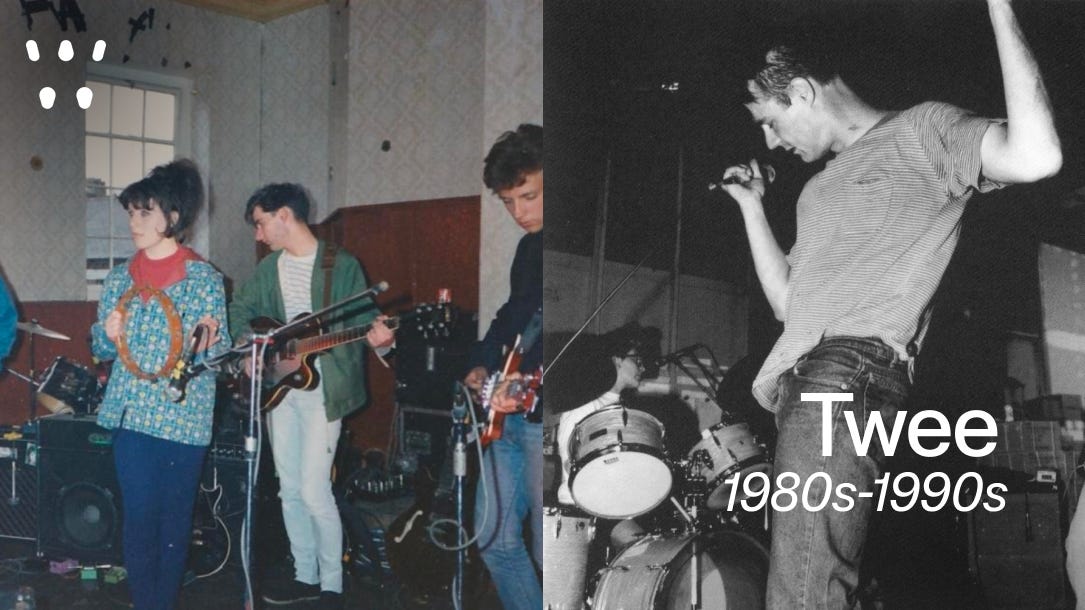
Twee (1980s-90s)
The original iteration of twee began in the 1980s as a subgenre of underground guitar pop that was distributed on cassette tapes among close-knit fans.
Unlike other popular post-punk music, which often dealt with nihilistically grandiose subject matter (such as The Jam in the mainstream, Nirvana in the grunge scene, or Joy Division in the art-rock wing), twee had a nostalgic sensibility and innocent lyrical themes.
KEXP writes that bands like Beat Happening were “throwing flower petals in the face” of heroin chic and darker dominant cultures.


Other twee bands from this first chapter include The Pastels, Talulah Gosh and The Field Mice.
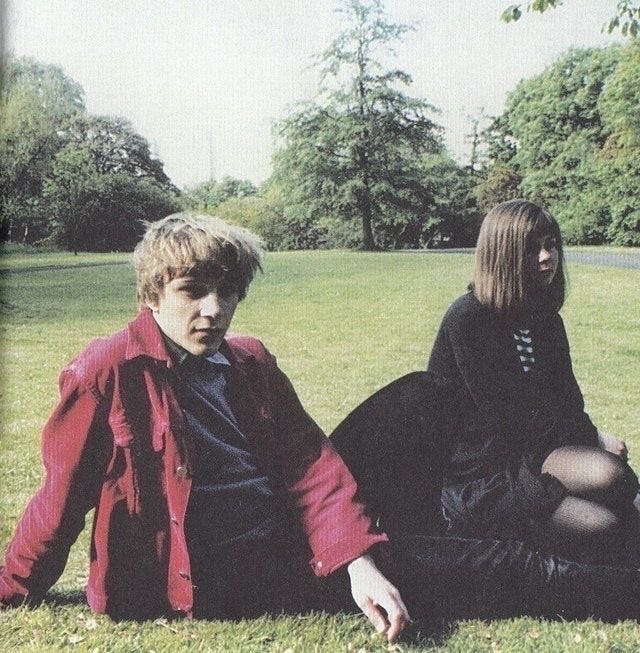
People seeking respite from sorrowful, cynical ideologies were drawn to Twee, causing the genre (and its associated aesthetic) to spread. After peaking in the mid-’90s, Twee moved back underground as pop homogenized around radio-friendly sounds.
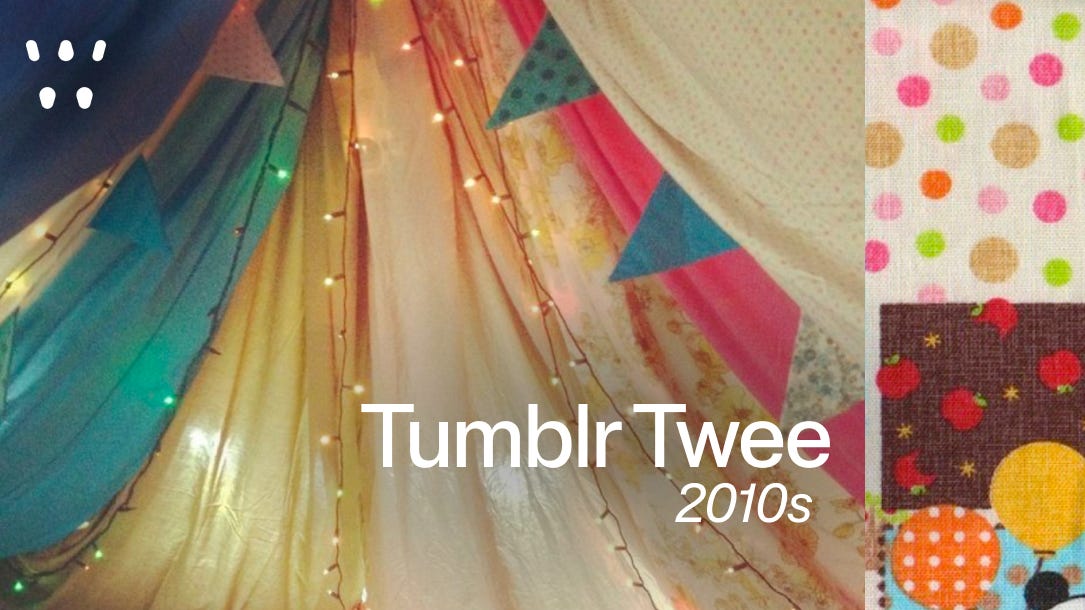
Tumblr Twee (2010s)
Twee’s second iteration, in the early ‘10s, was also a reaction to a self-serious dominant culture, this time one embodied by genres under the hipster umbrella, such as witch house or soft grunge.
The second chapter of twee was facilitated by the newfound popularity of vintage aesthetics on sites like Tumblr. These platforms increased the availability of archival imagery, causing the resurgence of past ideologies.


Twee was one of the subcultural ideology from past underground scenes that began to thrive on this new social media. A new internet context gave twee’s dated aesthetics (like polka-dots and scrappy handmade graphics) a renewed novelty.
As the aesthetic became popular again (in part by riding the coat-tails of a greater curiosity in underground hipster genres), twee ideology spread. Indietronica artists like Passion Pit would fold twee’s charming sincerity into synth-driven production, swapping twee’s jangly strings for cheery samples and glitchy digital textures, while maintaining a wide-eyed, innocent spirit.
Twee’s idealistic philosophy would soon be drowned out by a spirit of excess in popular culture, from the existential self-aggrandizement of trap, to the artificial self-curation of hypebeast culture. As a result, twee’s second iteration was short-lived, but a strong and necessary cog in the cultural cycle.
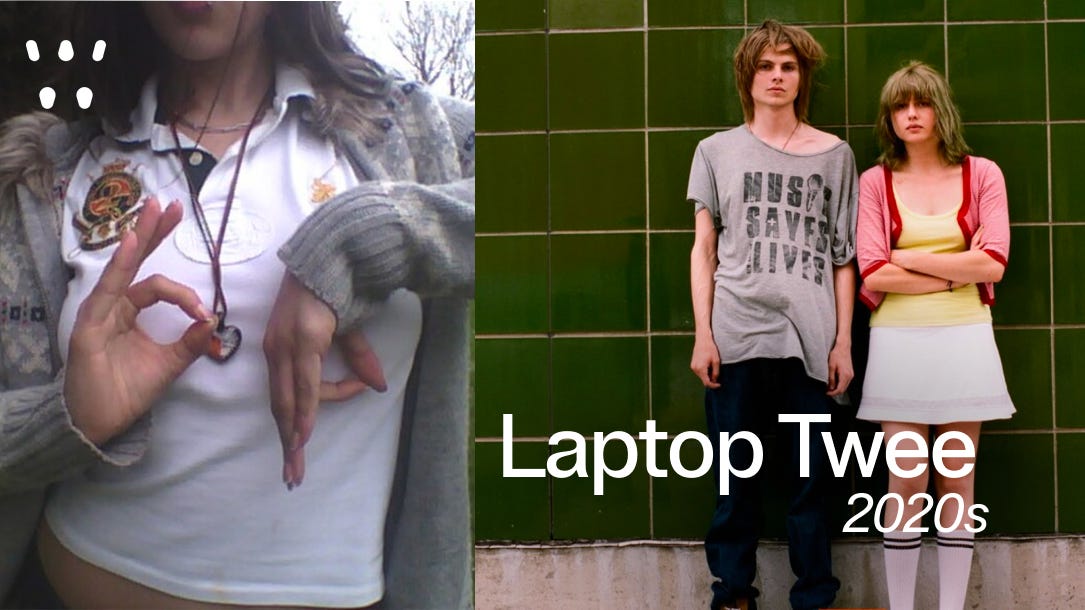
Laptop Twee (2025-present)
We’re watching this cycle repeat in today’s underground, where sonics and aesthetics have gravitated towards twee once again.
While labeling emerging artists today is notoriously difficult, it is undeniable that a certain subset of recent underground music has displayed a very twee sentiment. Laptop twee is a good catch-all for what unites this music.
Laptop: glitch production, prominent synthesizers, breakbeats, bitcrush
Twee: lo-fi vocals, stripped-back arrangement, acoustic incorporation, sincere themes
The sound is still far from a rigid genre, but offers a way to understand contemporary artists like ear, Worldpeace DMT, B7lanket, $quib, ideasforconversations, The Femcels and bbpue as part of a shared aesthetic movement.
These artists express the original twee ideology through contemporary production tools and programs.
Take duo ear as an archetypal example of the genre, the band largely credited for driving Laptop Twee’s newfound success. Their sound is the result of the tension between Jonah Paz’s background in more conventional twee music (see other projects like Sacred Holes and The Pictures) and Yaelle Avtan’s affinity for electronic textures.
ear told Nina Protocol that the music was never “intended to be twee,” but negotiates both the Laptop and Twee influences to create something new. This balancing of nostalgic twee and modern electronic production is what defines other Laptop Twee acts as well.
As with its previous lives, laptop twee is a response to a different genre: what has become known as the indie sleaze revival.
Sonically, contemporary indie sleaze draws from post-grunge indie rock and electronic dance music intentionally reminiscent of MP3 blog and Tumblr-era sound. Musical acts in this genre often lean heavily on references, which can contribute to their feeling contrived, or pretentious, or inauthentic. Much like the genres that twee has always responded to, indie sleaze represents an irony-poisoned dominant culture where meaning is hedged behind cold artifice.
Laptop Twee’s rise through the underground in the past year is indicative of cultural fatigue with indie sleaze, and desire for something softer and more earnest.
And, as in past resurgences, twee is spreading to other genres. Underground rap artists like Feng and Earfzilla are embracing childlike nostalgia through their own work and riding the wave of this cultural reaction. Contemporary talents of the electronic discipline, like Suzy Sheer and Snow Strippers, have sampled artists of the twee discipline.
In the past year, Laptop Twee has exploded out of the niche. ear’s breakout success with their 2024 debut “Nerves” (recorded on iPhone in Bard College’s university library) saw the band garner upwards of 200,000 Spotify listeners in a matter of months, sold-out tour dates, and cosigns from the likes of Yung Lean.
In their jetstream, artists like ideasforconversations and The Femcels have seen steady interest in their music from new audiences, with the former opening for The Hellp this year and the latter billed with the likes of Rooster and Esdeekid.
Just as twee in the past has been a much-welcomed answer to stagnating values in music, it seems underground listenership is captured by the genre’s honesty and simplicity. It doesn’t necessitate being tapped in with online lore to enjoy what’s happening.


Looking ahead, laptop twee is positioned to be the next great export from the underground, especially as a form of resistance to increasingly curated algorithmic self-presentation.
In wider pop culture, we’re seeing the ideology spill into contemporary art with the explosive popularity of hand-drawn illustrations online. (See the work of Martin Tokeshi, Ana Terral or Masa Moore.)
In fashion, twee ideology informs the identities of brands like NiiHai, where nostalgic references and colors are central to achieving a sense of earnest adolescence.


As with any cultural movement these days, the longevity of this most recent twee revival is an open question. Ultimately, it may come down to whether its leading figures manage to create truly enduring works of art.
To get a sense of where they’ve gotten so far, listen to this laptop twee playlist curated by the first person to name the genre, Friends&.
Although each iteration of twee has had a slightly different sound