


For LA Art Week, Welcome asked London-based independent curator Bryan Munguia to be our eyes and ears on the ground. This is his daily diary of what he experienced.
It’s easy to get defeatist about culture. Memes of gooning and lobotomies flood our algorithms. The majority of the population appears anxious or depressed, or both. Beauty seems to be irrelevant, more vulgar than pleasant. Considering all this, it’s a fair question to ask: why should we care about contemporary art? Even people inside the artworld are ruminating over it. So am I.
This existentialism didn’t prevent any of us from descending upon Los Angeles last week for the city’s Art Week. Culture, after all, is a cracked mirror, and it is up to the individual to pick up the pieces and create meaning through its abundant fragments.
What follows is my schizophrenic diary of this most manic of weeks, recording notable artworks, exhibitions, and trends as I navigated LA’s neurotic topography. Read at your own discretion.
2.21.26 | SATURDAY
I wake up in a sweat. It’s 4 AM but my circadian clock is UK-wired.
It seems every local gallery has unanimously decided to hold their opening reception tonight, which is unfortunate because I left my US SIM in the UK, and will have to navigate Downtown LA blind.
I miraculously make it to the Jewelry Theatre Building where Ronald Jones’s exhibition is opening at Matinée. It’s a newer gallery housed in a former 1920s theater and televangelist studio, a Beaux-Arts building that feels more like a movie set than a jewelry exchange. Today, the marquee reads GOLD DIAMOND WHOLESALE RETAIL.
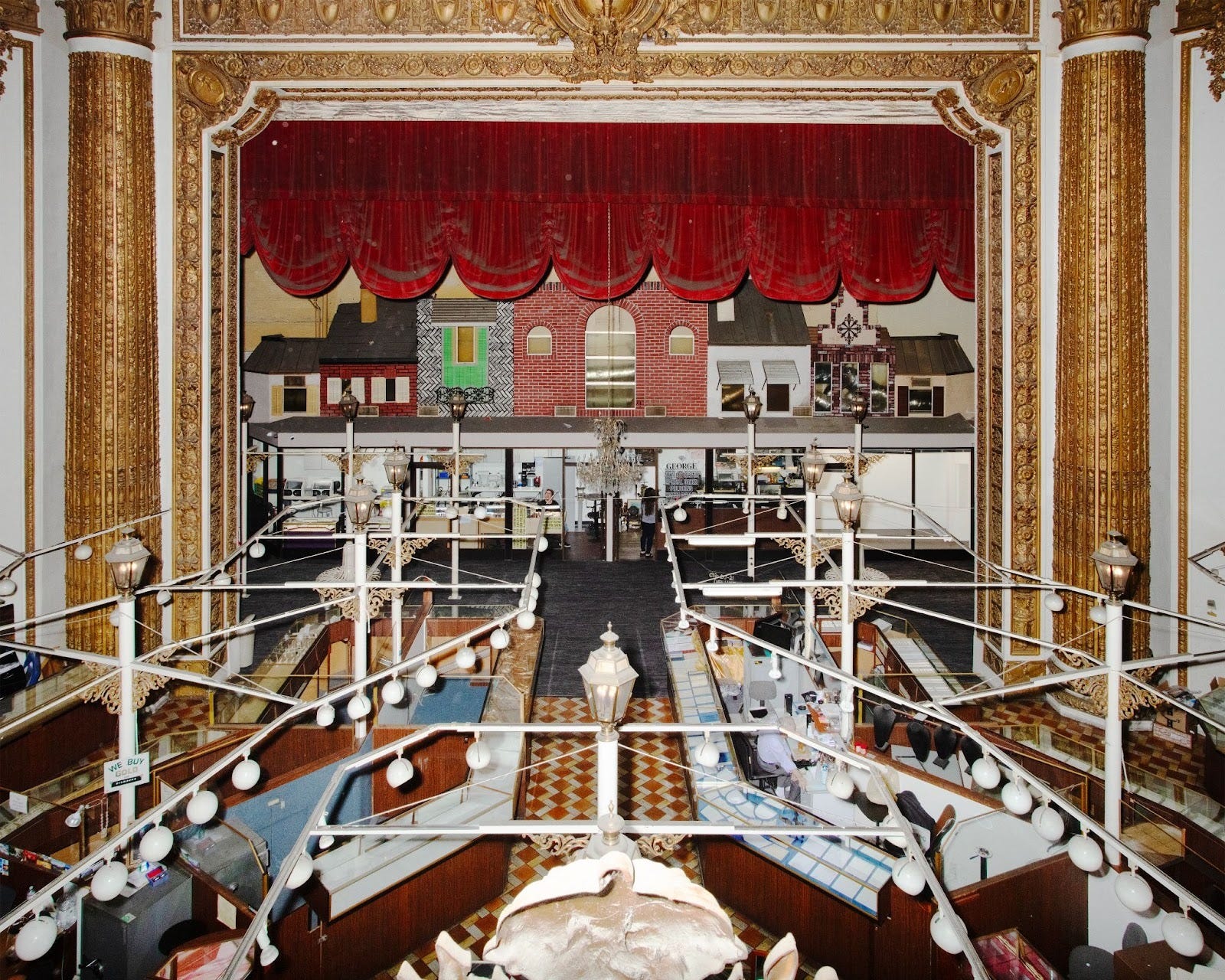
A few people inspect their discount gems inside. Towards the back are two connected storefronts converted into a well-lit gallery. Under stark white illumination is a pristine, blob-like sculpture.
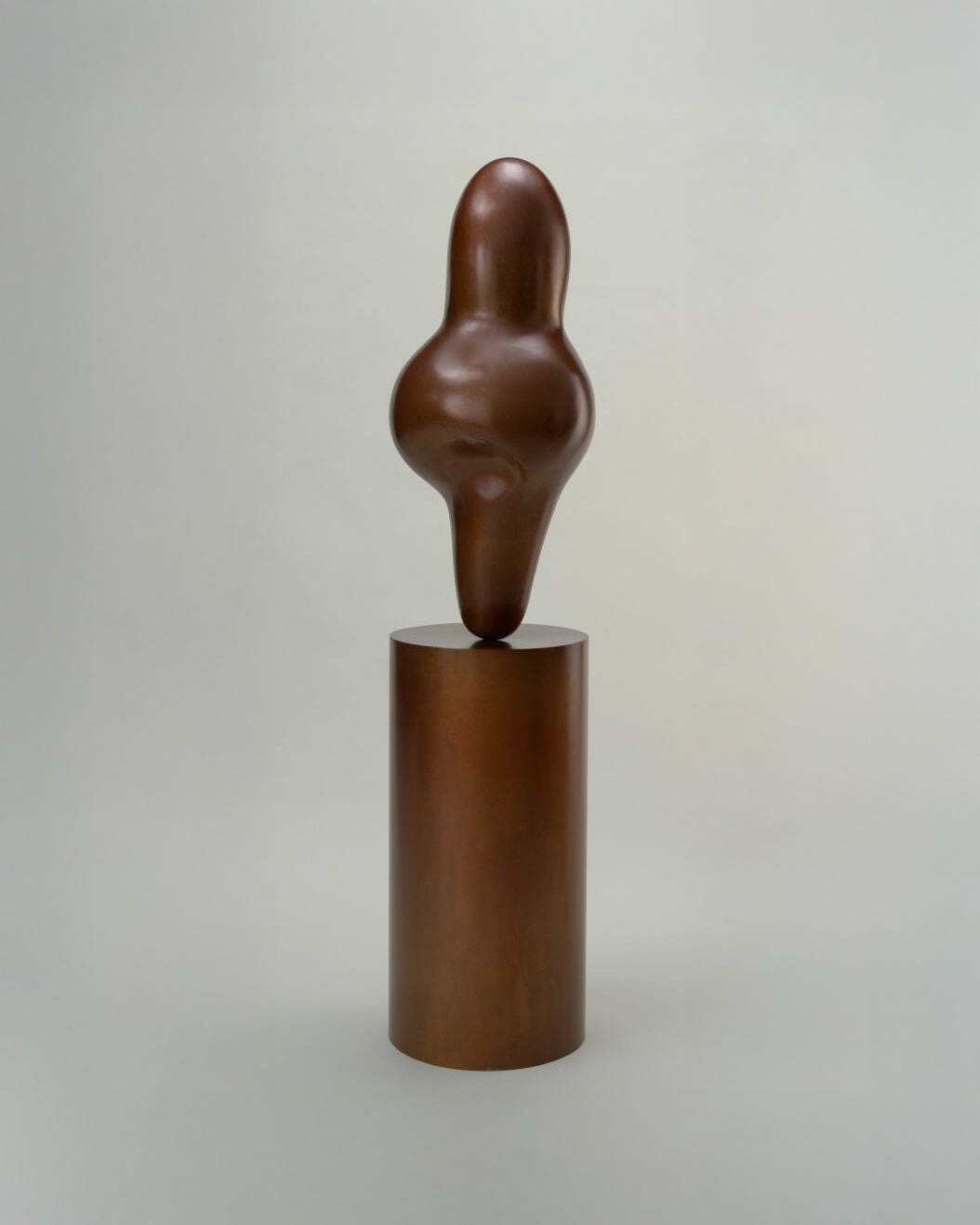
I stare at Jones’s glossy artwork and attempt to invent my own pretentious interpretations.
After absorbing some additional context, I realize I’ve fallen into the artist’s trap. What first appears as sleek abstraction is actually a mutating cancer cell. The sculpture is conceptual, its meaning materializing through its acquisition.
Existing in a collection or exhibition as an aesthetically pleasing piece of modern sculpture, its conceptual depth is pancaked by the commercial system in favor of its superficial attributes. The piece intentionally functions like a tumor of bad taste within capitalism.
***
Across town, I arrive at the Night Gallery opening of Factory Doomscroll by Christine Tien Wang and Rachel Youn. I’m particularly excited for this exhibition, curious to see works I’ve only seen on Instagram IRL.
The first thing I notice is Wang’s renderings of Luigi Mangione as a holy deity. He is winged and muscular, now preserved in oil on canvas and rescued from the expired meme cycle. Just like his online memes, I quickly pass the paintings. Mangione’s self-righteousness is more cringe than sexy.
I head into the second gallery where my favorite works live. One is a painting incorporating a classic meme-text exchange.
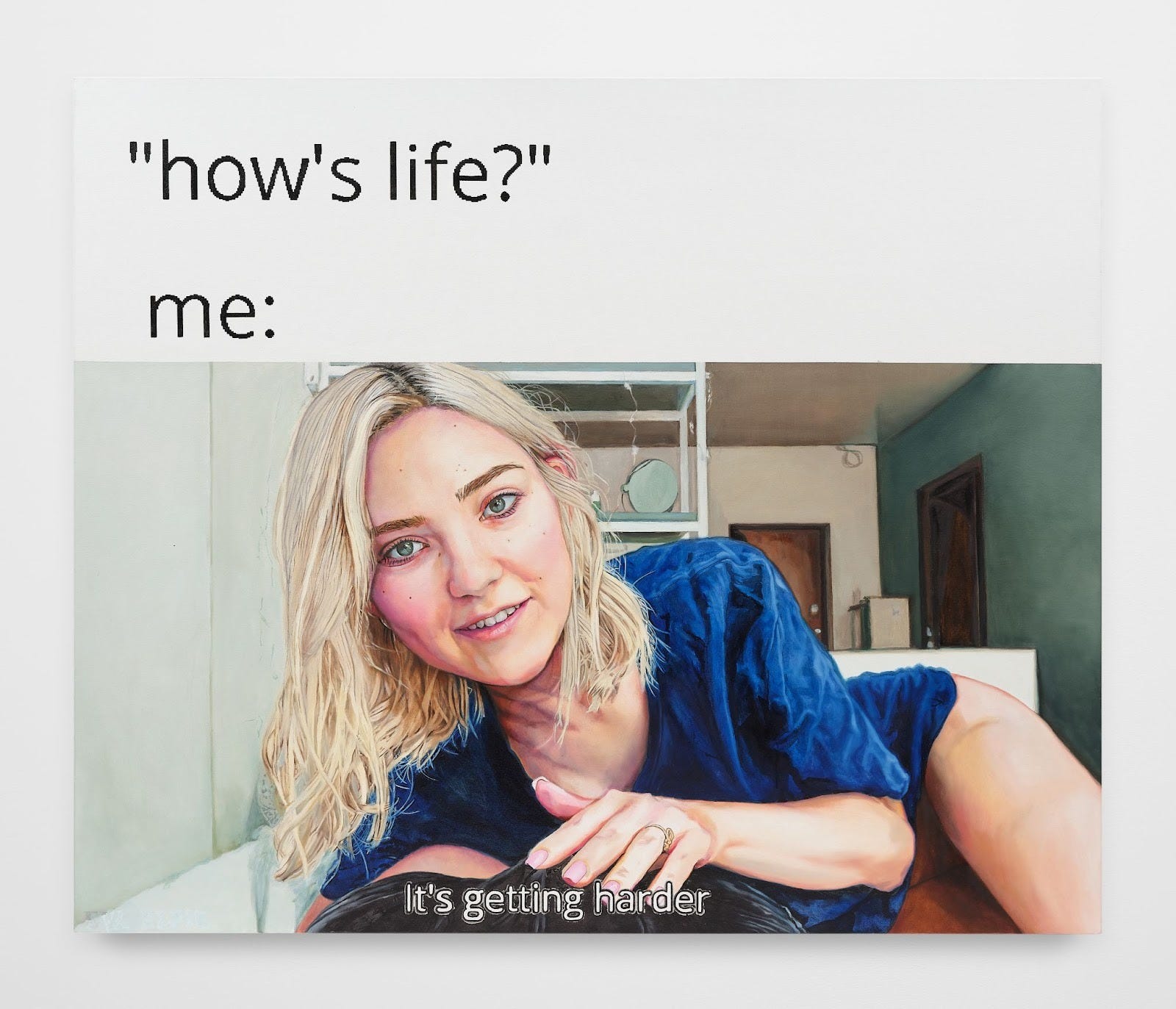
This meme-as-painting gives the porn-sick a space for contemplation. Like great painters of the past, Wang captures the zeitgeist. She canonizes the meme, acutely tracing collective truths and anxieties through its absurd, viral nature.
Youn, on the other hand, pulls her materials from wellness culture. Every kinetic sculpture appropriates self-care objects to capture an intimacy between industry and the synthetically organic. Healthmaxxing. Towards the back, I find myself hypnotized by a reconfigured neck massager stretching a faux fuschia blossom to and fro. The flower’s fine jewelry evokes a gendered eroticism. It is subtly vaginal.
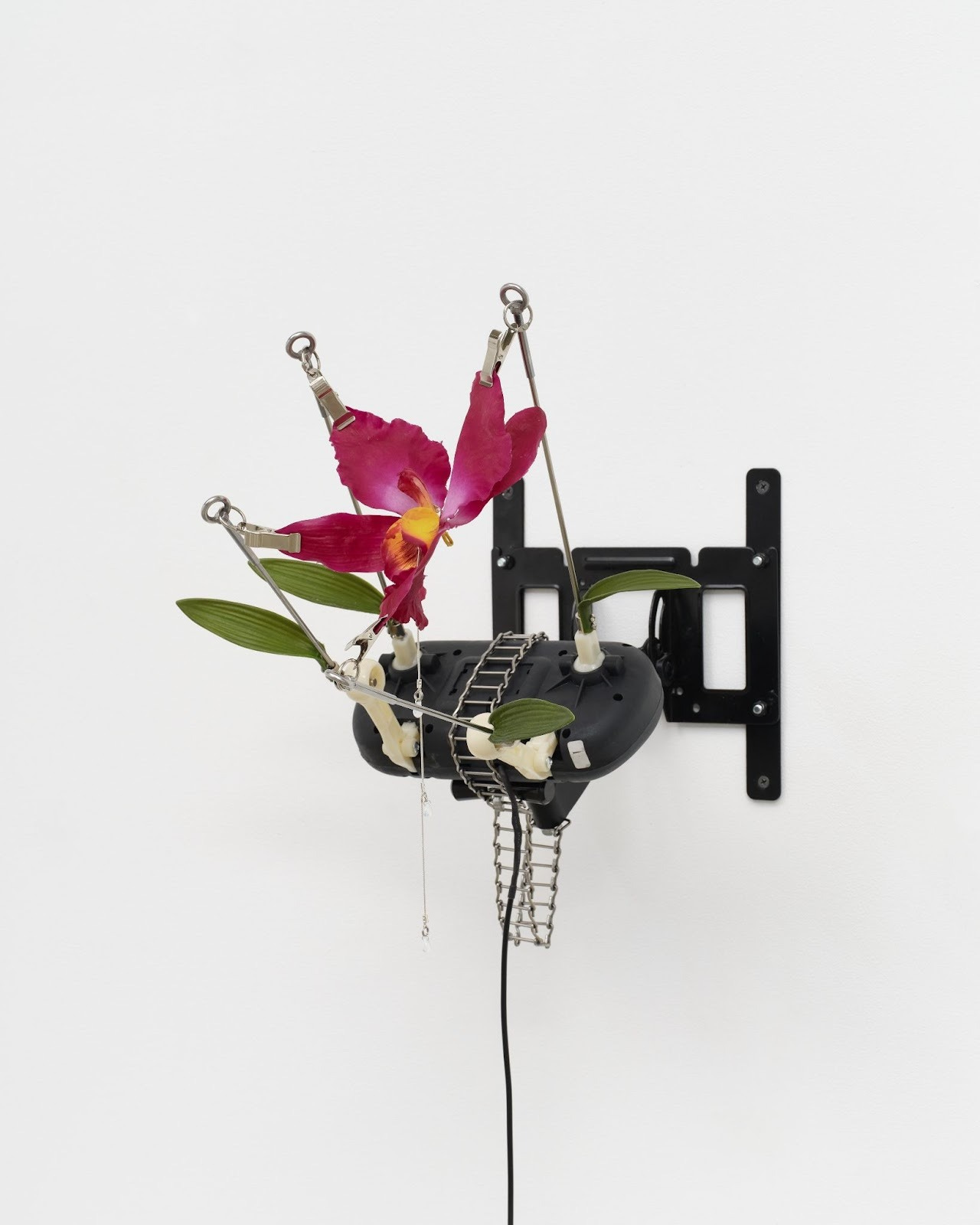
Over pizza, I discuss spirituality with Youn. She tells me her work is devotional, drawing on stories of her religious upbringing and linking them to the rituals in her practice. Self-care and repetition become ceremonies of self-worship that, in her work, also summon otherness. It’s a momentary transcendence through the self.
When looking at Youn’s sculptures, I relate to my compulsions. Scrolling, consuming, etc. My looping rhythms are made visible and art slows them down long enough to feel legible.
2.22.26 | SUNDAY
I’m in another abandoned theater tonight. This time, it’s the 1920s Variety Arts Theater where German collector Julia Stoschek stages her grand showcase What a Wonderful Word: An Audiovisual Poem. Stoschek keeps it extra German by enlisting curator Udo Kittelmann with the privilege of displaying forty works in the collection besides forty rare films throughout the five-story building. Cinema legends like Walt Disney, Luis Buñuel, Alice Guy-Blanché, and Georges Méliès are all present.
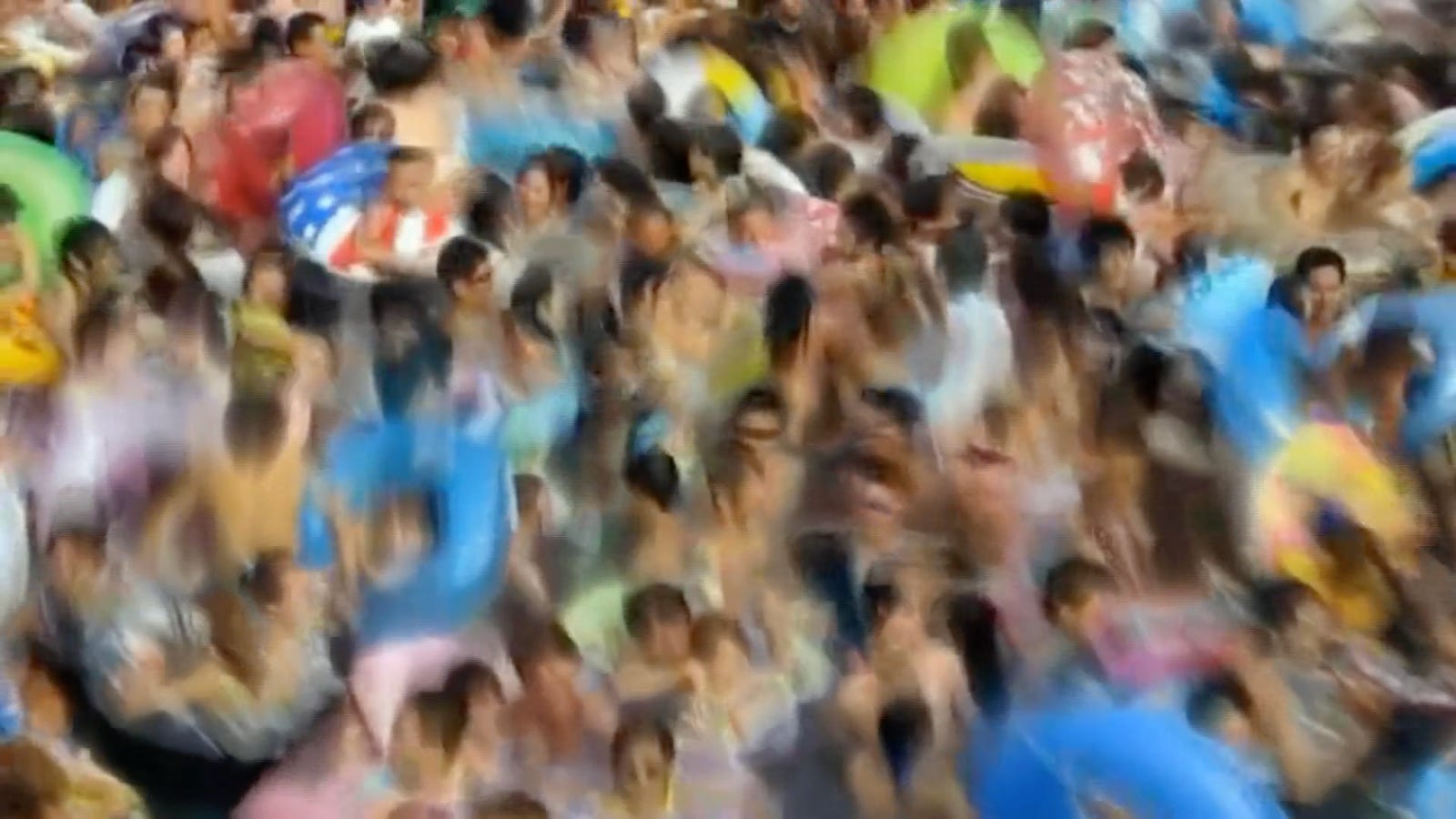
I arrive early and find the main theater bathing in the colorful saturation of Jon Raman’s video piece. In it, a swarm of AI-generated tourists merge into a wave-like composition. There’s an obscure sublimity to the work, beauty in the excesses of American consumer culture. Painters and purists doubt technology’s ability to invoke the sublime, but Rafman gets close here.
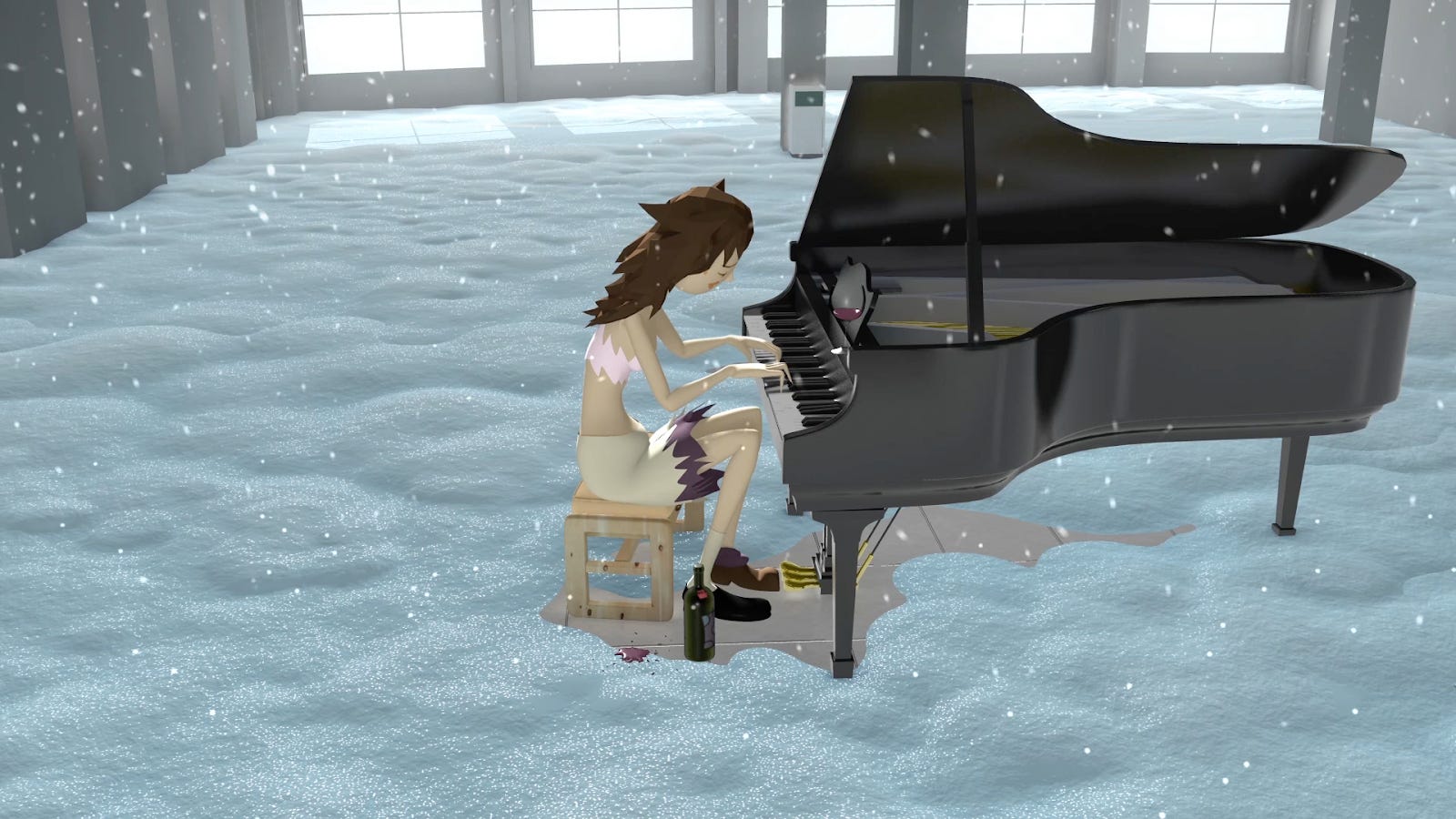
Floating in the basement, I stumble into a white, half-torn room containing Mandy’s Piano Solo in Columbine Cafeteria (2016) by Bunny Rogers. A stranger and I sit quietly under falling paper snowflakes. A 3-D animated Mandy Moore—a character from Clone High (2002)—plays a melancholic piano solo inside a simulated Columbine High School cafeteria.
I feel like I’m in a vigil. The cartoon loses its innocence once you realize it personifies adolescent trauma. I was too young during Columbine to understand the panic around it, but sitting here now, I’m confronted with the strange way that tragedy lingers in culture. This installation gives its viewer a still moment to feel through its hysteria.
I’m drifting through the haunted five floors for about four hours before settling in the basement’s Lynchian bar for a Modelo. I realize that this might be one of the best exhibitions I’ve ever seen in my life. It’s clear to me that Stoschek, like much of the internet, has a knack for reading societal collapse with subversive humour. It’s my preferred way of dealing with psychosis, as well.
Let’s just be grateful that its previous owner, Justin Bieber, didn’t convert the Neo-Venetian gem into an evangelist megachurch, as he is rumored to have once intended.
2.23.26 | MONDAY
Today is a personal day.
2.24.26 | TUESDAY
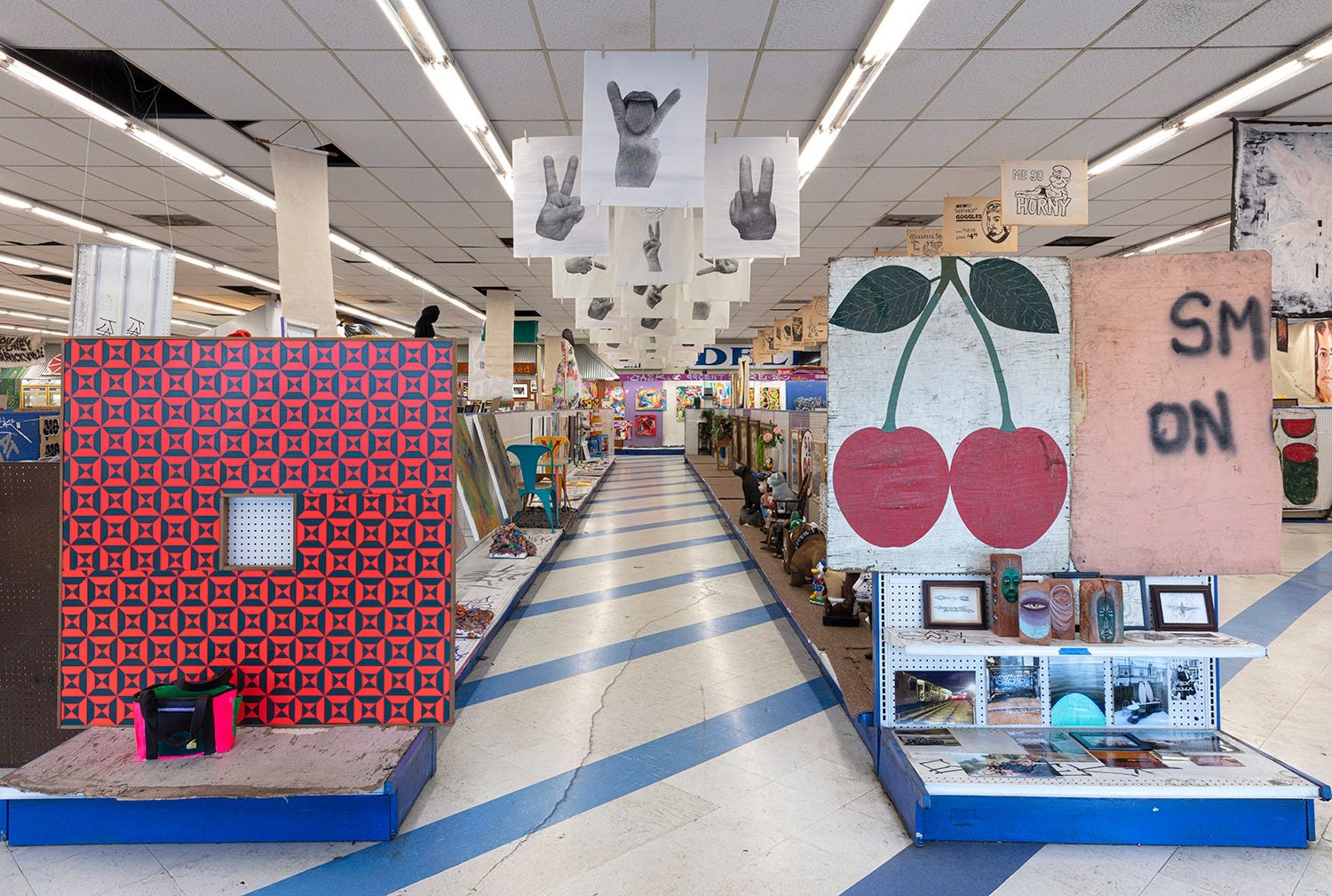
I’m parallel parking on Wilshire Boulevard to preview the new fair, Away From Desk, before realizing next door is arguably the most talked-about exhibition of the week: a showcase in an abandoned 99 Cent Store of works by Barry McGee alongside roughly two hundred local artists.
I change my plans and enter the store. I’m immediately nostalgic walking down aisles where cheap ephemera used to live, now stocked with four hundred artworks, mostly by skater-bros. Angelinos have managed to create their own makeshift art market within a bankrupt site.
For the past year, there’s been a lot of paranoia about the art market collapsing. This exhibition side-steps that failure by using community to build a culture outside the traditional art economy. It’s a demonstration that in these isolating times, camaraderie is richer than individual ambition.
Art-wise, nothing here seriously catches my eye, but I respect the irreverence. If they wanted to get real punk though, everything should be 99 cents.
2.25.26 | WEDNESDAY
I’m in Hollywood for the second-largest art fair this week, the Felix Art Fair, where 57 exhibitors occupy hotel rooms in the Roosevelt Hotel.
I feel a bit ill so I skip the pool-side cocktails and head straight to room 1109 for the SOLOS presentation. It’s a gathering of the early 2000s post-internet generation that saw online platforms as fertile grounds for artistic experimentation.
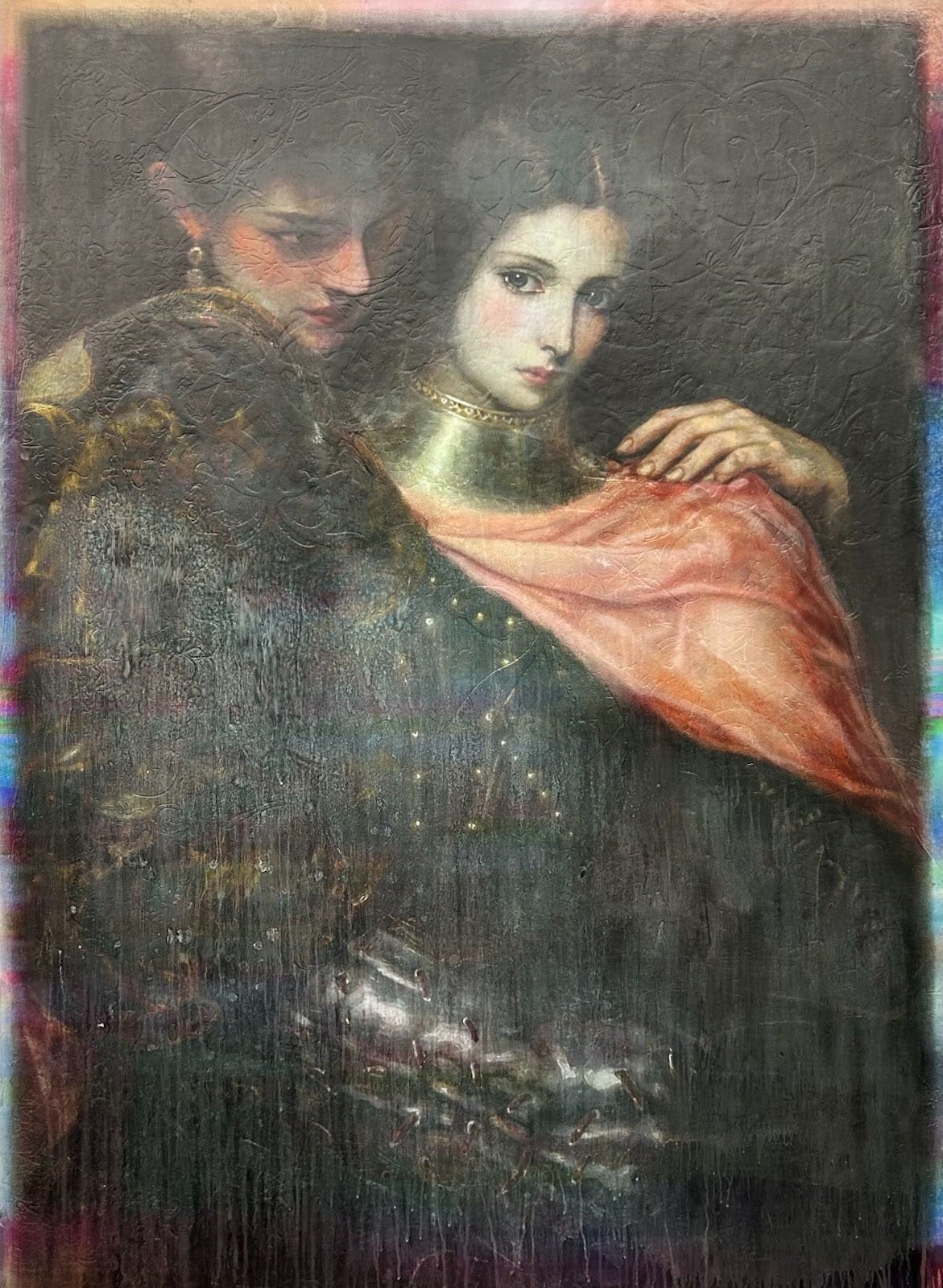
I’m barely inside before I see a closet stacked with CRT TVs playing Jon Rafman’s videos of social chaos. Deeper in the hotel room, Petra Cortright’s Photoshop-made abstract landscapes look almost painterly elegant. I’m most transfixed on wallworks in the back, where Parker Ito’s inkjet-portraits of gender-swapped medieval lovers stare through you.
This is a room of artists responsible for shaping the aesthetics of today. Through AI, Photoshop, and digital reproductions methods, they have rendered artificial beauty to let you contemplate its validity. It’s the media of the milieu, and one of the more interesting booths in this year’s art fair circuit.
2.26 | THURSDAY
It is Frieze LA’s VIP Preview day, and I wake up with pink eye in both eyes. I turn off my phone and go back to bed.
2.27 | FRIDAY
There’s still redness in my eyes that makes me look like your average LA stoner.
Despite this, I head to Santa Monica for Post-Fair. It’s a newer, may I say chic, fair held in an abandoned postal office not far from Frieze LA.
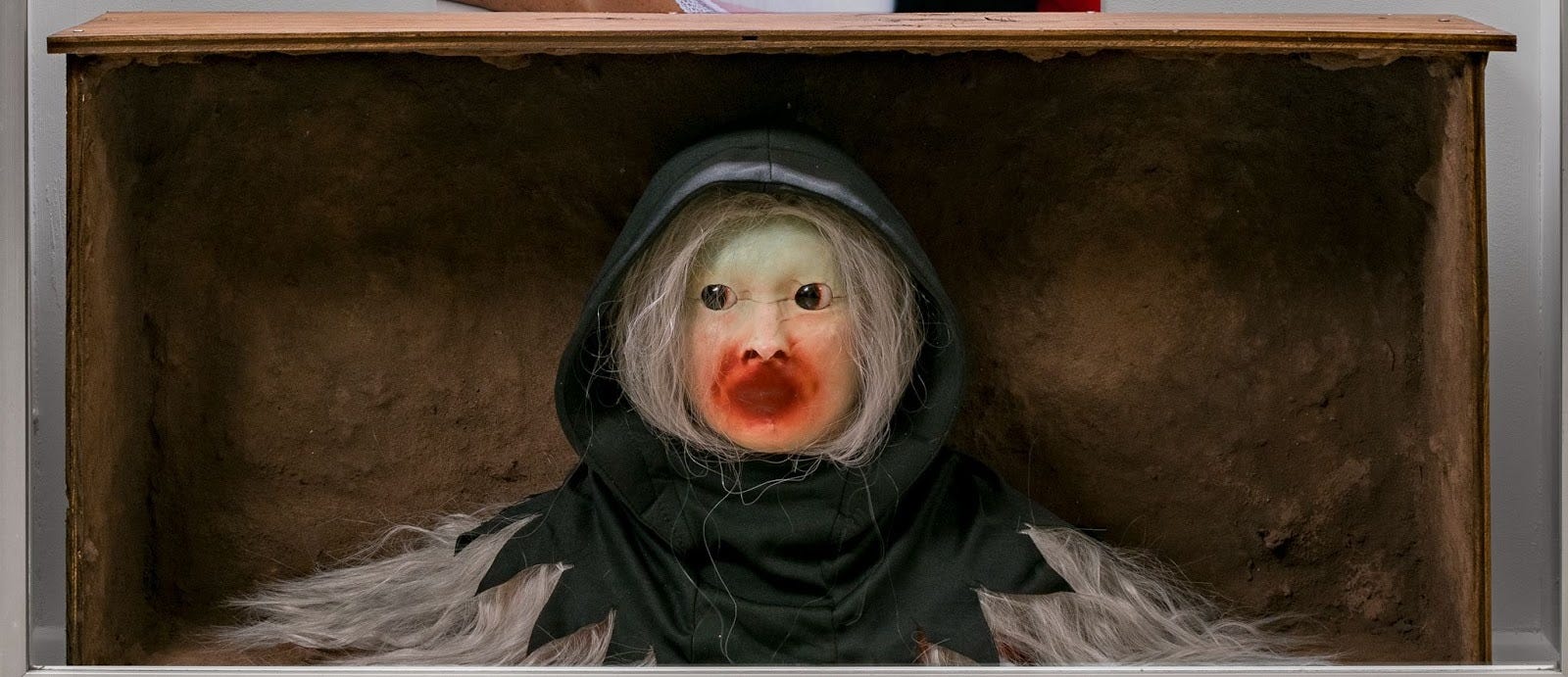
Walking around, a monstrous scenographic installation by Isabelle Francis McGuire makes me do a 360. Presented by the gallery Bel Ami, I get up-close-and-personal to witches and burial grounds that exhibit female demonization. A press release nearby clarifies that this monstrosity reflects how women are currently depicted in public campaigns. I find using horror in contemporary art one of the most effective ways to manifest fears hiding in the subconscious. In McGuire’s case, her installation asks us to think through our projections rendering womanhood as diabolical.
I leave Santa Monica and check-in to the five-star Cameo Beverley Hills Hotel.
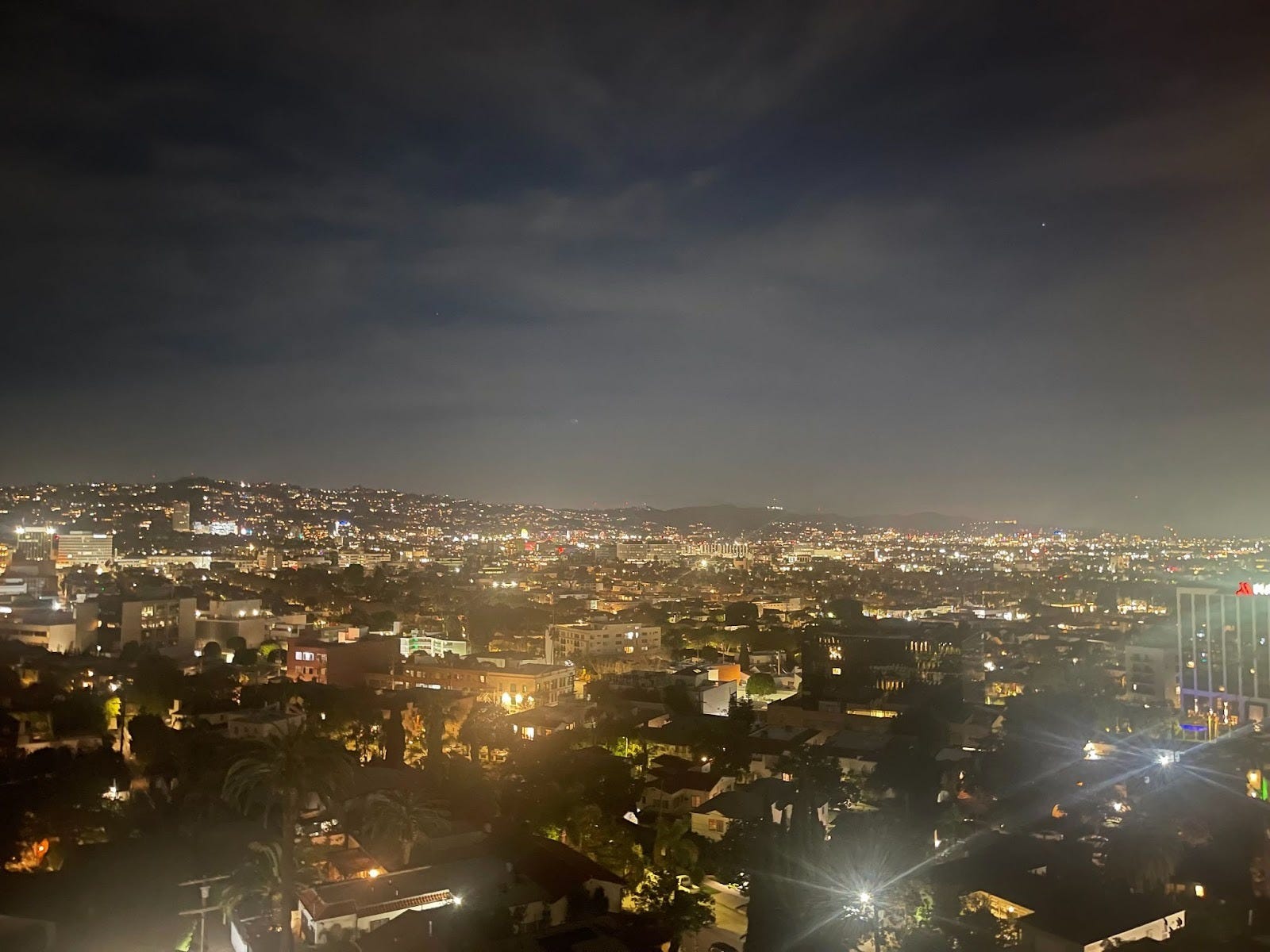
I’m gifted a double-balcony view of the Hollywood vista that could make you religious. My eyes have healed by now.
2.28 | SATURDAY
I wake up in the morning resurrected by the powers of high-luxury.
It’s a great way to start my work at Frieze LA, where I’ll be leading tours for the weekend. Frieze is the week’s anchor, attracting an international posse of collectors, artists, art dealers, sycophants. Tours help me trim the fat, and pin-point the exhibitors showing something worth discussing.
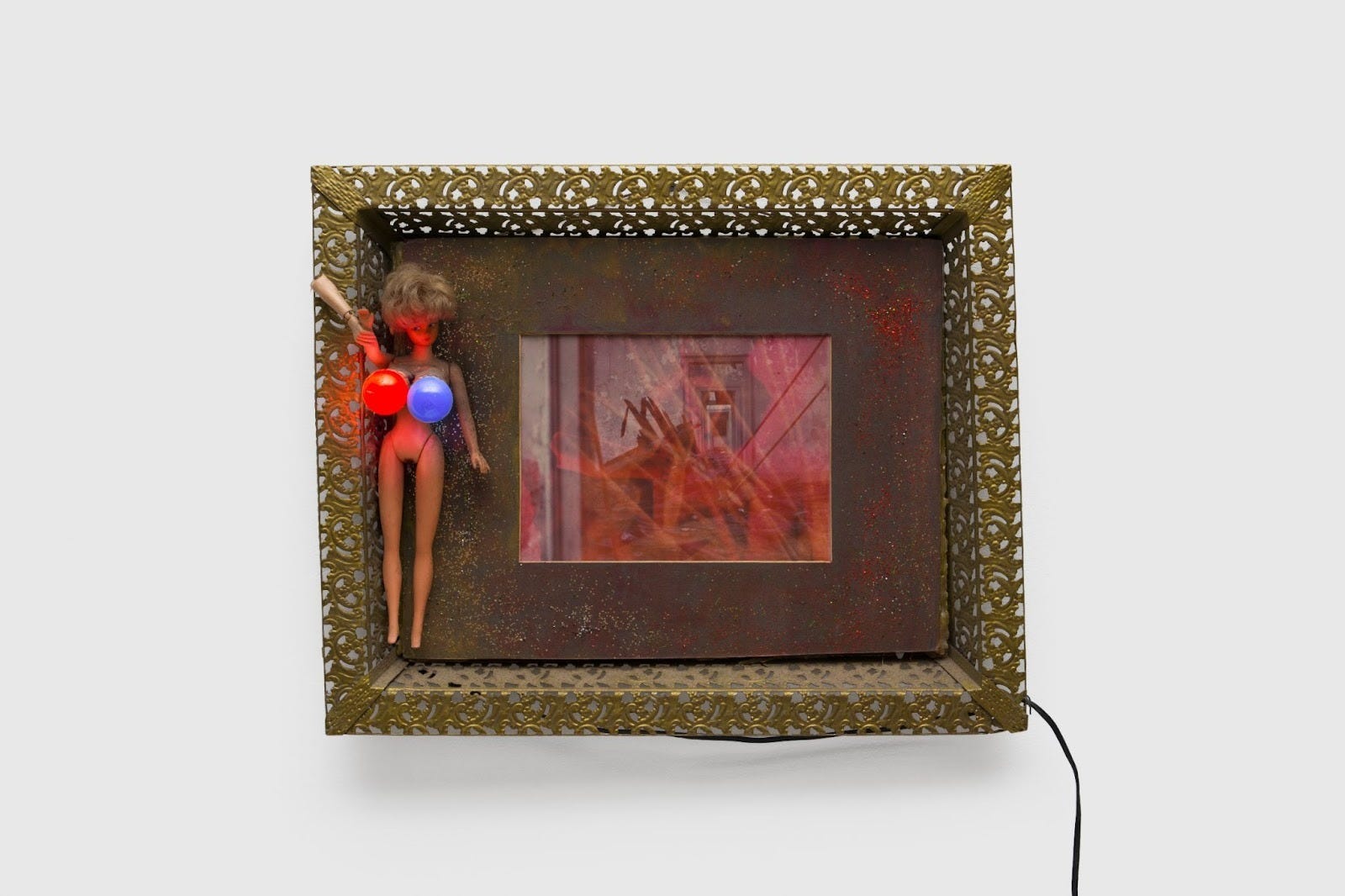
I zig-zag through the fair’s white labyrinth, landing at Gordon Robichaux to look at Uzi Parnes’s tasteful 1980s assemblages. Goopy glitter and glued-on trash coat photographs of gay Manhattan pier life that strikes me as playfully queer. Talking to my groups, I relate Parne’s discarded materials to the outcased homosexual in the 80s. It is history told through kitsch and proof that aesthetics can be great teachers.
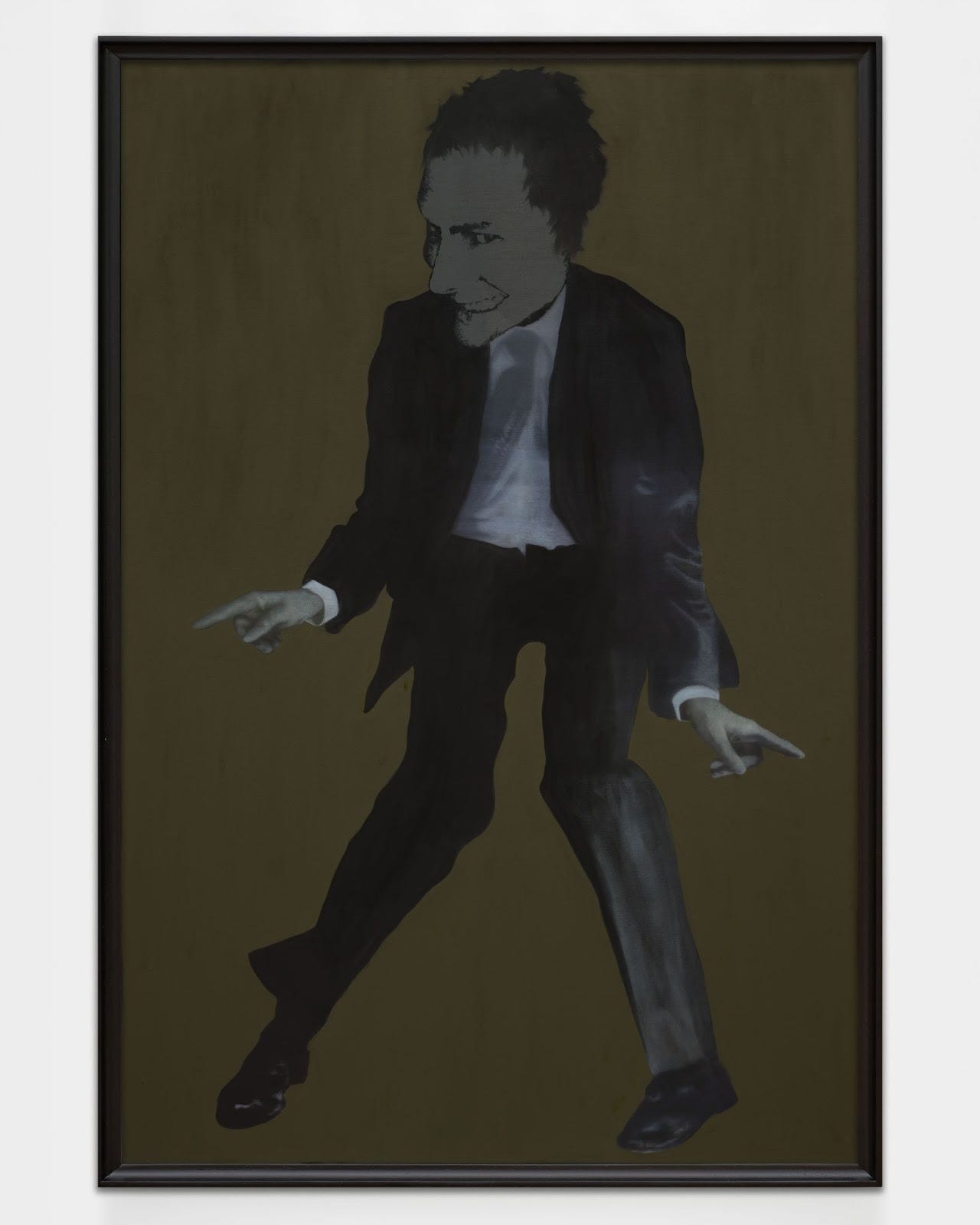
For excellent contemporary painting, I take people to Hoffman Donahue. With just oil and linen, Adam Alessi manages to possess me. He paints a nightmarish cast of characters that feel uncannily familiar. They emerge from the subconscious, as if snarkily winking from discrete thin veils that narrowly separate their shadow world from our own.
A lot of things lack human touch these days, and I use Alessi’s paintings to confirm that there’s something phenomenal about things that come from the hand rather than the machine.
3.1 | SUNDAY
It’s the last day of Frieze and of the art week, in general. I arrive in Santa Monica for my swan song.
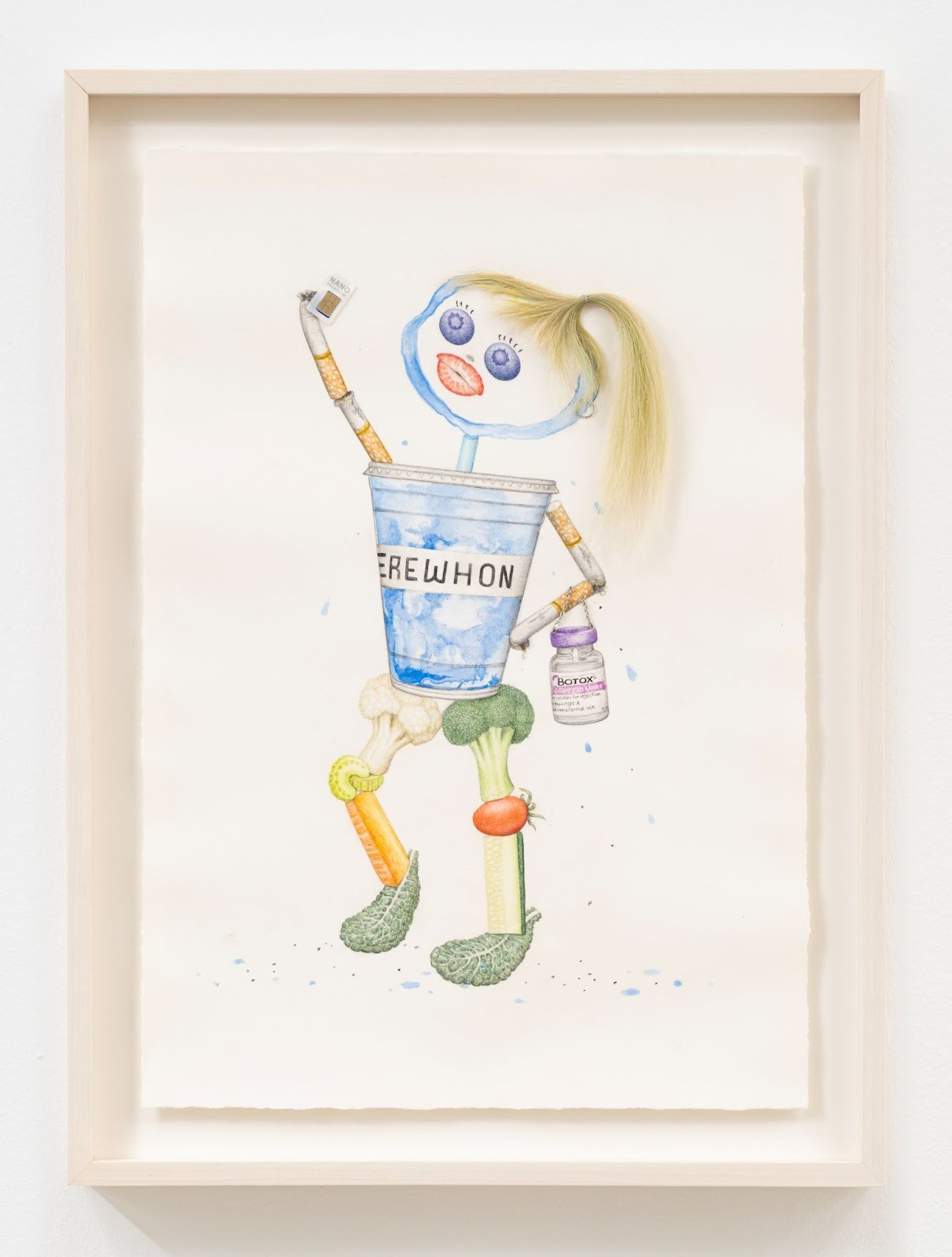
During some free time between tours today, I hear the trumpets of cool calling from the Lomex booth and notice a new work from Aurel Schmidt’s Trash Dolls (2026) on display.
I stare at an Angelino Frankenstein made of urban detritus and self-referential LA mythology. It’s like Rachel Sennot’s I LOVE LA (2025) told through draftsmanship. This echoes Stephanie H. Shih’s Erewhon juice ceramics at the Berggruen booth, where both artists parody a Los Angeles luxury consumer culture that is more pathological than healthy. It’s a helpful visual guide of what the LA subconscious currently looks like.
3.2 | MONDAY
I realize I have a later flight, which means I’m allowed one final exhibition.
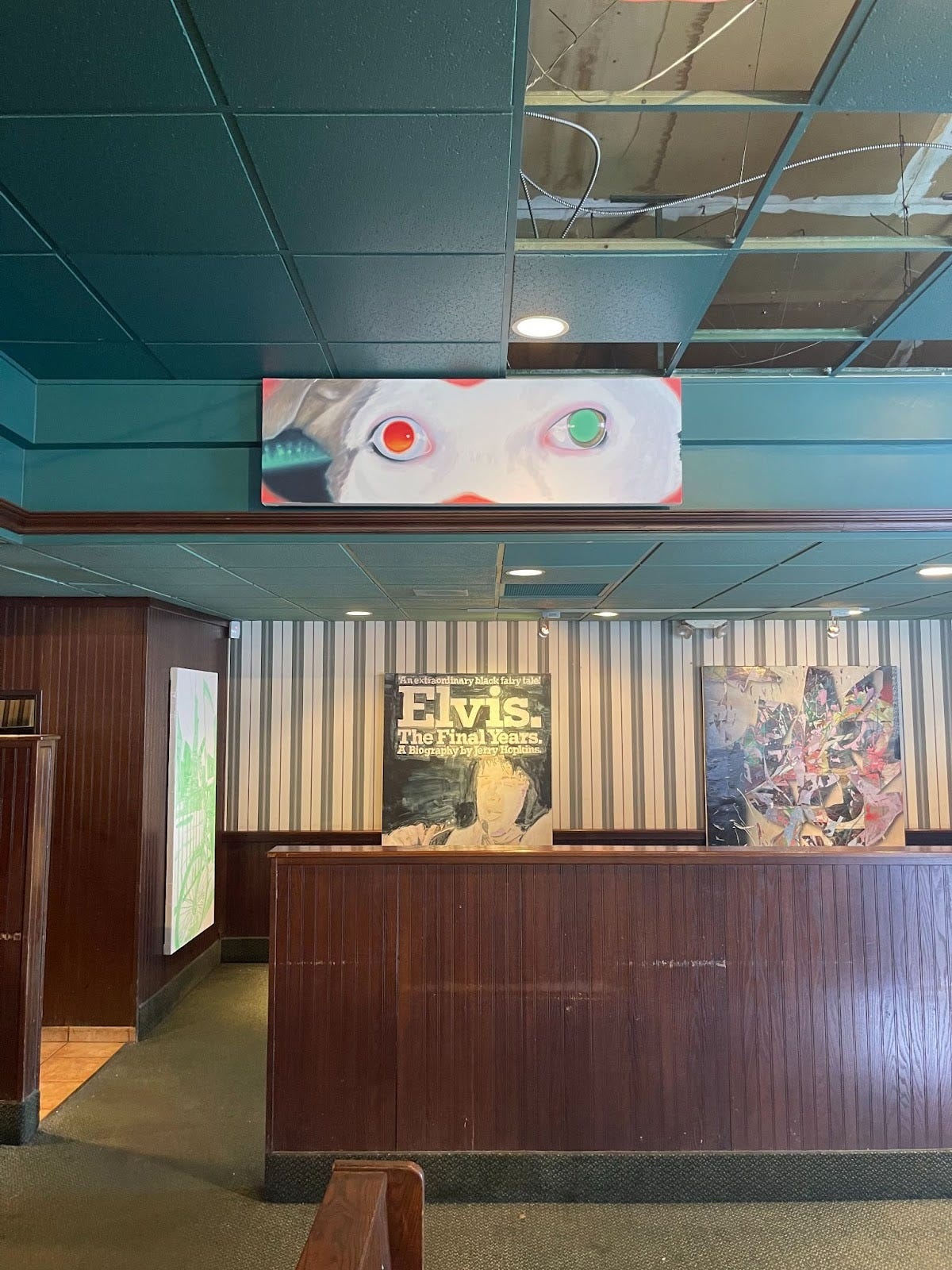
I’m going to Sizzler. Curated by Grant Edward Tyler, it’s another vacant-building takeover that directly neighbors 99 Cent Store and the Online Wilshire HQ where the Away From Home fair was hosted. What once was a blue-collar restaurant chain now serves up some of the most important emerging and mid-career artists in the LA region.
I walk around the restaurant, finding paintings and sculptures in freezers, kitchens, booths, hallways, and standing walls. Some tables even double as canvases. I accidentally mistake colorful smudges as residue when they were really ad hoc paintings from Lauren Quin and Juliana Halpert.
When you pack so much vision into one room, you accept a certain chaos that comes with it. At one point, Jon Rafman shows up and starts shooting an impromptu music video with a cult-favorite Spanish artist (not Rosalía). I’m asked to be in it.
***
Heading to LAX, I watch one last pink-and-blue sunset feeling optimistic.
There was an exorcism in LA’s cultural landscape this year. This local art scene succeeded the minute it stopped inventing an institutional center, and acknowledged the spirit within its sprawling margins. In threshold spaces, artworks reveal their poetics through atmosphere rather than overexplanation. It’s art’s true role: to show, not tell.
You should care about contemporary art because it embodies a moment. An artwork, as I experienced, helps you grasp reality and the invisible structures that prey on you. It’s a noble chance to reclaim the mind from the constant penetration of online-pilled content that turns our generation into complicit consumers rather than critical thinkers.
Great contemporary art demystifies the codes of the universe, making them perceivable. Whether that knowledge is painful or pleasurable depends on the social climate. At the very least, it makes you aware of the forces quietly shaping your everyday life.
-
Bryan Munguia is a Los Angeles–born, London-based independent curator exploring phenomenology, theatricality, and technology through conceptual exhibition-making.