

The Hyperreal Photography of Brent McKeever
The Viral Image Index: 02
The Viral Image Index is a Welcome Magazine interview series by Claire Koron Elat, which investigates viral images through conversations with creatives who have a track record of creating them. This is the second installment.
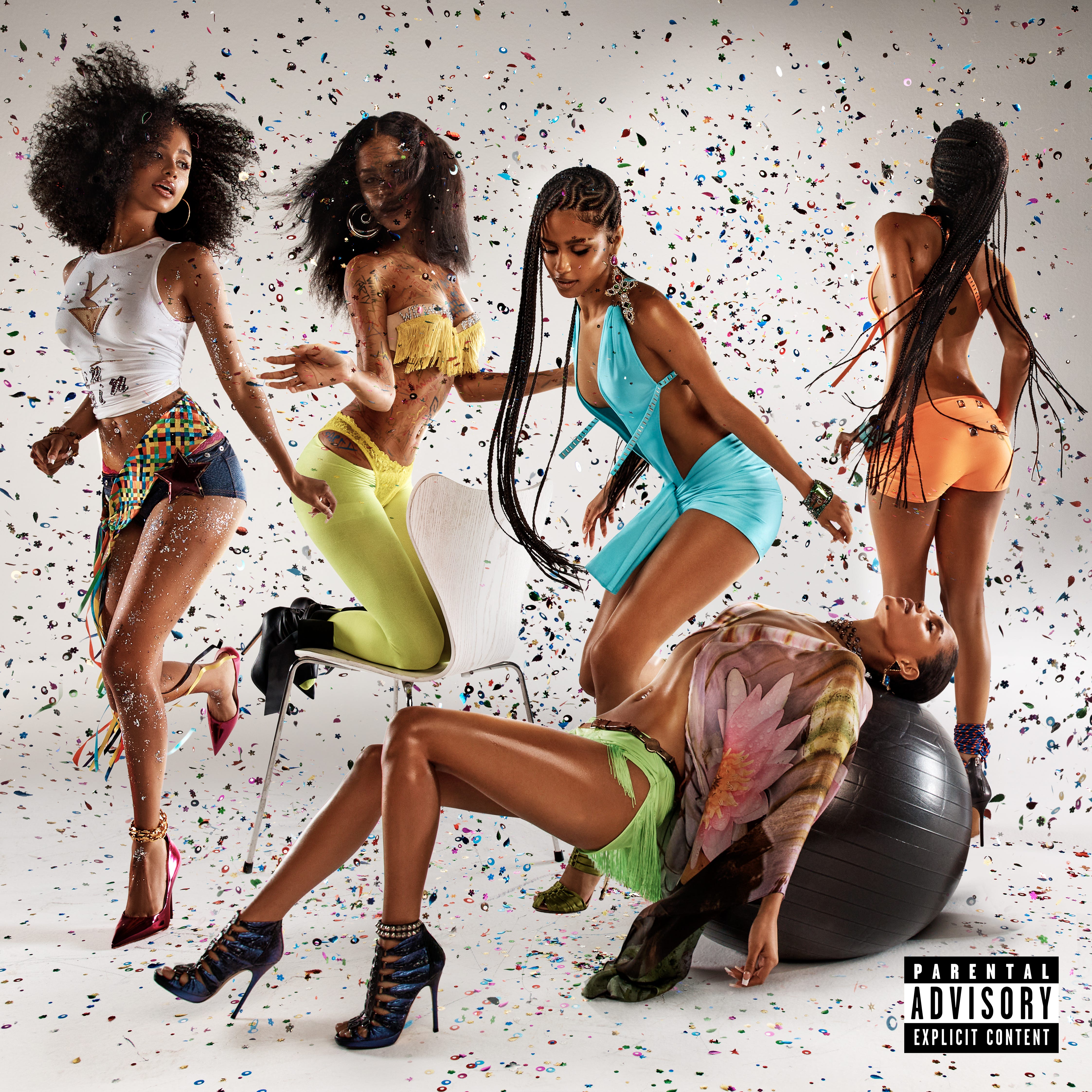
Virality today is often understood as a byproduct of fame or reach. My first installment of “The Viral Image Index” with Gadir Rajab, however, suggested something more unstable at work. Images circulate not because they are attached to power, but because they activate a precise tension—between visibility and voyeurism, authenticity and performance, intention and projection. Meaning no longer fixes itself to the image, it mutates as the image moves.
In this sense, virality is less about recognition than resonance: an image’s ability to invite repetition, misreading, and desire without exhausting itself. It seems that viral images function less as messages than as interfaces. They do not transmit stable meaning; they invite the prosumer to participate, to screenshot, to comment, to repost. Their power lies in their openness: an image becomes viral not by explaining itself, but by leaving something unresolved, allowing viewers to project themselves into it. Circulation amplifies this instability.
It is this very tension—the subtle slippage of an image—that Brent McKeever is drawn toward. And McKeever does not look at images casually. He is possessed by them. For McKeever, a single image can hold the emotional weight of an entire film—suspended, climactic, and irreversible. Where cinema dissolves into ephemerality, the photograph remains.
Growing up in Malibu, McKeever absorbed the allure of early 2000s Americana while remaining excluded from its privileges. His work reflects that alienation, turning envy, memory, and longing into vivid, performative images. Faces, bodies, and gestures become vessels less for their subjects than for the artist himself. A successful image, he suggests, haunts the viewer so deeply it renders the original subject secondary.
McKeever’s hands, the camera becomes a weaponized extension of desire. His portraits stage intimacy, fantasy, and projection simultaneously, collapsing lived experience into heightened, hyperreal tableaux that recall Jean Baudrillard’s concept of the simulation: reality intensified, exaggerated, and destabilized until it becomes more real than real.
Rajab’s approach to making viral images also leans on instability, but where the stylist articulated this instability as something sensed—an intuitive awareness sharpened by online exposure—Brent McKeever operationalizes it. He does not simply anticipate circulation; he designs for it. His images are constructed to withstand misreading, to remain legible even as their meaning shifts. If Rajab resists the compulsion to chase virality, McKeever accepts its conditions and pushes them to an extreme.
Warhol predicted celebrity, and Koons anticipated advertising. McKeever identifies the next frontier—the self itself, fully commodified—resulting in an economy where visibility is a tool, and withdrawal a strategy.
It is precisely McKeever’s operationalization of contemporary culture’s obsession with virality that made me want to talk to him for this installment. In conversation, the photographer reflects on weaponized photography, the commodified self, and why his image of Ice Spice in a chair went viral—all while holding one question at the center: What makes an image go viral?
Claire Koron Elat: Your work feels quite cinematic. When you construct an image, how do you build an emotional narrative? Does today’s context in which we consume thousands of images every day affect this?
Brent McKeever: My eyes and my ears are the reason why I keep living. Cinema is deeply informative to my practice. There’s movies where I see a shot, screenshot it and hold onto it because it’s done more for me in a visual sense than the whole movie has. And whereas I forget the content of most of the movies I watch—starting with the visuals—I don’t forget a picture’s plot or content, which honestly does the same thing on a soul level, maybe more so, than the whole two to three hour fiasco.
I’ve heard Carrie Mae Weems say that she learned more about her work from others’ descriptions than from her own interpretation. And that’s kind of how I feel about this question. For me, I want things to feel close to an experience I’ve seen directly, or at least something that exists within my mental faculty, like my fantasy. Like a direct blip from my eyes. So I can’t really say that there’s two or three specific things I do that create the effect you’re talking about. But I will say that, in my practice now, it comes down to light, color, texture, and an openness to different states of being while creating, particularly creating a split between when I take the photo and when I sit to edit it.
I see the picture I take with the camera like a sketch in a coloring book. The outline everyone got in the book is there, but now it’s time to make it mine, to make it one of one. Especially now, in a digital age where raw images are fetishized. If you look at internet photography culture, like Tumblr or similar spaces, it’s all raw flash or straight-from-import imagery. It’s cool, but I’ve come to the conclusion that, sometimes, if not most times, the image should serve as a blank canvas that you push further.
CKE: Do you use specific references, like from certain films? Some artists and photographers heavily draw references from existing images.
BMK: I definitely am possessed by images and have a sort of encyclopedic memory of everything I’ve seen. I have found that when I go into shooting with an open heart and mind, meaning no concrete expectations other than greatness, I surprise myself and paradoxically get the thing I wanted. It gets boring chasing something that’s already been seen. But playing with existing visual codes and symbols is fun, and that happens involuntarily.
CKE: Your visual world seems rooted in nostalgia—90s or 2000s Americana dreaminess. That aesthetic has also become very trendy online. How do you feel about certain visual worlds suddenly becoming viral or trending?
BMK: The idea of virality is subjective—everyone’s algorithm is different. You might see one aesthetic dominating on one phone and something completely different on another.
I think these things are just wells of ungranted wishes. I was born in 2001, and I grew up seeing the allure and glamorization of the self, especially in Malibu. As a formerly fat, black queer child, outside what was considered the norm (the black population of Malibu is less than 0.9%), I absorbed my surroundings deeply. That environment shaped my early work, which, although bright in color, is dark in its substance.
The 2000s-aligned imagery you’re referencing was me trying to simulate how that world felt as a yearning outsider-insider hybrid, emphasizing the idea of lived memory by using hyperbolized colors, props, locations, and girls I saw growing up. I envied them but also felt camaraderie. It was that classic feeling of not knowing whether you want to be someone or be friends with them. Luckily I don’t want either now. In photography, I value an acknowledgement of the time one has lived in. Photography is about looking at the present, but for the future
CKE: What made you envy them?
BMK: They were given space by society to exert confidence unchallenged. They were allowed to embody certain characters deemed acceptable by the patriarchy. I didn’t want much. I just wanted to be hot, sexy, a bimbo—even though that was a construction in my head, a way to escape my own reality.
I felt close to their world but unable to fully reach it, so I began to use these girls and people as vessels for the imagined “I” which I knew would reach people in a way that using my likeliness otherwise could not. That tension makes my work both reality and fantasy.
I’m inspired by Baudrillard’s idea of the hyperreal—the real destabilized by experiences that feel more real than reality itself. Today, images need to be hyperreal and pulsing, whether raw or aestheticized, minimal or maximal. In the same vein, I’m invested in investigating and subsequently destabilizing what is valued as perfect.
CKE: What made you translate that feeling into photography?
BMK: I once wrote about photography as an inherently aggressive act—shooting, capturing —like hunting. When I’m shooting, I lose myself. The camera becomes that weapon-like extension of me.
I wanted to show the world how I saw it, but I needed an outlet, and when you don’t see your vision reflected in the world, that drives you. There’s a responsibility to carry on the pictorial tradition. At first, it wasn’t that deep. I just thought it was cool and rare, even though it wasn’t. Different impulses drove different phases of my work, and now I feel like I’m on the edge of something new.
CKE: Your portraits feel intimate and simultaneously staged. Is intimacy a technical skill?
BMK: Truth can be really lame. Sincerity and truth are different things. My fantasy is sincere. So I’m prioritizing sincerity, but just like you can get a shitty apology text from a friend or lover who is being sincere, you can get a shitty but sincere work of art from someone, so there’s always a line you need to be aware of.
Staged intimacy is really interesting when done right. It requires technical choices—lighting, color, framing. Sometimes a phone image is more intimate than a full lighting setup. Look at Jeff Wall or Philip Lorca-Dicorcia. These are lives dedicated to performing reality as fantasy, which isn’t unlike most modes (that I like) of art making. Despite working in the only mode of representation that can immediately transfigure physical reality, I feel most connected to what I do in the illusory.
What inspires me most now are images that feel accidental, like they weren’t meant to be seen. There’s envy in that, too. Once images are circulated endlessly, their emotional value dries out. It makes you wonder about the life lived behind the image.
CKE: What makes a good image for you?
BMK: It’s instinctual. I can’t define it, just like I can’t define good art. In terms of virality, a good image sparks a reaction, even a negative one. The “Poot Lovato” image is a perfect example—terrible for the subject, but an incredible image culturally. I know that picture is edited, which is part of the point. A good image, in portraiture at least, should haunt its subject so intensely that it effectively renders the original (the living subject) unnecessary.
A good viral image intercepts reality and warps it to a breaking point. Visually, we’re turning in on ourselves, peeling back layers, until we’ve come back together as a whole, but inside out. We’re pushing the definition of what an image even is.
In my work, a good image happens when, despite being a photo of something other than me, I still feel myself in it. I’m selfish in my approach to portraiture, in that way. I like perceived genuine, albeit staged expressions of that particular subject, which by the time I’m done editing are really just projections of myself onto another. I want to see myself in pictures, then I’ll be happy. And I don’t mean like a black gay kid, I mean my soul. I’m never not trying towards that.
CKE: Did you ever know an image would go viral before publishing it?
BMK: I knew the one of Ice Spice in a chair hitting her “emote” would be something, but I didn’t know it would be viral in the way that people thought I should be condemned for not making her demure, like she had not been shaking it for the masses as a primary source of marketing, which I love. I think people’s negative reactions [had] more to do with their own fucked up conceptions of parasocial idolatry. It was a fun sort of social experiment because, despite the fact that the picture showed her doing what, in large part, got her to where she was, when that action was elevated to an editorial image meant for public relations, it was polarizing.
Most viral images from the 90s and 2000s you see in your feeds were originally physical—printed—and are now presented on your screen as scanned media. My work from 2020–2023 was printed and scanned on basic office paper, and in a way, masquerading as another one of these images through that archival feel. People responded to the texture and nostalgic sensibility. Now, that effect feels less effective because we’ve seen everything. We’re running out of content to scan. Images go viral irrationally—sometimes because they’re perceived as bad. It mirrors pop culture cycles. People want things pushed to the edge so something new can be born.
The internet economy is hallucinatory and climactic. You can either consume endlessly or disengage completely. Both are numbing in different ways. Life isn’t meant to be preserved perfectly. Sometimes you just have to let yourself do whatever you want.
If Warhol predicted celebrities and Koons predicted advertising, then what’s next? I think the self is the next fully commodified thing. Personal narrative has never been more valuable. People don’t just want to hear about your life—they want to see your archives, your old posts, your Snapchats. The packaged self is now in every industry. The work should speak on its own, but everything depends on how the self is displayed—even if that means hiding. And I love hiding. Mystery still matters to me.
-


🙏🏿✨️
Great, great photography and a great well written piece!!