


Today, most physical artworks are made with virtual distribution in mind. That’s why they look like that. Material things designed to travel digitally have become a very tired aesthetic, a defining trait of which is a lack of intricacy. The painstaking attention to detail and labor-intensive focus that, say, Albrecht Dürer brought to an engraving are foreign concepts to many of today’s artists, especially digital ones.
So it is notable that Henry Tuori, discoverable on Instagram as @fullmetalgallery, names Dürer as a primary inspiration. One look at Tuori’s work and this inspiration’s imprint is clear. An archaic aesthetic brought into crystal sharp relief, a quasi-medievalism ornamented with nods to 2000s fashion and modern paranoia.
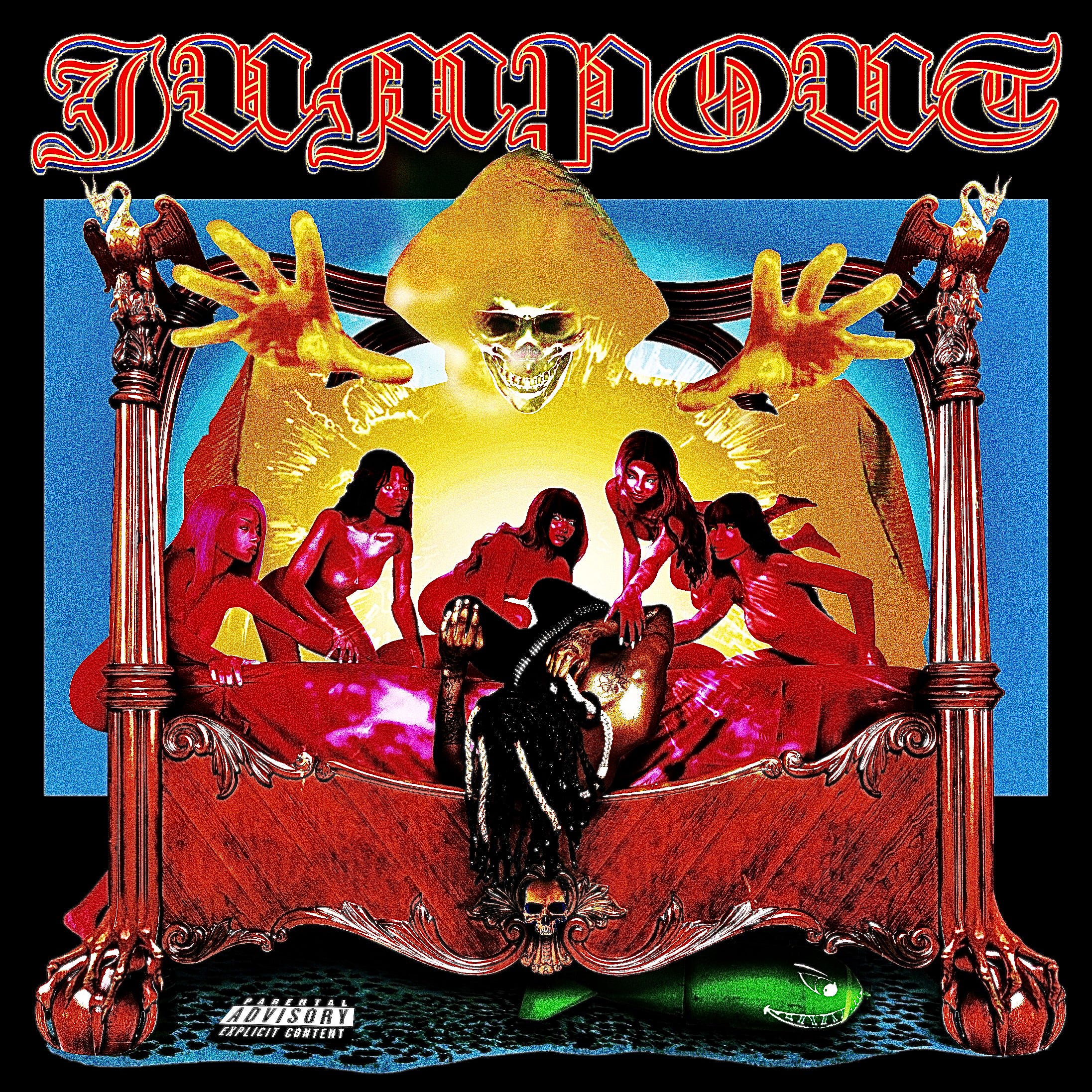
You might not know Henry Tuori’s name but there is a good chance you’ve seen his work. He made Osamason’s Jump Out album cover, and Fakemink has modeled his clothes. He is a highly sought after graphic designer and part of an underground-adjacent creative circle that includes past Welcome Magazine interviewee 1199.
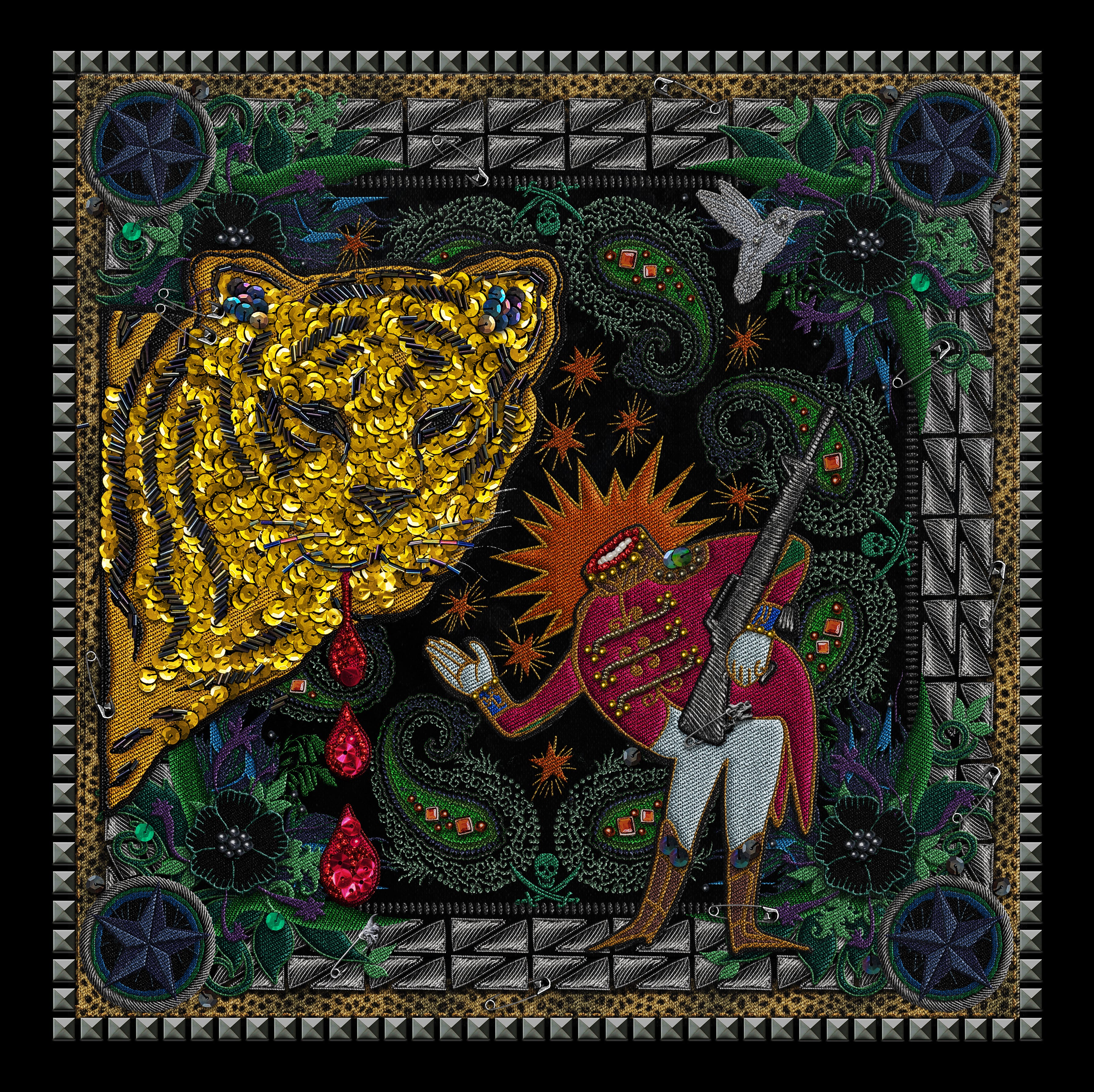
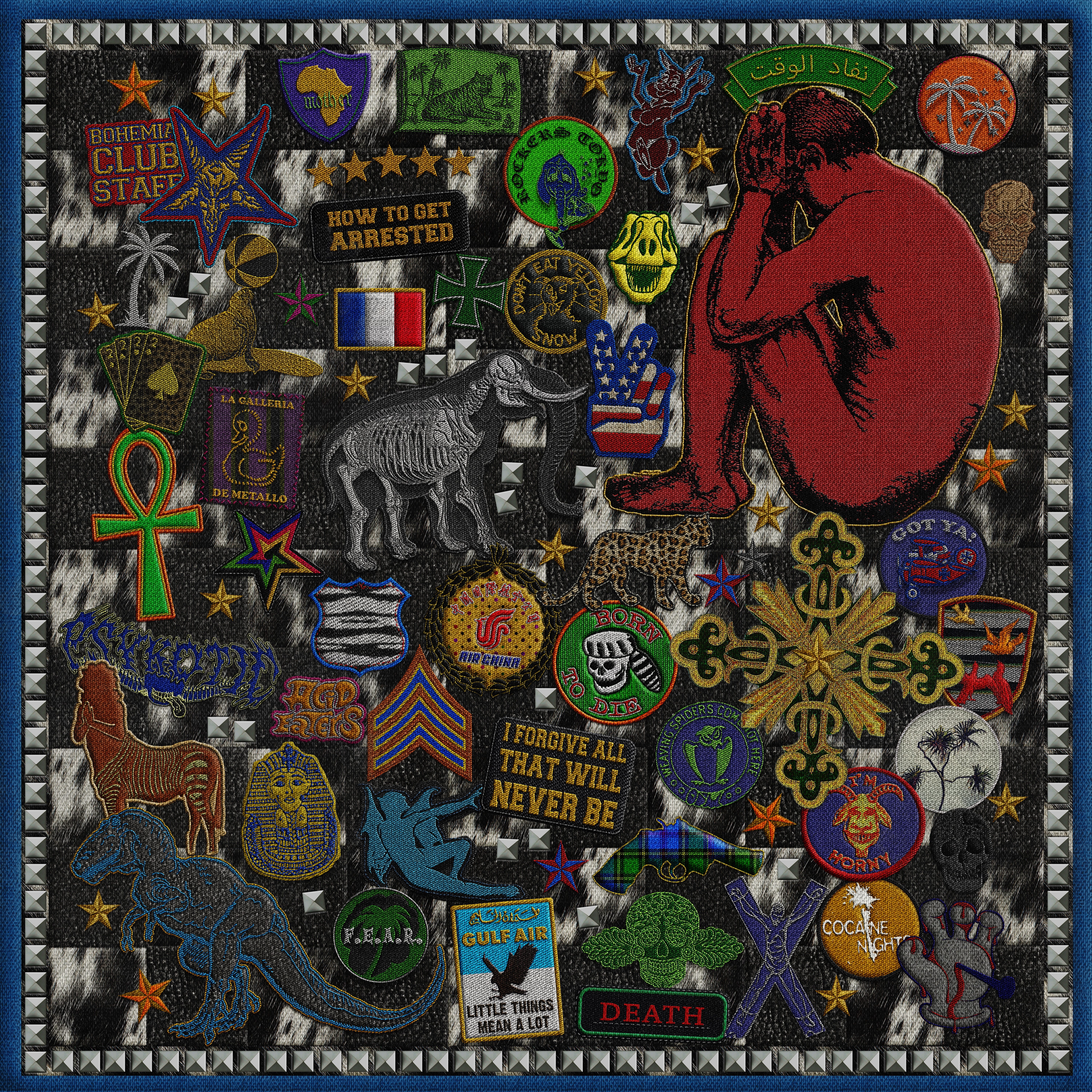
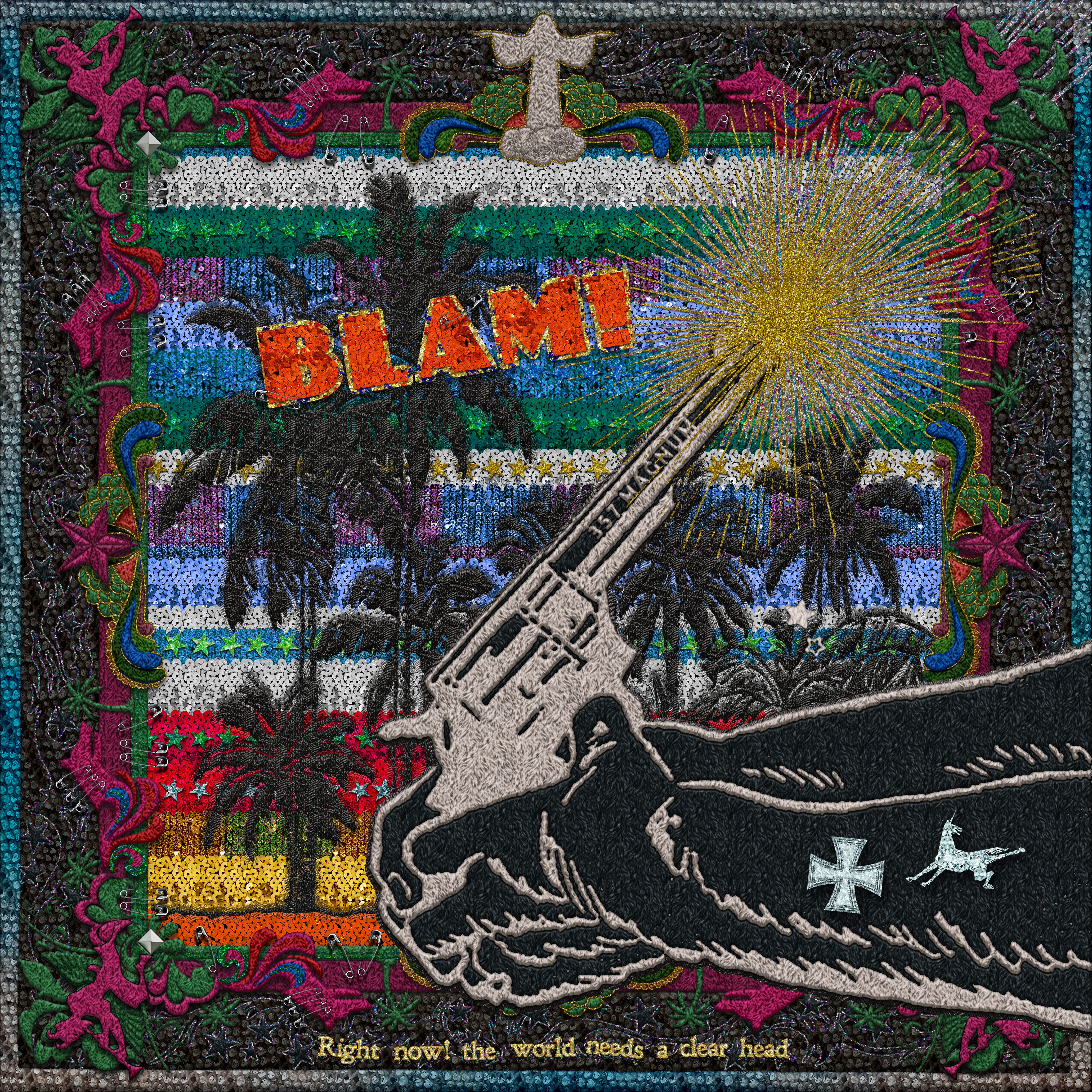
But it is in his independent digital art that Tuori’s talent is most apparent. His digital tapestries are the product of an inimitable signature technique that mimics physical embroidery. In Tuori’s work, instead of the internet swallowing the world, we see a world emerge from virtual tools. As the fine art space continues to grapple with its post Post-Internet relationship to the digital, artists like Tuori have the potential to typify a new aesthetic era.
We spoke to Tuori about his proprietary technique, his habit of reading history textbooks, how an artist should approach references in the age of unlimited availability, and much more. Read on.
-
Welcome: What’s your story?
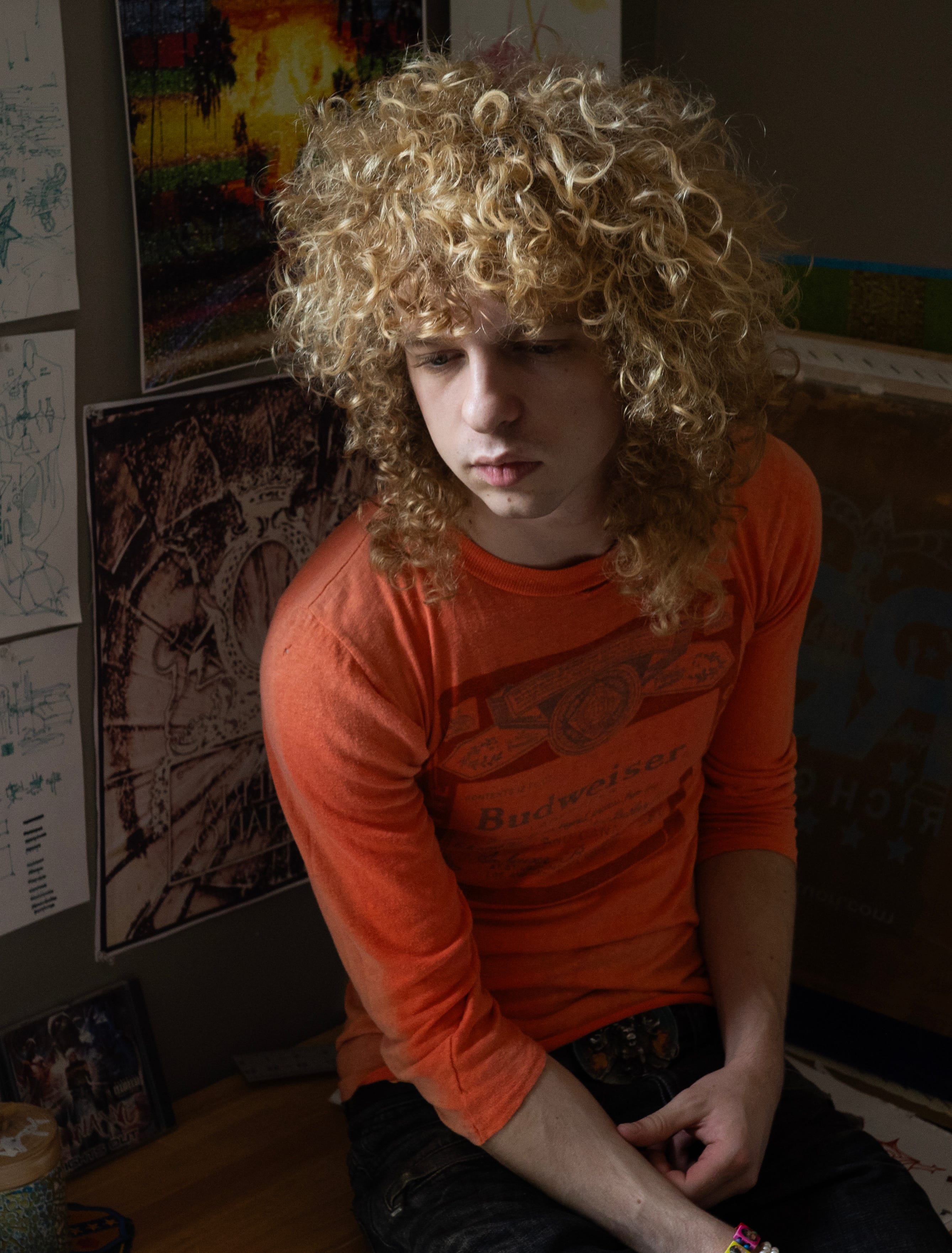
Henry Tuori: I’m from upstate New York. As a kid I wasn’t online. I naturally gravitated towards drawing. I’d get LEGO catalogs in the mail and draw huge scenes with the sets I wanted. I would also pore over history books. One in particular I had was military themed, uniforms and battle scenes, and I would redraw uniforms from the book. I was really infatuated with that stuff.
Welcome: How’d you get into digital art?
Henry Tuori: Later in middle school, when I did get online, I’d do YouTube banners and logos for like 50-follower clan players on Twitter. That’s how I got on Photoshop. I had a cracked Photoshop license, Photoshop 6 or something. I fell in love with it and realized I wanted to pursue art as seriously as I could.
W: Your first Instagram post is from 2020. It’s a t-shirt with a famous Lil Wayne chain screen printed on it. When did you start messing around with screen printing and clothes?
HT: That t-shirt was some shitty DTF heat transfer, not even screen print. Shortly after gaming I got into skating and fashion, starting with Supreme and Palace. Supreme was such a great medium for someone my age. It introduced me to artists like Raymond Pettibon and H.R. Giger. I’d download pictures of Supreme t-shirts, wipe the graphics in Photoshop, and design onto the shirts. I made hundreds of designs in high school for a brand I wanted to start but I never showed or told anyone. In retrospect, it was a good decision.
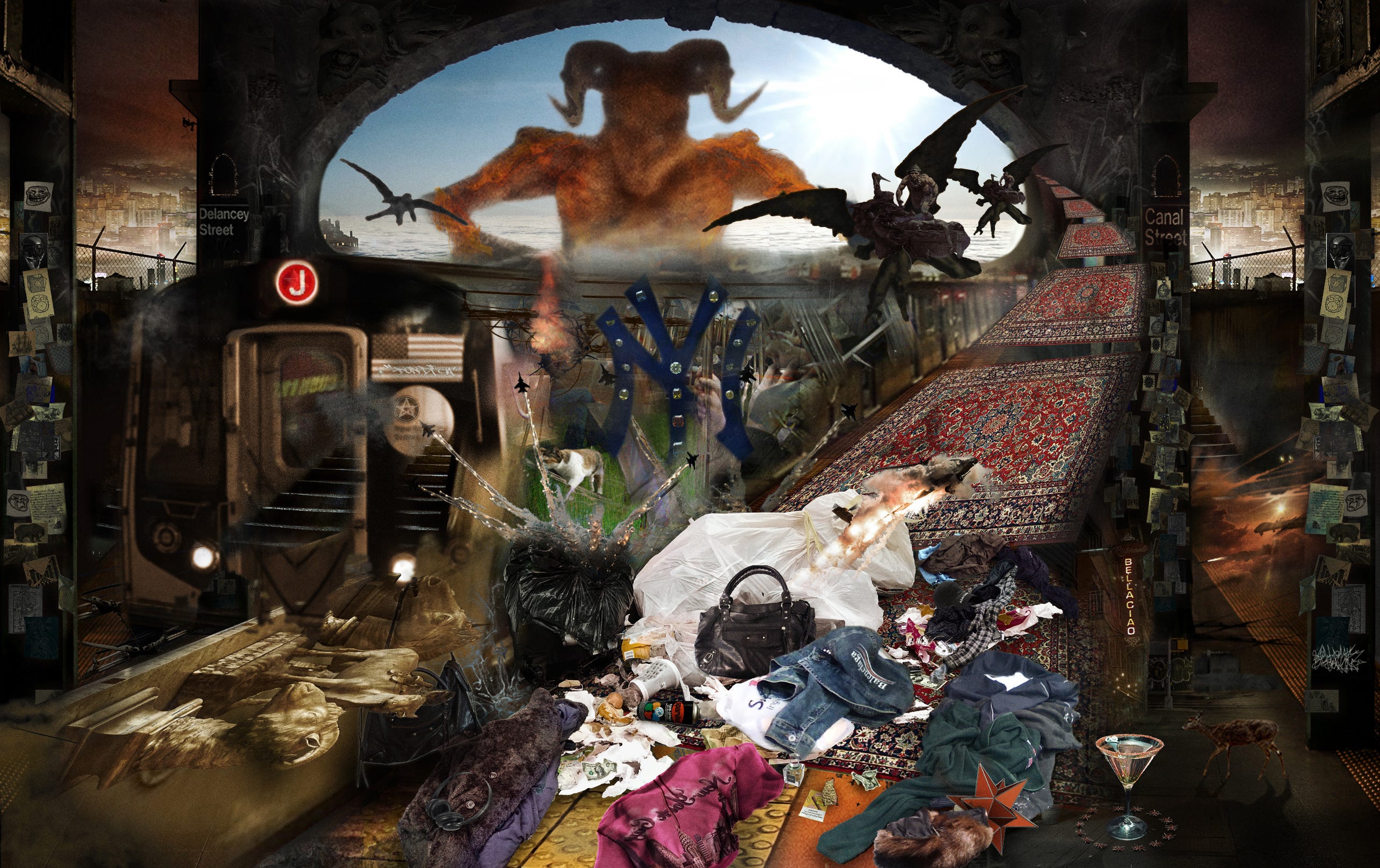
When did you start to develop your digital art practice? Your ‘Digital Altarpiece,’ for instance, seems like a departure from the earlier clothes graphics.
I’m very interested in history and art history. I took a lot of art history classes in school. I’d be sitting in lectures working on digital art instead of taking notes. There was a learning curve there that was completely divorced from any fashion and design interest. At the time, I was in Chelsea trying to talk to people at galleries and nobody would take me seriously because my art is digital. This was shortly after the only time digital art got any institutional recognition, the NFT era, which is still such a shame.
So I’m printing stuff on canvas, trying to show people, getting shut down, embarrassed. Maybe Digital Altarpiece is a reaction to that. That’s really what I was interested in: making art that is taken seriously. Not even just for my sake. All my friends work really hard refining this ever-expansive craft. You can do anything with these [digital] tools, and nobody cares, outside of “it looks cool in a music video.” People don’t collect it, don’t seek it, don’t want to learn about it. Some of the styles I’ve coalesced are a reaction to that. I want people to ask questions, be a little confused.
How did you arrive at your current style?
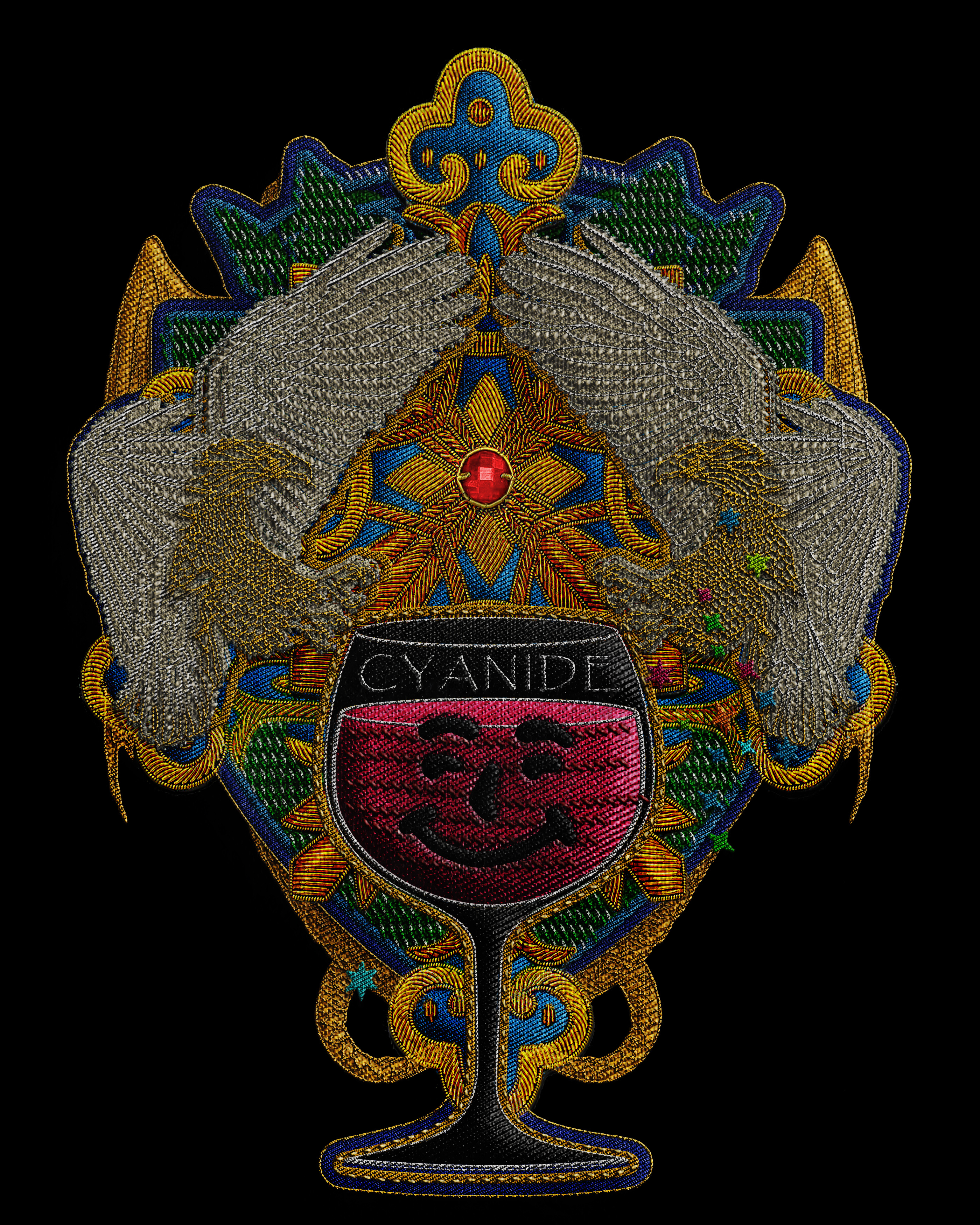
There was no revelation or hidden truth backstory. The style is derivative of the software itself. I’ve always been interested in texture experiments, which is a basic building block of working in photoshop.
I think it’s poignant. The relationship between ‘real’ and ‘fake’ seems to have been redefined in recent years, speaking to mainstream media, politics, AI, all of it. It’s convoluted. These pieces are like the game of telephone where a phrase is changed by passing it through people. But in this case it’s real materials created in a digital environment, then transformed back to the real world on canvas. I often present the digital file, but they’re all printed on canvas in the end.
I routinely get suggestions like “you should make this a real patch” “you should make this into a rug” and it fascinates me that people see these pieces as some type of transient medium where my presentation is not deemed to be the final state. I’m not at all offended by this, but it’s a unique relationship to have with art.
How do you see the relationship between art and graphic design? Is there a distinction for you between the two?
Yeah. In my own work, I see projects as either design or art. Art: I’d make it anyway. Design: I’m thinking more about a reason, more tangible. It’s a different thought process. If it’s design, it has to be placed in time and location, and be fit to be judged by certain characteristics. Art I care less how it’s perceived. But the tools are interchangeable. That makes it fun. Some projects start as one and end up as the other.
Graphic design is such a saturated space, and you’ve managed to cut through and present something that feels fresh. How have you managed that?
I haven’t changed to fit anything. I’m not trying to make my work applicable or understandable for other people, which is kind of rebellious in graphic design. I‘ve had to wait my turn for a space to show my work, which is natural, but not always fun. I definitely had feelings of jealousy towards people at some point, about projects they were on that I wasn’t. But if I’d chased something instead of committing to speaking with my own language, in the long run it would have felt like some huge failure.
Do you feel like the development of individual character and proprietary style is necessary to stand out?
100%. I want people to come to me specifically. I’m happy to take on projects, but only if they want me. The greatest designers have something proprietary, novel, or a style attached to their name. If you can do everything, you’ll never be as good as someone doing a few things well. That’s when you’re at risk of being replaced by AI.
Tell me about your collaborative relationship with Osamason.
When I started sharing art on Instagram in 2020, I came into a community that was forming or had already just formed. A type of Covid renaissance. A lot of names at the helm now, we all kind of grew up together. Also being in New York, I met underground artists, I’d go to parties, I’d be at the studio working on digital art, hanging out, listening to music, meeting producers.
I met O through GK. We’ve been friends for a while. We all talk about clothes, girls, everything. I love those dudes a ton. Very smart, and fun to work with and be around.
What’s one collaborative project with those guys that stands out?
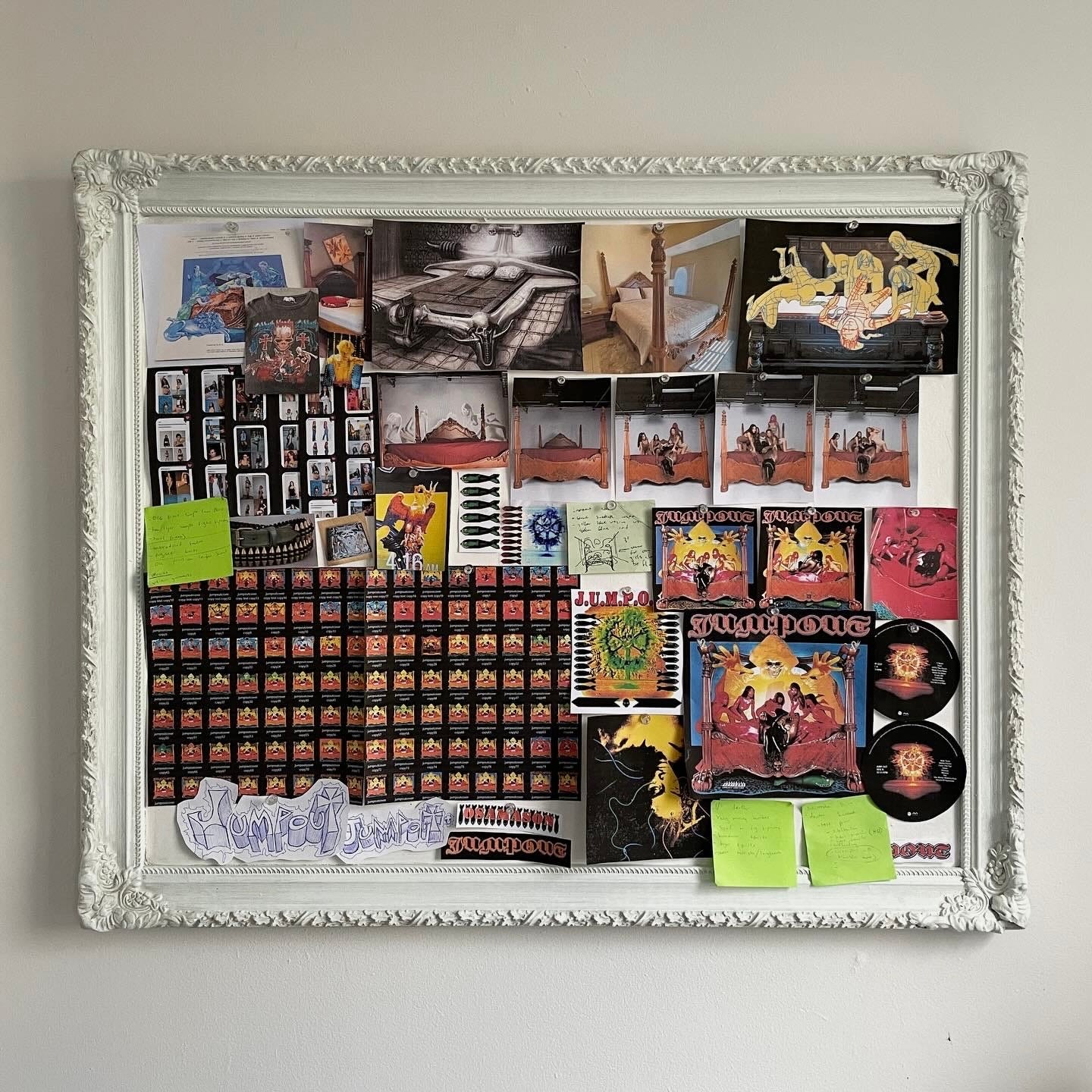
A big one that turned out super well was the Jump Out cover. Started last fall. O and GK and I would be in GK’s Discord server talking shit to each other for hours then we’d get off and all get back to work. We talked constantly, sending stuff back and forth. O moved into the studio for a bit, was sending me music and I’d be sending him art back and forth. I think we both got quite inspired.
There’s a picture where I printed out the full process. We bought the bed, rented the studio, picked the models out. I styled it, directed over FaceTime. We finished that stuff up with a punch. It’ll be remembered well. I’m very proud of that project and how it came together. I liked the discourse about the reference too.
Let’s talk about references. You are part of a generation who practices a very complicated relationship to references. Tell us about your approach to referencing.
I think one issue right now is people see something they like and copy it. I’ve always thought: see someone you like, then ask who do they like, and then who do they like? There’s no bottom to that well. There’s always references down the line. If you can follow that string, you’ll get way more inspiration, become more knowledgeable, and bring older ideas back into the light. I think people need to dig more, and avoid splashing around in a shallow pool. I wouldn’t go on Pinterest. If you’re working on a project, dig deeper.
Where do you go? Hit the library?
Yes, I take photos on my phone and scan a lot of stuff. There’s also so many cool deep cut websites. The images might be low-res, but you can find the coolest stuff. You have to be moderately digitally literate though. I think that had a peak and is coming back down—people don’t know how to actually find stuff using the internet. It takes effort to find material to build ideas you really like and that others find interesting, that also isn’t a rehash of something done six months ago.
To take a specific example: we see a ton of early Young Thug, peak Lil Wayne right now. Do you have any theories about why that moment still resonates?
Part of the reason my work feels relevant or cool right now is because Young Thug, beyond classic artists, is one of the most immediate people who really inspires me. Besides the Rich Gang shirts which were blatant, that inspiration might be delivered less directly. I really liked the way he dressed, the music, being a skinny dude, being okay with it. A lot of people now doing creative stuff are around my age—I’m 23—probably have similar feelings. That time, being 13 years old, 7th, 8th grade, is a real period of uncertainty. Thug embodies this kind of coming-of-age heroism. So something 10 years ago feels relevant collectively. I think people need to tone it down with that, specifically. It’s a great period to feel inspired by, but it could be toned down.
What do you think about the whole reference vs. originality discourse?
To be honest, a lot of it is very cheap. Done for a quick buck. See-through, everyone knows it. Specifically the nostalgia baiting, and tail end of this indiesleaze and ‘2010s irony’ stuff. The thing is, those eras are also partially callbacks to even older periods of art and music, but they had something new to say. That’s what’s lacking now: of course you’re inspired by something you looked up to when you were 12, but you have to bring something of your own or it’s pointless.
Thug is a good example. He copied Lil Wayne, but that wasn’t the end all be all. He branched out into what was genuinely him. If you need to get your foot in the door by making something people understand quickly—no judgment—but you need to have more to say to be in the creative discussion.
Let’s go back. You’ve talked about art history, history in general. What are some periods you’re drawing inspiration from?
Art has always been integral to how history unfolds. You’re not making stuff the same way people did a thousand years ago. Follow the strand of history, all different cultures, and art is always new. You can pull any time period and there’ll be something interesting about the art happening then. I find that inspiring. People think things are crazy now, but it’s just a pinpoint. You can learn about the wildest tyrant rulers, wars, periods of wealth, and art has always been there. Art always makes sense in the context it’s placed in. I find that super interesting.
Who’s on your artistic Mount Rushmore?
I really love the Flemish painters. Bosch, Jan van Eyck. I love etchings, very intricate drawings. Some painters did that really well. Fragonard is one. Jacques Callot back in the day, who made etchings that were like the first newspaper drawings. I have a small etching that his son reprinted. It’s old, but not an original etching. But number one for me is Albrecht Dürer.
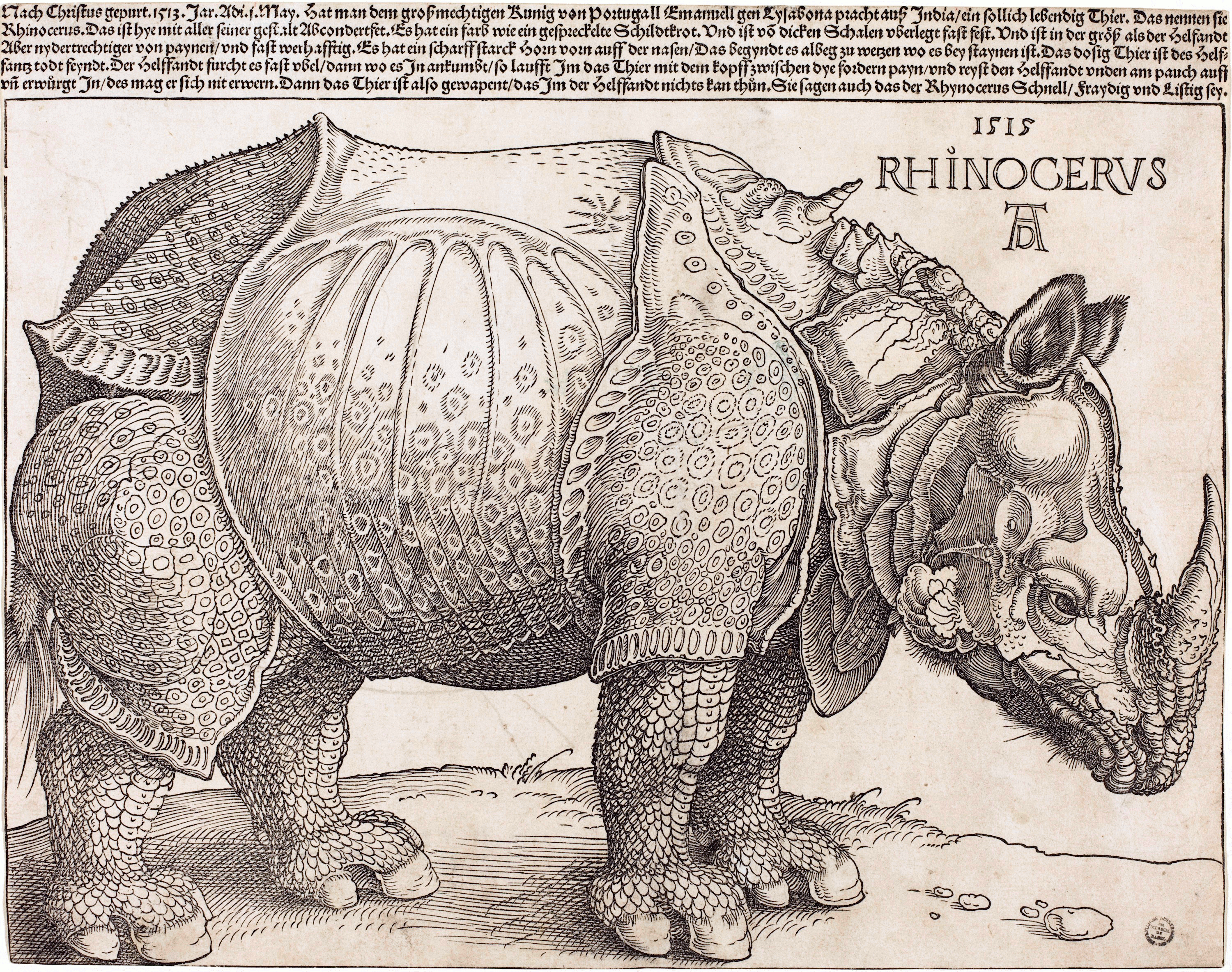
One piece I really love is his etching of a rhinoceros. The rhino was shipped to the king of Spain in 1515. There hadn’t been a rhino in Europe for centuries. So they didn’t know anything about it. They tried to have this rhino and an elephant fight, thinking they were enemies in the wild. Dürer could’ve gone and seen the rhino, but instead he took an anonymous eyewitness account and drew what he thought it looked like. It’s absurd—he’s drawing something real, but in his own fictional context, knowing it would be used as official documentation of the rhino. I like that. I picked up a lot from him, like the absurdity in that story. That’s what I like to read in my free time, and that ends up back in the work you see.
Tell me about the jungle shirts.
What are some contemporary creators or media you’re viewing or feel positively about? What are you liking now?
Gk’s personal projects, hopefully the photobook. All of Black Orchid. New Suzy Sheer Music. 1199 Paris; I’ll be collaborating with them again this year. I just started cooking up for that. We have great stuff coming.
Around New York, the group ‘Campus’ run by my friends Tashi, Danka, Drew, Jaylen. Kind of the downtown art kids finding their place. We’ve had some shows which bring out a really good crowd. Some collectors are starting to buy. They’re all influential to me, and very much part of what’s driving the way things are going right now.
What does a day in the life look like for you these days?
Oh my god, it’s never ending. I do everything myself. I like the control, but I’m getting to a point where I’m flustered a lot, very unhappy with the amount of pressure I feel to get stuff done with the time I have. I go to work, get home, work all night on my computer, sleep for two hours, go back, and the next day I have to do something else. It’s very hectic. But that is what you see in the work. If I was complacent or happy, it probably wouldn’t be as interesting.
What brings you peace?
Definitely late night, headphones on, listening to music, having some breakthrough on a project, I feel peace then. Outside of art just having relationships where I can feel comfortable, confide, laugh, talk shit. I run the risk of becoming very isolated and unhappy when left to my own devices. So I really appreciate having people around.
What’s next for you?
I’m working on a full collection of clothes. In my head I have this world entirely built. Art, clothes, everything. There’s no way to share those ideas, however, unless I execute them. It’s hard for me to use words to describe it. It’s my design language. I think it will inhabit an important corner in the world of design when it’s released.
I announced late winter but it might be in the spring because I care more about perfection than deadlines for my own work. But I’m very excited. I finally have what feels like the appropriate amount of resources to do it, and a lot I want to say.
After that I’m going to refocus on fine art. Another show later this year.
Last question. Your profile picture: what is it?
It’s completely random. I wear a hat like that a lot, the kind of floppy brim. I love that hat, but I didn’t take that picture. That’s a complete internet pull, which is fun.
I want to put my name to stuff because I care so much and I’m a real person, but I also like having a moniker. I like having the random internet profile photo. I’m an internet kid. That’s how I started doing all this.
This is a great interview
i love interviews