


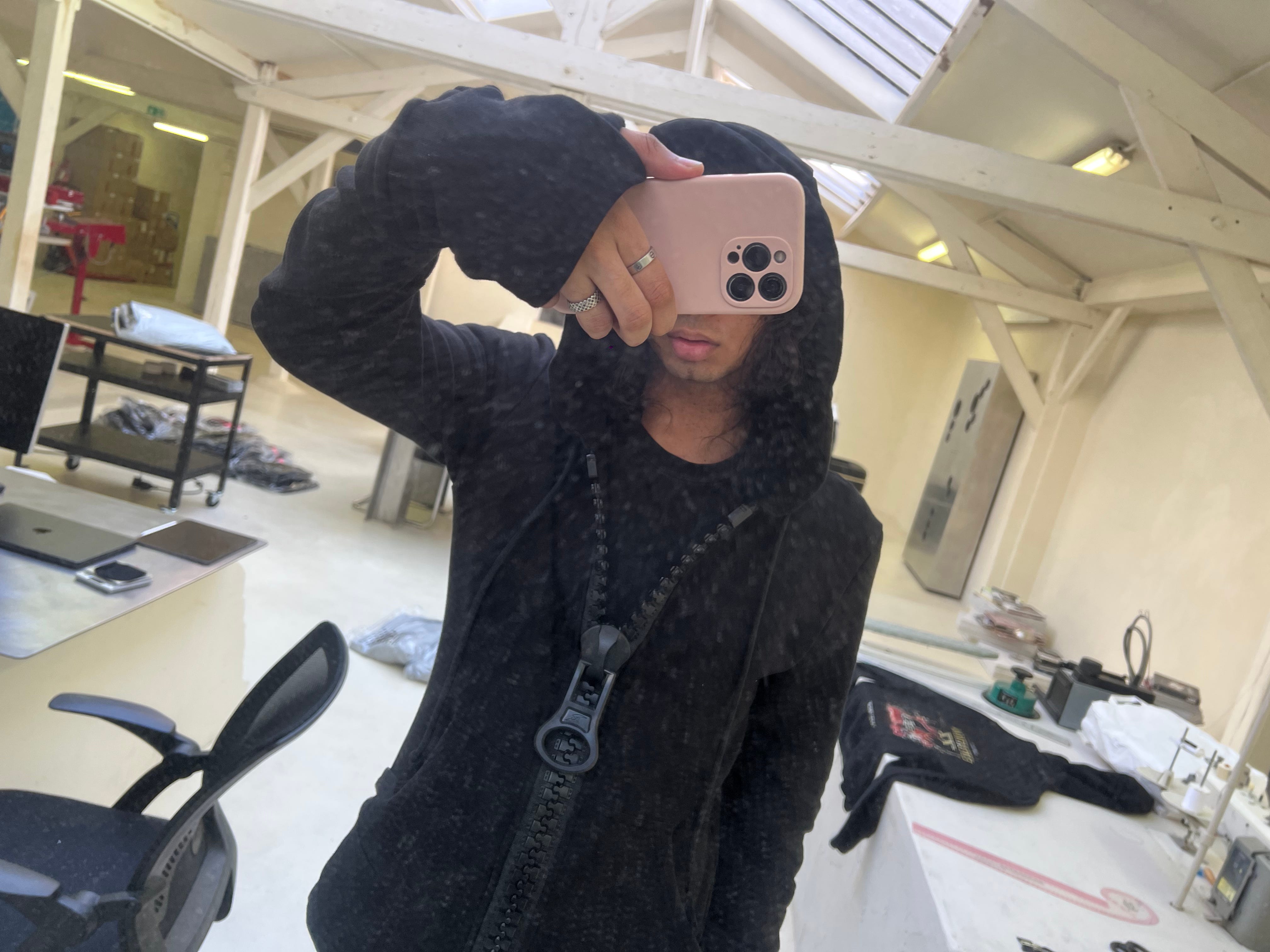
There is a new generation of designers in Paris. They grew up on internet references and Soundcloud rap, and find fashion week boring. They work in neighboring studios and party together when they’re done. They are revitalizing a fashion scene that has become commercialized and disconnected. You might know the names already, or you will: Bazo, Cannnone, Tareet.
Rohan Mirza is one of these new designers. He’s the creative mind behind RMS / Marieohana, a label defining haute couture for the internet’s youth. His collections are named after Call of Duty maps. His primary reference are video game characters. His first medium was 3D printing, and digital design continues to be central to his practice.
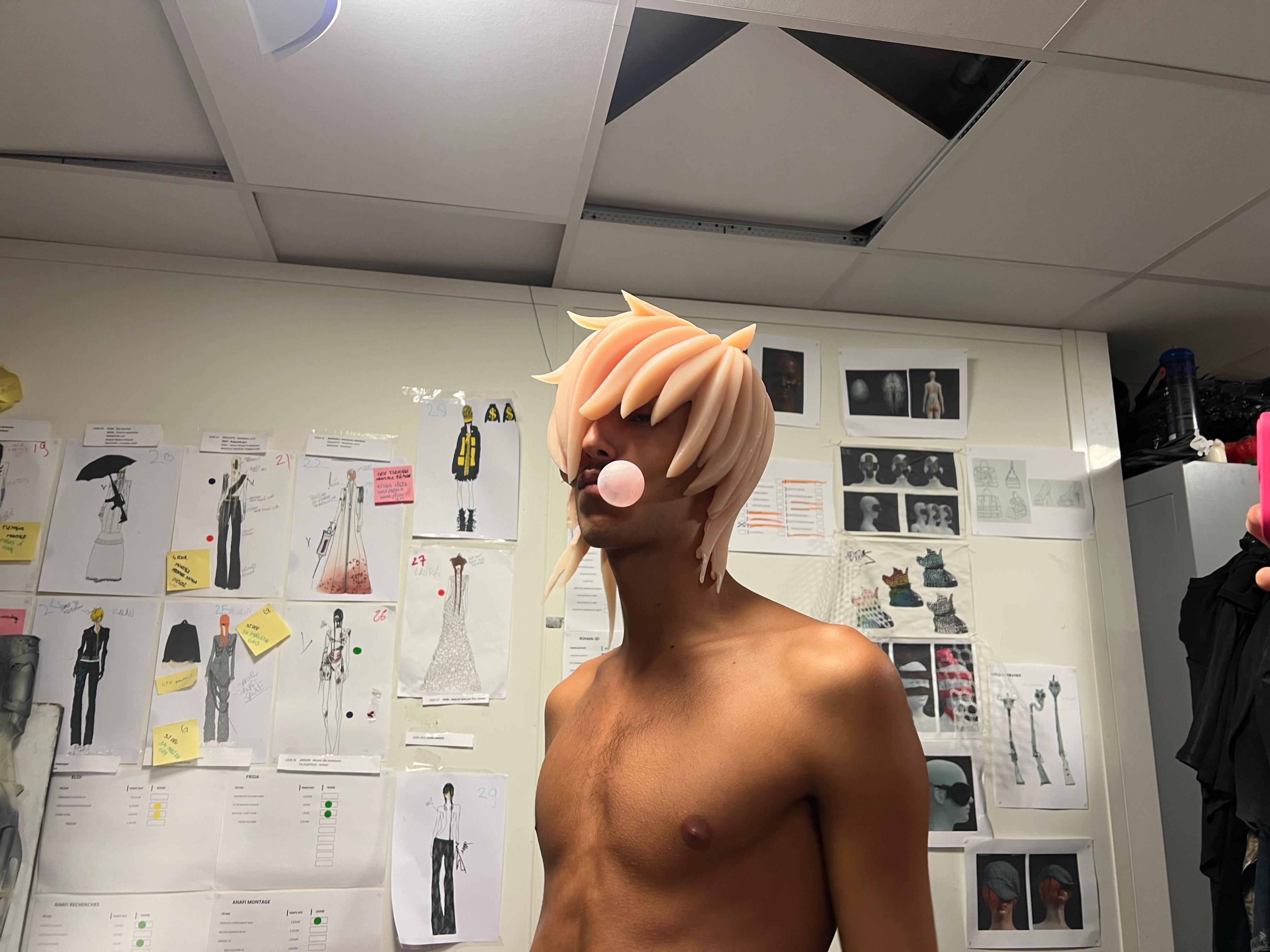
Like many of his generation, Rohan first broke into prominence by posting something on Instagram. In his case it was 3D printed accessories. The commissions lit up, and his work ended up on Bella Hadid, Beyonce, Quavo, and more.
These 3D accessories are not Rohan’s most interesting. His best work is happening right now at RMS, the fashion label he began when he graduated fashion school, and which is only two collections old.
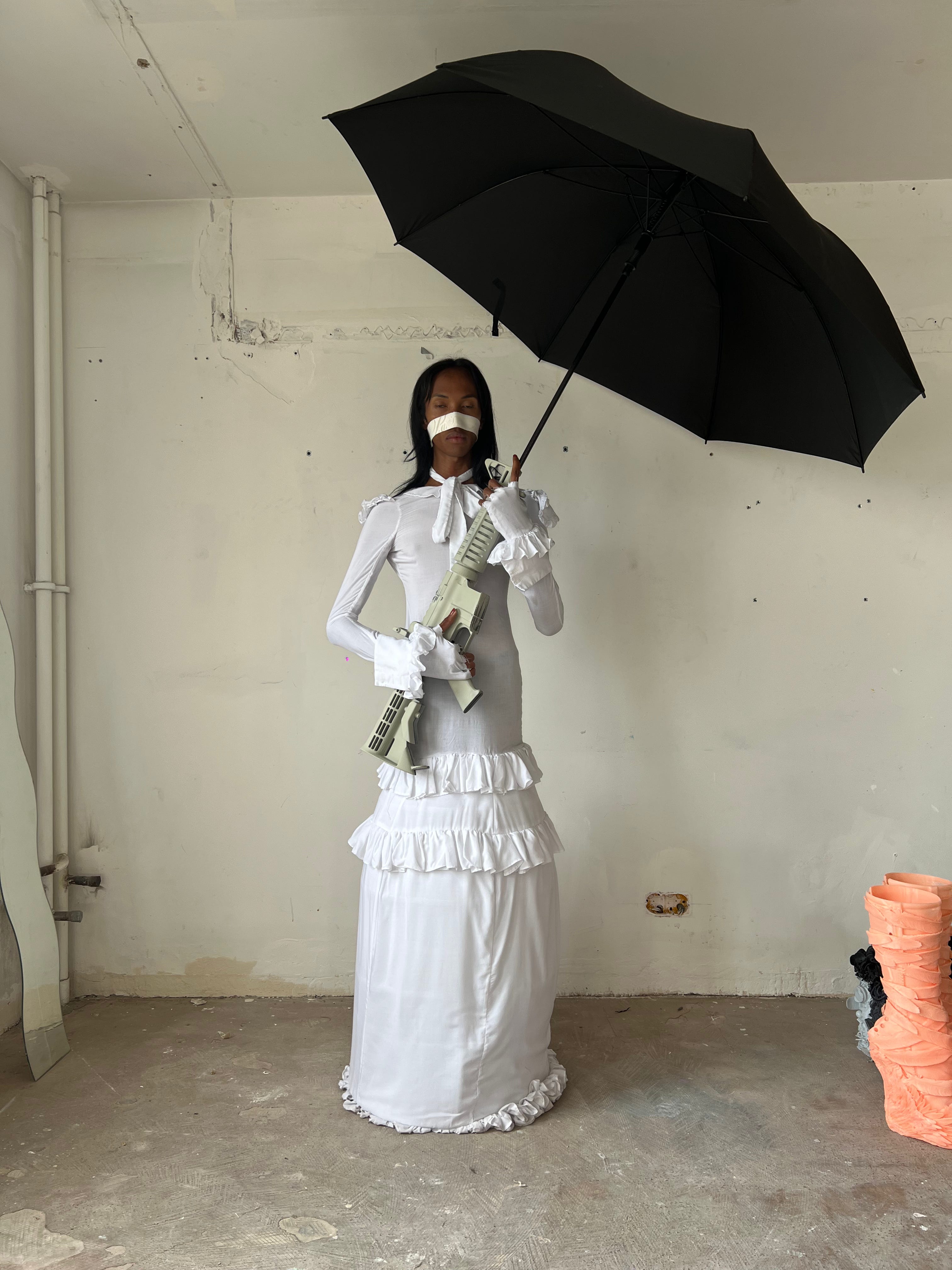
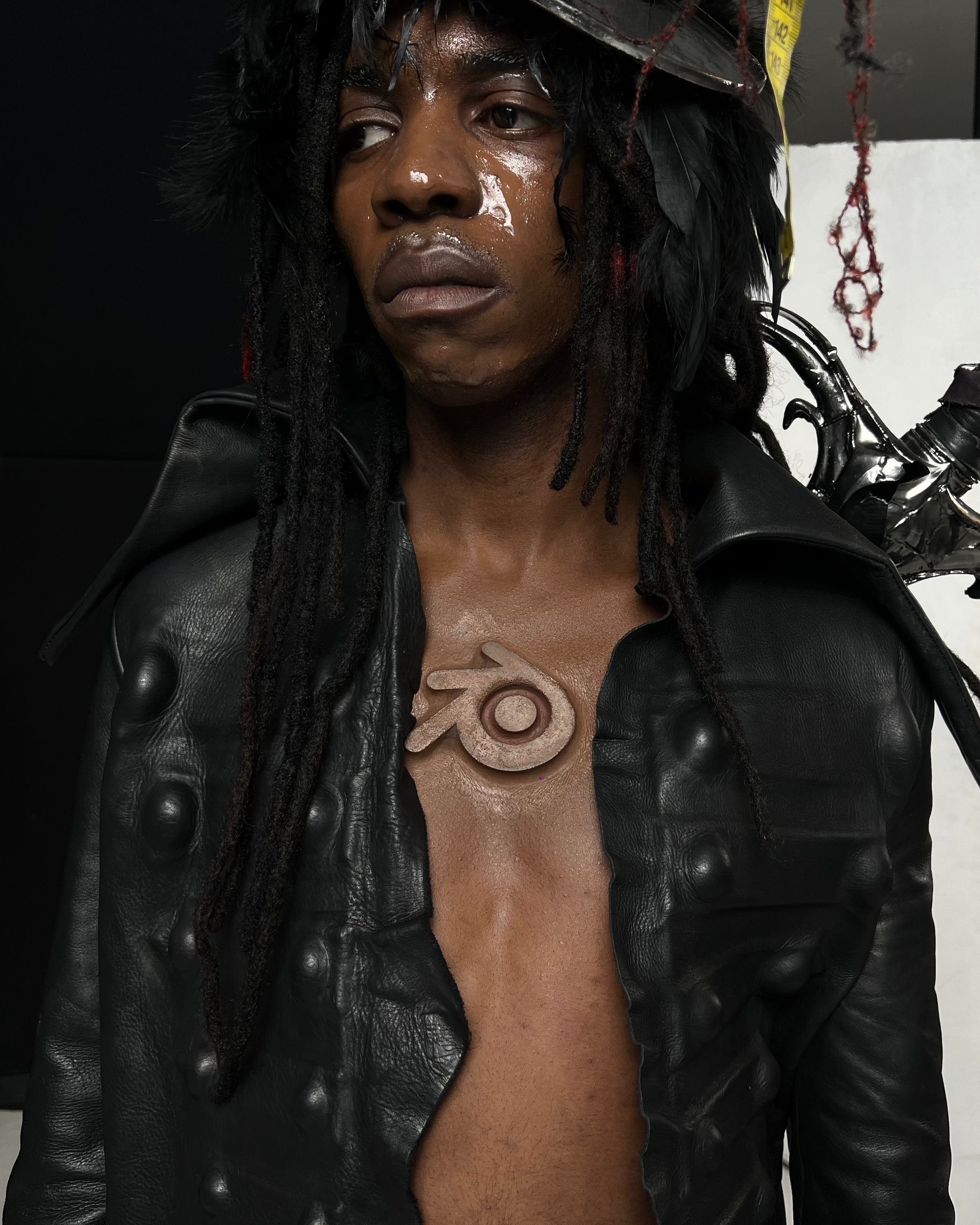
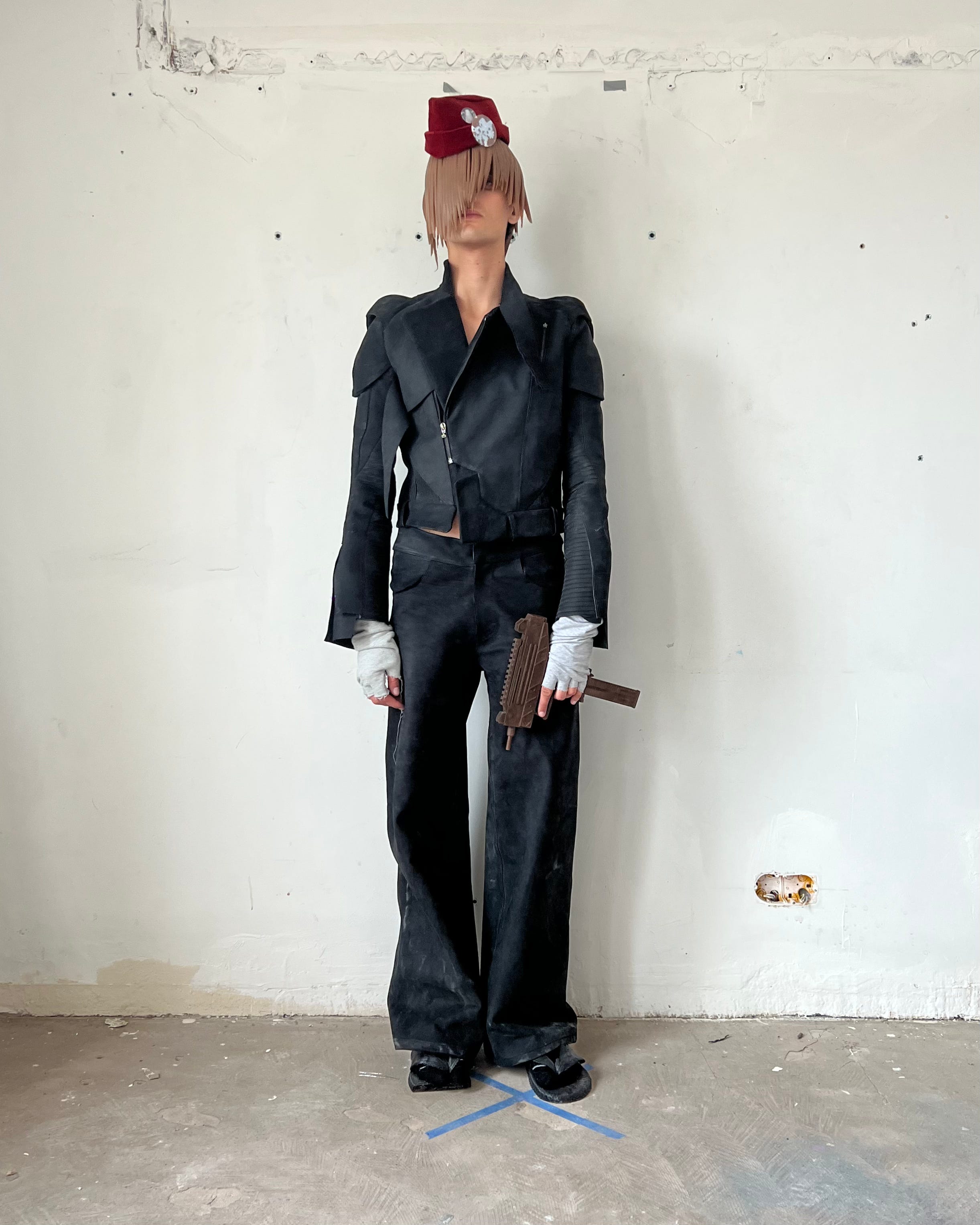
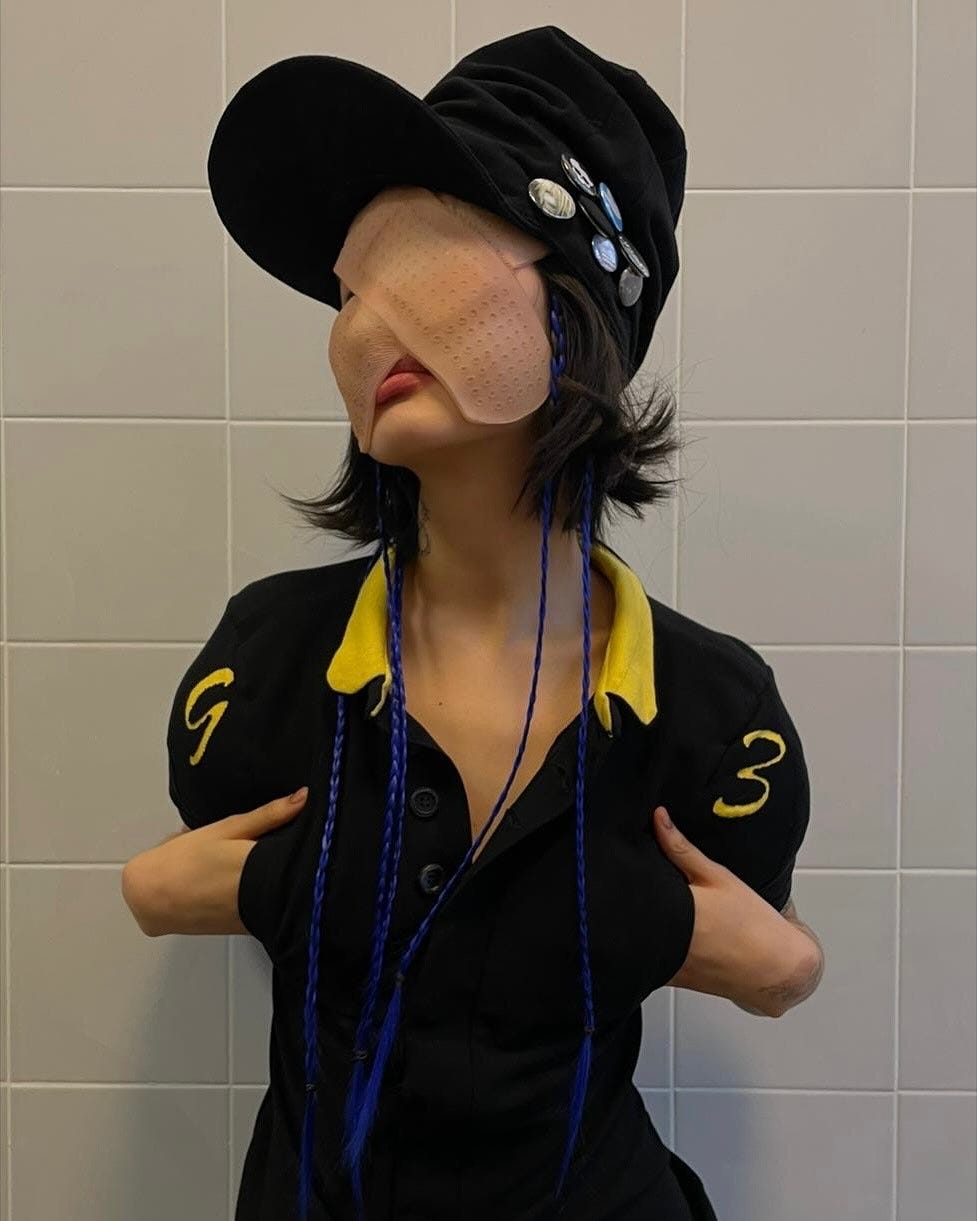
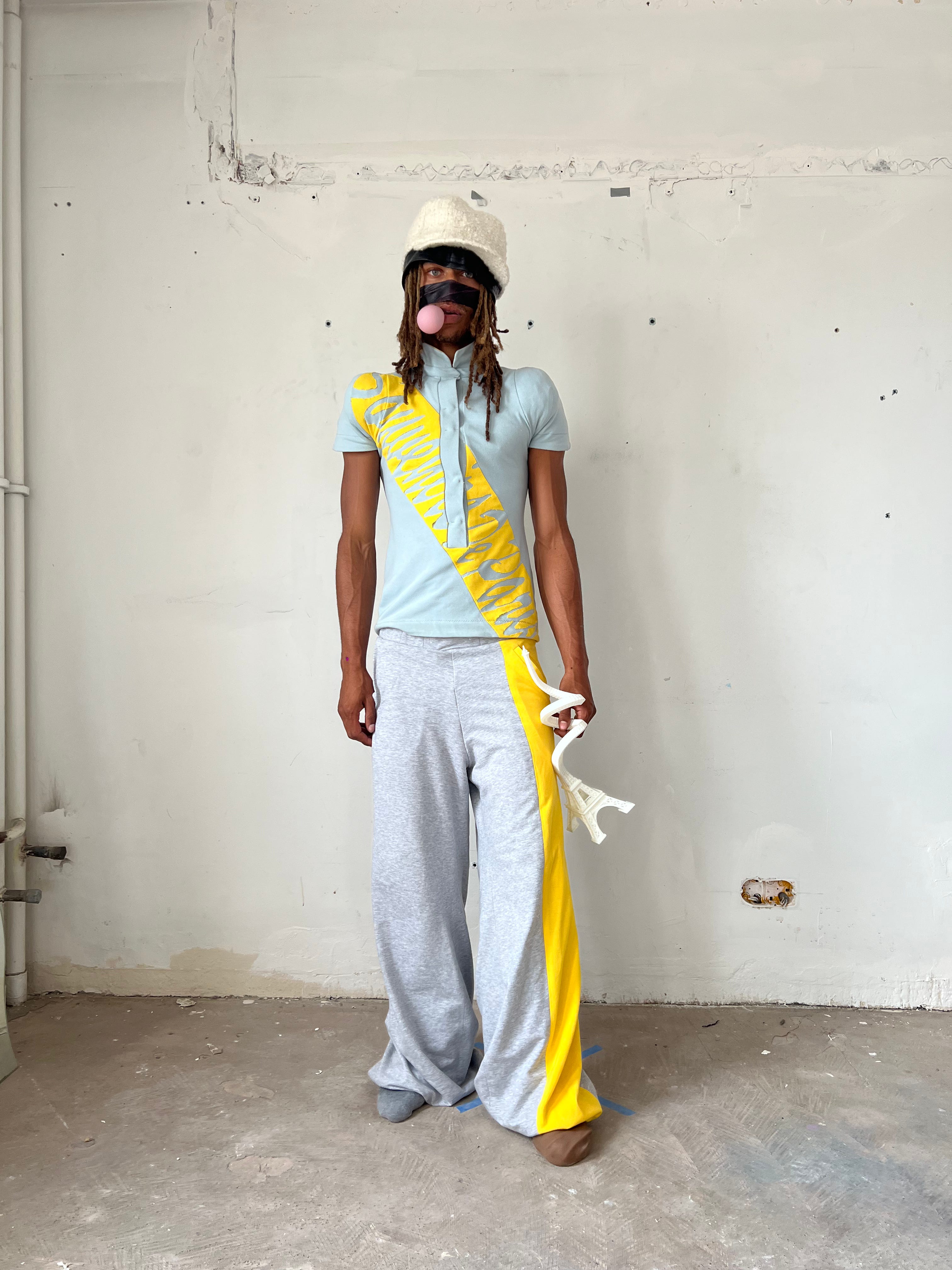
RMS pieces look like skins, and make those that model them resemble avatars. Proportions, materials, and body modifications that our eyes associate with digital mediums become real on the brand’s runway. It’s an uncanny and liminal atmosphere, powered by an aesthetic tone that is at once gothic and futuristic, and feels very fresh.
Of course, it’s not just in Paris that a new generation of artists are blooming into relevance. It’s happening everywhere, and, like always, a new class of creatives reflects the cultural diet they grew up on. For this generation, it was the one the internet fed them. Rohan Mirza isn’t merely emblematic of something happening in Paris; he’s on the forefront of a global trend in creativity that is coming for every cultural capital, and every medium.
We wanted to learn more about the designer on the front lines of such broad shifts. So we gave Rohan Mirza a call. We spoke about the Paris scene, the internet, his collections, his pastimes, and more. Read on.
Welcome: For anyone not familiar with you: who are you, what do you do, and where do you come from?
Rohan Mirza: My name is Rohan Mirza. I’m from Paris. I’ve been building this brand, RMS, for 3 years now. In the beginning, I was specializing in 3D printing and 3D modeling, but now I’m making fashion and anything related to that field.
W: Your bio says you’re a video game programmer. What do you mean by that?
RM: In fashion school in Paris, everybody already knows how to sew, and I’m not so good with my hands. It’s like my main problem. But I love to do computer stuff. I learned 3D modeling during COVID, and from this, I started making clothes with software.
Even when we’re doing a collection, each silhouette and look represents a video game character to me. So everything is based on a digital avatar, but we’re making it reality.
The looks do have such an avatar feeling to them. Why does the video game avatar aesthetic resonate with you?
It started at school. Everyone was more cultured about art [than I was]. I’m into fashion, but I’m not into painting and classical art. I grew up with the internet, and video games are my main culture. At fashion school, you have to have “good references.” My references were video games and internet culture.
What are some of the video games that you grew up with that inspired you?
Mostly Call of Duty. I played Call of Duty for seven years, every day. There is also a game called Mad World. It’s one of the main references for the brand. It’s black and white, and the only color shown is blood.
What do you think about fashion that is literally digital? I’m thinking about when they did the fashion show on Fortnite a couple of years ago, or metaverse stuff. Does that interest you at all, or is it important for you that it is physical?
For me, it’s quite important to have physical items. The main thing about [my work] is to make digital things a reality, so we’re not going to push them back into the digital world. It’s not something that interests me. With all the AI and 3D stuff we have now, I think it’s quite cool to have things that don’t look real, but are, and people don’t really know if they’re AI or real.
What is the school that you went to?
It’s called Duperré. It’s like the only public school you have in Paris.
I’ve been hearing more and more about this growing fashion scene in Paris, specifically the next generation of designers. Do you feel like there’s a scene of young designers right now?
Yeah. We have a lot of young designers making good stuff. in our building there’s Cannnone and Tareet’s studios, two brands I really fuck with. We’re always together making stuff. That’s the cool thing, everyone can talk about everything, and we have a cool energy together.
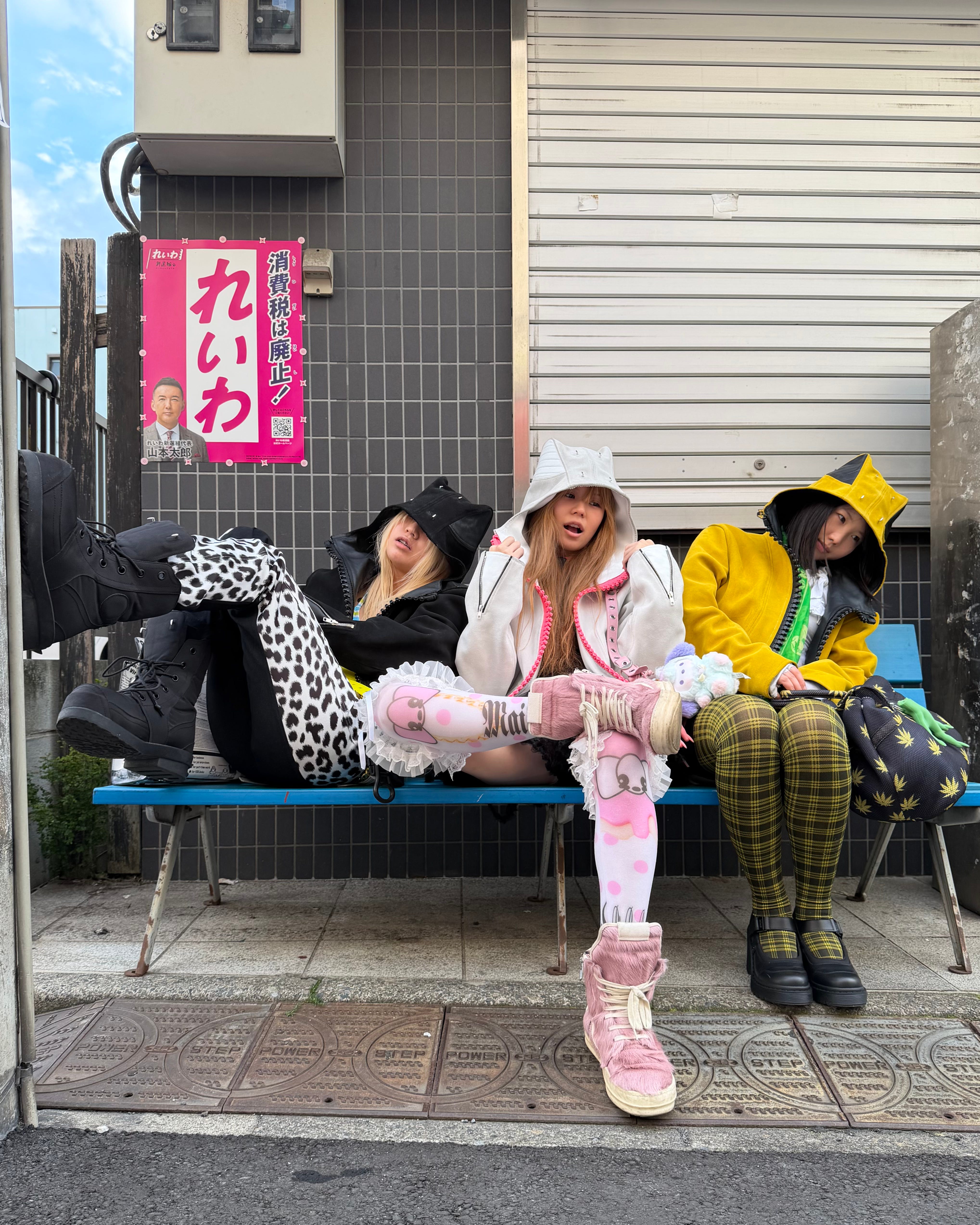
When there are multiple people making good stuff in the same area, you all push each other to get better.
Yes, I think it’s the best time. Everyone is quite confident about the future.
In this new scene of young designers, is there any sort of like or approach or philosophy to design that you guys share? Is there a defining characteristic of this scene that you’re a part of?
Everyone has their own direction. Our brand is more fun and toys inspired. Cannnone is more about the leather, the animals. We know, the scene in Paris is not that good, like everyone is enjoying it, but we know we can make it better. The events, the parties, the nightlife, everything. We can make it something huge. I think that’s the philosophy everyone has here. To make the scene in Paris as impactful as it was 10 years before, you know.
What’s the social energy like among people in the scene?
There’s not any real groups in Paris here, everyone is going out with everyone. Everyone knows everyone. It’s quite a small city. So you can go anywhere you want with who you want.

What do you think about Paris Fashion Week?
Like five years ago it was the most exciting thing we had, but now every month you have something, and the events are not good. It used to be amazing and you were discovering places, and brands had money to book big venues. Now it’s boring. Iit’s cool to have people coming from other cities here, visiting the studio, getting to meet new people, but it’s not as exciting as it was.
I want to go back to your come up. Your first couple of posts are commissions of custom 3D accessories for big names. Tell me how you were able to make those first connections?
When I started making 3D, it was at a time when the beauty world was interested in nails. It was a thing on Instagram. I was making nails with a lot of color, and when I posted the first time, Dazed reposted it directly after. So there are a lot of people who know me from that, thinking I was a nail artist or something.
I had only a small printer at the time, so I was printing small things. That’s why in the beginning I was only making accessories; for ears, nails, for anything I could print with this small printer.
So people like Bella Hadid, Quavo and Beyoncé just hitting you up on Instagram for commissions?
Yeah, exactly. For me, it was the first time dealing with that. But yeah, stylists were DM-ing me. The thing with 3D printing is that they can send you a message like three days before, and you can make it and send it to them. Stylists are always late and they’re asking you stuff like two days before. So it was a cool solution for them to quickly have some pieces they want.
I encounter a lot of designers and artists that blow up off of some object they made, then transition it into a full-scale practice. When did you decide you wanted to go beyond the accessories and do clothes?
Even before 3D, I was more interested in clothes. 3D was just the thing I was best at, so I was making that. But when I finished school, I was like, okay, I need to start something bigger now because I don’t have school anymore, and I have this base on Instagram where people can see my work.
The cool thing with this studio is all the people who are working here are from the same school and we have all known each other from the first year. That’s why I think it’s working so well, because it’s a group of friends making stuff and having fun.
Your runway shows have been really cool. Have you enjoyed that process of doing the setting and curating the entire experience?
Yeah, I love making a collection. I love to collaborate with people. We’re working with a lot of people, and I love a lot of different artists that I want to work with. So every collection is a new curation of people that we’re working with and making cool stuff with.
The last collection, we started in January 2025, we finished like eight months after in September, and we were working every day on it. I don’t like not having anything to do, you know. We love to see our shows as a gaming map, you know, like Stonehaven and Nuke Town. To think about how it’s going to look, how the people are going to feel when they’re here. That’s my favourite thing to work on.
In your daily life where do you find creative energy?
I think Instagram. I’m not spending a lot of time on it. I’m more into YouTube. But for Instagram, it’s more like for work, to connect with people, when we’re talking with new people. The thing with Instagram is you can see the whole world doing their thing. You see there’s someone in Canada making something crazy, there’s someone in Seoul or Tokyo making something crazy, and it motivates everyone, I think, to see our generation or other generations making stuff and people liking that stuff. There’s a cool energy about Instagram; people can see it as good or bad, but I prefer to see it as a motivation and an inspiration more than something that scares me.
What do you like to watch on YouTube?
I’m a big fan of French YouTubers. I’ve been following them since my teenage years, and still looking at them, but it’s quite like stupid stuff, you know, nothing really interesting. But this type of YouTube video is funny to watch, and it’s my culture.
What does a normal day look like?
We’re starting the day at 9 or 10. My studio is 10 minutes from my home, so it’s quite easy to get here. It depends on the day, but some days we have to work on commissions, and some days we’re working on the ready-to-wear pieces that we want to produce and make happen. Sometimes we’re working on events we want to do. When it’s not a collection, we always try to find something to make the brand bigger and make events in Paris, not to just be waiting for the next collection. It finishes at like 9-10pm at night.
What’s a music album that has made an impact on you? That’s been important in your life.
I’m a big fan of French rap. That’s my main thing—even more than fashion. And there’s an album called Or Noir from an artist called Kaaris here. I think this album is like crazy. I will send you—if you want. But yeah, it’s like the base of French trap. The melodies are crazy. This guy is so good.
Do you believe in good and evil? Do you think those things exist in the world?
Yeah, totally. People can be good, people can be evil. I think that exists, and we have to be good. I’m a really positive person, like from when I was young, I was really positive. I love to enjoy, to laugh and stuff. I’m trying to be—all the team and the people we are around are trying to be—the best we can be. But I think there are evil people.
What outfit do you have on?
I always wear the same thing every day: black t-shirt, black joggers, and I have my black Air Force Ones. This is my main fit. I’m only wearing black clothes. I don’t like to make outfits and stuff; I want to just wake up and put on the same thing and go out. I’m not into buying clothes and stuff. I don’t really like it.
Why do you think it is that so many designers are just like, I just want to have my uniform and not mess with all these fashion brands?
I think it’s because we don’t have the time to think. Maybe because people who really like to dress, it’s their main thing. And we prefer to make the clothes, so we don’t really care. For me, I think that’s it, like I don’t really care about clothes for myself, but I like to create.
What’s coming up next? What should people keep an eye out for on you, your brand, and your various endeavors?
This year, we’re working a lot on pieces; we’re going to drop more online, and we’re doing a lot of events. The next collection is in February next year.