


Reporting and photos by Welcome Arts Correspondent Bryan Munguia
Constantly shuttling from one art fair to another is starting to make me feel like a war correspondent, knee-deep in the trenches of the commercial art world. This feeling was heightened by the fact that, this time, I actually did find myself in the middle of a revolution.
On the final day of Frieze London, the same day I was traveling to Art Basel Paris, I woke to images of Paris on fire. Videos of marching, looting, and violent confrontations with police, all unfolding on my feed, just hours before I was to depart for the most unapologetically opulent, capitalist soirée on the art calendar, hosted in the heart of the burning capital.
Merde.
I went anyway.
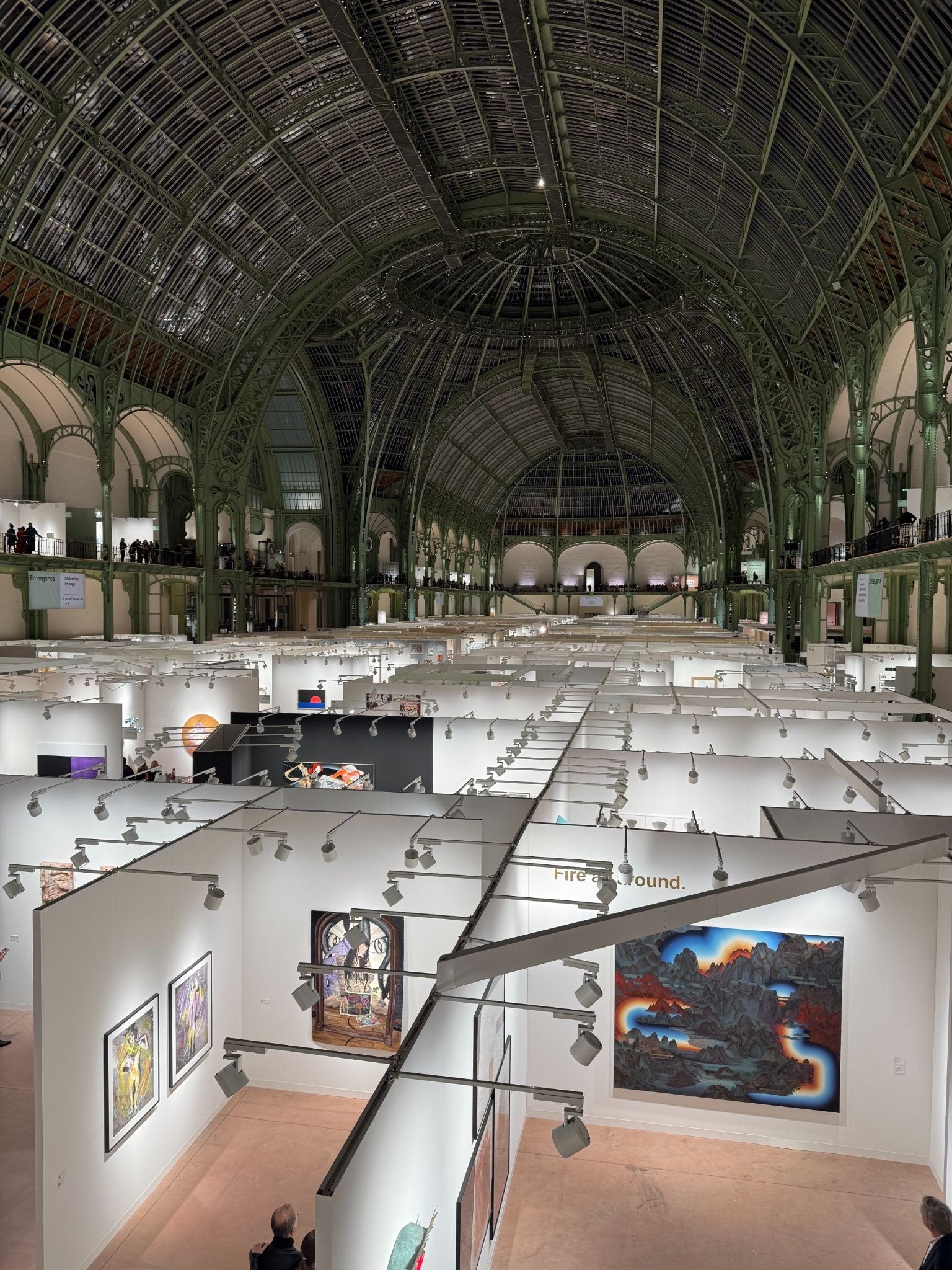
Basel’s Paris edition is only five years old. Despite its infancy, it has become a favorite among the experts and attracts an international roster of galleries showing both celebrated and emerging artists beneath the Grand Palais’s enchanting glass-and-ivory canopy, just a romantic stroll away from views of the Eiffel Tower and the Seine. This is a fair for lovers.
Beyond the Grand Palais, major museum shows unfold across ornate institutions. Other boutique fairs also orbit nearby, with Paris Internationale and Post-Fair offering artworks that capture some of the more in-vogue aesthetics of the moment.
For much of the week, things were calm in my insular art-world bubble. That changed when Basel officials announced an early closure of the fair ahead of planned weekend demonstrations. I spent the last two days of my trip observing the protests.
There, I encountered an energy that far surpassed anything inside the fair. Between the surprising number of Spider-Man costumes and blacked-out Parisian youth blasting French drill from portable speakers, you can’t say that these demonstrations lack spirit.
In Paris, the kids are telling you that they are not alright. These protests stem from student anger toward failing school systems and standards, and have since become a collective catharsis against capital’s exploitation of people’s livelihoods. It’s a tale as old as time, and especially in France, a perfect excuse for mass demonstration. As one Parisian told me, protesting is an essential part of the French DNA. “We’ll protest until we die,” she said.
Despite these protests being last week’s most memorable event, there still was a whole arts ecosystem at play around it. Some artworks at the fairs managed to harmonise with the political theatre unfolding outside, while others captured the spirit of the times, political or not. So, amid the clamor, here’s a round-up of works that managed to sing.
SYLVIE FLEURY, Sprüth Magers, Art Basel Paris
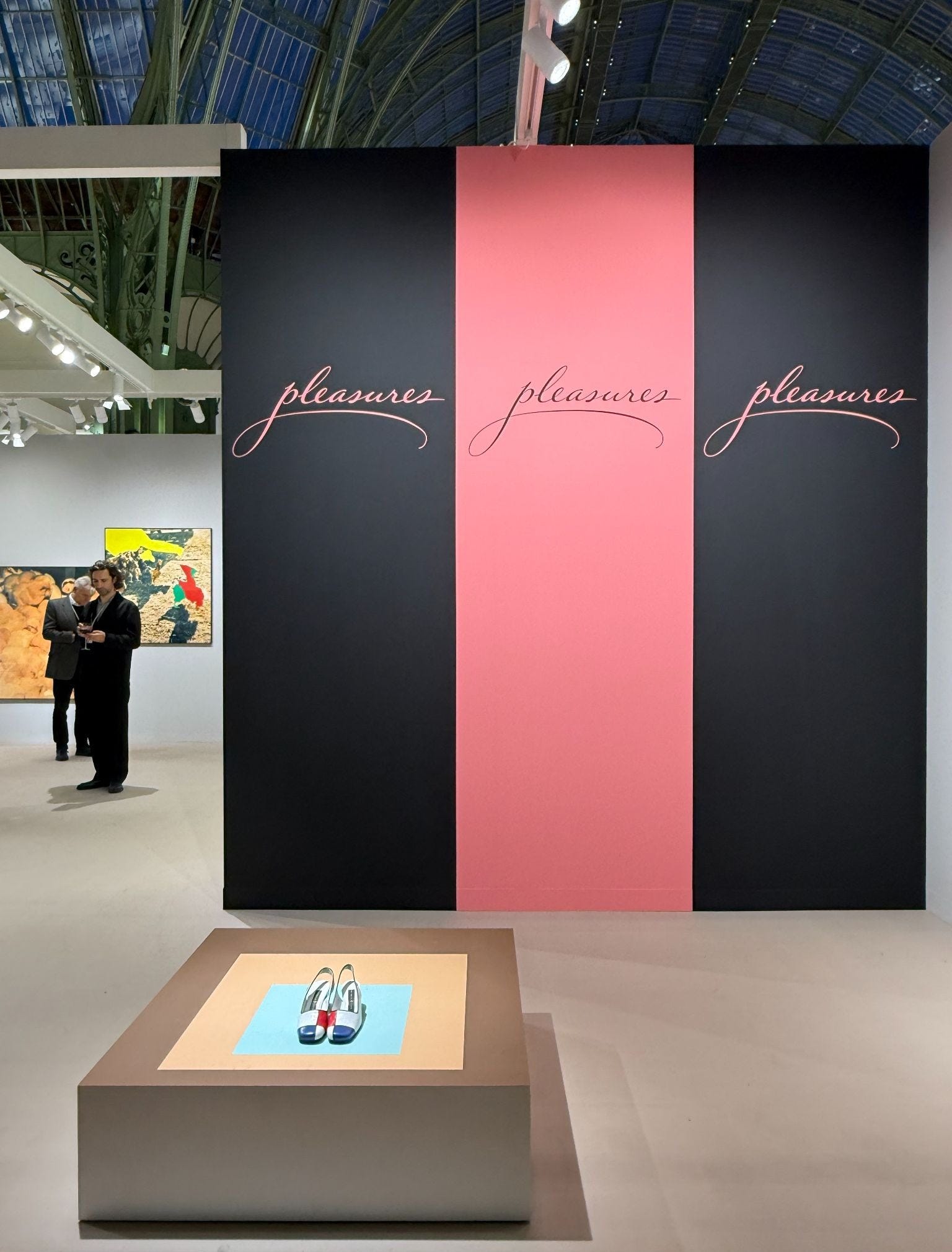
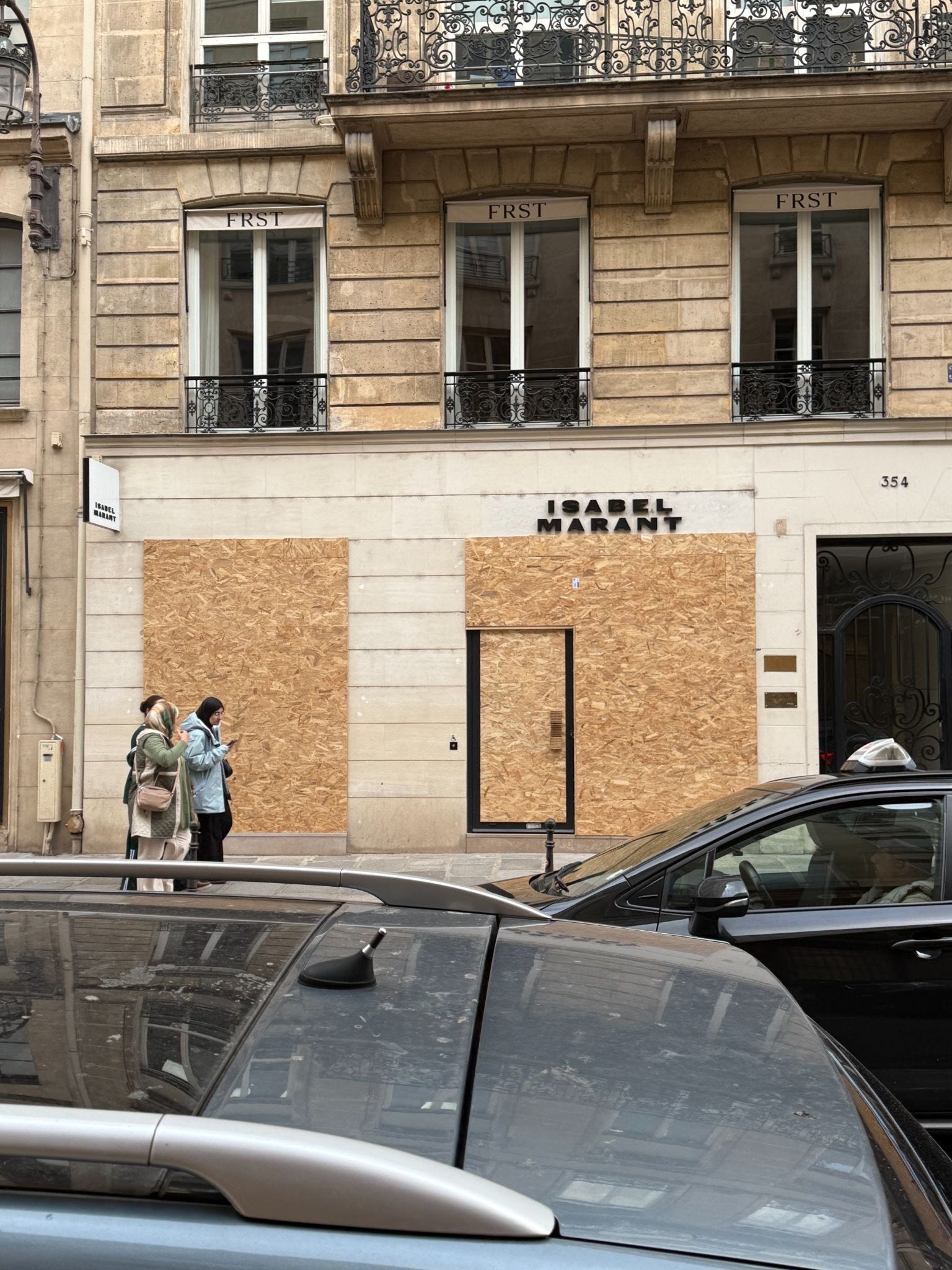
Walking into the labyrinth of exhibitor booths at the extravagant Grand Palais already feels like stepping into a high-end shopping centre you don’t belong in. Sylvie Fleury’s presentation at Sprüth Magers coyly mirrors this decadence, greeting visitors as they enter the fair with a display that could have been lifted straight from a vintage Parisian boutique (several of which were boarded up just around the corner).
Written in cursive, the word Pleasures stretches across a Victoria’s Secret-esque backdrop of pink-and-black stripes, while a pair of Mondrian-inspired mules by designer Patrick Cox rest delicately on a plinth patterned with teal and coffee-coloured squares reminiscent of Josef Albers’s modernist abstractions.
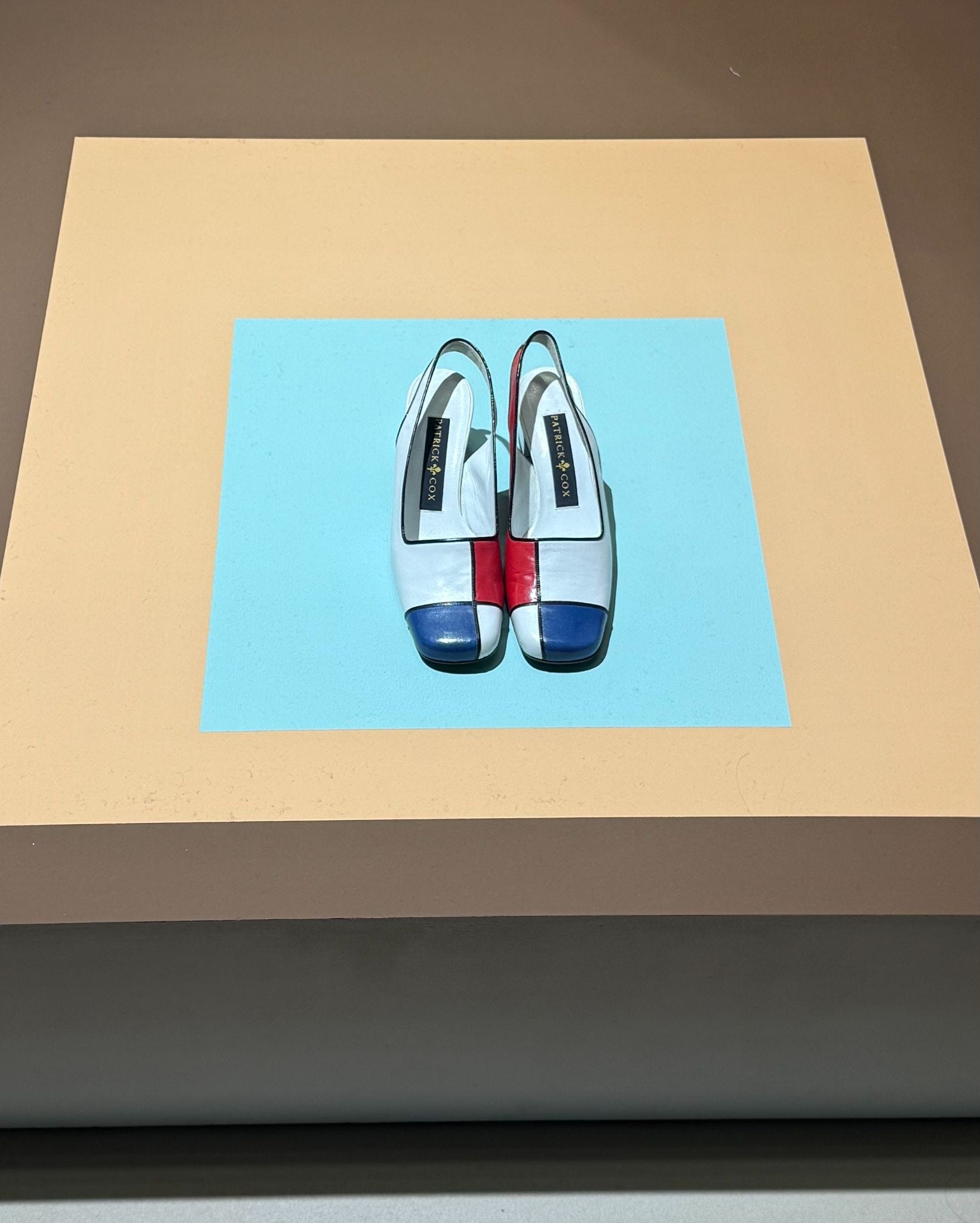
Fleury blurs the line between modernist art and consumer culture, highlighting how easily the visual language of high art can be repackaged as luxury merchandise. Mondrian’s geometric compositions become fashionable footwear, while Albers’s experiments with color and form provide the perfect pedestal for displaying them. Once considered radical, these modernist aesthetics now serve the more familiar purpose of making consumer goods desirable. Rather than condemning this transformation, Fleury seems to revel in it, perhaps suggesting that capitalism is at its most persuasive when it knows how to make itself beautiful. Oh là là.
MARC KOKOPELI, Reena Spaulings, Art Basel Paris
A rule of thumb for finding great artworks in crowded fairs: go straight to galleries run by artists. They often have the best taste.
This is exactly the case at Reena Spaulings, an NY-based artist-founded gallery operating under a fictional alias. There are no skips in this booth.
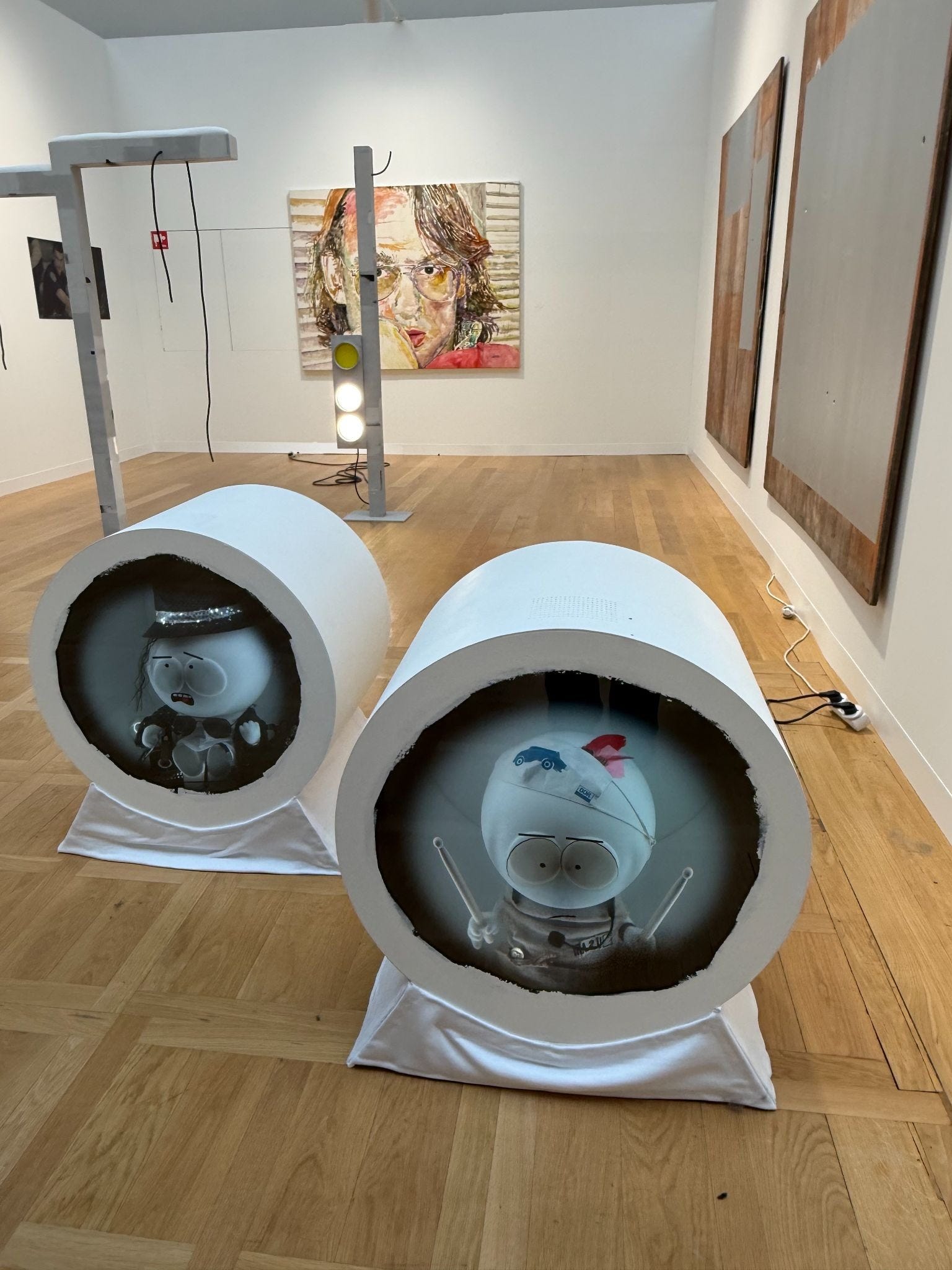
Anchoring the booth are two new sculptures by Marc Kokopeli, arguably one of Downtown New York’s finest exports. Resembling obscure television sets, each white cylindrical structure houses a handmade South Park doll, one dressed as Michael Jackson, the other in an East German military uniform (I believe). An LCD screen layered in front of each doll animates its eyes and mouth in the show’s signature cartoon style, making the figures appear to speak.
It was too loud and crowded to hear what they were saying, but watching their cartoon features flicker across the faces of these ghastly puppets felt strangely hypnotic.
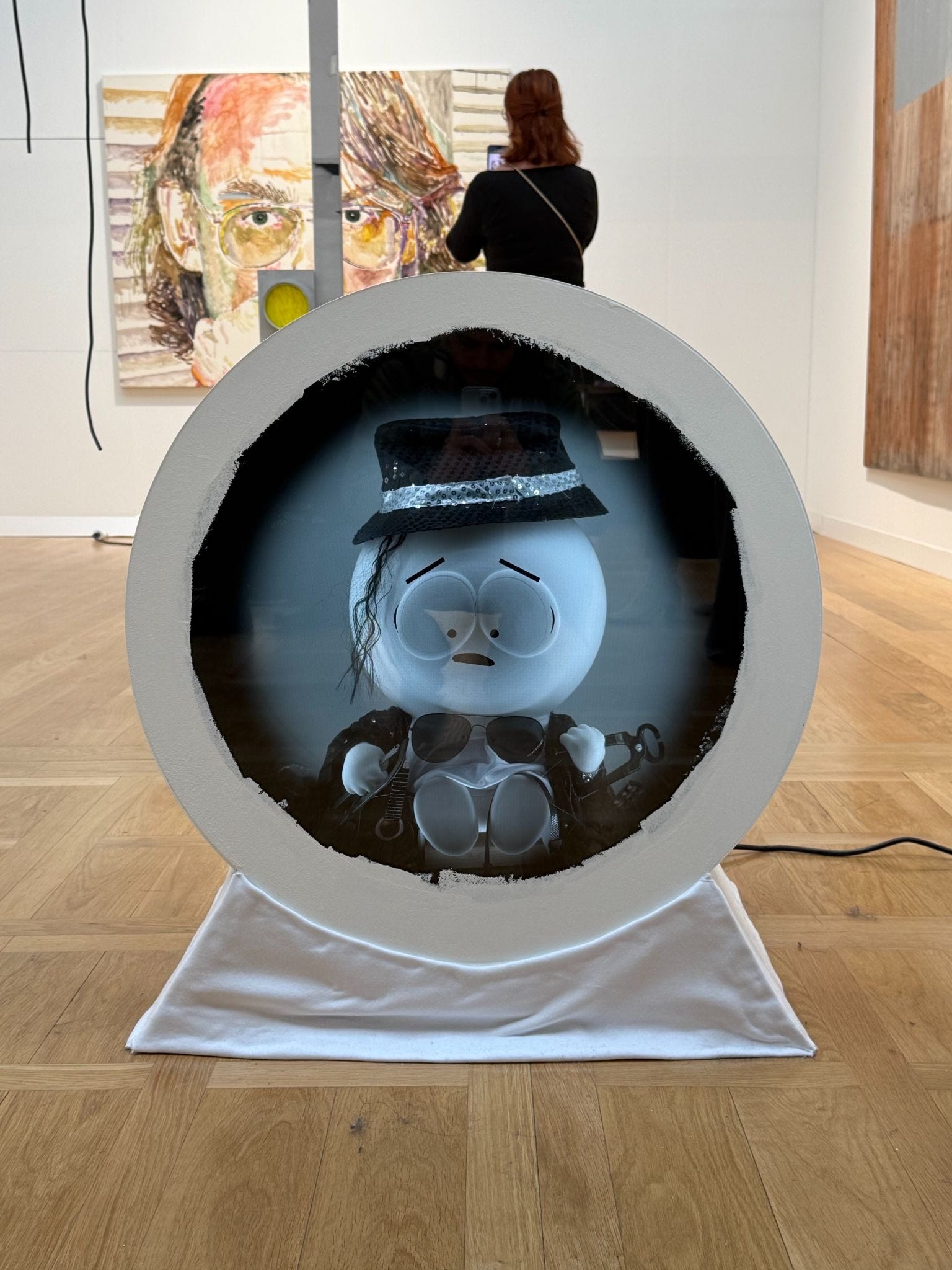
Kokopeli is a new-media Frankenstein, using animation and sound to resurrect relics of pop culture. What emerges is a nostalgic reminder of the images and objects that shaped our childhoods. For millennials, these rambling South Park characters embody a distinctly absurd sensibility that feels increasingly at home in our surreal reality.
MOKA LEE, Carlos/Ishikawa, Art Basel Paris
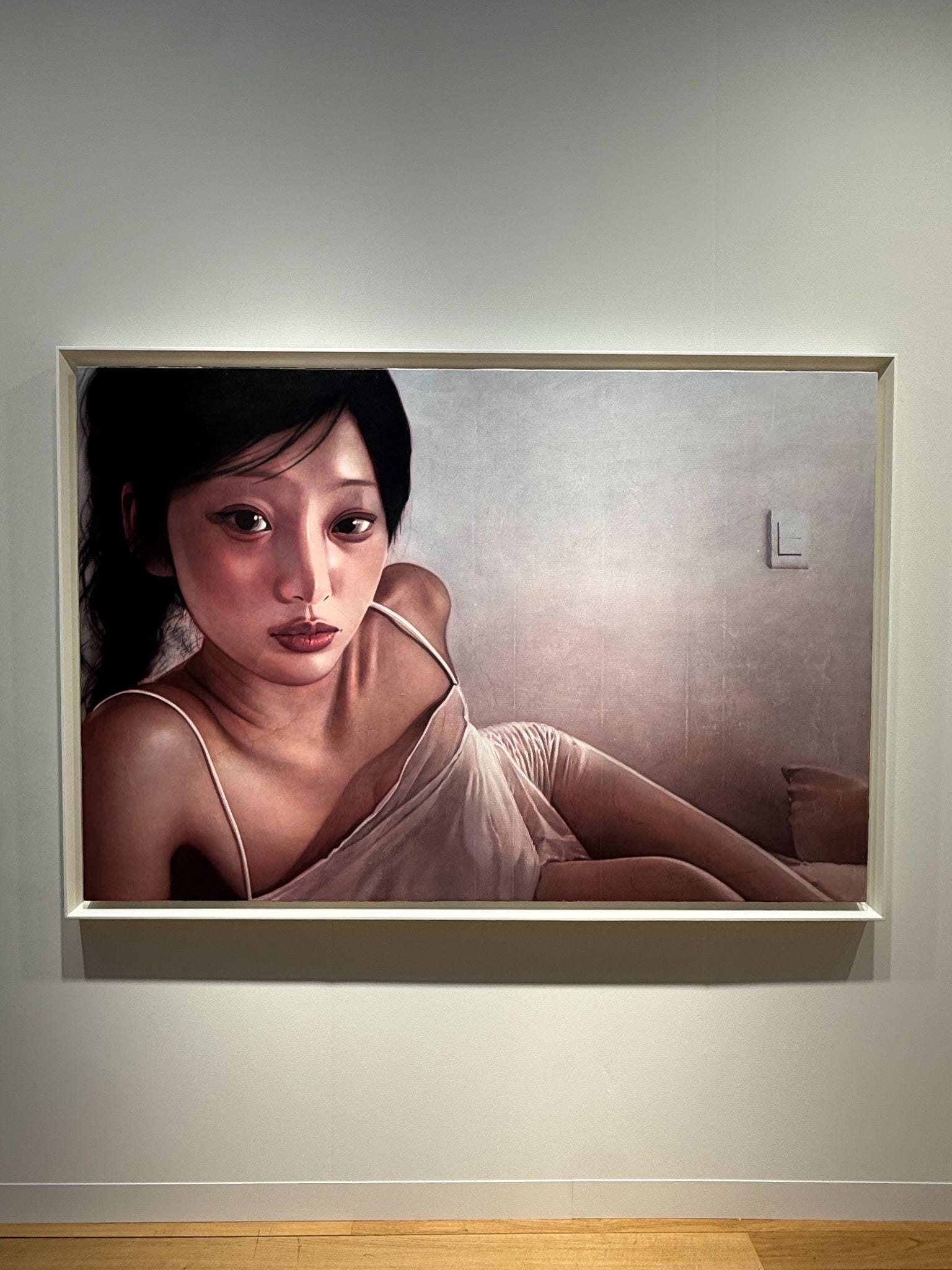
Near Reena Spaulings’ booth is another kind of uncanny artwork, this time investigating the Instagram selfie. It’s the solo presentation of South Korean artist Moka Lee, who transforms photographs sourced from social media into eerily intimate oil portraits.
The characters here are mostly Asian women striking the rehearsed poses of a carefully constructed online persona. The internet created an endless moodboard of attitudes and poses that shaped how an entire generation presents itself to the world, and Lee’s subjects draw from these.
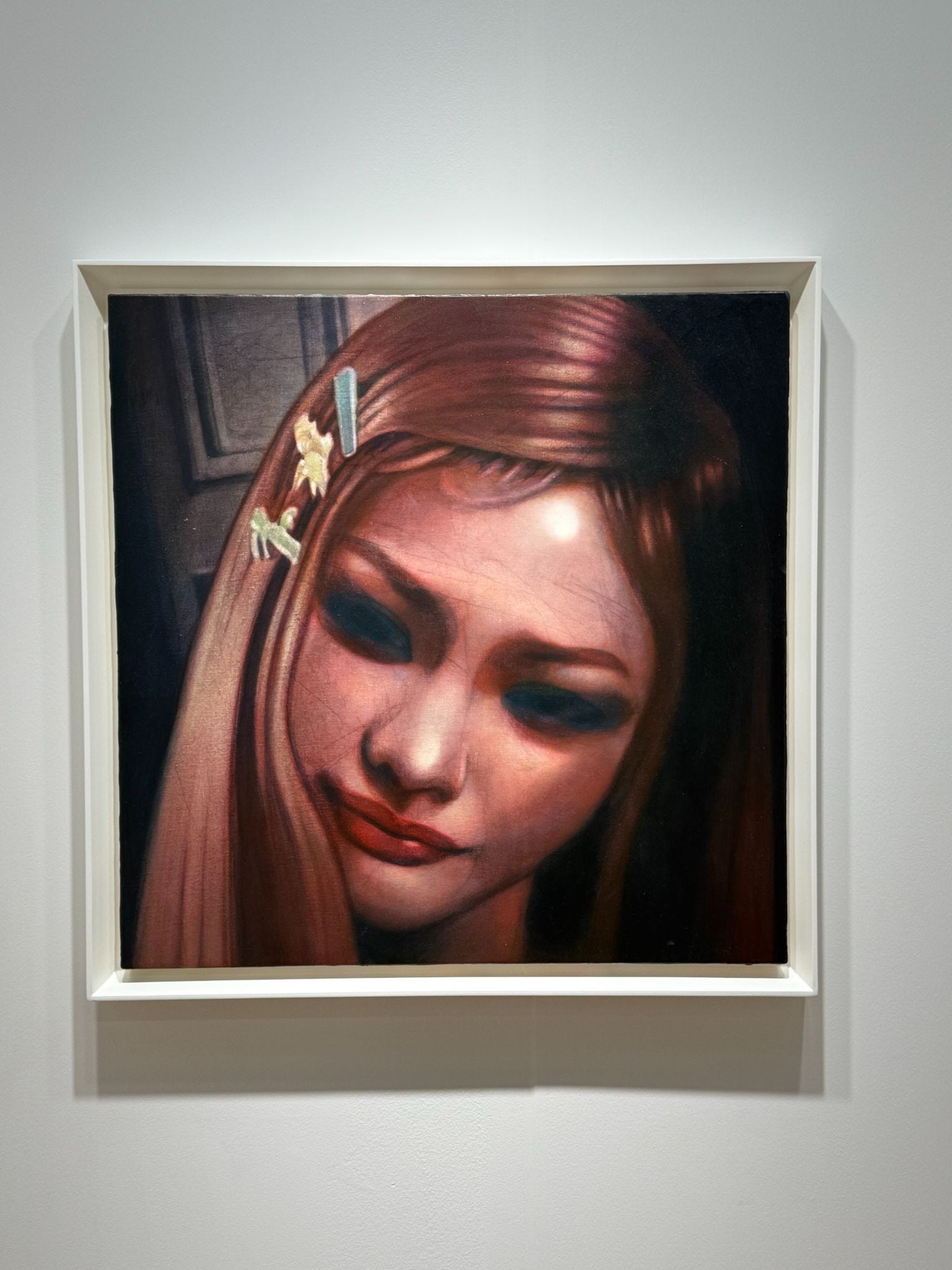
Lee renders the selfie in a gloomy palette that feels both Baroque and glossy. These paintings have a darkness that I’d like to think goes hand in hand with the sense of doom we’ve come to associate with social media. But the faces also seem to glow, their skin luminous, porous and algorithm-ready.
It’s no coincidence that the same gallery showing Issy Wood’s moody paintings just the other week is now presenting Lee’s. It’s further proof that in contemporary art, it’s all about mood.
DRAKE CARR, Mariposa, Art Basel Paris, Emergence Section
As fairgoers wrap around the Grand Palais’s balcony, they are treated to stunning views and a curated selection of emerging galleries offering a taste of what’s happening in younger artistic scenes. As usual, these sections are my favorites, often showcasing the most dynamic and experimental work at the entire fair. It was a competitive year, but the booth that stood out most was the first one I encountered.
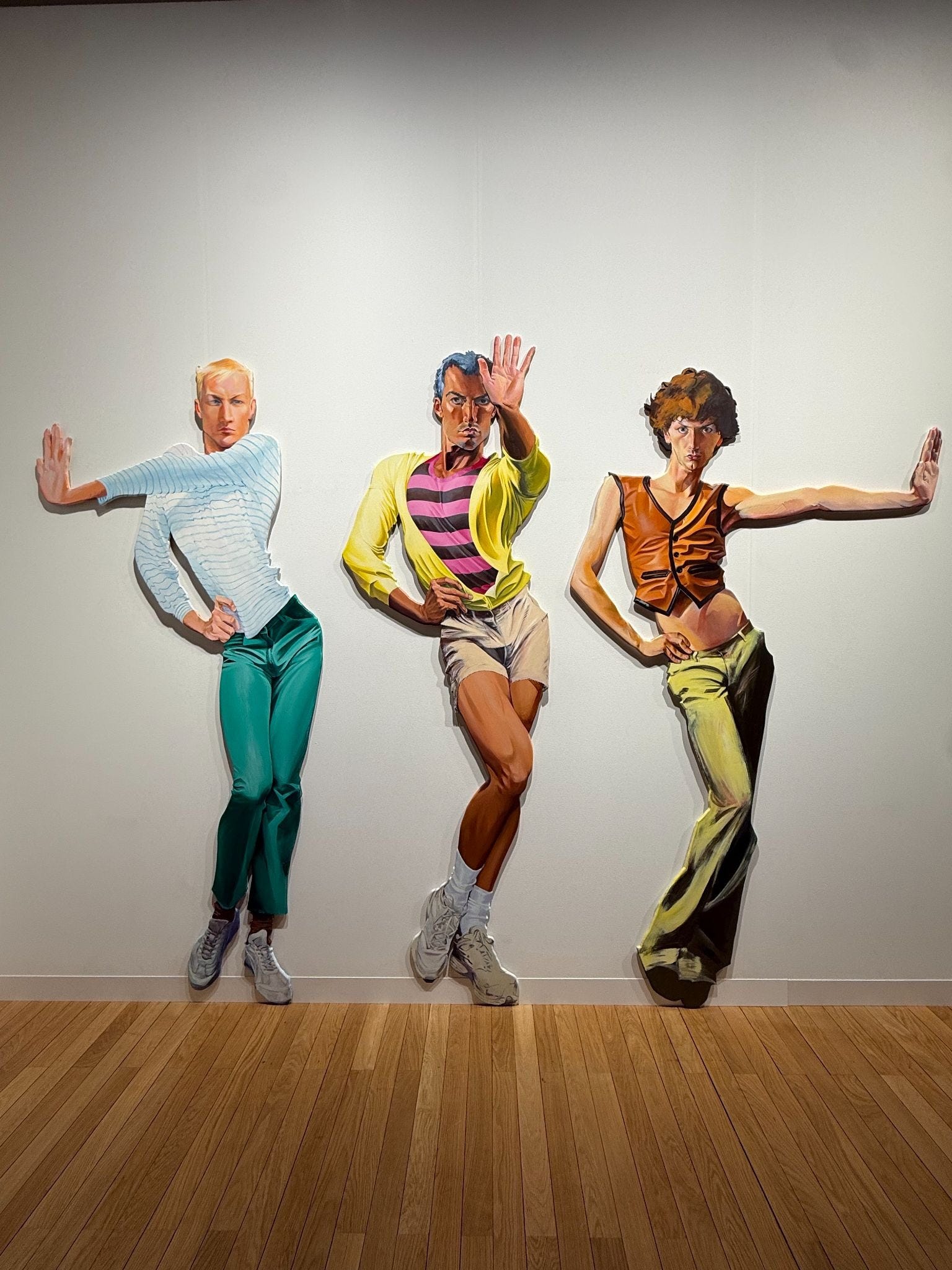
Mariposa’s solo presentation of Drake Carr caught me in what felt like a queer flash mob. The walls were populated by larger-than-life painted plywood cutouts of flamboyant, vaguely ’80s-looking characters, all striking impossibly choreographed poses. With their elongated limbs, cocked hips, and exaggerated gestures, they looked like a cast of downtown nightlife personalities.
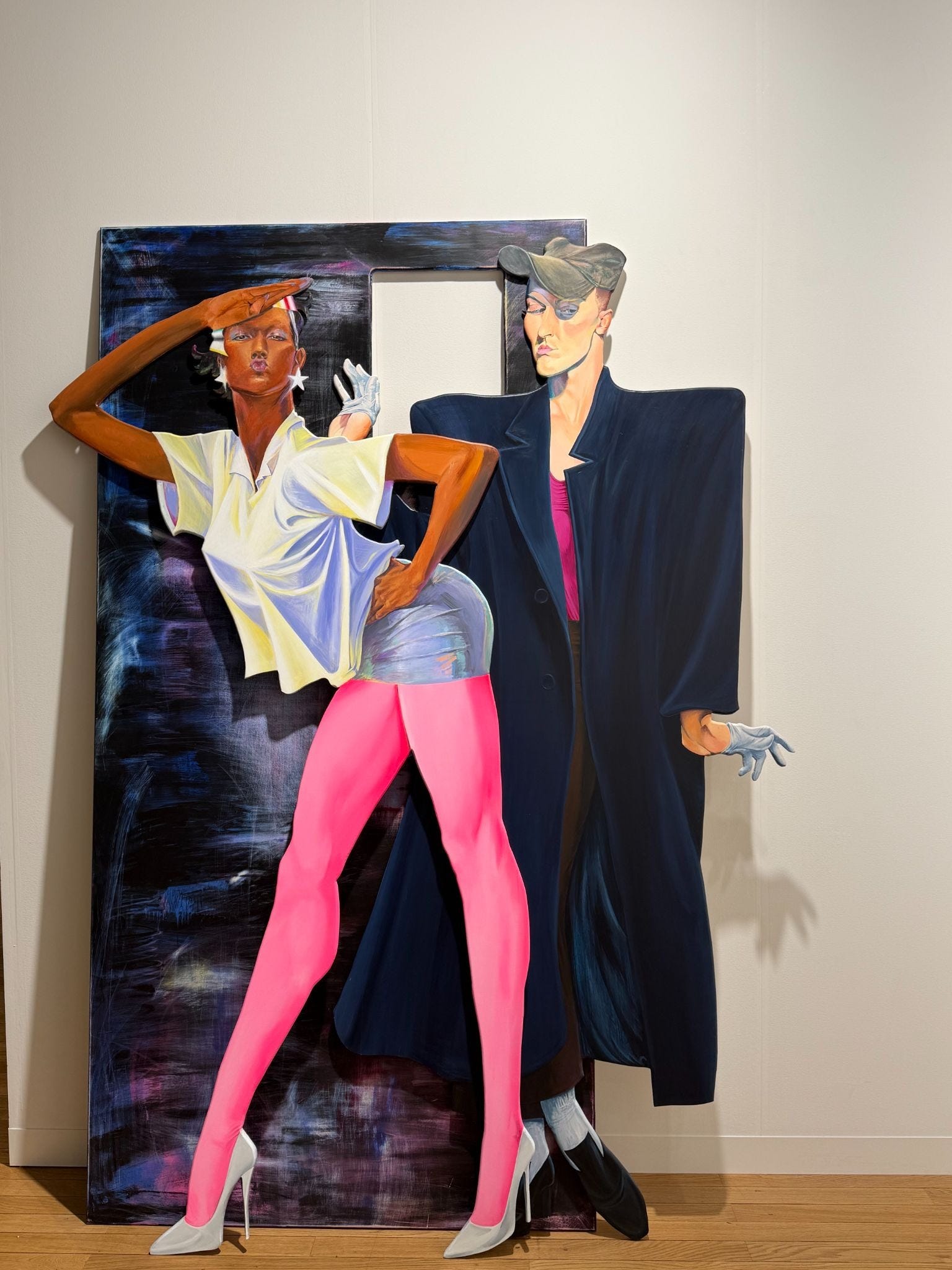
I knew these works were queer without knowing a thing about the artist. My gay cousin, who has absolutely no interest in art, liking my Instagram story of the cutouts was further confirmation.
Later, I learned that Carr drew inspiration from the people he met while bartending in New York’s queer nightlife scene. Now their theatrical gestures made perfect sense. Each figure seemed caught in the act of performing for someone, whether flirting, posing, or simply demanding attention.
What I loved most was how Carr captured the prescribed choreography of queer social life, where looking and being looked at are practically forms of communication. Even standing around becomes a performance.
MEXICO CITY GALLERIES, Paris Internationale
After all the pomp and circumstance of Art Basel, I was eager for something a little less polished. Enter Paris Internationale, the independent fair that has become a reliable host of younger and experimental practices.
This year’s edition occupied a stripped-down office complex along Canal Saint-Martin, trading the grandeur of the Grand Palais for bare concrete, exposed interiors and the feeling of stumbling into an exhibition that wasn’t supposed to be there.
It’s a global village here, but I couldn’t help but gravitate towards the Mexicans. Perhaps it was my affinity for the Mexico City artistic scene, but these galleries always seem to bring a zany grit that is simply unmatched.
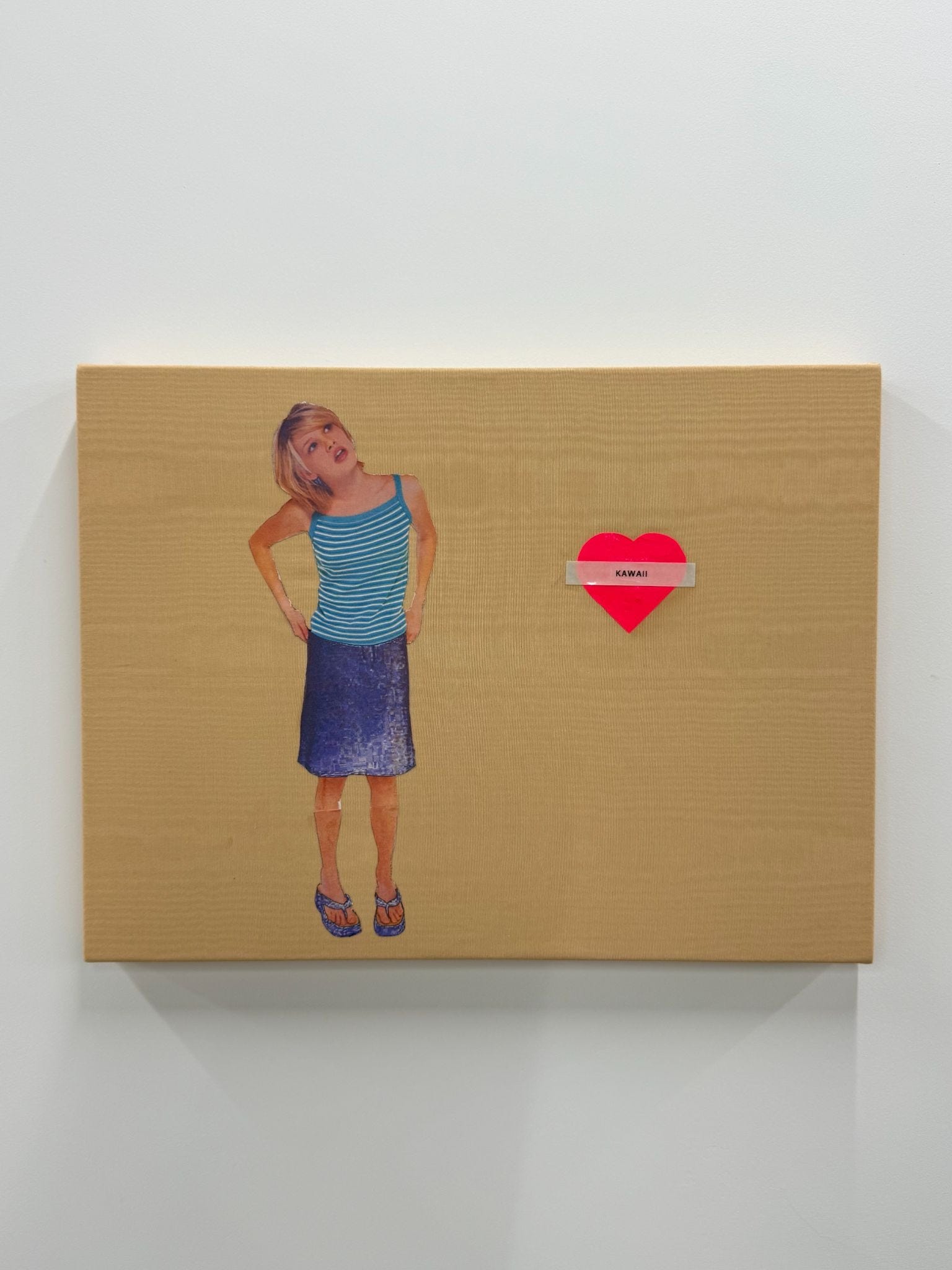
Leading the pack on the dusty first floor was House of Gaga, which is not to be confused with Lady Gaga. Here, Gaga is the star, bringing their usual lot of trendy international tastemakers. E.g. the glittery scrapbook-like collages of Maggie Lee, making you feel like a 90s teen girl filled with endless desire.
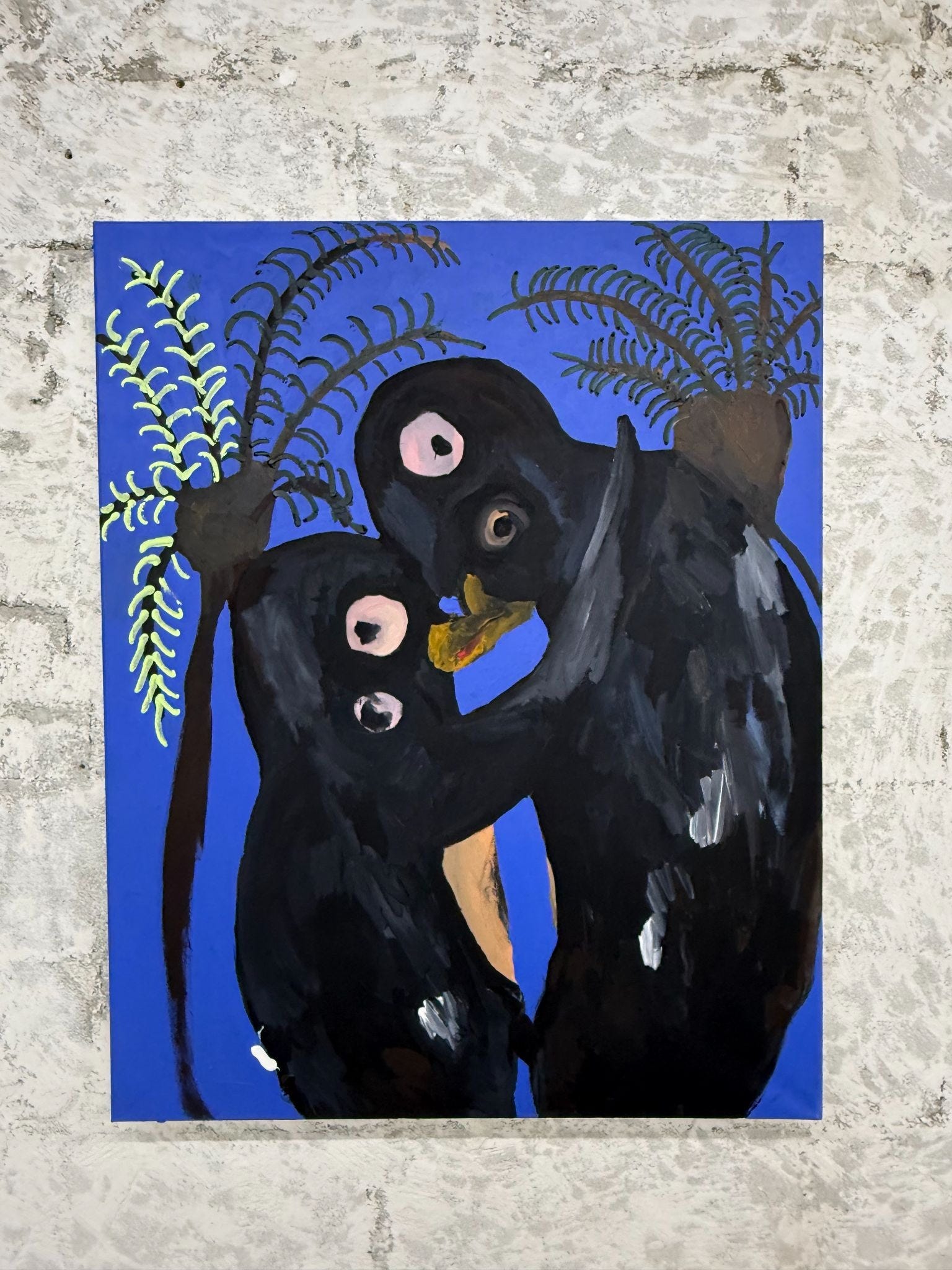
Further inside the booth lives the ugly penguin paintings of Mathieu Maloof, who purposefully paints badly to challenge what even makes a painting “good.” In a previous interview, Maloof said that the penguins came to him after taking an edible, which seems to check out.
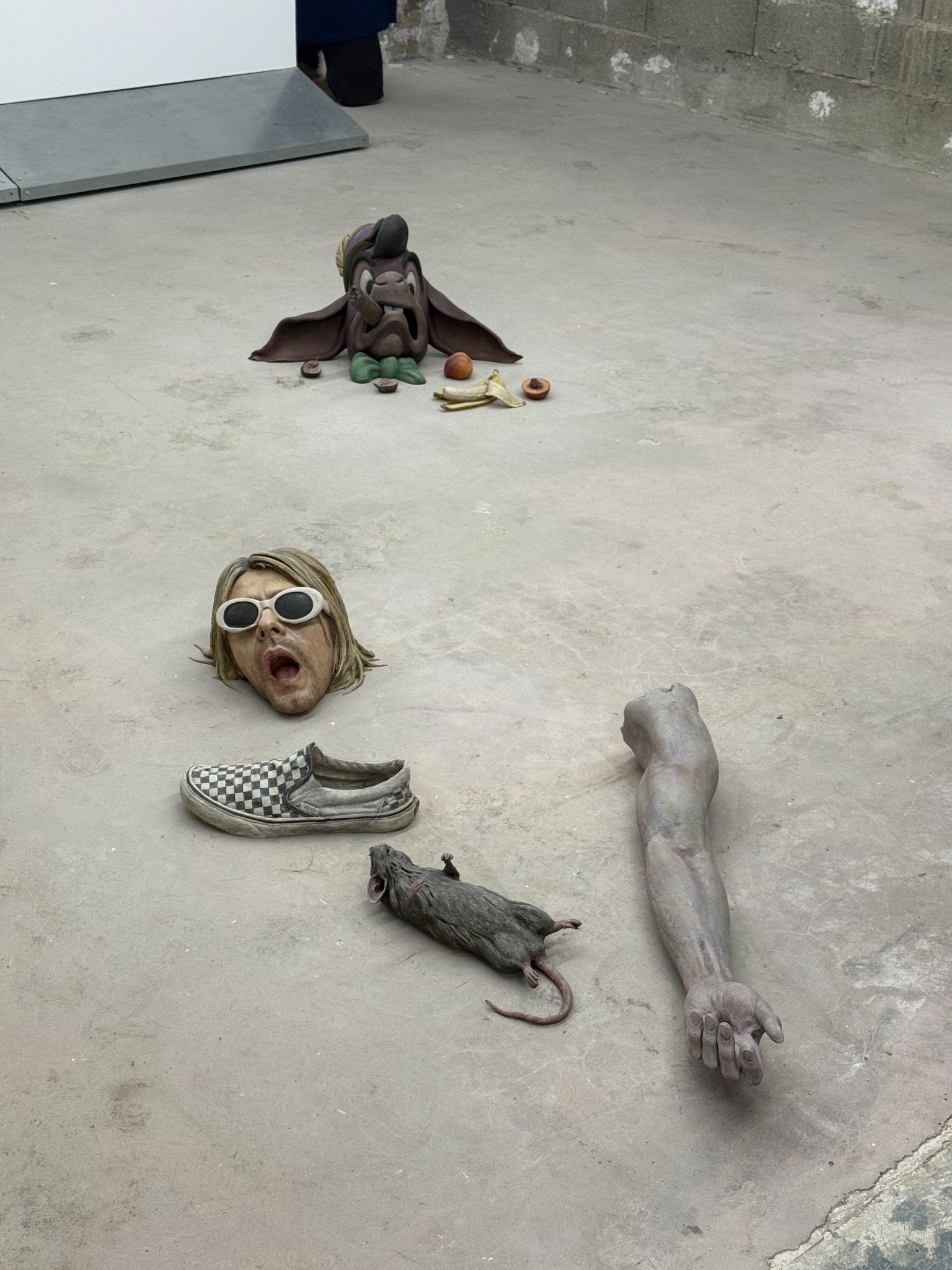
Across the hall, Llano offered another assortment of oddities. Disembodied ceramic figures of pop-cultural icons such as Kurt Cobain and Dumbo rest emotionally on the floor. These are the works by Enrique Lopez Llamas, reminding us that who we are is often an assemblage of the images, objects, and cultural references we absorb.
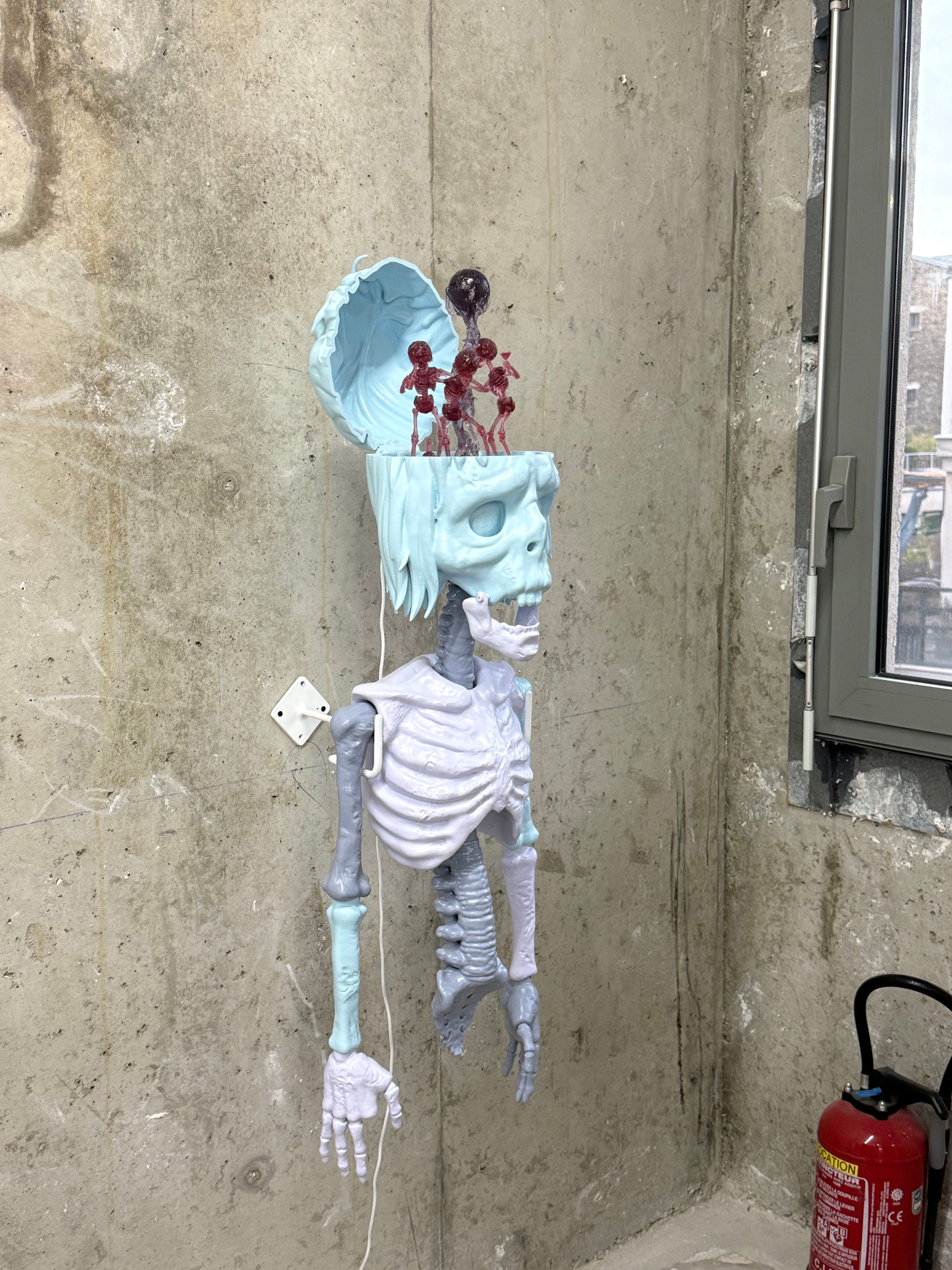
Upstairs at Pequod Co., Mexican artist Andrew Roberts takes a similarly modular approach to identity, this time through the language of horror, with skeletal figures inhabited by monstrous forms made of plastic and 3-D video imagery. For the Tijuana-born artist, horror becomes a means of confronting the anxieties and violence that haunt the present. It’s also a deeply personal language, with the sculptures’ makeshift scenography drawing on his own life and domestic rituals.
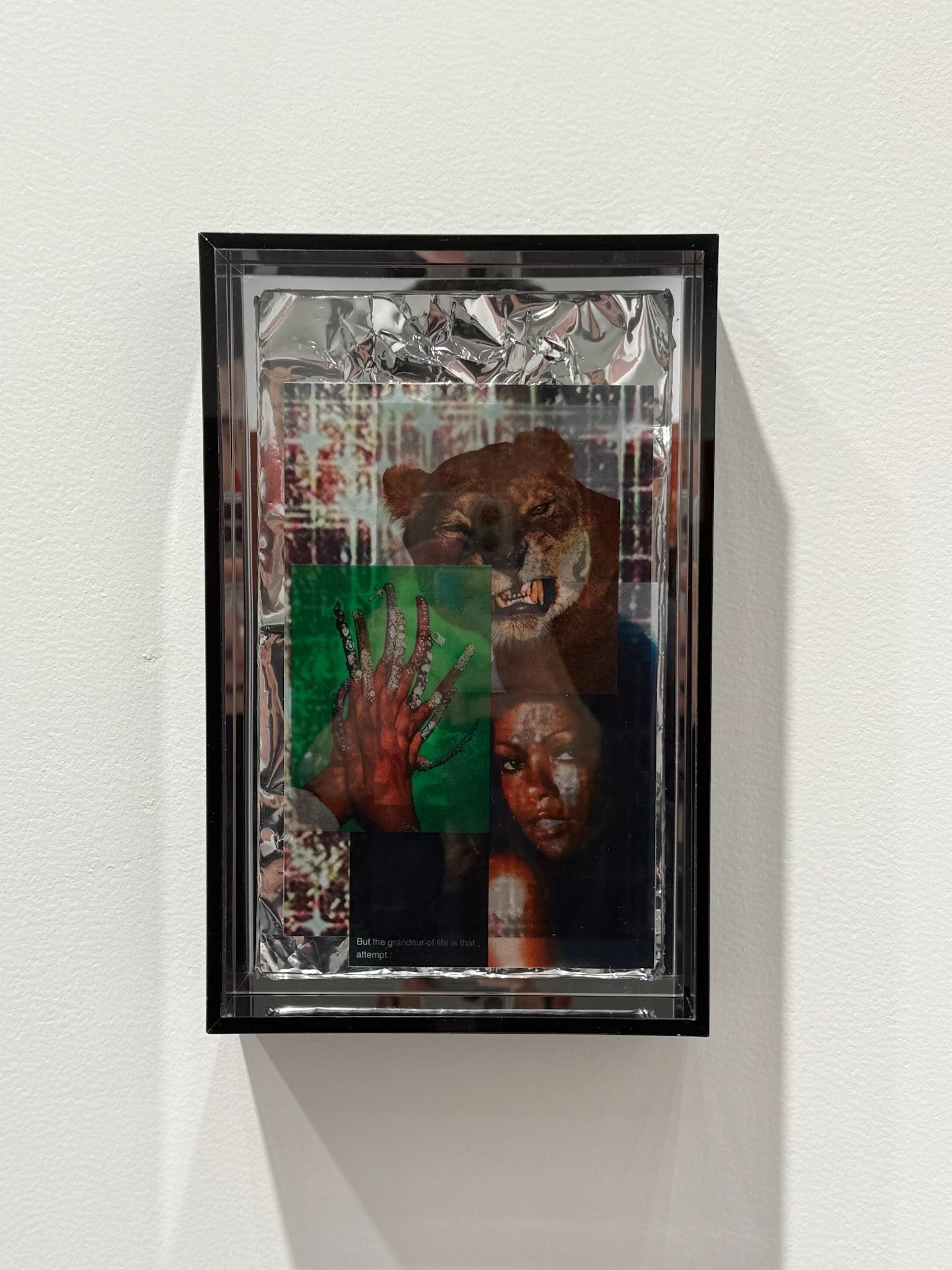
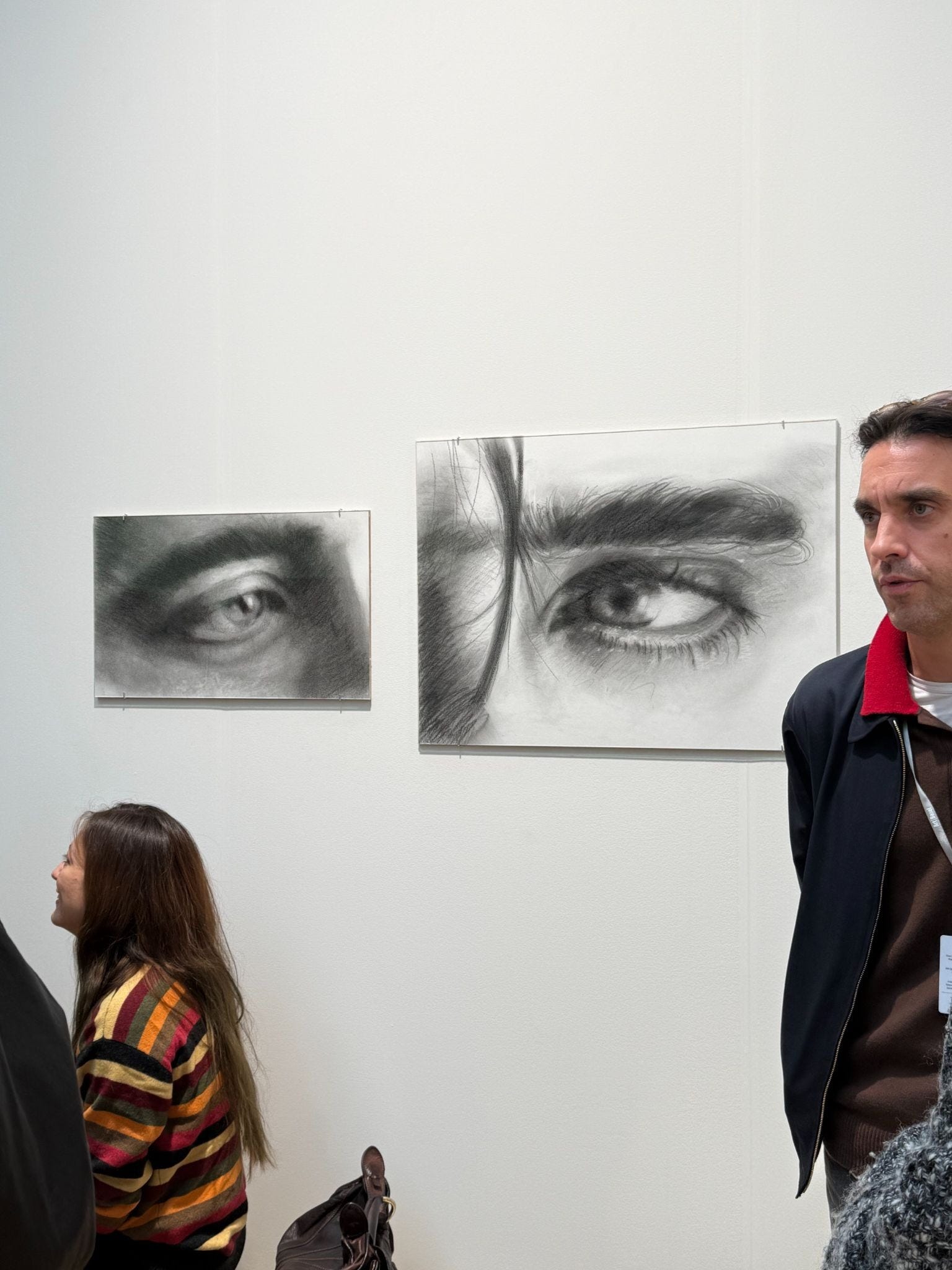
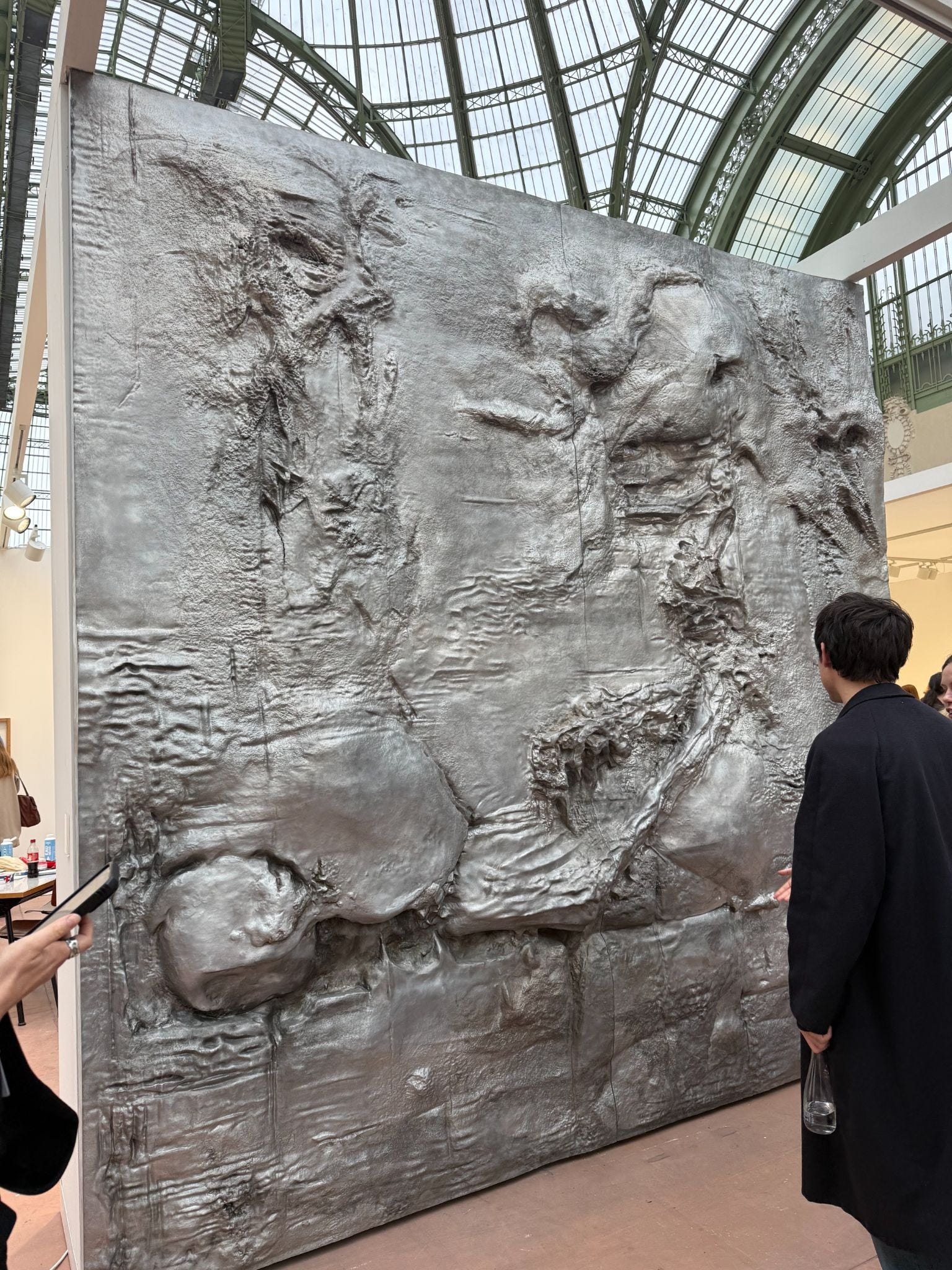
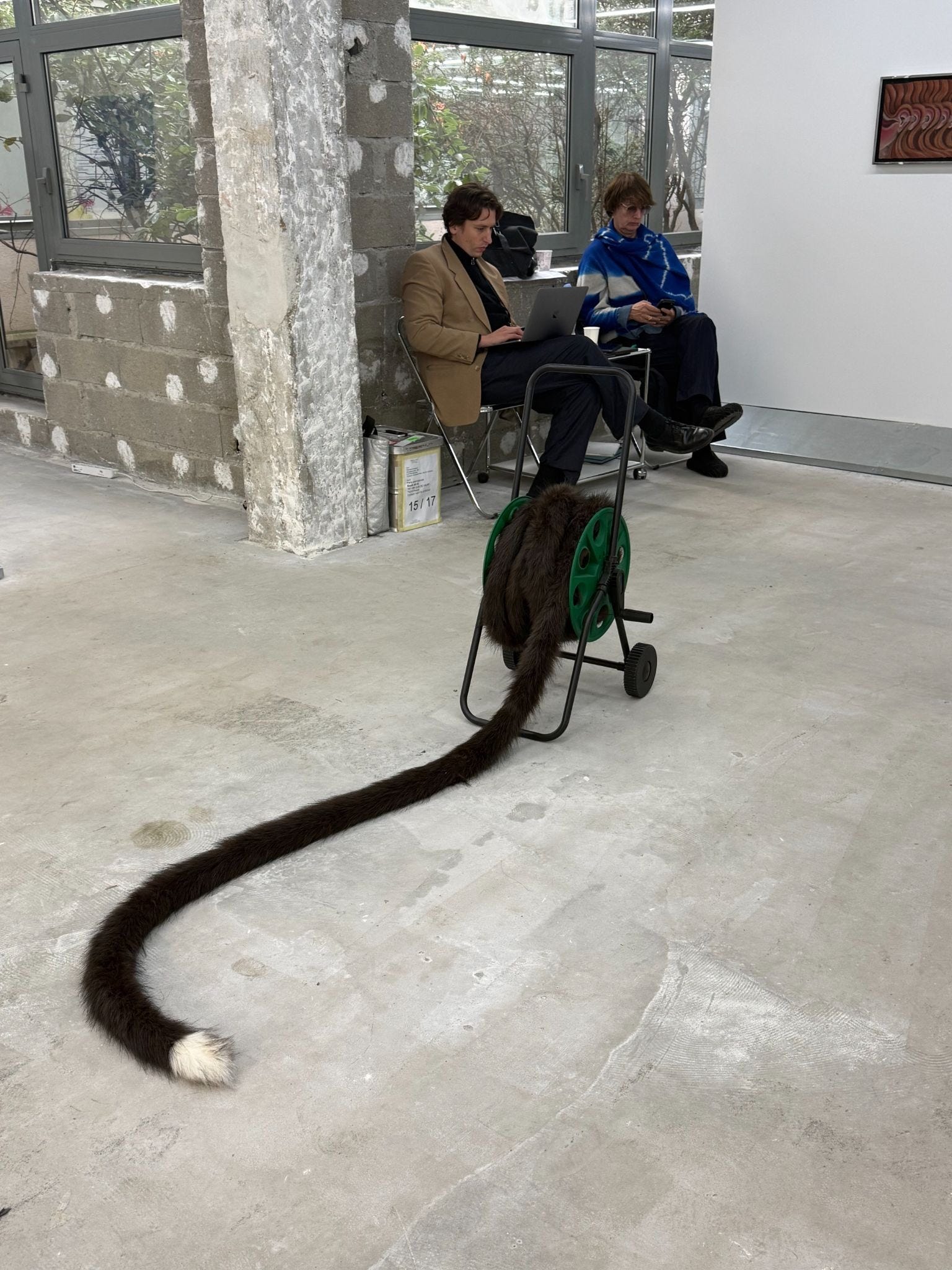
PARIS ART WEEK PHOTO DUMP
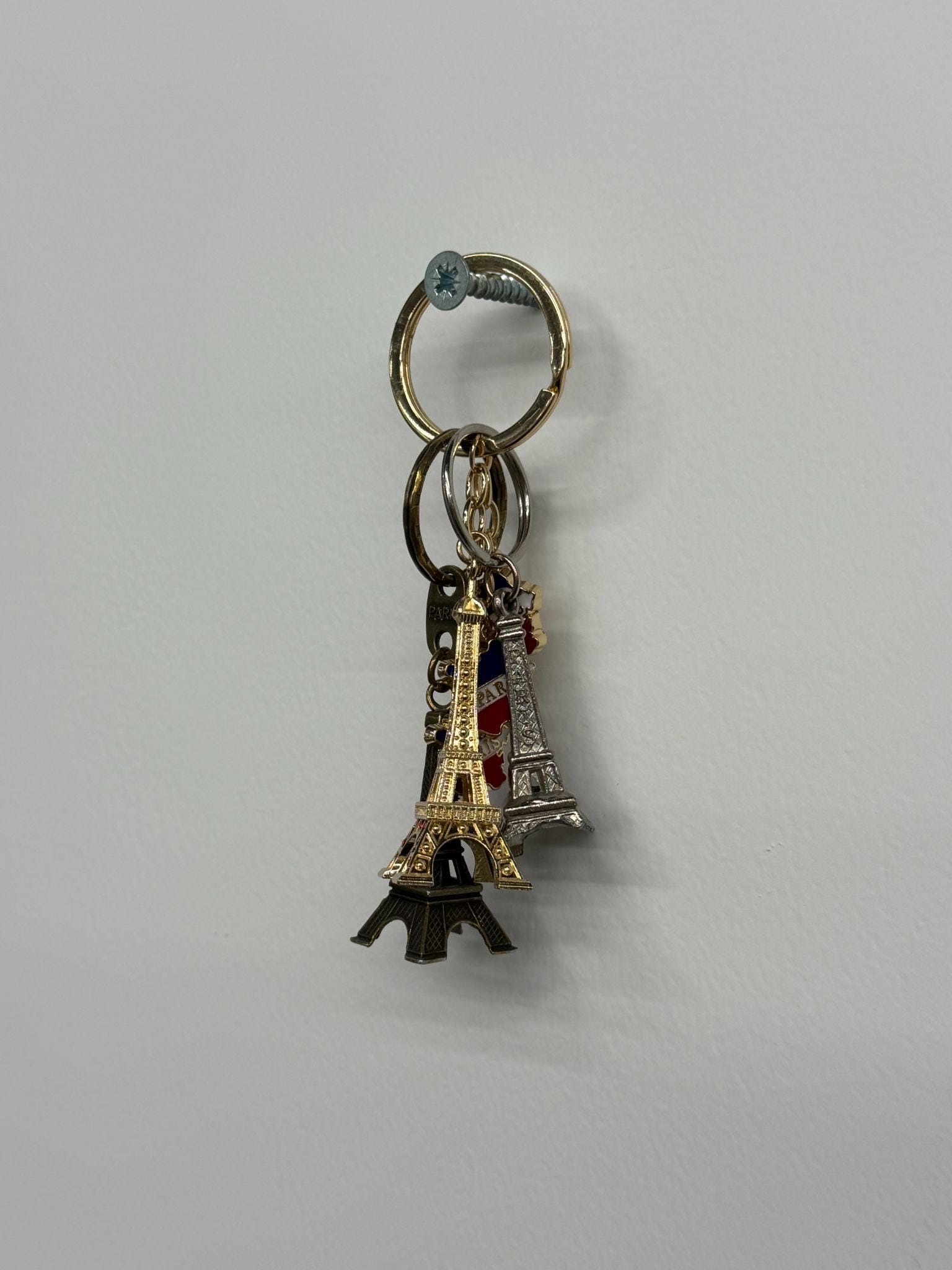
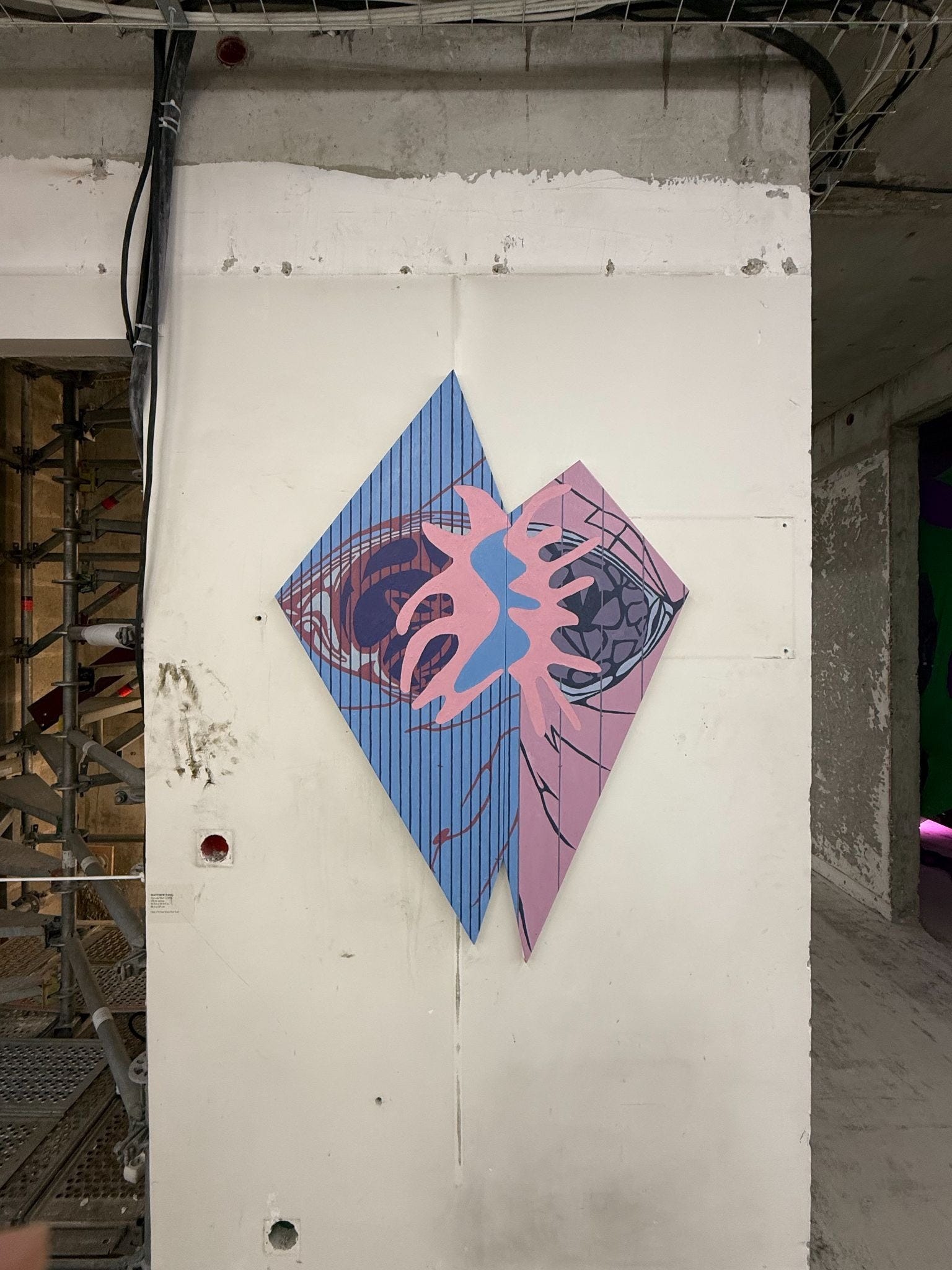
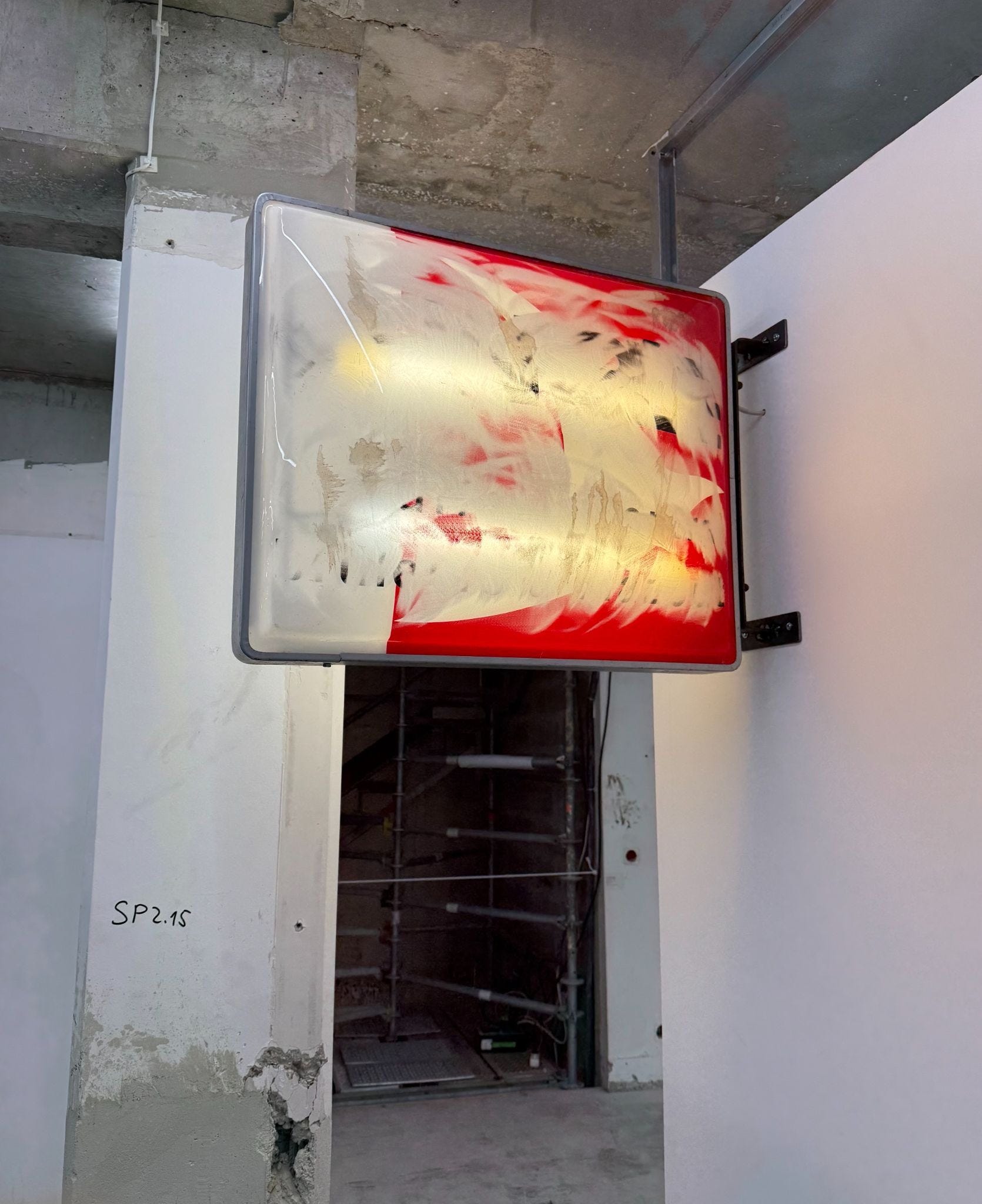
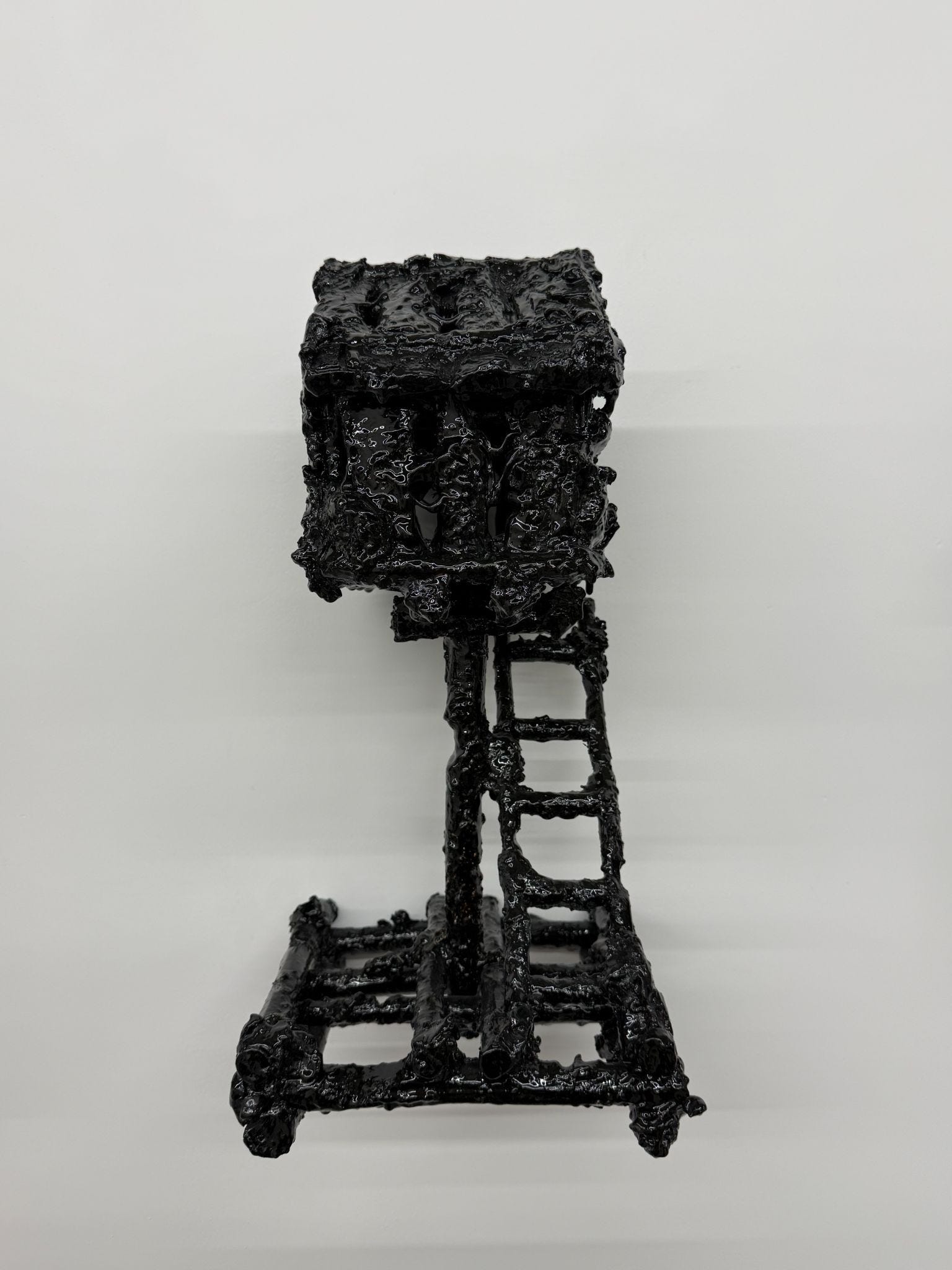
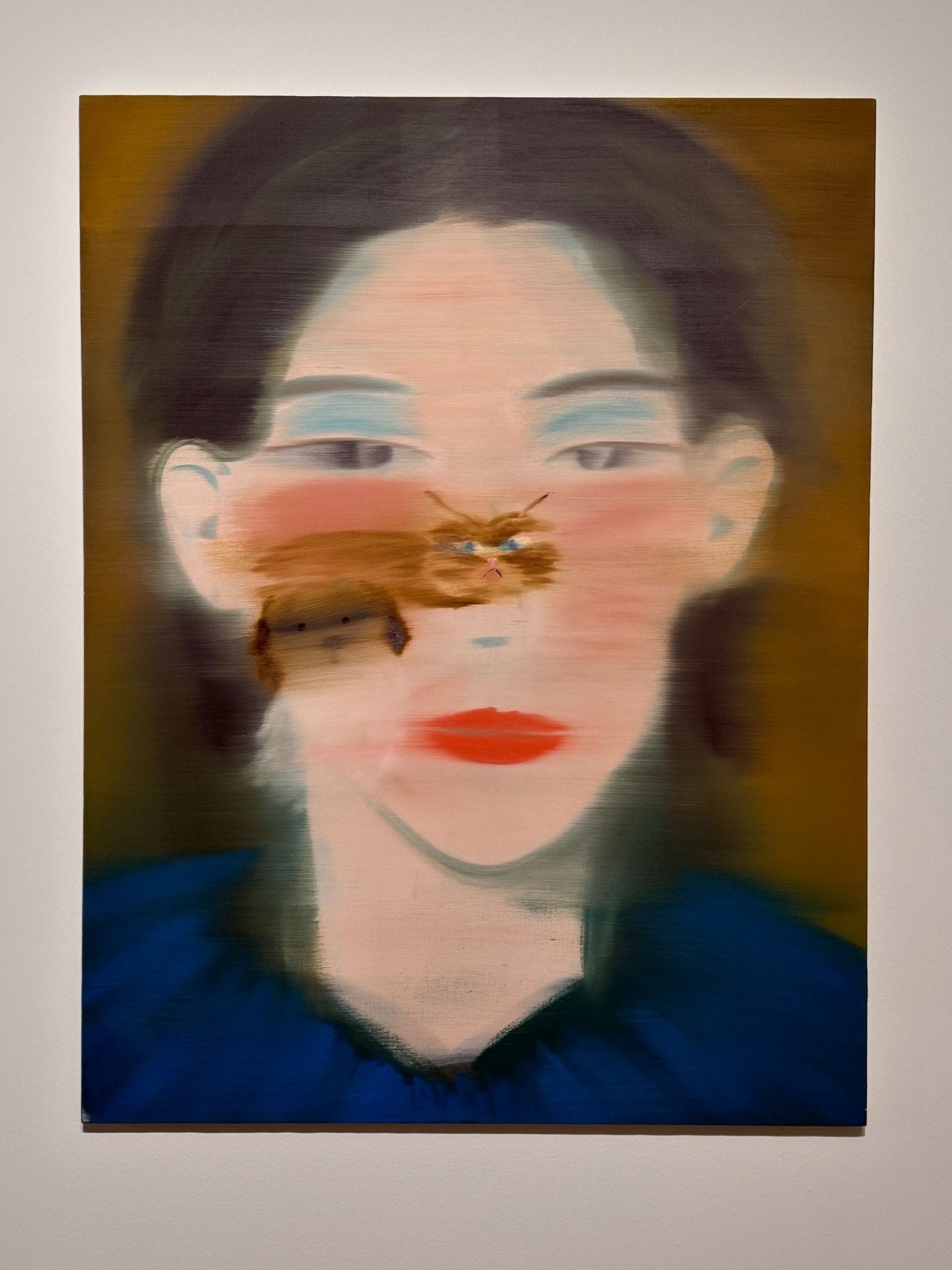
For artworks that need no introduction…
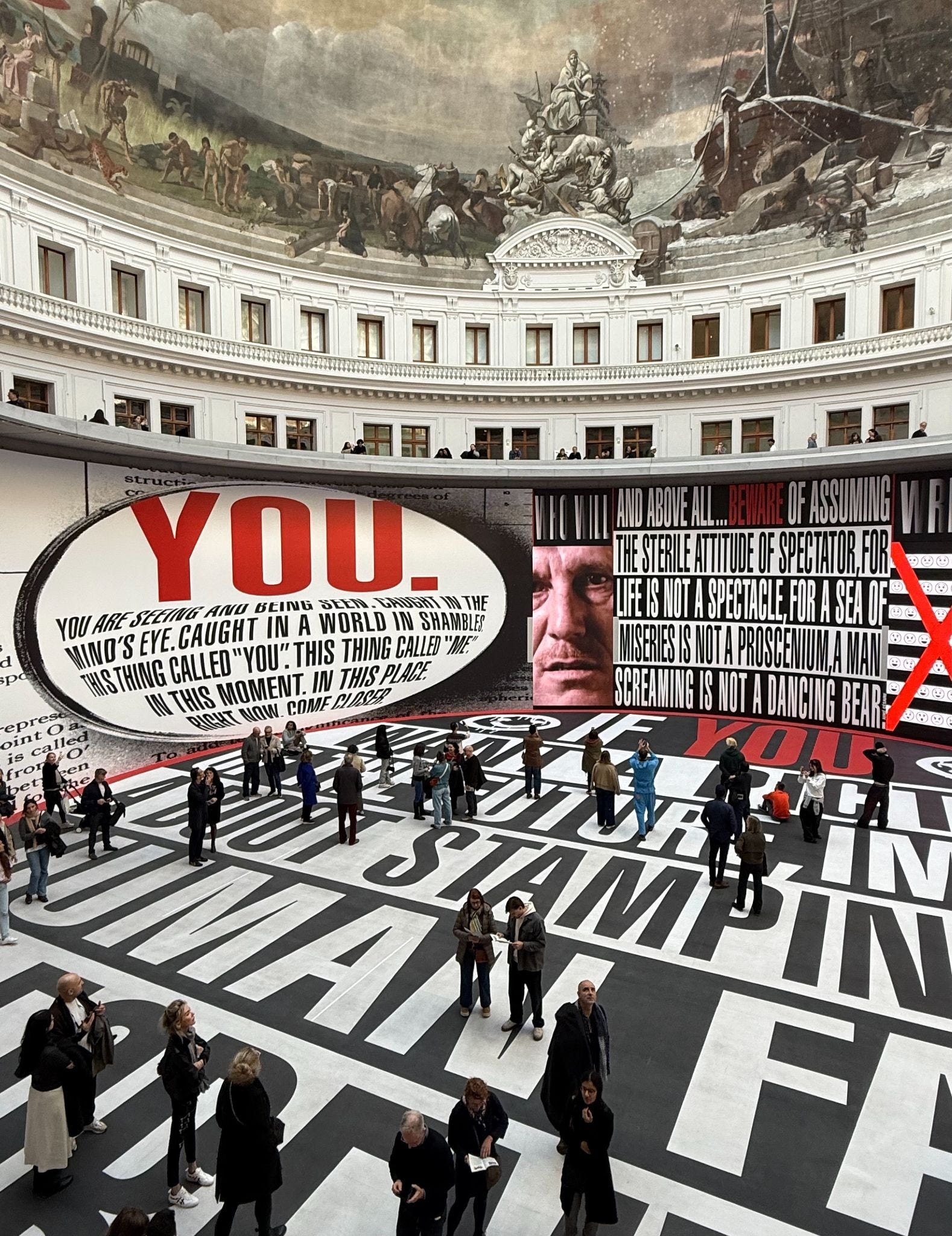
loved this