


There are a handful of defining features of reality in the year 2025, and one of these is branding. Logo, advertisements, copy. Everywhere, all the time, on the street, on our screens, in our homes.

Fake brands are real business. Wes Anderson works closely with graphic designers to build out the products and packaging of his worlds. Barbie had an entire graphics and set design team working specifically on the consumer products that appeared in the film. The fake brands of Rick and Morty are often front and center of writer’s room conversations.


There are several reasons fake brands exist.
One is worldbuilding. Given our hyper-branded present, the presence of brands (or at least logos) can make a fictional world feel realistic.
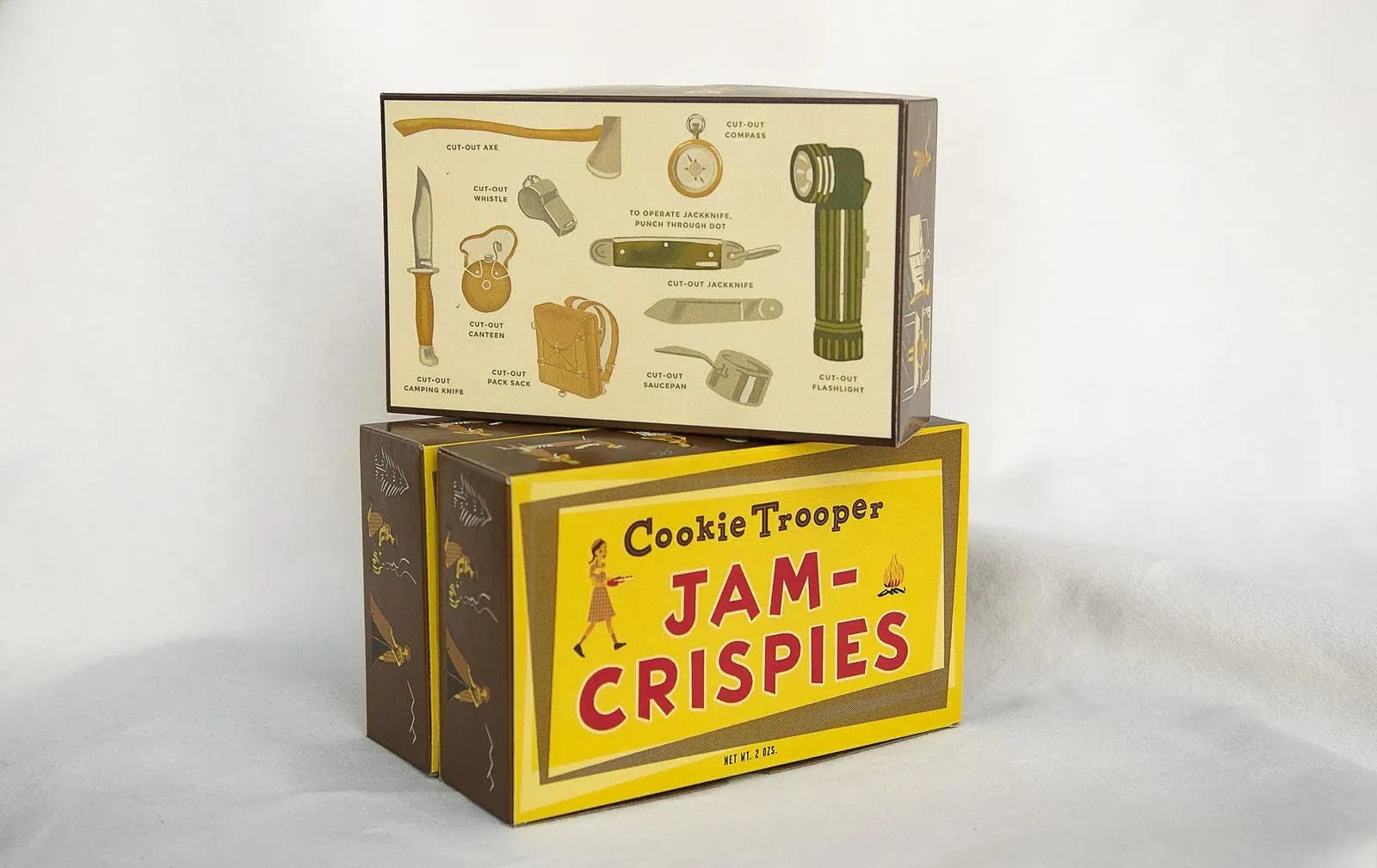
Changes to the design, presence, or manifestation of these brands can also imply crucial information about how the fictional world functions. Wes Anderson is deft at this technique. The wry hyper-literal titles of the various bureaus, buildings, organizations, and books in his films (example: Invisible Spectrum Elemental Surface Atomic Spectroscopy) alert viewers to the absurdist tone of his worlds. In Asteroid City, to take a different sort of instance, menus are magisculed on the front of cafés, a practical implication of the speed of passing vehicles. These changes to consumer product branding (and yes, the title of a book cover counts) are elegant delivery systems for worldbuilding.


Fake brands are also great because they can’t sue you. Many a production team has had the hard conversation about whether they could afford a protracted legal battle with the umbrella conglomerate that owns the brand of, for instance, toothpaste they want to be a fixture in their show’s bathroom set. The safe choice is often to get in Illustrator and make a few transformative alterations.


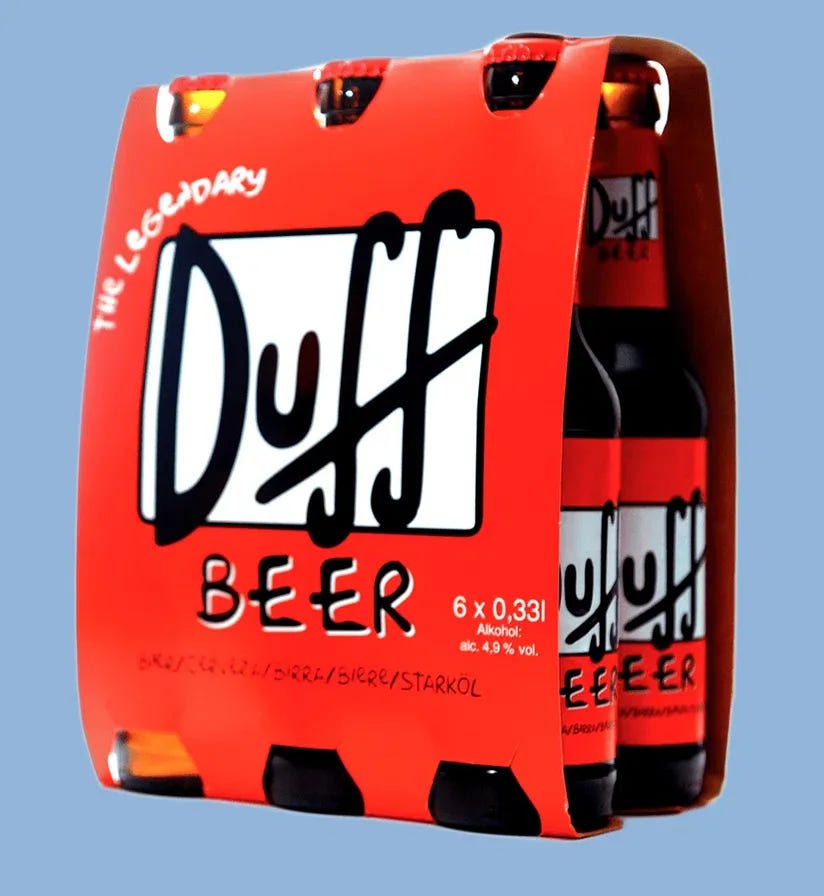
Sometimes you want a brand’s attention, or to wink at the audience. Fake brands as satire is a well-worn use case. Duff Beer, a fake brand from The Simpsons universe, embodies all the worst of bottom-shelf beer.
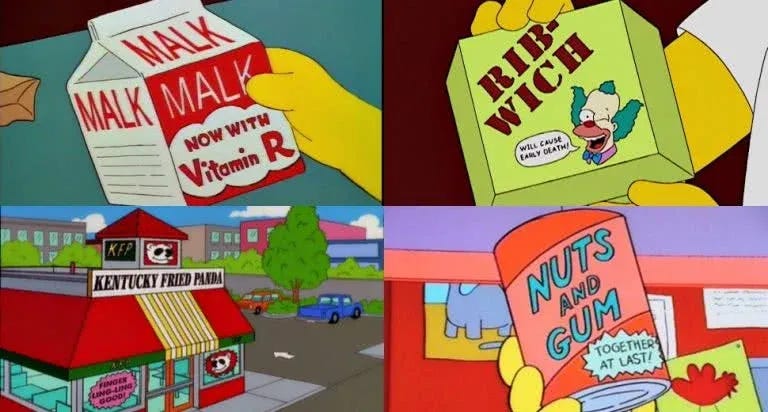
Brand’s can also characterize. A fictional character’s brand companions can tell us more than their words, actions, or beliefs ever could. Wes Anderson is also particularly masterful in his use of this strategy. The books, products, and trinkets of his characters are rarely empty objects.
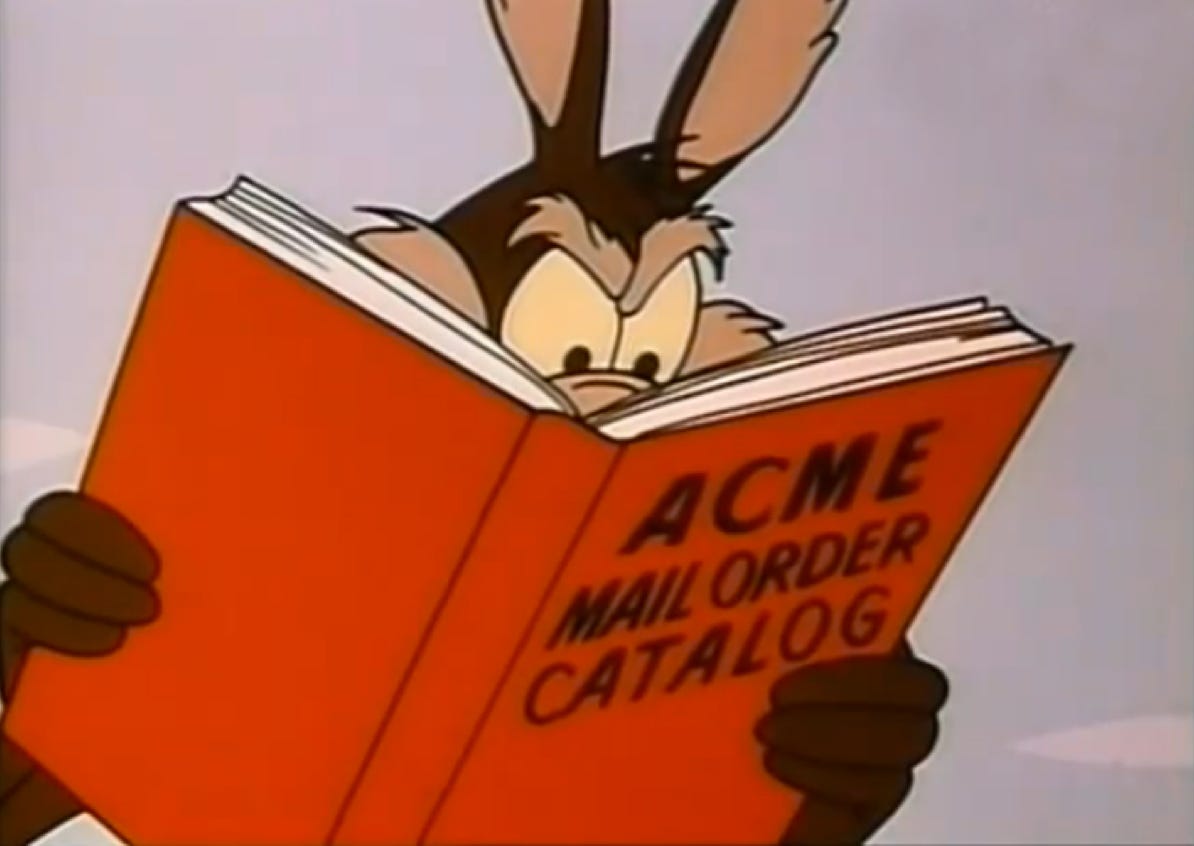
In a newly prominent phenomenon, entire fictional works are sometimes set in the universe of one brand. Barbie, for example. In these situations, rather than branding the objects explicitly with logo and graphics, all design becomes a brand facet. Everything from the cut of the lawn to the groceries in the fridge are implicitly Mattel sub-brand products


The importance of brands in our world and in our stories is clear. The two aren’t as separated as they may seem. In his dissertation on the subject of fake brands, 3D artist Lorenzo Bernini studied the principles of fake branding and examined several related phenomena, one of which is defictionalization, or the process through which a fake brand becomes real. Duff Beer is an example - the fake beer now has real beer, t-shirts, and can koozies bearing its emblem. Bubba Gump Shrimp co. is another example.
A 2012 show at Apexart celebrated this blurry line by curating a lineup of fake brands, several of which had defictionalized, placing it in a gray area between guest curated art gallery show and pop-up shop.
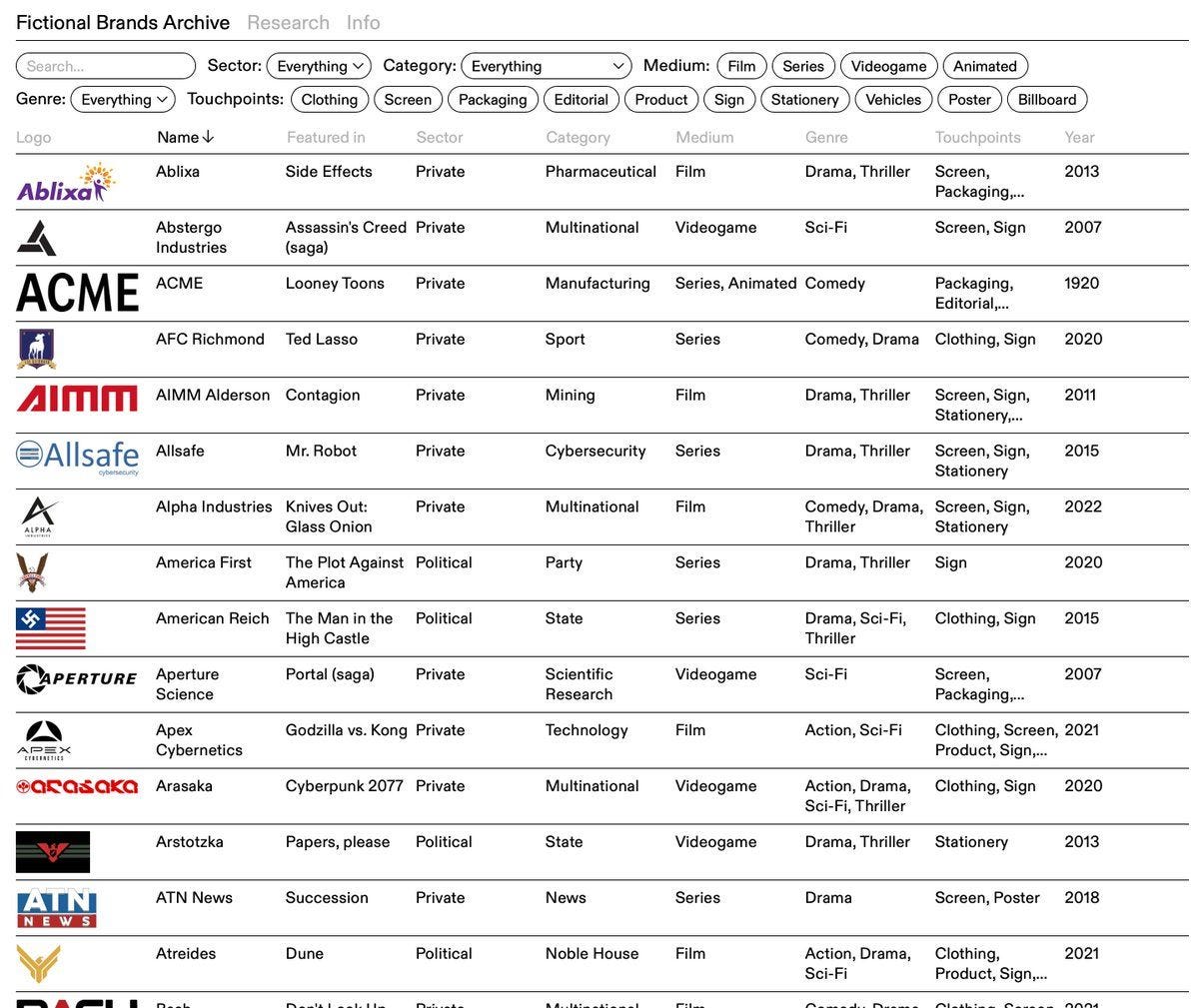
The line gets even blurrier when you introduce creative ideation, the hypothetical brands of marketing agencies, and the productless logos of creative wannabees. Today, many people do branding who don’t have anything you’d call a company. In some ways, to ‘brand’ has become a purely creative endeavor. Does that make it fake?
Brands can be many things. They can be comforting, exciting, disappearing, prominent, beautiful, ugly. They can also be real or fake. Increasingly, drawing the line between the two isn’t as easy as it looks.
Image Curation by Erild Kondi (@kondierild)
Written by Johann Faust.