


Written by Hannah Morgan
For the average person, even one with an interest in clothing, the world of high fashion is something to be consumed alone, if at all. Brands fill the rooms of their runway shows with influencers in front rows, and produce curated content to distribute on socials. As a result, the masses are left watching clips of shows alone in their rooms, on their phones, in formats whose goal is clicks, not the celebration of quality fashion.
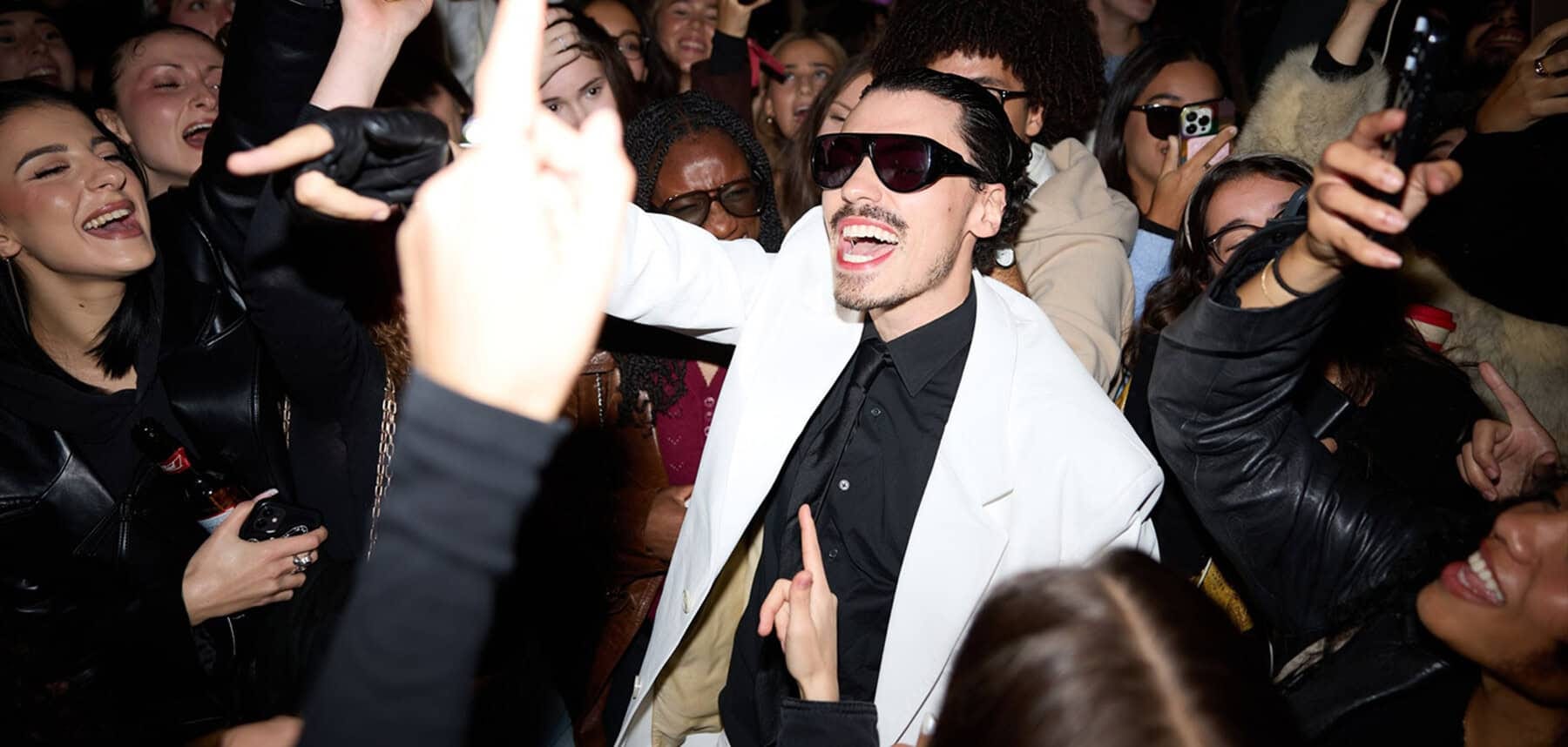
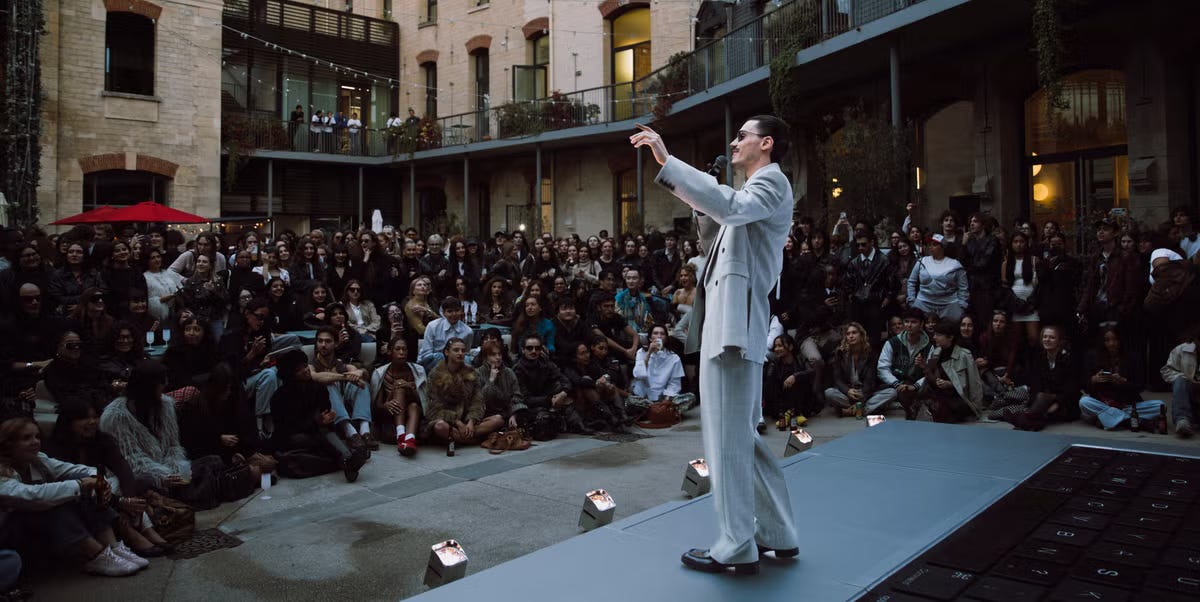
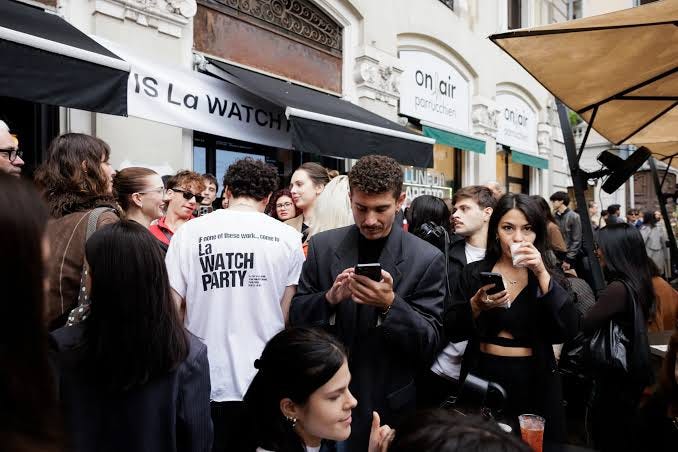
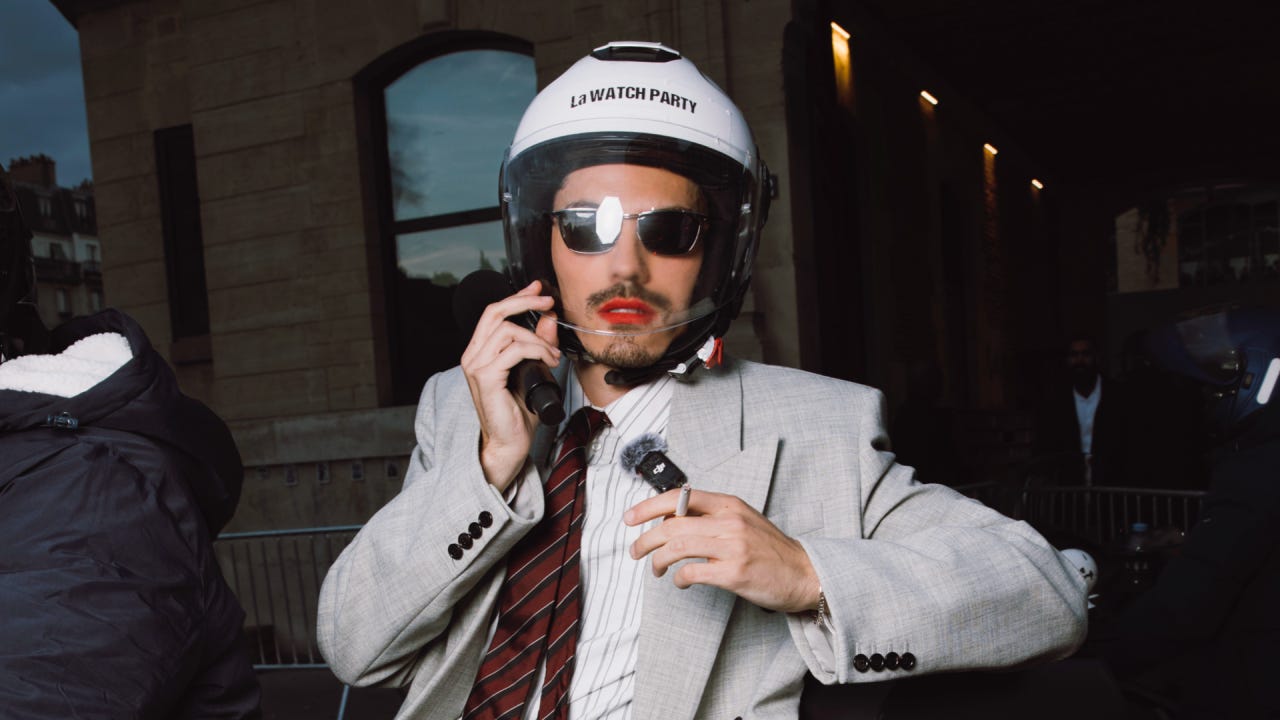
Elias Medini, commonly known as Lyas, built a solution: an open-invite watch-party event series, where fashion lovers gather and watch, together and live, like sports fans. Founded in 2024, La Watch Party, as it’s called, has become an international sensation among fashion enthusiasts, and made Lyas a new People’s Champ in an industry with very few of them. This month, he was recognized with an Instagram Rings award for his achievements.
A unique path led Lyas here. After graduating from film school he became a fashion commentator, exploring the contextual and political layers of contemporary style through outspoken short-form analyses. His commentary is sharp, funny, and has no allegiances to particular brands or institutions.
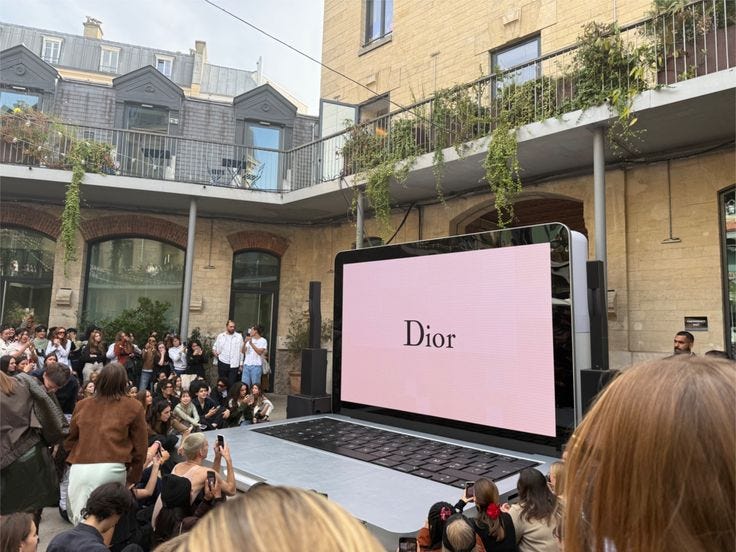
In 2024, when he was snubbed for a Dior invite, he towed his own television to a friend’s bar in the 10th Arrondissement with an open invitation and a promise to pick up the tab. As he tells us, the decision was inspired by his dad’s practice of watching football with his friends. Why couldn’t this exist for ready-to-wear?
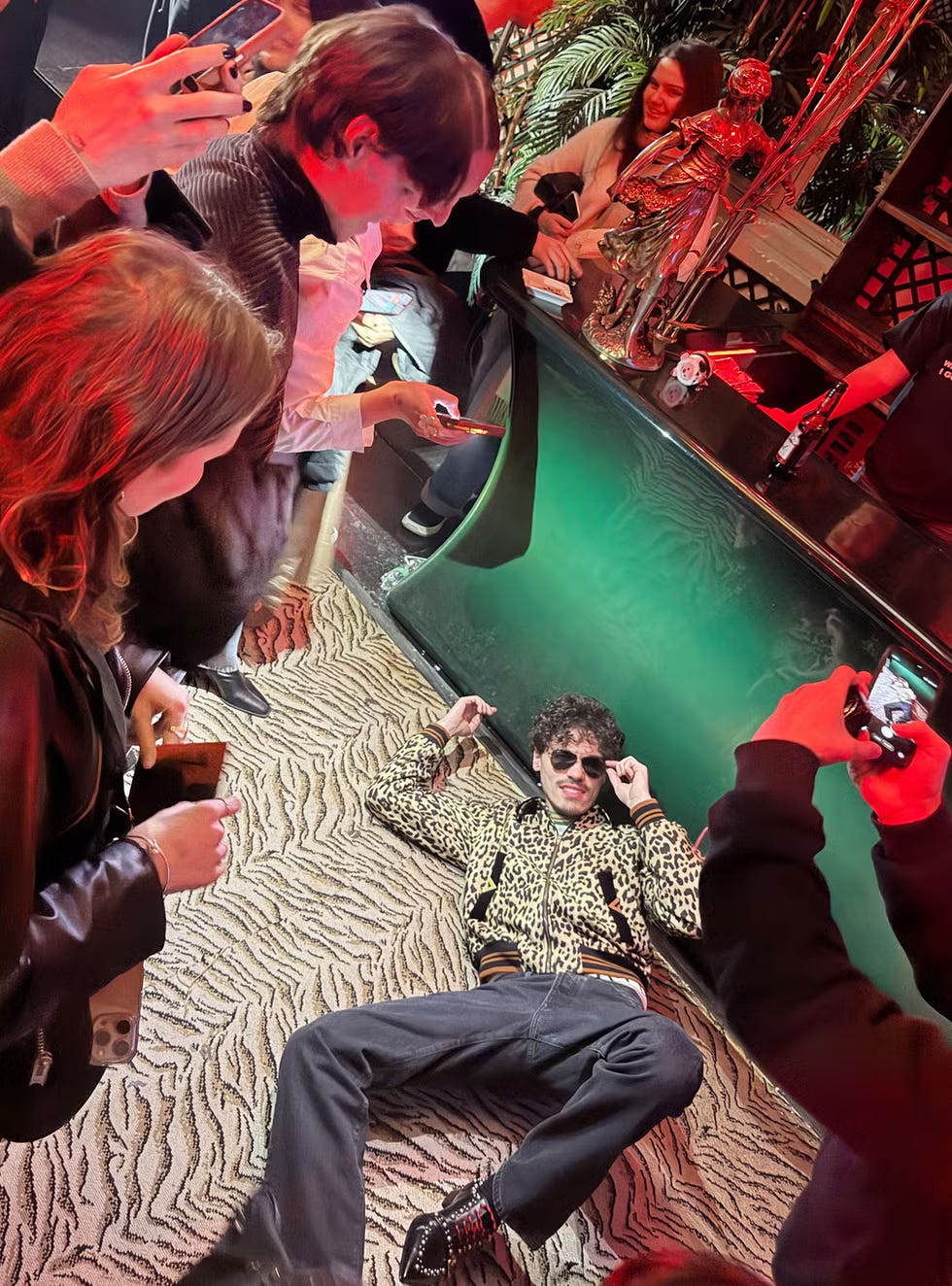
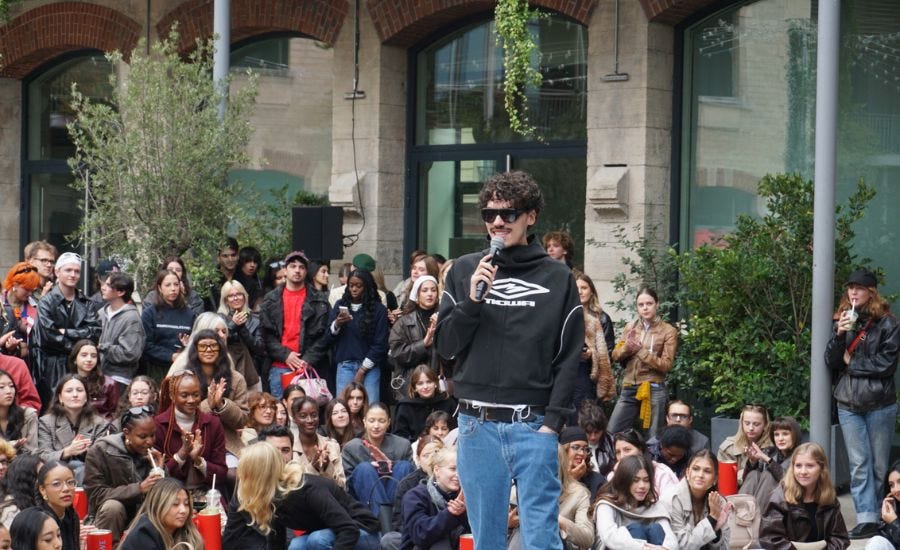
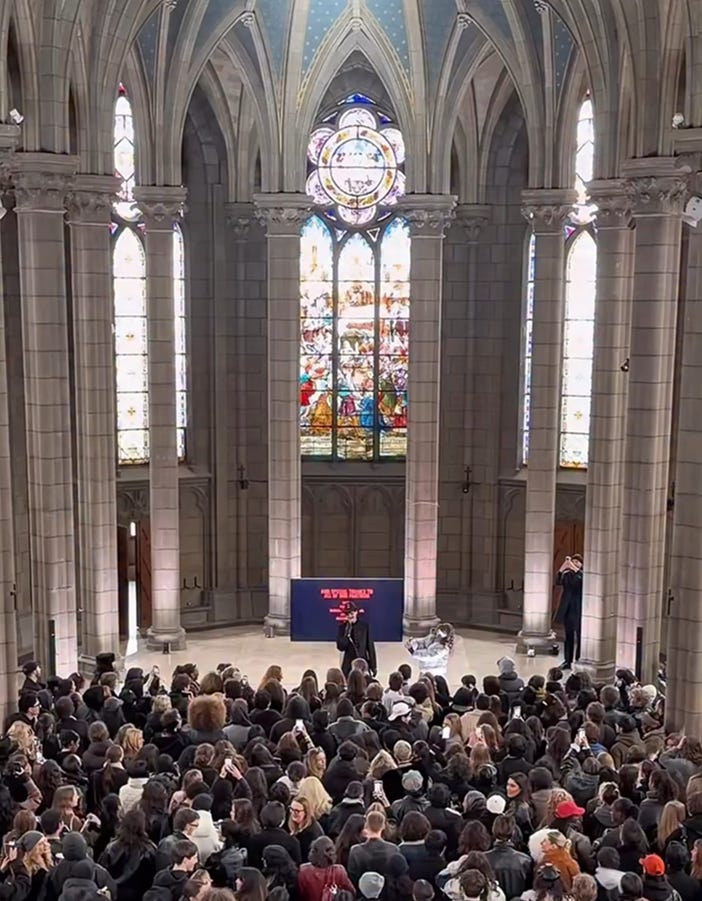
The series found an immediate audience, and rapidly expanded across borders. Lyas has carried the concept to cities that are traditionally overlooked by the calendar (like Helsinki and Marseille), earned sponsorships from brands like Celine, and appearances from industry legends like Carine Roitfeld. La Watch Party exists today as a communal celebration of fashion, where stylish kids and industry professionals rejoice in the highs of fashion as part of the new front democratised row.
Lyas’s story is a rare and important one: a popularly elected lodestar, running against the grain of the industry, delivering important cultural material to those who would usually be deprived of it. We wanted to know the details, so we called Lyas. We spoke about his come-up, his philosophy, and his vision of the future, which is as optimistic and expansive as ever.
HM: Let’s go back to the beginning. Growing up in the north of France, what kind of a kid were you?
Lyas: I was a theater kid. I was queer kid in a restrictive environment, so theater classes were a way for me to explore parts of myself that I couldn’t on a day-to-day basis. I wanted to be an actor, and I started doing castings and realized that I hated doing castings and being judged by others. So I thought Okay, I’m going to become a director, so I can cast myself. So I came to Paris to study cinema.
What were some important cultural touchpoints for you growing up?
Lady Gaga. Honestly, she made me who I am. She allowed me to apprehend life with a sense of freedom that I couldn’t get anywhere else. She made me feel accepted. She was a second mother to a lot of queer kids, and her boldness, craziness, and weirdness made me feel like anything was possible.
After your studies, have the principles of film informed your point of view in the fashion sphere?
It gave me this narrative perspective on fashion. I always looked at a fashion show in this narrative way—like the first look was a character that had a relationship to the second model, which was another character. I always apprehend things in a linear story, even though I know that it’s only my interpretation, because fashion is mostly not linear in storytelling.
How did you know that fashion was a world that you wanted to be in? Was there a particular moment?
No, I think it came because I was hanging out with a lot of fashion people at night in Paris. I realized that these people were allowing me to be free, and that it was possible to reinvent yourself every day by dressing up. And so I felt way more included and free in the fashion world than in the cinema world.
After my studies, I decided to go the fashion route and talk about fashion online because I heard a lot of people say certain things behind closed doors, but never voice them publicly. I figured, Well, if we all think that, why is no one saying it? So I started taking the risk.
Was it difficult being so outspoken in voicing your opinions? Did you have to work up the courage, or did this come naturally?
At the beginning, I had nothing to lose. I was nobody. I wasn’t invited in the first place, so I didn’t have to risk not being invited in future. So, I was saying everything on my mind. I think I was fair—or I tried to be—even when I was tough.
It became a challenge when I started entering the industry. I was banned from LVMH. I was fired from my job at Interview Magazine. But if I had to do it again, I wouldn’t change a thing. Who cares?
On that, the first La Watch Party was inspired by not being invited to the Dior show, right? Can you walk me through that?
I wasn’t invited, and I really wanted to witness the show. I didn’t want to watch it at home because it’s sad if you don’t have the collective experience. I was thinking, Should I just go and sneak inside the show? Then I was like, Should I just bring my own TV to a bar, and watch the show just like my dad would watch football with his friends?
I hadn’t heard of anyone doing that, ever. So I decided to do it with my brother. We organized this in one day, checking with every bar in Paris to see who would help us. The only one that wanted to was my friend’s tiny bar—which I always go to—and they were like, Yeah, who cares? Bring your TV, bring everyone.
I used to go to events when I never had money, so I always went where the alcohol was free. So I said, I’m gonna pay the bill as well. I really wanted free alcohol and free entry. No RSVP.
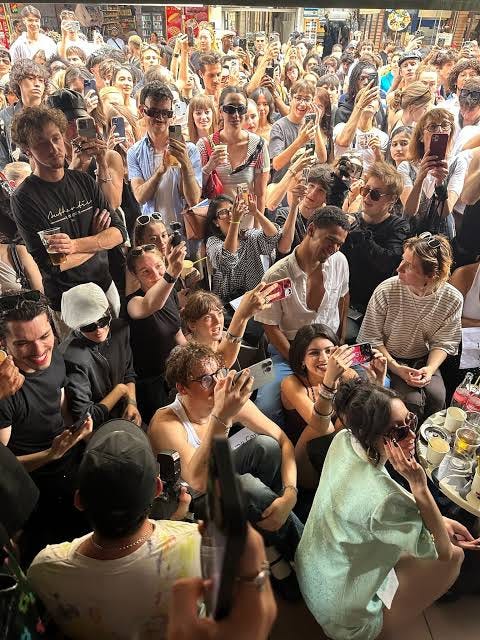
So many people came and reunited around the joy and excitement of fashion. So from this frustration came something much more beautiful.
Were you surprised by how many people came?
It opened my mind. I thought, They are here because they want to experience the show collectively, and nothing in Paris or in this industry allows them to do that freely. It really made me hopeful for the future.
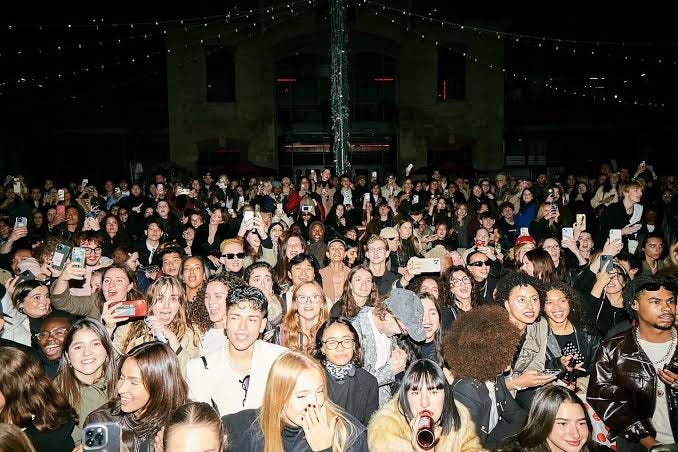
The screen was in the back. There were too many people, and most couldn’t even see the screen, but they were watching on their phone just to be together. There’s a real need for community in this industry. These people are the future of fashion, and we have to treat them like they are.
And Jonathan Anderson personally thanked you, right?
Yeah! He sent me a message right away, like, That’s very, very, very, very, very smart. And he gave me a bag.
When did you decide to scale it up?
Right after. I figured I needed to offer people space where they can all come, but keeping the vibe free and not corporate.
So how the fuck do I do that? Because we need to find a space that’s big, but when there’s a space that’s big, it can feel corporate because you need security and things.
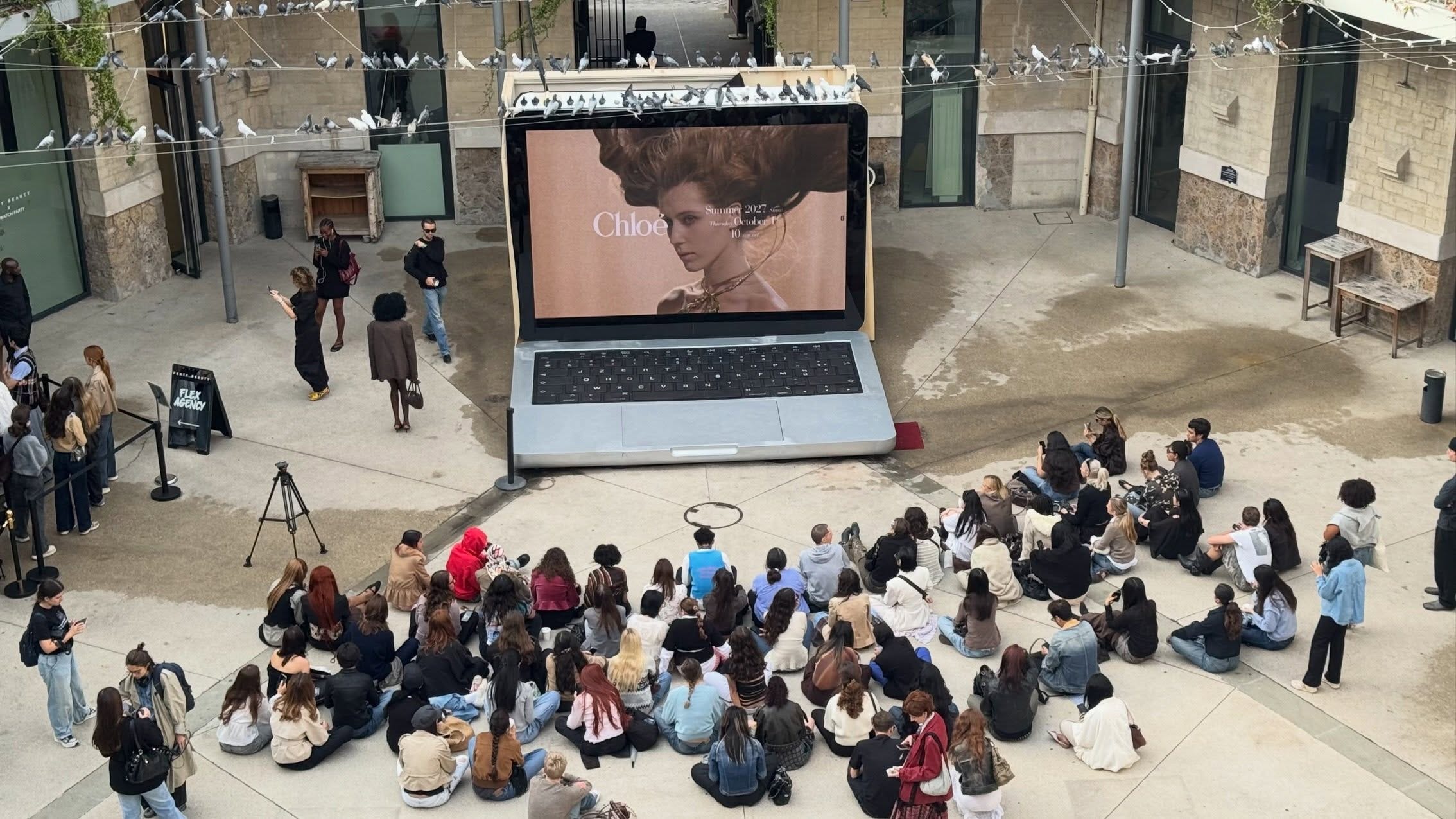
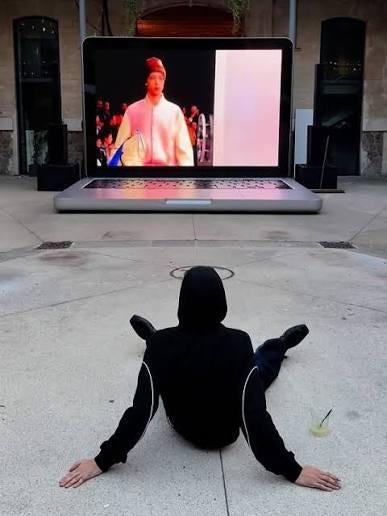
So I was like Okay, what if we replicate my MacBook on which I always watch the fashion shows in my room, but make it huge in this courtyard, so everyone feels like they’re watching it at home, but collectively. And so that was my way of bypassing this institutional shit by making it still real. And then we went around the world.
Is your passion for keeping it democratic informed by your coming from outside of the industry?
When you come from somewhere not privileged, you have to remember where you come from. A lot of people would close the door behind them, but I decided to leave it open. I was the kid in Paris ten years ago running around trying to sneak into everything possible—like the shittiest show that I could get into—in order to experience what the fashion industry had to offer.
It’s for the kid I was. I think many people can relate, because no one is included in this industry.


There’s been a lot of exciting moments. Do you have a favorite La Watch Party moment thus far?
I think it’s gonna be the next one. There’s big plans.
How are you measuring its impact?
It’s not the clicks online. It’s when the actual people come. It’s when we do a watch party in another country that’s not “fashion,” in itself. When we do La Watch Party in Lyon, Marseille, or Rome, it’s so exciting to see that people turn up and want to experience what fashion can offer them.
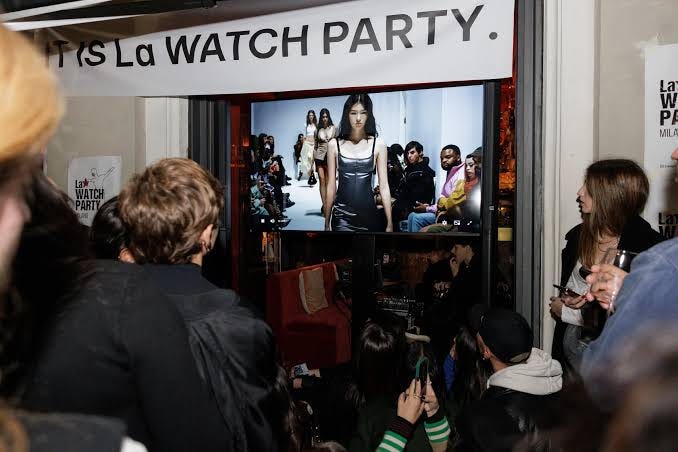
Yeah. I saw that people were queuing up eight hours early for the first event in London, which is nuts.
It’s insane. We’re trying to find another way, because it’s also very important for me to not have QR codes or these things, but people have to queue for a long time. I need to find the right balance between making it open and not having to queue for eight hours.
Is there anything else that’s been difficult to balance in your work, when it comes to maintaining your values?
Of course. Finding the right sponsors is so complicated, and funding this is so expensive, but it’s a bigger mission. It’s for the culture. What it provides is of a greater importance than anything else. So we find ways to make it happen.
This season’s La Watch Party campaign
In the BTS video for this season’s La Watch Party campaign, you said that AI could never recreate it. We’ve seen this increasingly in campaigns from the likes of Dior and Prada. What does not using AI mean for you?
I think for young creatives, it’s even harder for them to avoid using AI. Brands like Dior have no excuse whatsoever. They have the most money in the world to do things practically, and they still choose to use AI. Gucci too. If a small, independent creative can do things with no AI help, what is the excuse you have when you have all the money?
So now it’s become a new luxury to do things practically. But with that, comes imposters that pretend they don’t use AI when they do. For us, it was a real challenge to do all the effects practically for this, but it was non-negotiable. It’s the fun of filmmaking. I want to see the process. Otherwise, I would watch someone else’s work, or just generate it. But I think to see the process, to see the people come together, the team working overnight to find the right texture to do the bubble, to find the right texture to do the balloon, and then the final dress. It’s so exciting. It’s the drive of any creative person to make things with their hands. And that’s what we did.
You’ve said you want to work on more direction in future. Will that be a part of your fashion world endeavors? Or will it be different?
I want to direct fashion shit, and then maybe move on to just cinema. For now I want to direct more fashion ads. I want to explore my vision fashion in a cinematic way, and then go into cinema.
What’s next? Do you have goals for the upcoming year, personally or creatively?
I don’t set goals. I just do it.
Given you’re the people’s champion in the industry, what advice would you give the young fashion enthusiasts you’re nurturing?
I think you gotta find what makes you different - what makes you stand out, what makes you real. And once you find that, be confident that this is what people will connect with.
Don’t be scared of saying no. Don’t be scared of saying fuck you to the establishment. You don’t need to say yes to Vogue. You got to have so much faith in yourself that you can find a way to do things on your own by being highly delusional.
What does that delusion mean for you?
You have to have faith in yourself, and until people have faith in you, it’s gonna be delusion. Because you’re not gonna know if it’s real or not. You’re gonna have doubts.
Am I just delusional, or do I really have talent? Do I really have a voice? Do I really need to be the one speaking? If you’re delusional enough, you won’t care about that answer. You’ll just do it.