

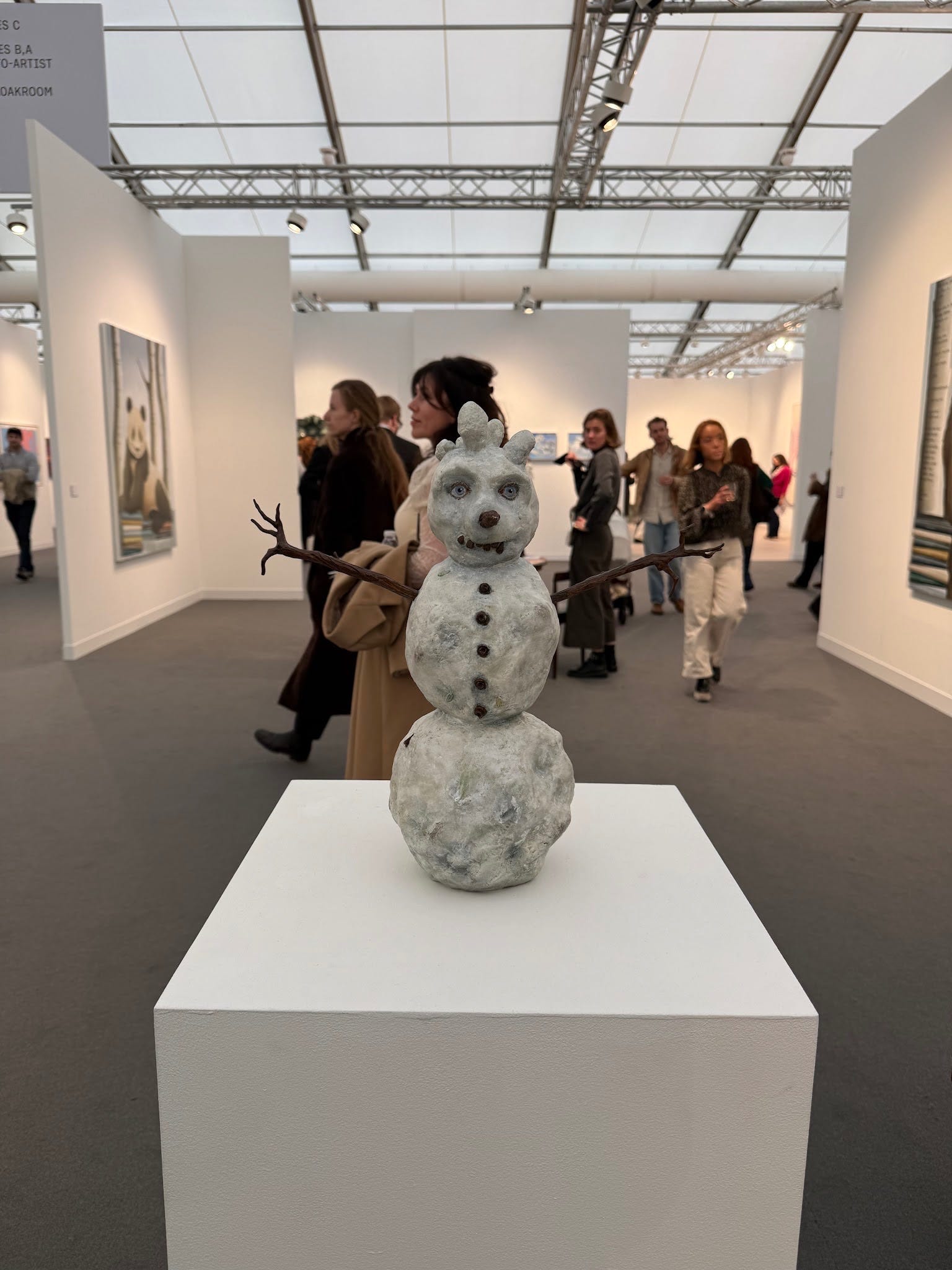
Reporting and photos by Welcome Arts Correspondent Bryan Munguia
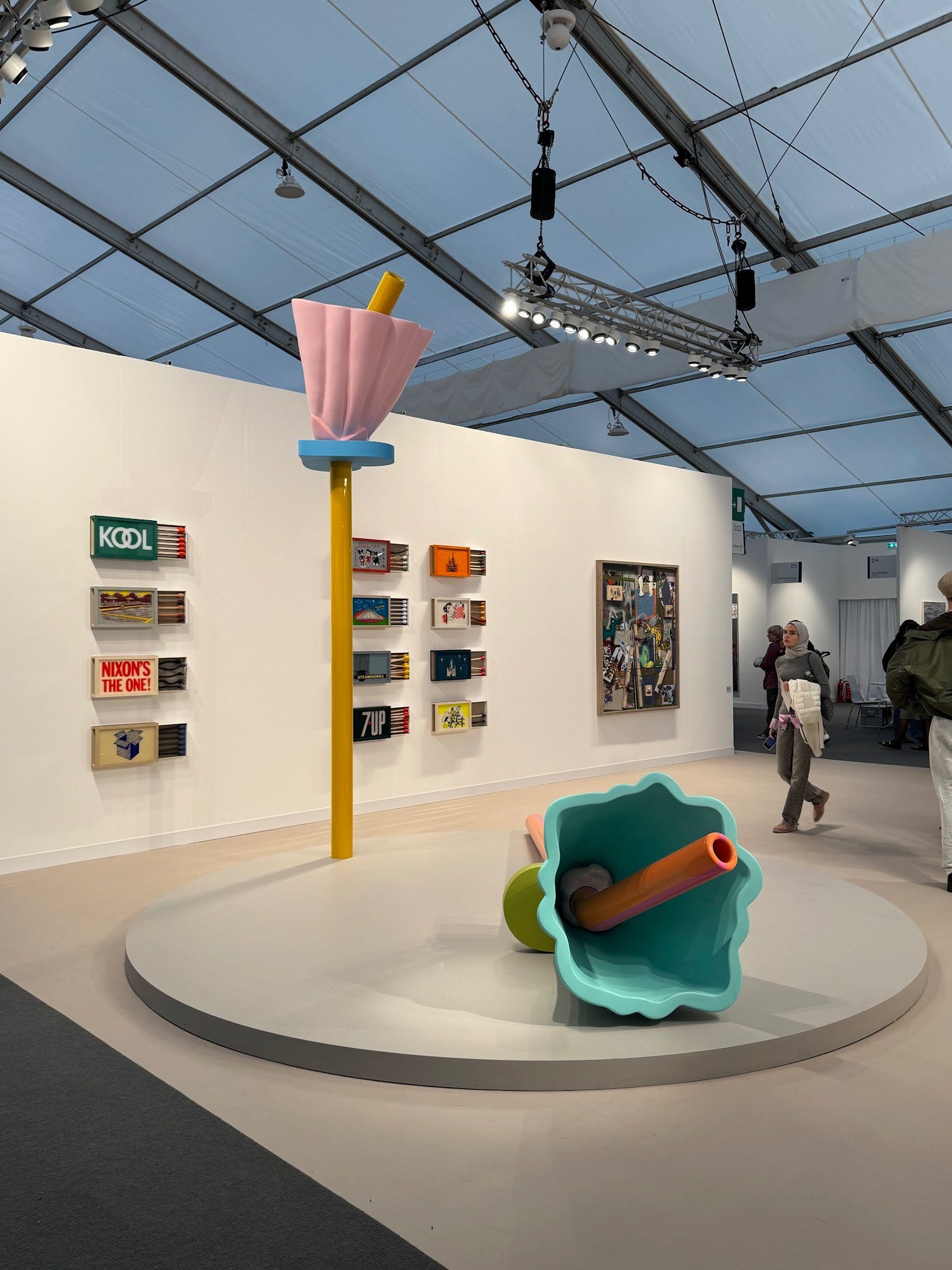
It’s that time of year again. In London’s picturesque Regent’s Park, beneath the browning autumn leaves, a sprawling compound of white tents announces the annual arrival of Frieze London and Frieze Masters. For five days, the park and greater city swarm with processions of art lovers, art-world VIPs, and the culturally curious.
Frieze London is the original fair in the Frieze family, and remains one of the largest. It was founded in 2003 as an “alternative” art fair that would capitalize on London’s flourishing contemporary art scene. At the time, the city was riding the momentum of the Young British Artists (YBAs), a loosely grouped class including Damien Hirst, Tracey Emin, and Sarah Lucas, whose provocative attitudes and unapologetically individual approach to art-making had the art world of the ‘90s in a chokehold.
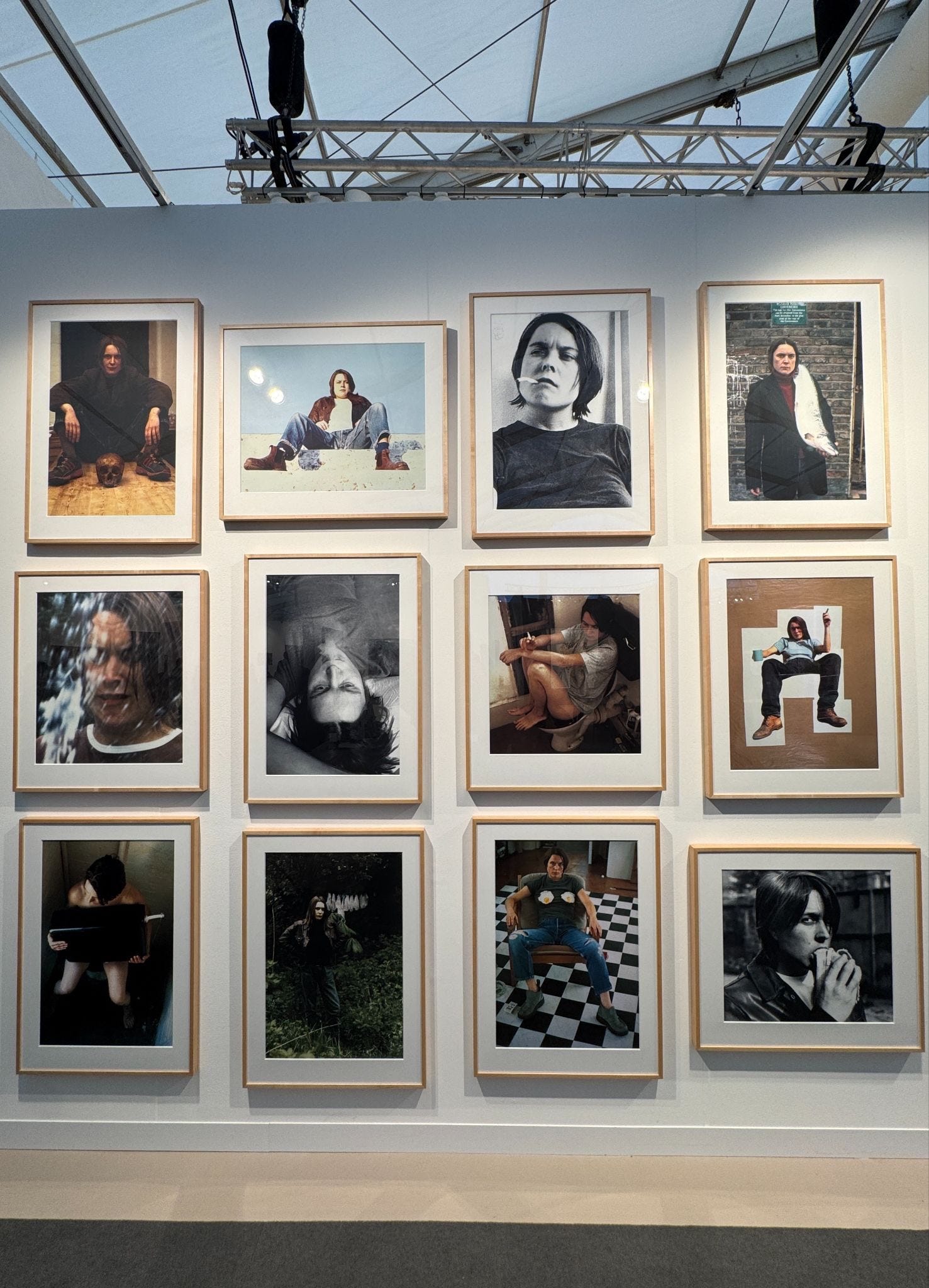
Twenty-three years later, Frieze London remains a defining fixture on the international contemporary art calendar. It’s a massive operation whose stark white interiors and circulatory atmosphere make you feel as though you’re lucid dreaming inside an airport. The Turkish Airlines sponsorship only enhances this sensation.
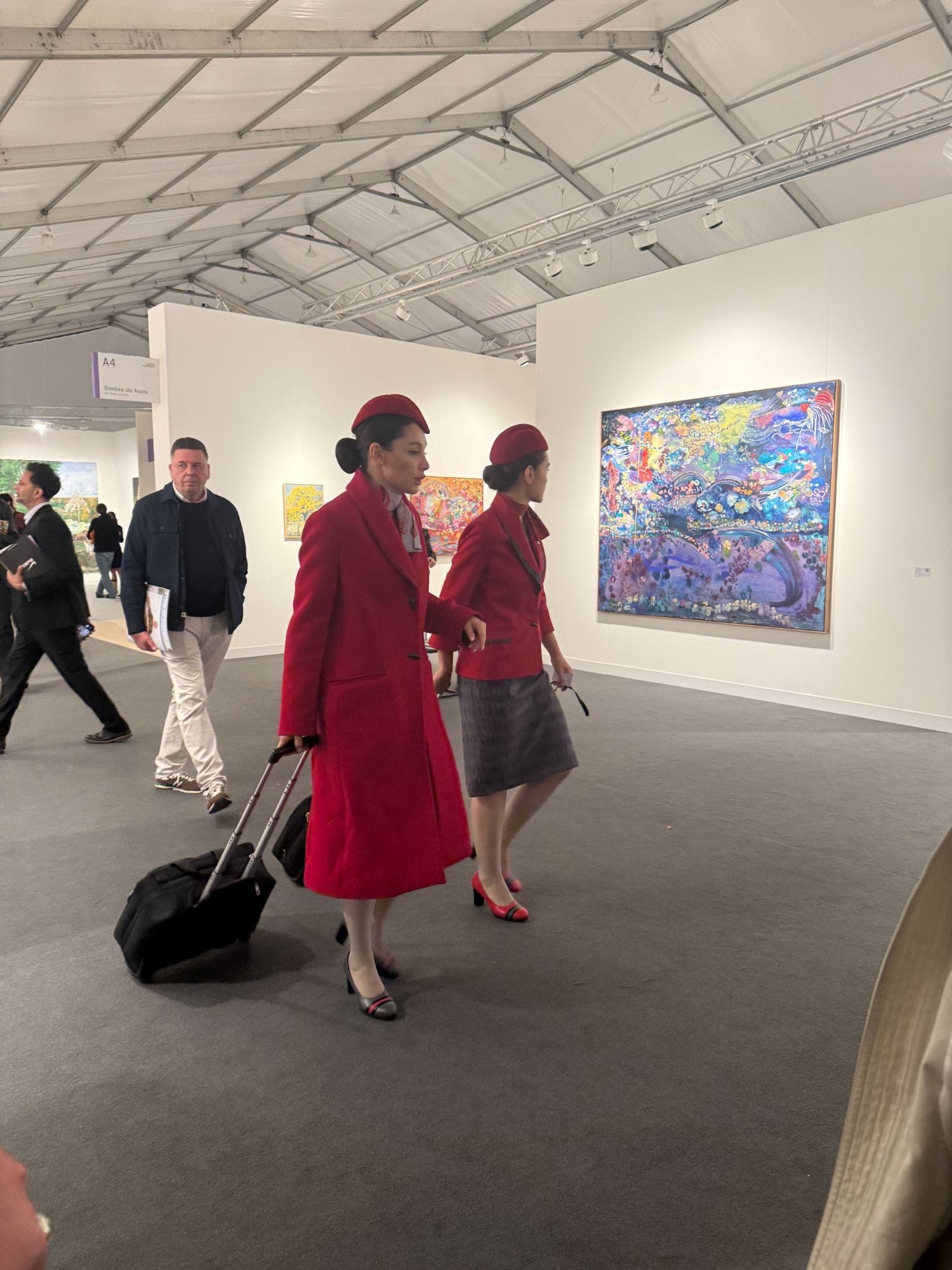
A brisk fifteen-minute stroll through the breezy park brings you to Frieze Masters, where things feel both more sophisticated and eclectic. The atmosphere inside is more zen, although its curation can be wonderfully bizarre. Here, you’ll find paintings made before the ‘80s that put much of the contemporary works in its sister tent to shame. Some offerings are ancient. This year, I came across a fossilized Triceratops skull for sale.
As usual with these international fairs, the official Frieze programming is only the tip of the Art Week iceberg. Nearby, several other organizers have opened their own fairs with more boutique focuses. About twenty minutes down the road is the maxed-out Minor Attractions fair, which crams roughly 75 international exhibitors into a single floor of hotel rooms at The Newman. This fair remains a cultural staple for younger, emerging artists and galleries, but only a few find resonance in its overcrowded format.
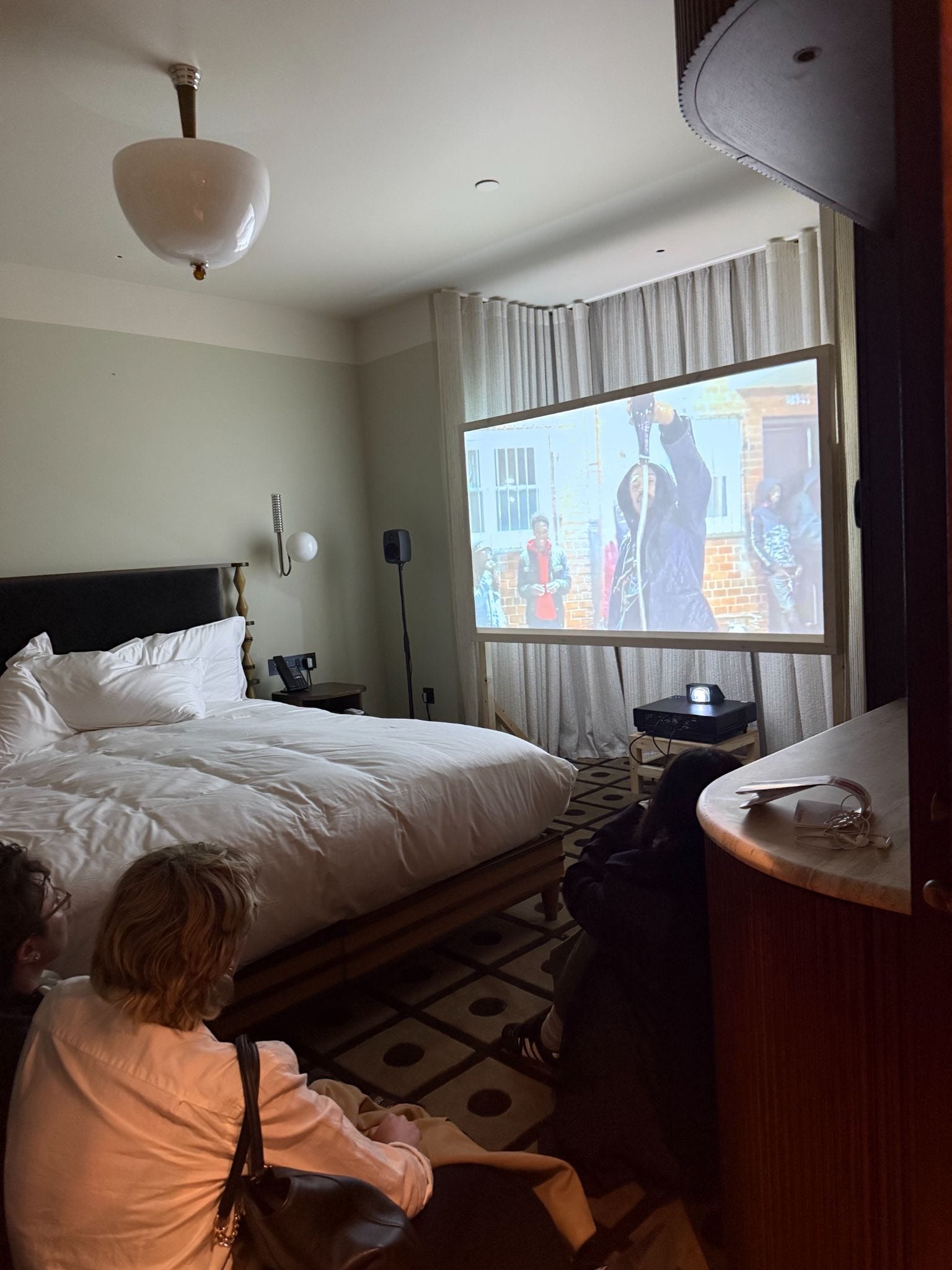
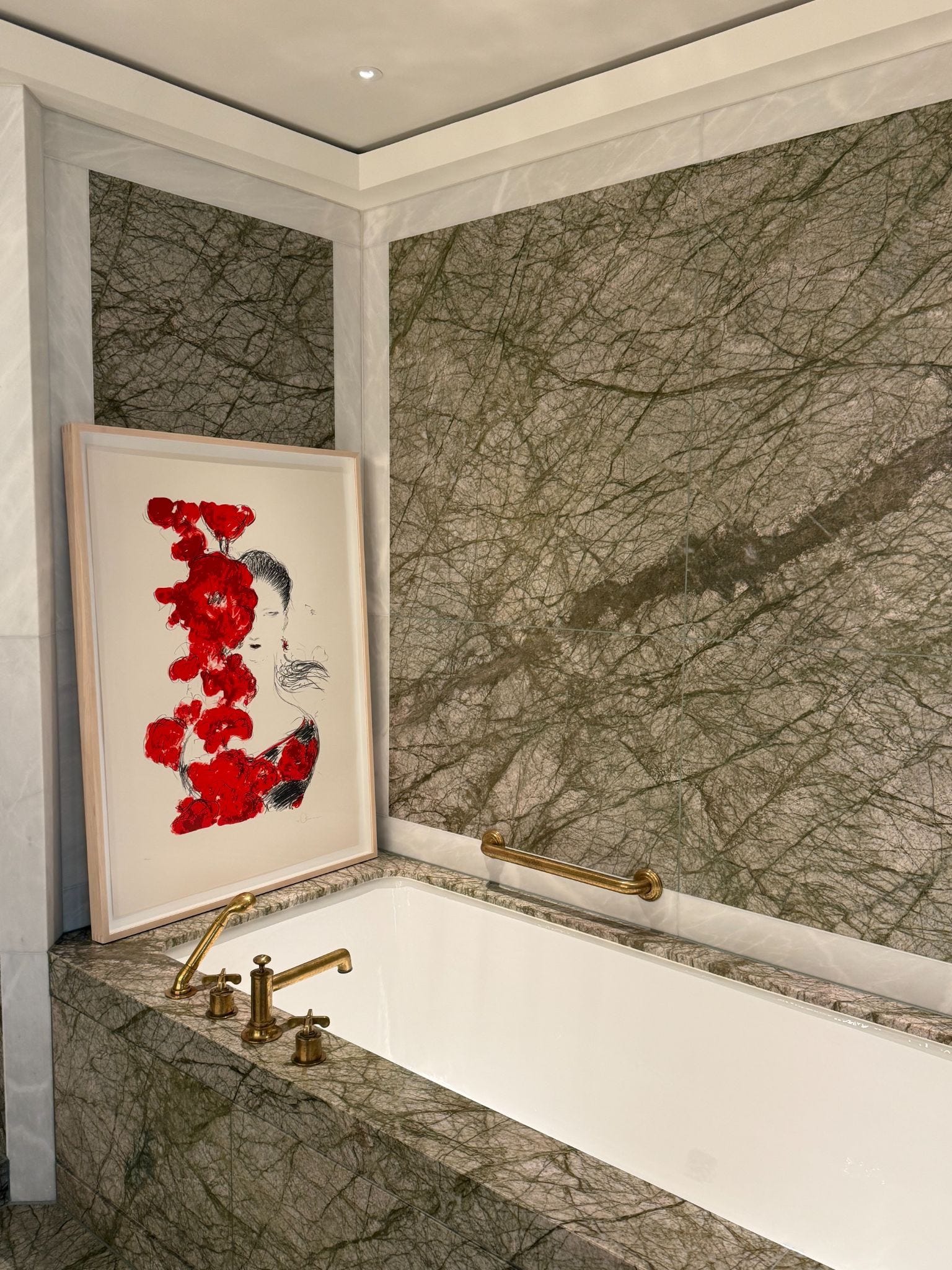
A better approach to the hotel-as-art-fair can be found in the inaugural edition of the London Invitational. The Dallas-born art fair took over the über-posh Rosewood Chancery as its temporary home, turning its elegantly modern rooms into pop-up gallery booths hosting a tightly curated list of exhibitors. Despite the obvious commercialism of the fair’s abundance of decorative paintings, I found most of the art in good taste. Galleries like LA’s Bel Ami and New York’s Lomex were enough to lure me in.
The circus all began on Wednesday, preview day. Preview days are always a kind of art-world reunion. Narrow corridors are crowded with influential, wealthy personages locked in transactional two-cheek European kisses, quietly upstaging one another with news of their latest personal achievements. Between these interactions, art changes hands. Gagosian reported a sold-out booth before preview day was even over, including all six abstract paintings from its Albert Oehlen presentation, discreetly estimated at over $1 million a pop.
I spent the rest of the week navigating this oversaturated cacophony of competing fairs while down bad with what people are calling “Frieze Flu.” Here’s a roundup of highlights across the London fairs that made the struggle worthwhile.
(+ a photo dump at the bottom)
FRIEZE LONDON, Regent’s Park
ELLA FLECK, training material, Ehrlich Steinberg
A solo presentation by recent MFA graduate Ella Fleck, informed by her undercover investigation of an OnlyFans “chatter” agency.
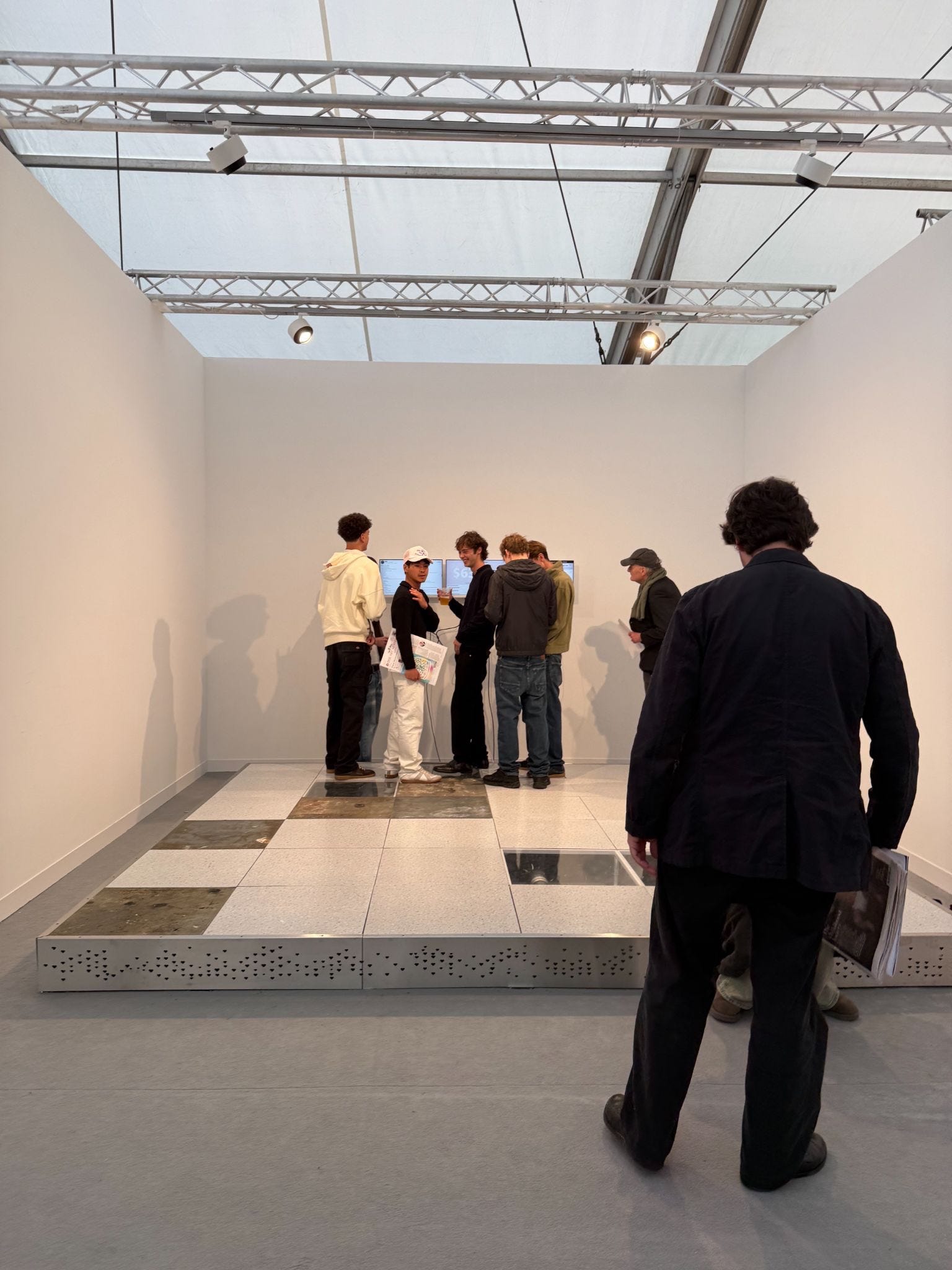
Younger, emerging galleries give Frieze its pulse. The Focus section exclusively features galleries younger than twelve years old, and is a great place to find more experimental practices.
This year, one of the most experimental was to be found in Ella Fleck’s solo presentation training material, presented by Los Angeles-based gallery Ehrlich Steinberg.
Entering the booth, fairgoers are invited to step onto a raised platform. Beneath the tiles, vibration exciters turn the entire structure into one giant speaker, allowing you to both hear and feel the perverted dialogue of horny men chatting with whom they believe to be an OnlyFans creator. Their conversations travel through your body from the ground up. At one point, I could feel a man’s leaked sexts reverberating near my groin.
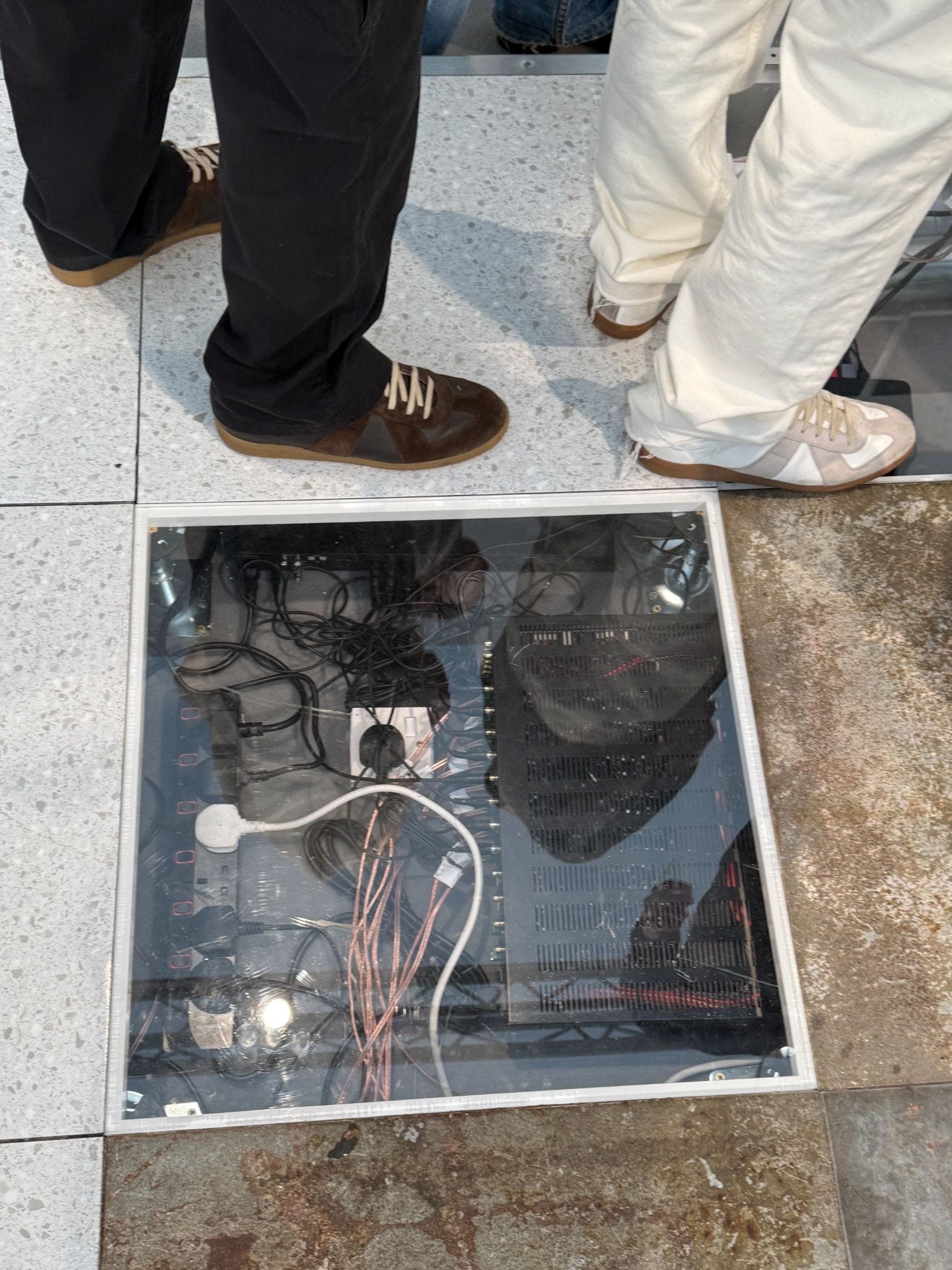
The piece stems from Fleck’s interest in male-dominated “chatter” agencies, which OF creators hire to outsource their many subscriber chats. Fleck took a six-week training course at a chatter agency under the male alias Elliot, then used her knowledge to program Aria, a software-made, imagined female OF creator. The conversations vibrating up through the platform are between Aria and fictional clients, and were generated using real chat logs that Fleck and her peers used as their training material.
Above the sculptural platform are three screens showing a manager’s view of the speculative ecosystem of chatters and subscribers operating behind Aria’s fictional identity. The middle screen records the five-figure sums made from these games of manipulation and seduction.
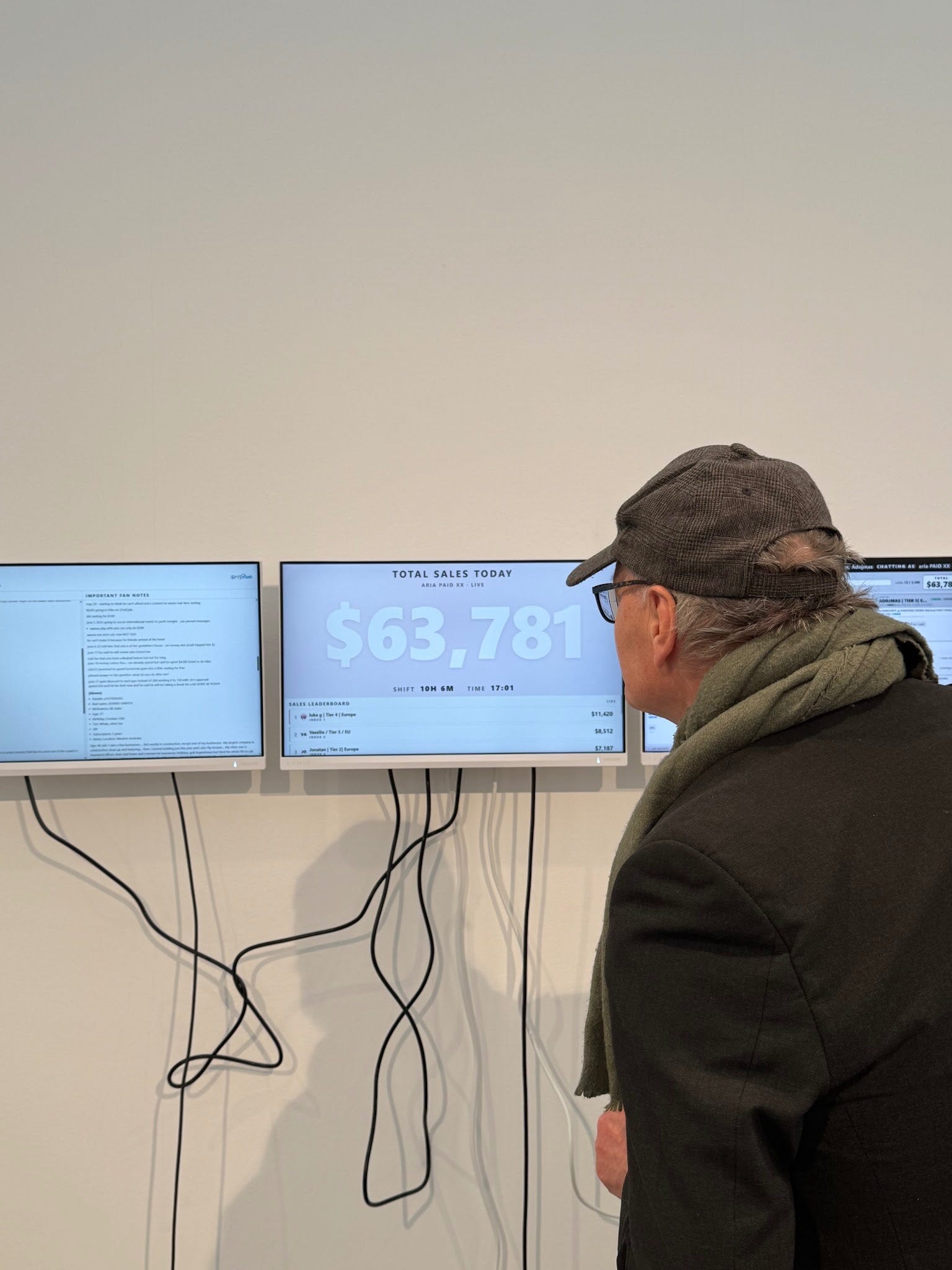
Fleck’s presentation depicts a digital age in which both identity and sex are completely unhinged, as fluid as the algorithms scripting them.
BENJAMIN LALLIER, Heidi
An installation by the Berlin-based artist Benjamin Lallier that explores the relationship between belief, observation, and free will.
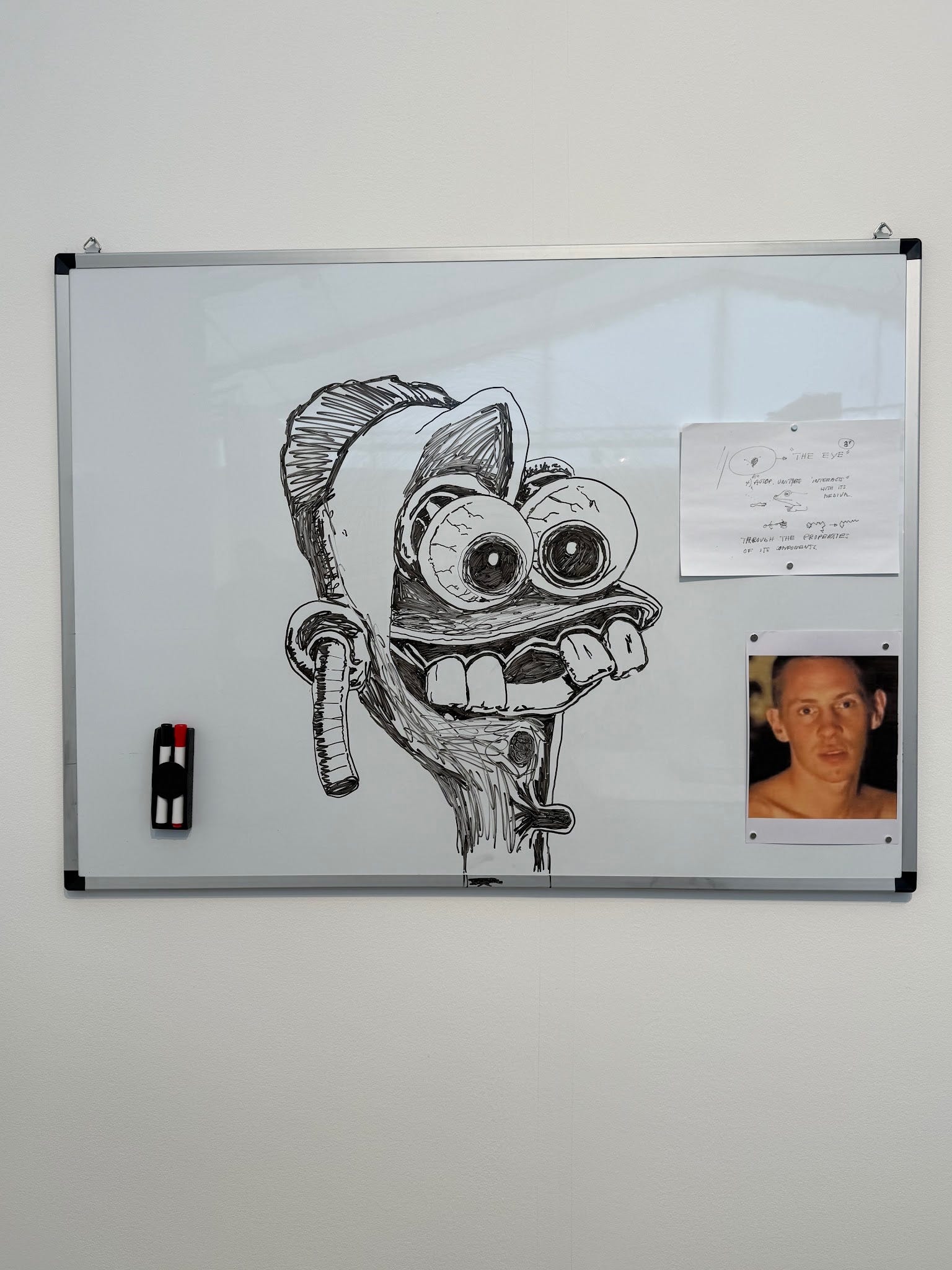
In this booth, you’re being watched. From whiteboard sketches of protruding eyes to anatomical renderings and robotic plans of ocular mechanisms, the familiar art fair convention of looking at art is reversed: here, the art looks back.
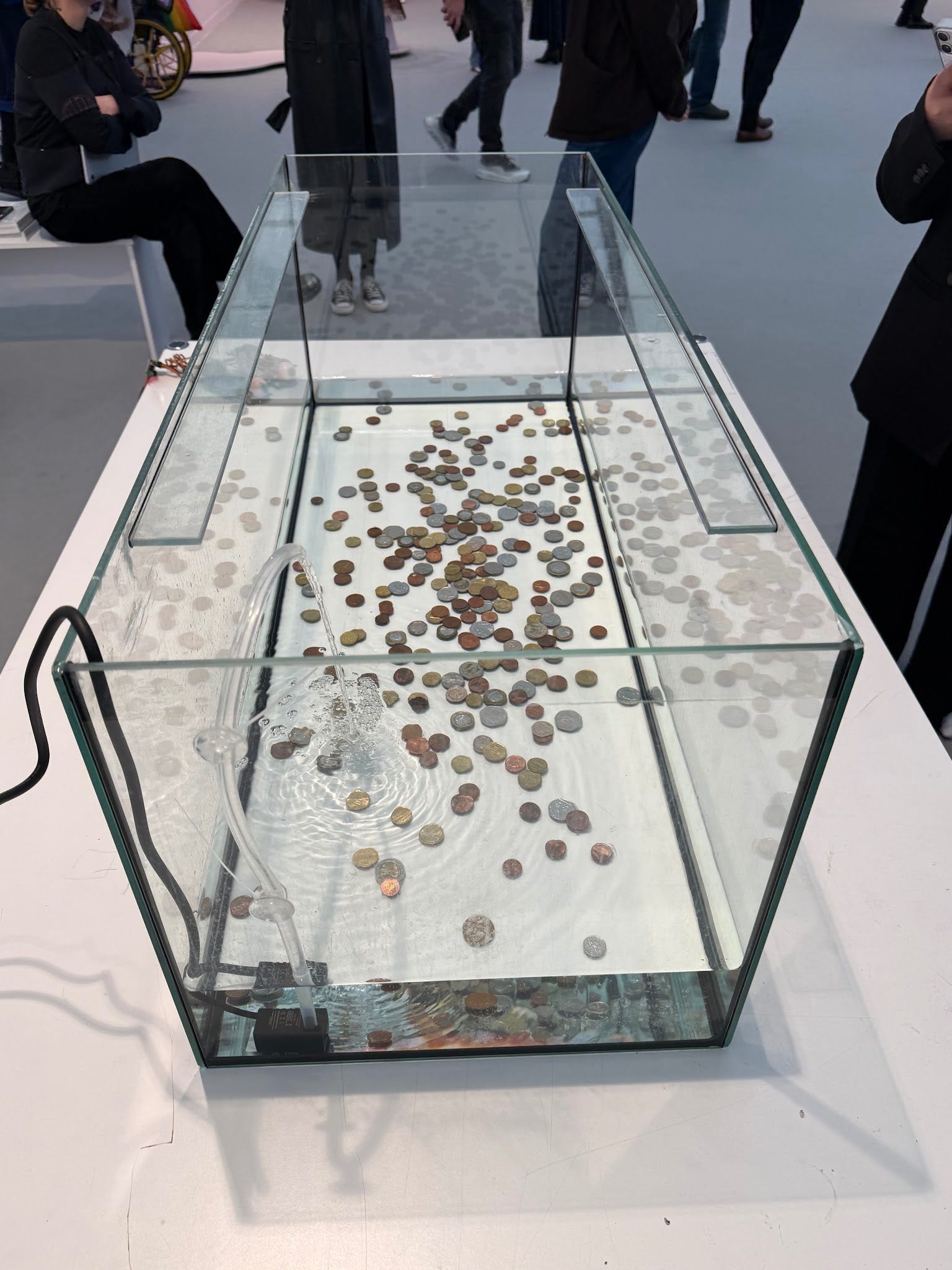
Anchoring the installation is a water tank that Lallier offers as a wishing fountain, stripped of the usual romanticism.
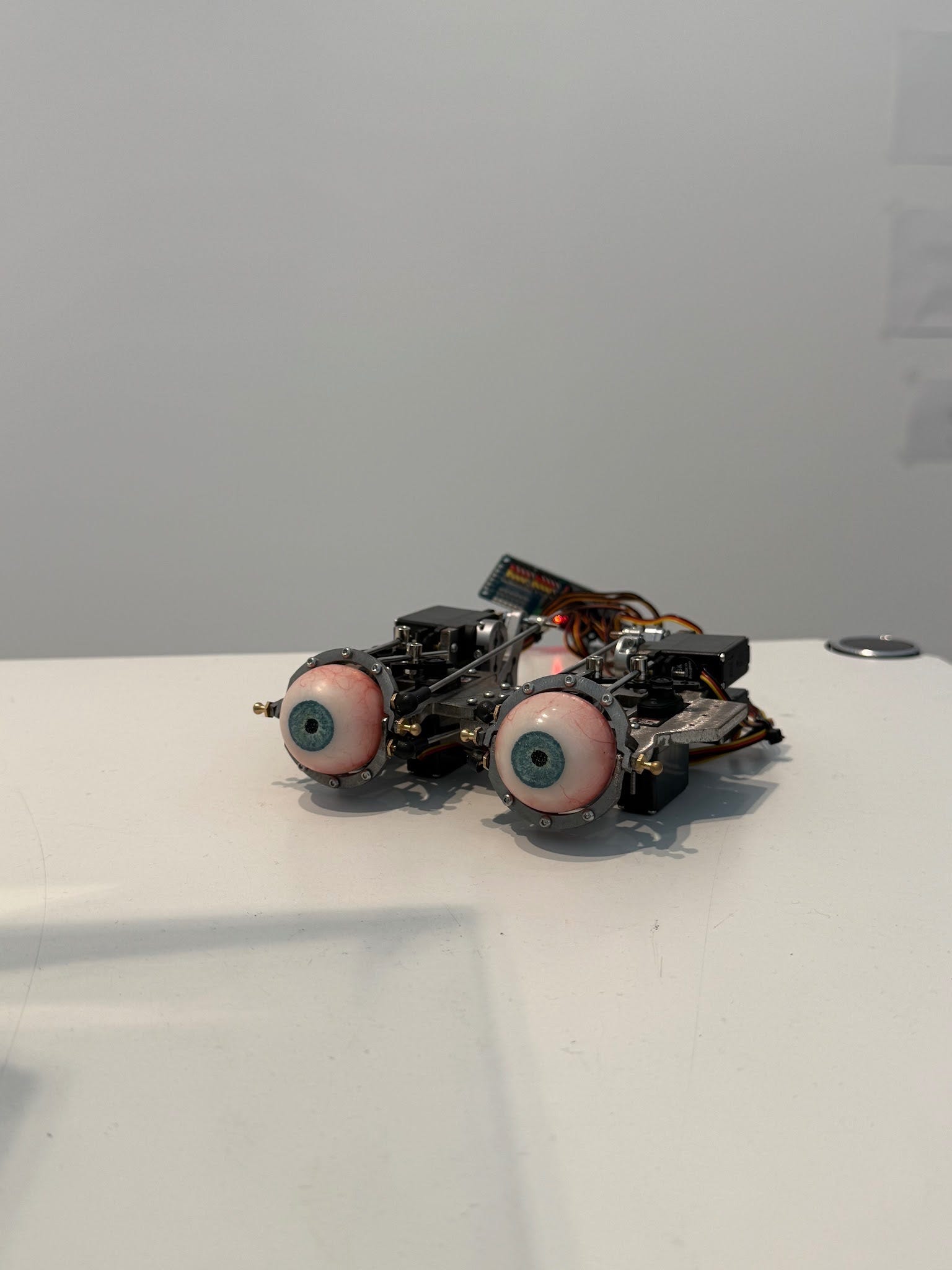
Beside the tank, a pair of slowly blinking animatronic eyes, tinted blue like the artist’s own, stare directly at the wisher.
I am a big believer in manifestation. I take the bait up and throw fifty pence into the tank. The act feels quite empty. It’s like praying to a wall. The words are the same, but without the promise of some spirited presence, what’s the point? Lallier seems interested in this very question, and in how our familiar rituals change when we suddenly become aware we’re performing them.
THEO TRIANTAFYLLIDIS, Feral Metaverse, Frieze Artist Award
A giant, climbable spider that functions as a multiplayer video game, forcing strangers to cooperate.
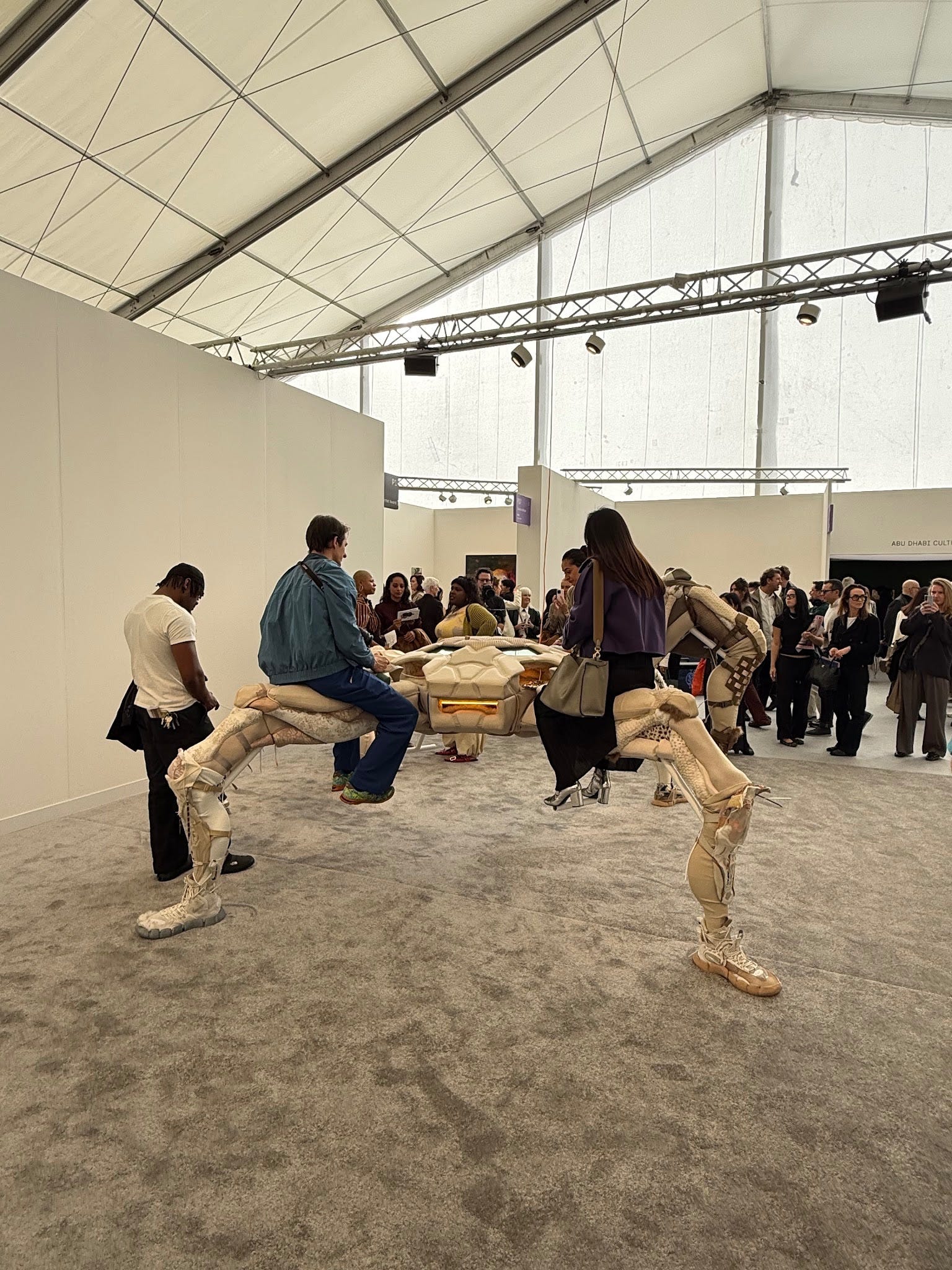
It’s a joy to see art actually bring people together. Theo Triantafyllidis’s interactive, mutant arachnid sculpture does this particularly well.
Strangers are invited to perch on one of its four surprisingly comfortable spider legs and play a collaborative video game, which requires you to communicate with the strangers on the spider’s other legs.
In a fair that relies mostly on subjective experiences, this sculpture proposes a form of coexistence. Without fail, a natural intimacy formed between the people playing the game, who otherwise wouldn’t speak to each other. I’m willing to overlook the spider’s literally trashy body made of junk clothing (apparently inspired by Anna Uddenberg), and celebrate the work for doing exactly what it promises: getting people to actually interact.
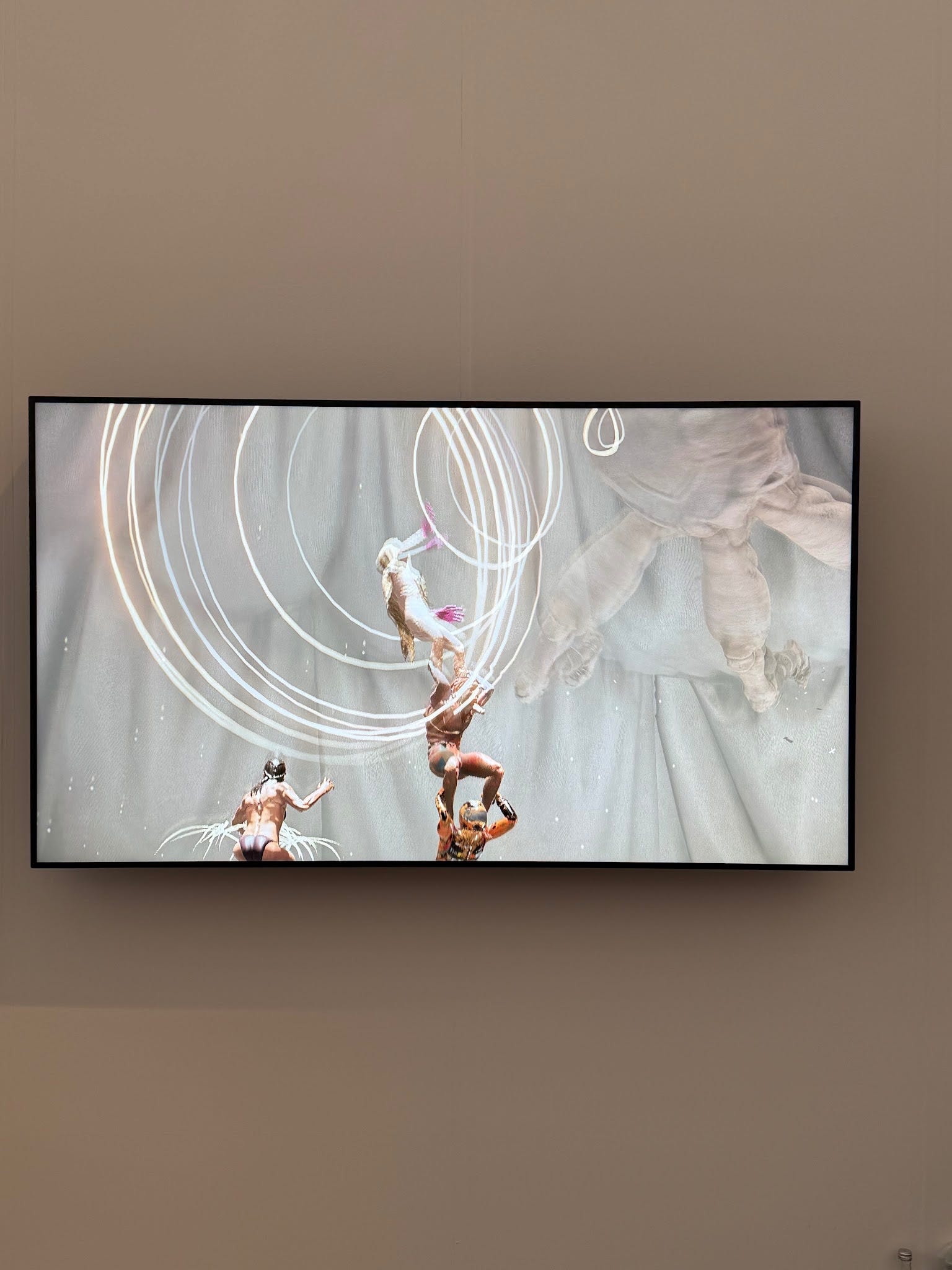
In an age where more digitally-native audiences might feel more comfortable exploring a video game than a painting, this type of game-based, “worldbuilding” art might be the medium of the future. But what I’m wondering is whether creating a compelling experience is enough to compensate for an overall less convincing sculptural form…
ISSY WOOD, Self Portrait 91, Carlos/Ishikawa
This self-portrait of the artist in a face mask brings the attitude of an Instagram selfie into the canonical tradition of oil painting.
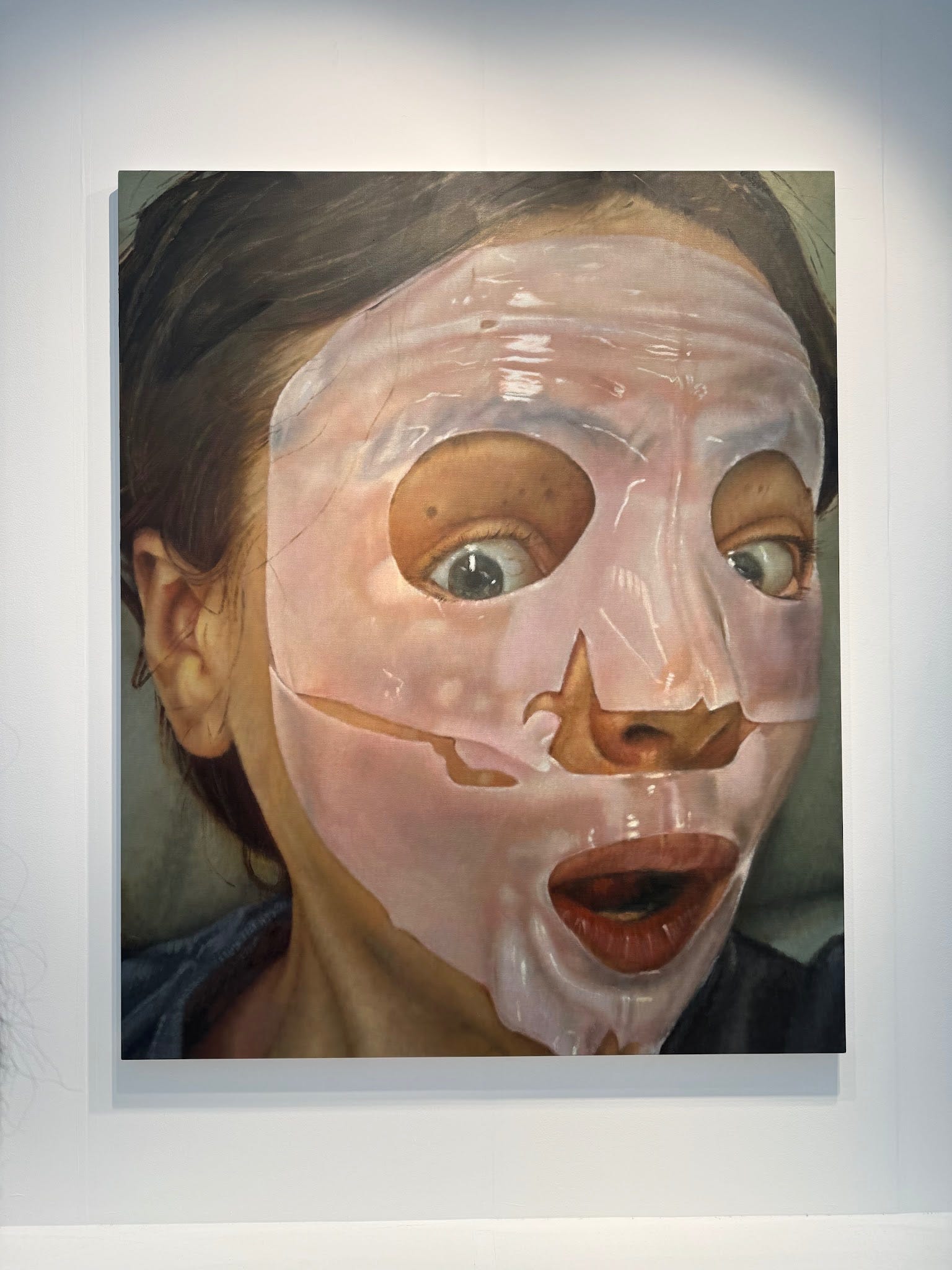
This past week, all eyes have been on Issy Wood, whose expressive, large-scale self-portrait greeted visitors near the fair’s entrance. We catch her in an exhibitionistic moment of self-care, wearing a face mask for all to see.
For the chronically online, Wood’s paintings scratch a certain itch. They’re charged with mood, like a tastefully curated Instagram photo dump from your favorite it-girl. They include just enough loose references to the Old Masters, from brushwork to color palettes, to give the artist’s seemingly digital aesthetics a painterly sophistication.
Just this past week, Wood’s solo exhibition at London’s National Portrait Gallery cemented her status as a pioneer in bringing the selfie into the legacy of art-historical self-portraiture. Wood’s influence on contemporary painting is hard to miss, with art students everywhere seemingly adopting her approach to rendering digital imagery through techniques borrowed from the Old Masters. In recent years, the streets have taken to calling this the Issy Woodification of painting. It’s all about creating the #moodiest image possible, as if engineered for (or by) Instagram.
FRIEZE MASTERS, Regent’s Park
JOHN DAVIES, Three Figures, Annely Juda Fine Art
Three Figures (1971) stages an uncanny psychological drama through three grotesque, mannequin figures.
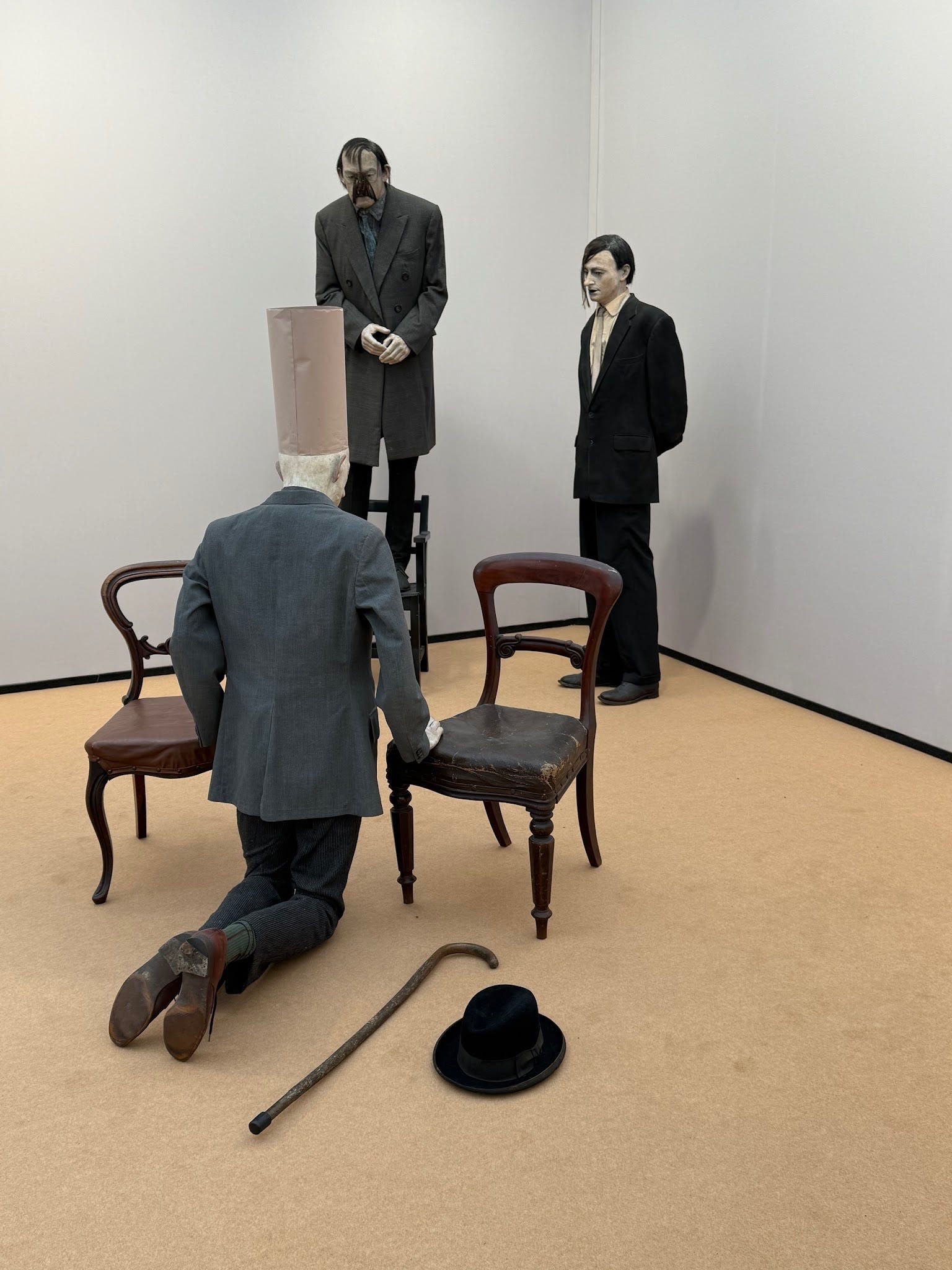
At Frieze Masters, where one expects to find modernist works and centuries-old paintings, it was striking to find three mysterious, suited, grey mannequins slyly tucked away in a corner. British artist John Davies created the 1971 work, which previously showed under the ominous title Three Figures.
One man stands over a kneeling figure, while a third sits nearby, one sporting a bird-like nose, another a dunce’s hat. It’s a theatrical scene straight out of a Lynch or Bergman film, where the familiar becomes unnervingly strange.
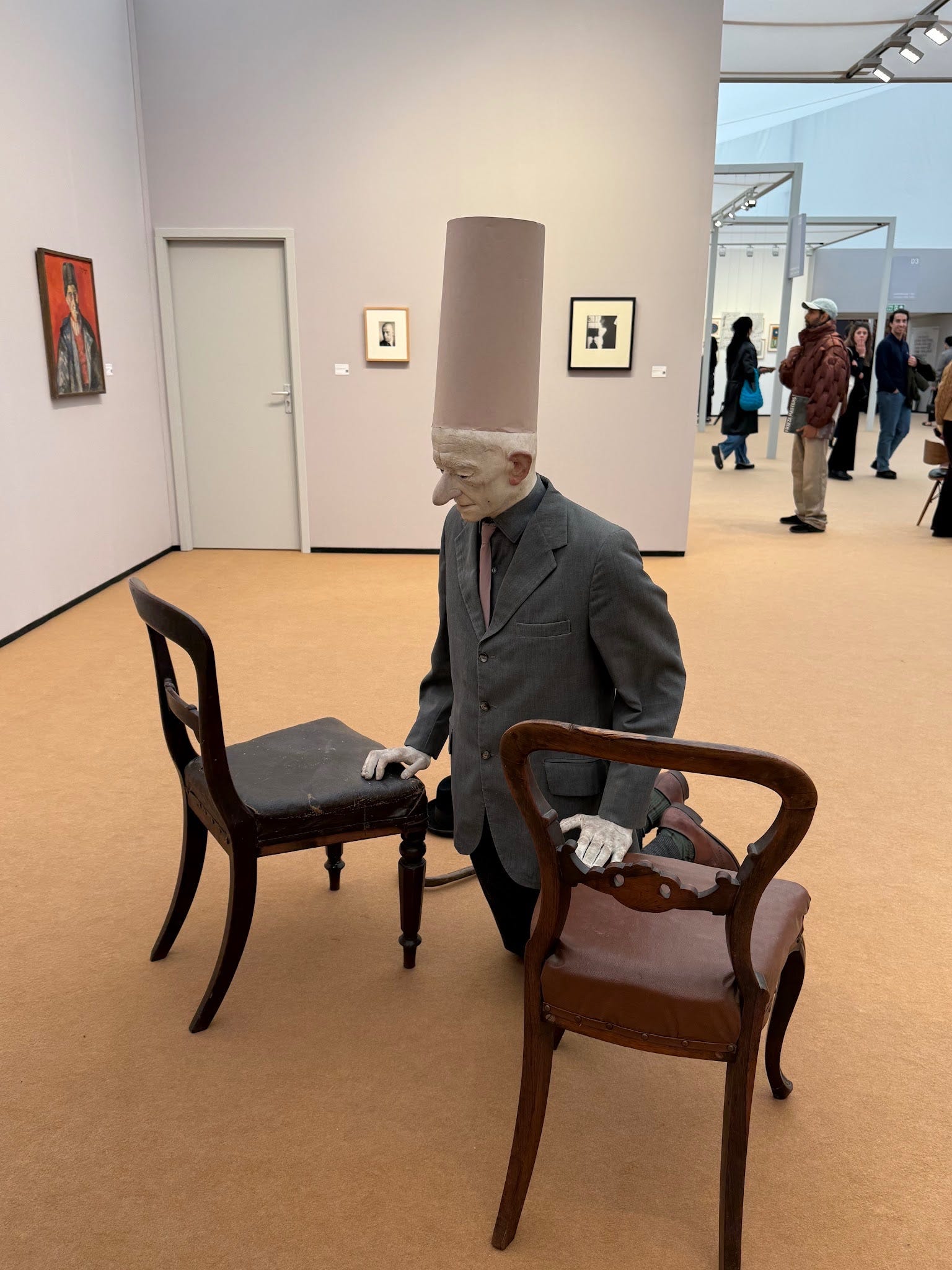
A nearby gallerist pushes her sales pitch that the sculptures capture oppression and the humiliation rituals of power. The longer you look, the more you project onto these figures—a dominant-submissive charge, aggression, the unsettling possibility of violence. They seem suspended in psychological tension, as though something terrible has just happened or is about to. Davies, however, never confirms the nature of their relationship, leaving our wicked imaginations to fill the gaps.
MINOR ATTRACTIONS, The Newman Hotel
MAX KING with scenography by AMELIE MCKEE, HEYSE IP, and MELLE NIELING, I Know I’m On Paradise Road, Plicknik Space Initiative
A hotel room turned into a casino.
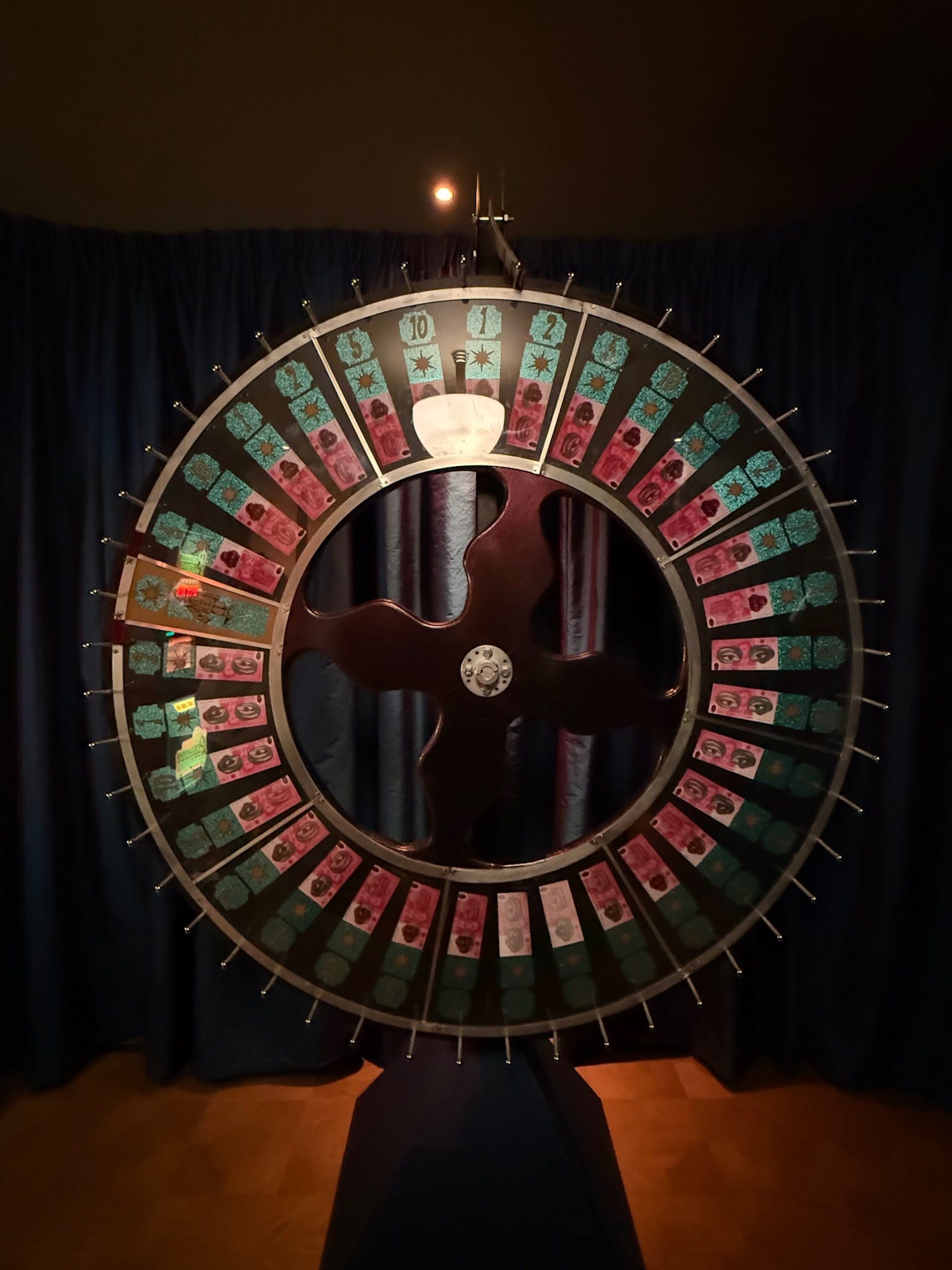
By the time I arrive at The Newman for Minor Attractions, my patience for an art fair is already wilted. Luckily my press credentials get me past the hours-long queue, only to find what seems like the entire emerging art ecosystem crammed onto a single floor. The presentation is nearly impossible to navigate, let alone appreciate, making it difficult to give the work any sincere attention unless you happen to know the people showing there personally.
One exception is Plicknik Space Initiative’s presentation, where Max King, collaborating closely with the gallery’s artist-directors, has transformed a hotel room into a casino.
Something eerie happens when you displace a space’s ordinary function and stage it as something else. The room becomes a threshold between reality and fiction. A spinning wheel is the room’s main attraction, while a Pleasure Gardens slot machine is tucked inside the shower.
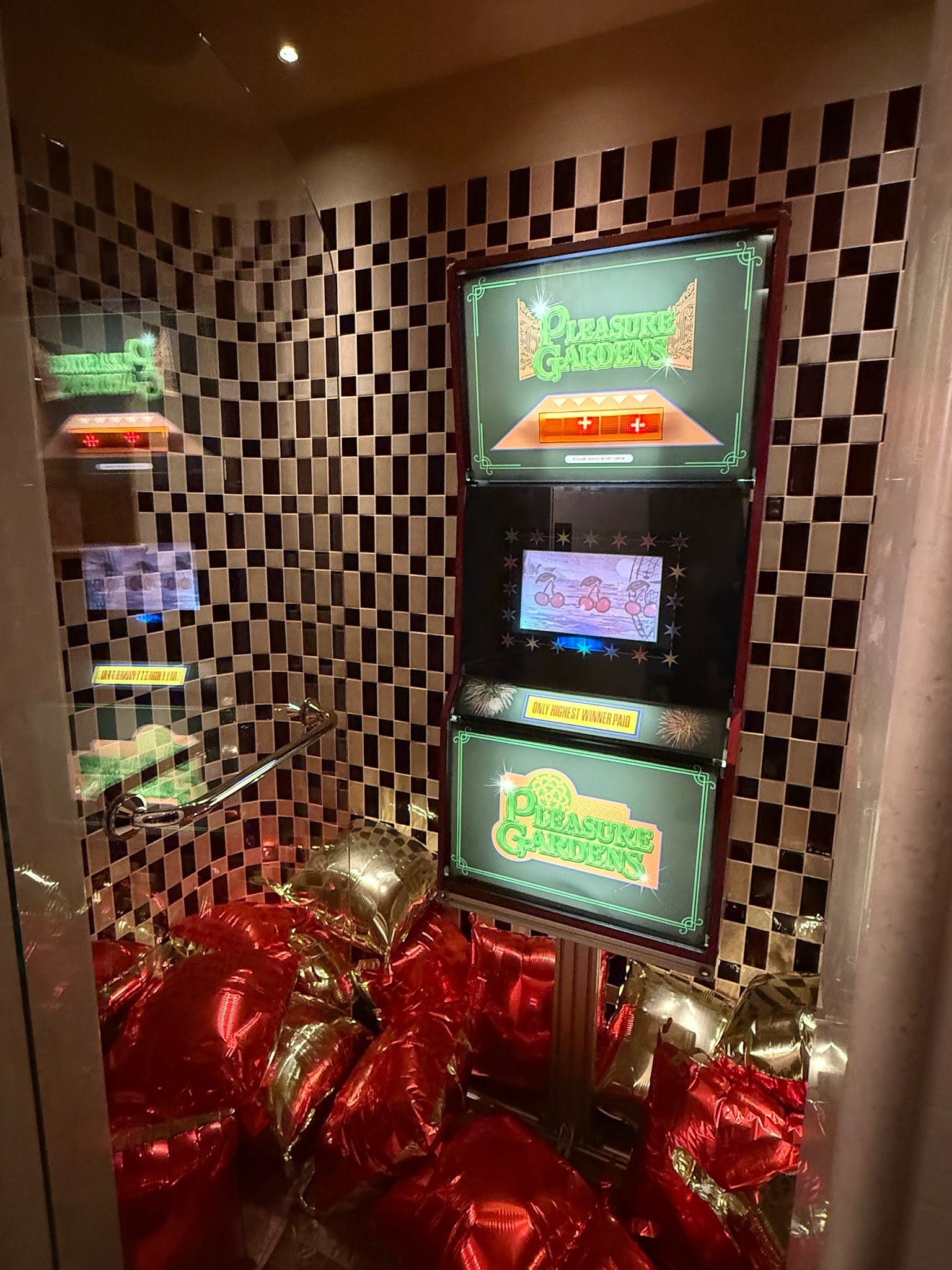
King is interested in the relationship between casinos and historic pleasure gardens, environments designed to maximize anticipation and sustain the promise of pleasure while quietly controlling the behavior of those within them.
The booth feels at home in the gamified nature of the art fair, which thrives on a collective yearning for discovery, sales, and social encounters. We’re always looking for something better in the next room, and we willingly play its game, no matter how much we complain. It’s an addictive environment.
LONDON INVITATIONAL, The Chancery Rosewood Hotel
DAN MITCHELL, Bel Ami
Provocative collages of language and graphic signs.
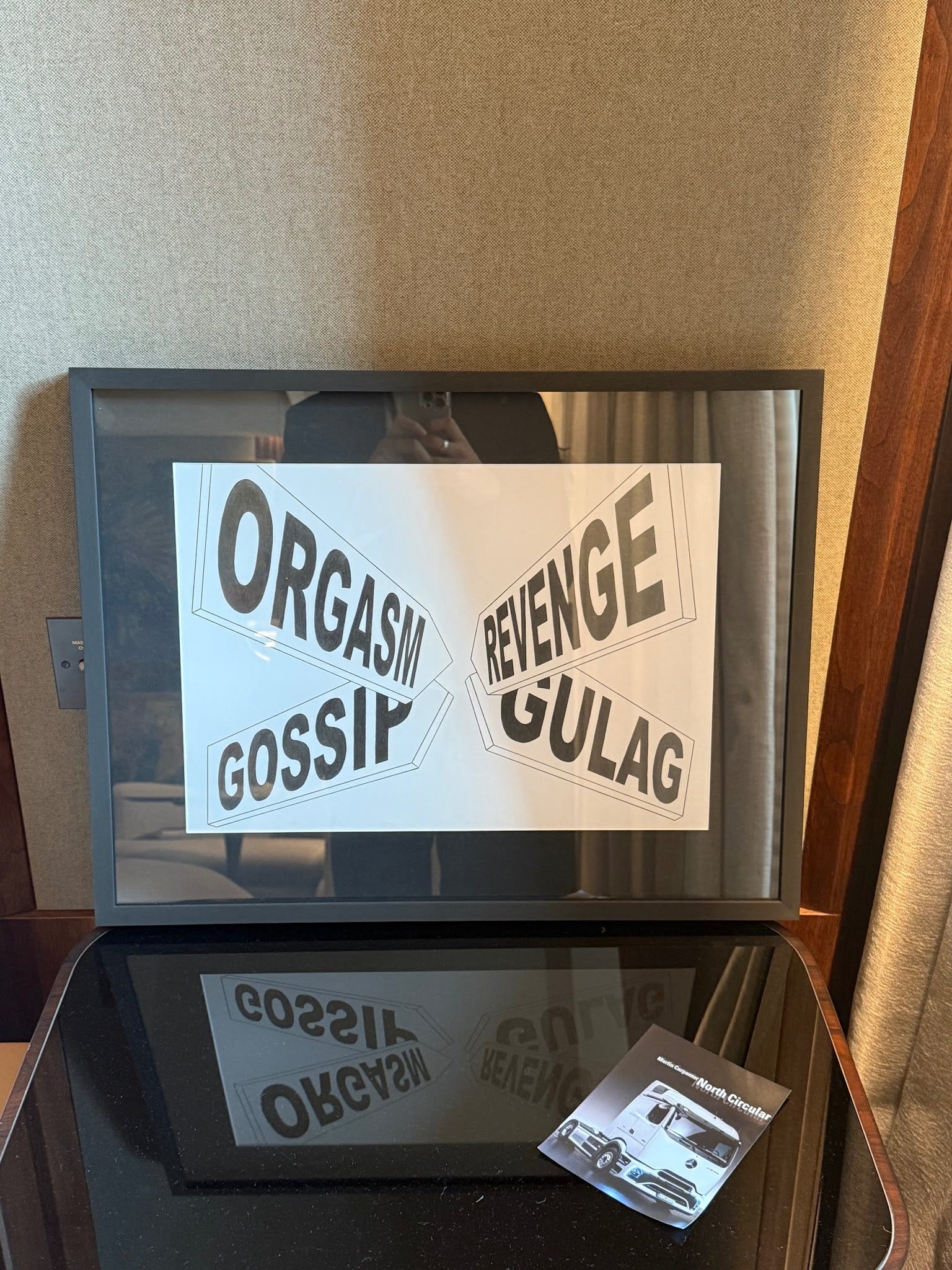
Past a seemingly misplaced outdoor sculpture of Ronald Reagan, I head up the stairs to the third floor of the impossibly chic Chancery Rosewood Hotel, where I encounter two of my favorite works of the week.
Naturally, they come courtesy of LA tastemaker Bel Ami, which has placed framed prints by British artist Dan Mitchell on bedside tables. In one, arrows bearing capitalized sans-serif words point inwards to each other: ORGASM, GOSSIP, REVENGE, GULAG. Across the room, another arrangement points in opposing directions.
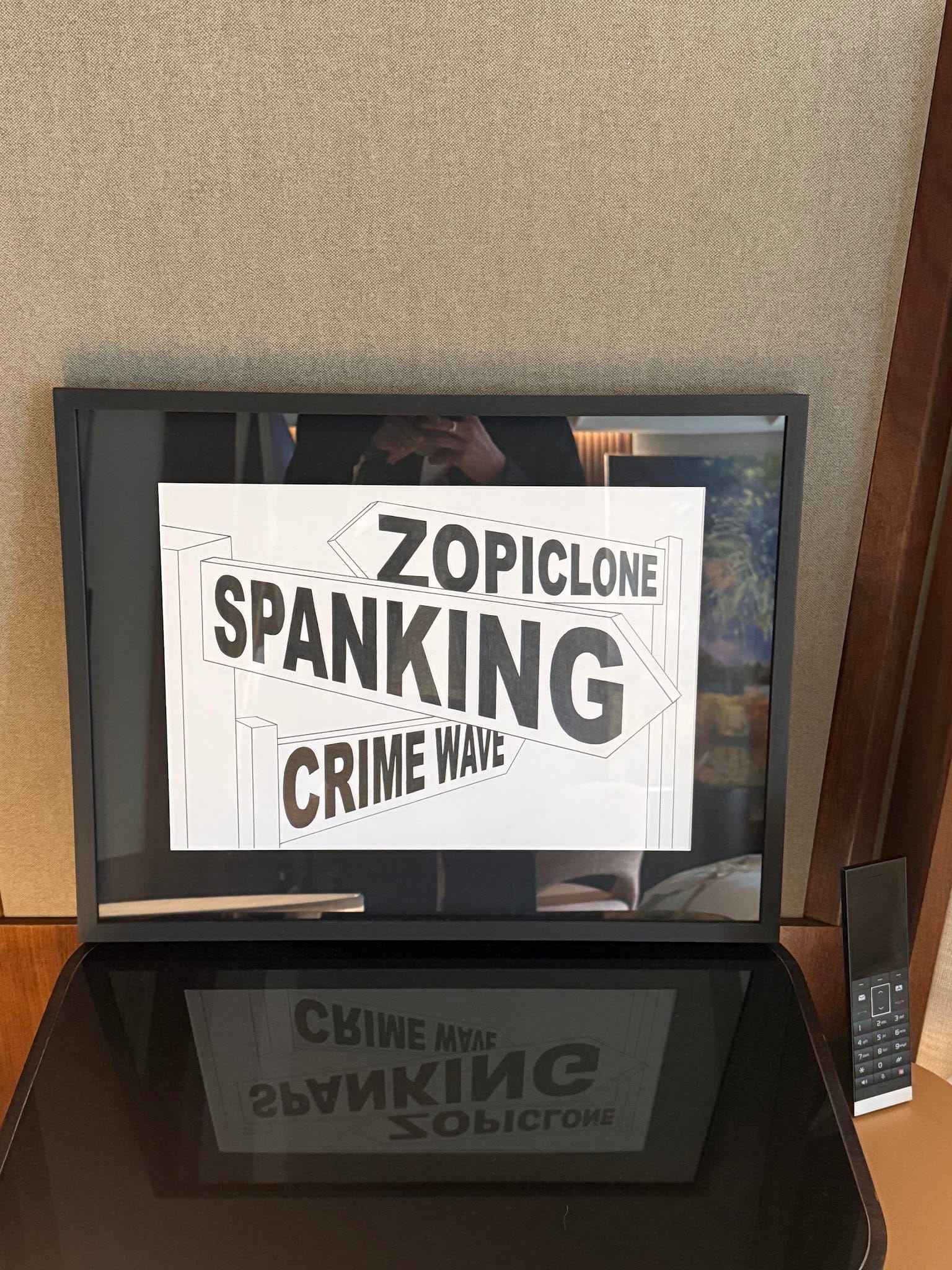
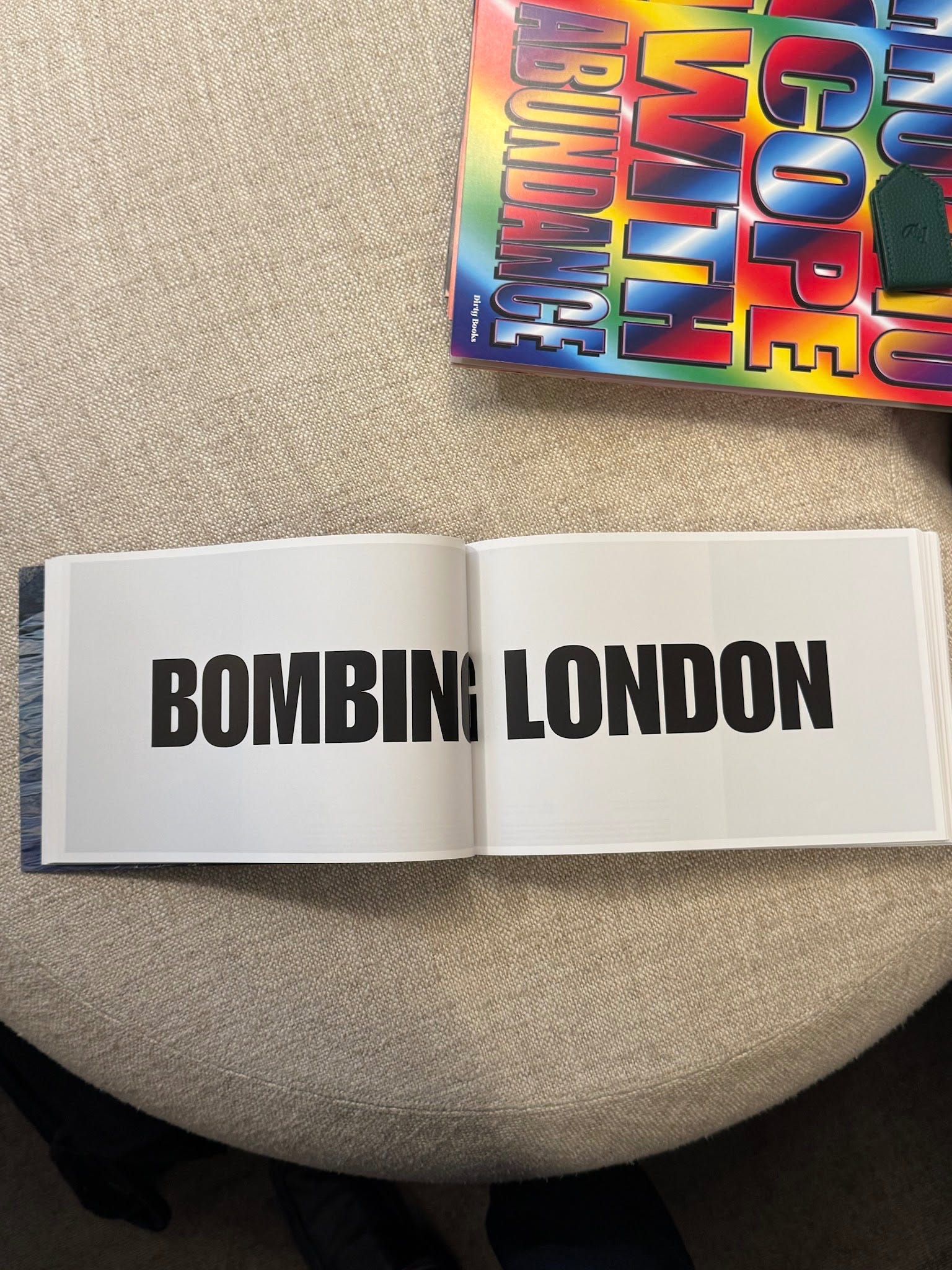
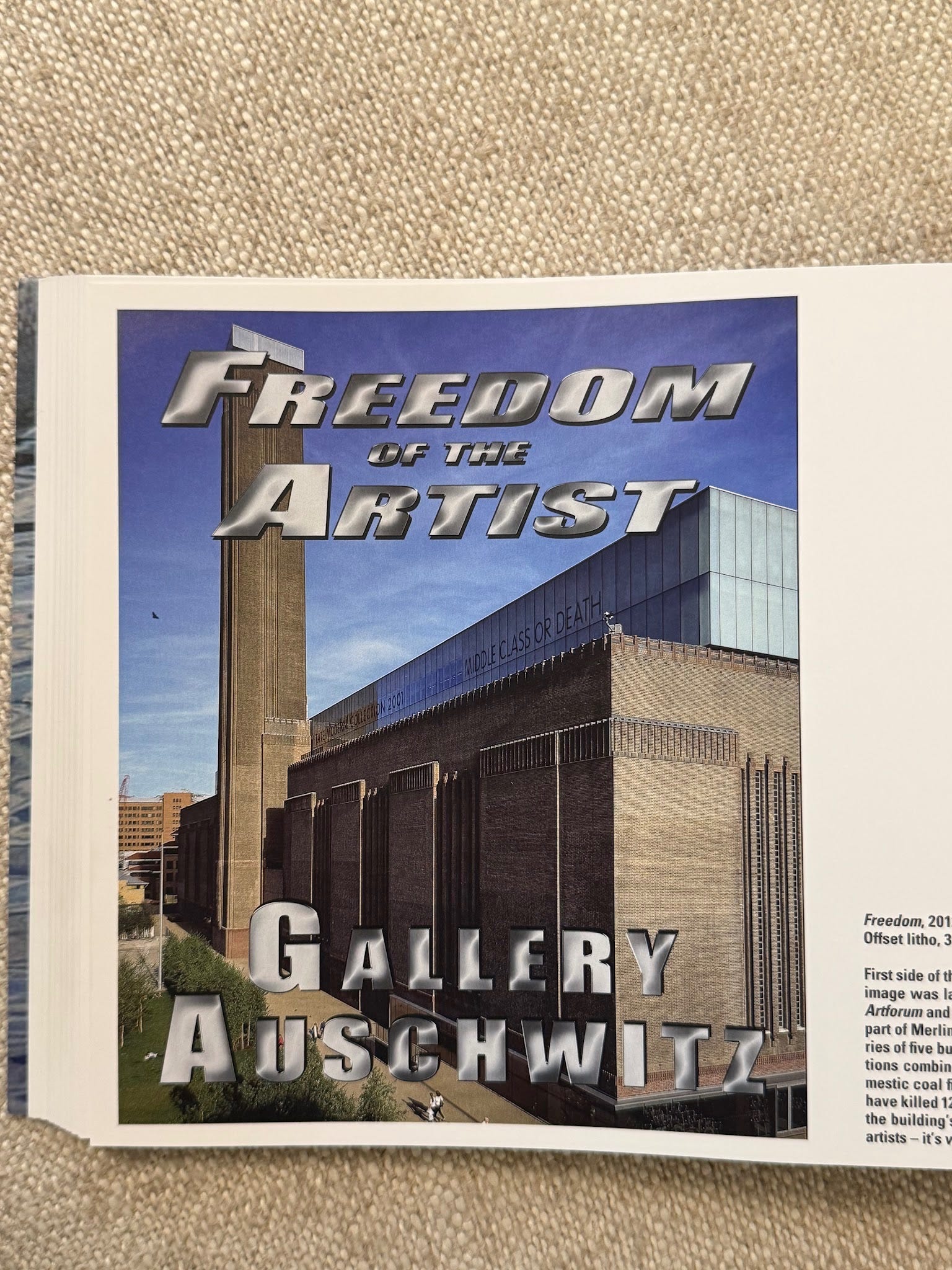
A fixture of London’s underground publishing scene, Mitchell conjures a punctum of attitude through seemingly unrelated words that acquire meaning through their arrangement.
The words need not make immediate sense together. Their collision produces a mood all its own. I’m just glad to see this absurd style of wordplay, which feels quite intuitive to me and my generation, elevated to a formal artistic practice.
To finish off the week, I treat myself to Mitchell’s art catalog, which is one of the best I’ve come across recently:
***BONUS: ART PHOTO DUMP
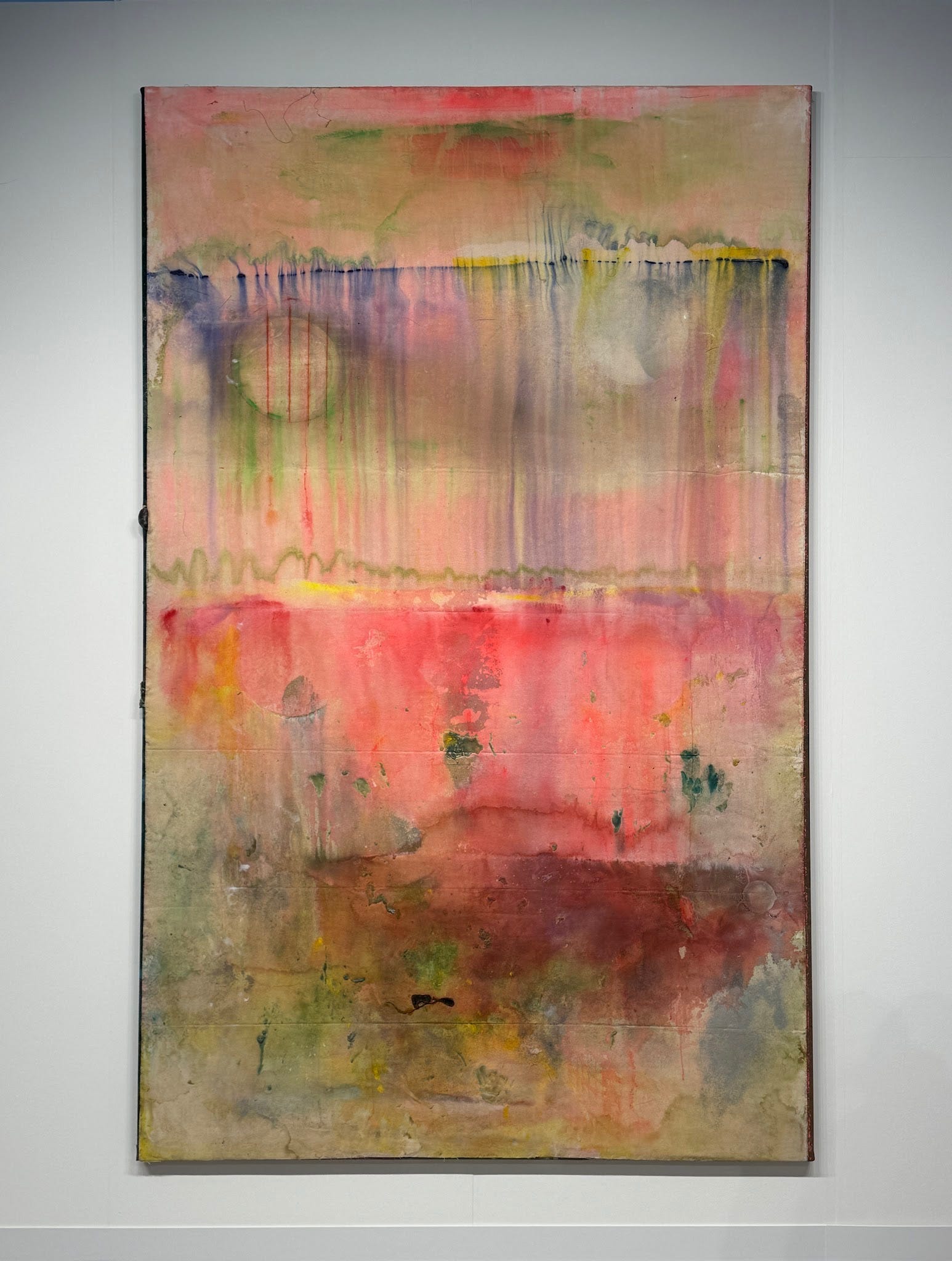
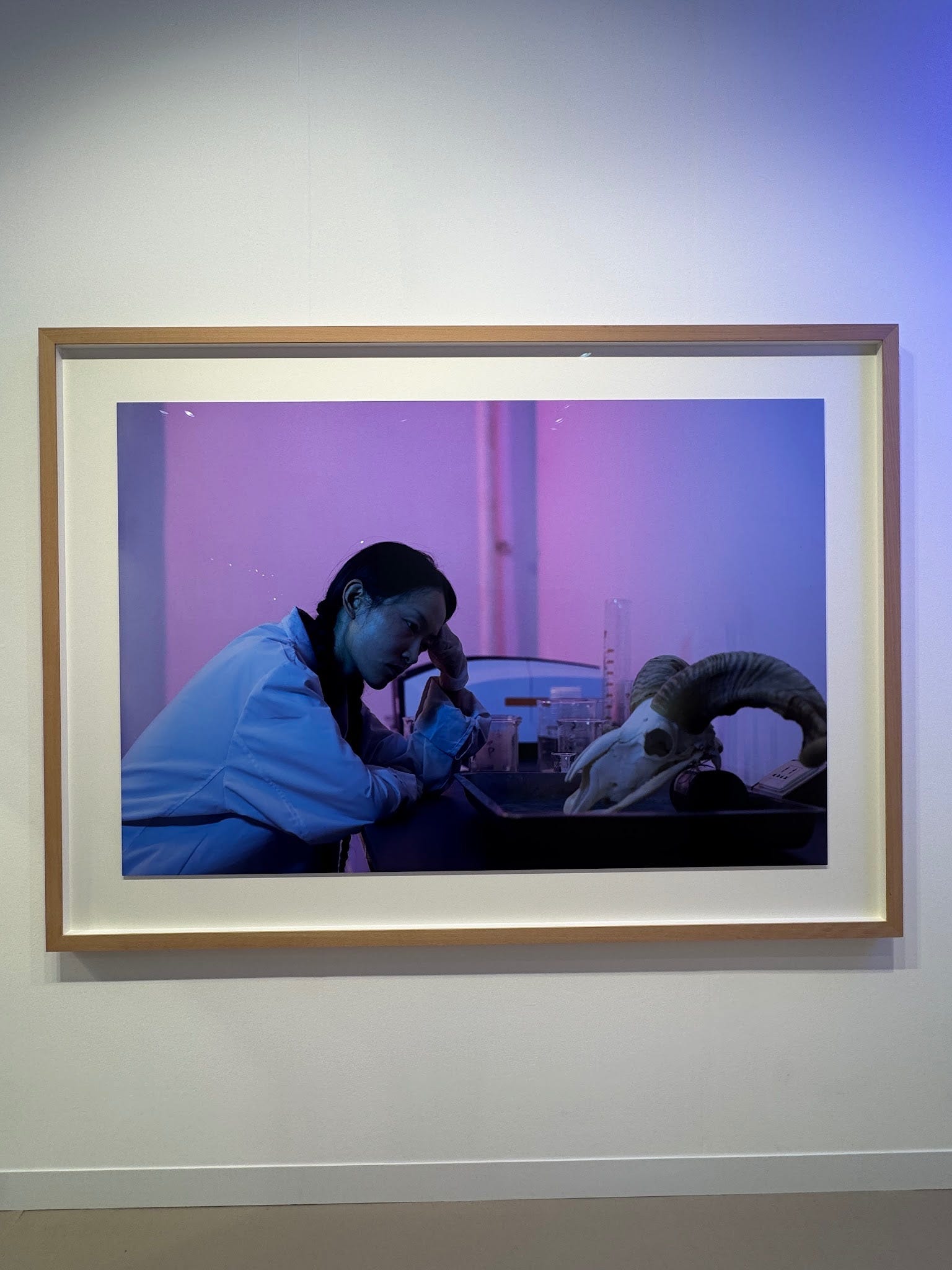
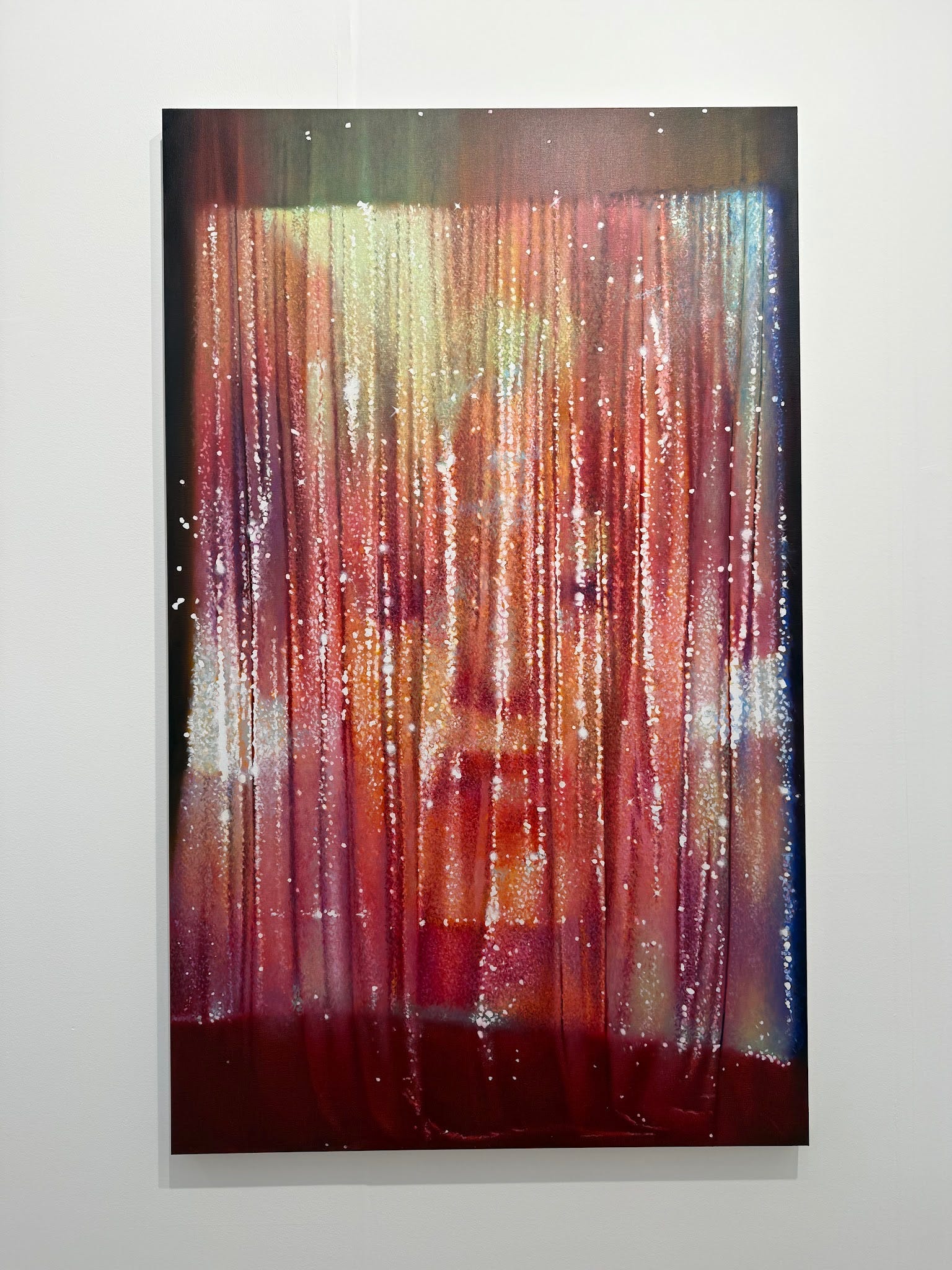
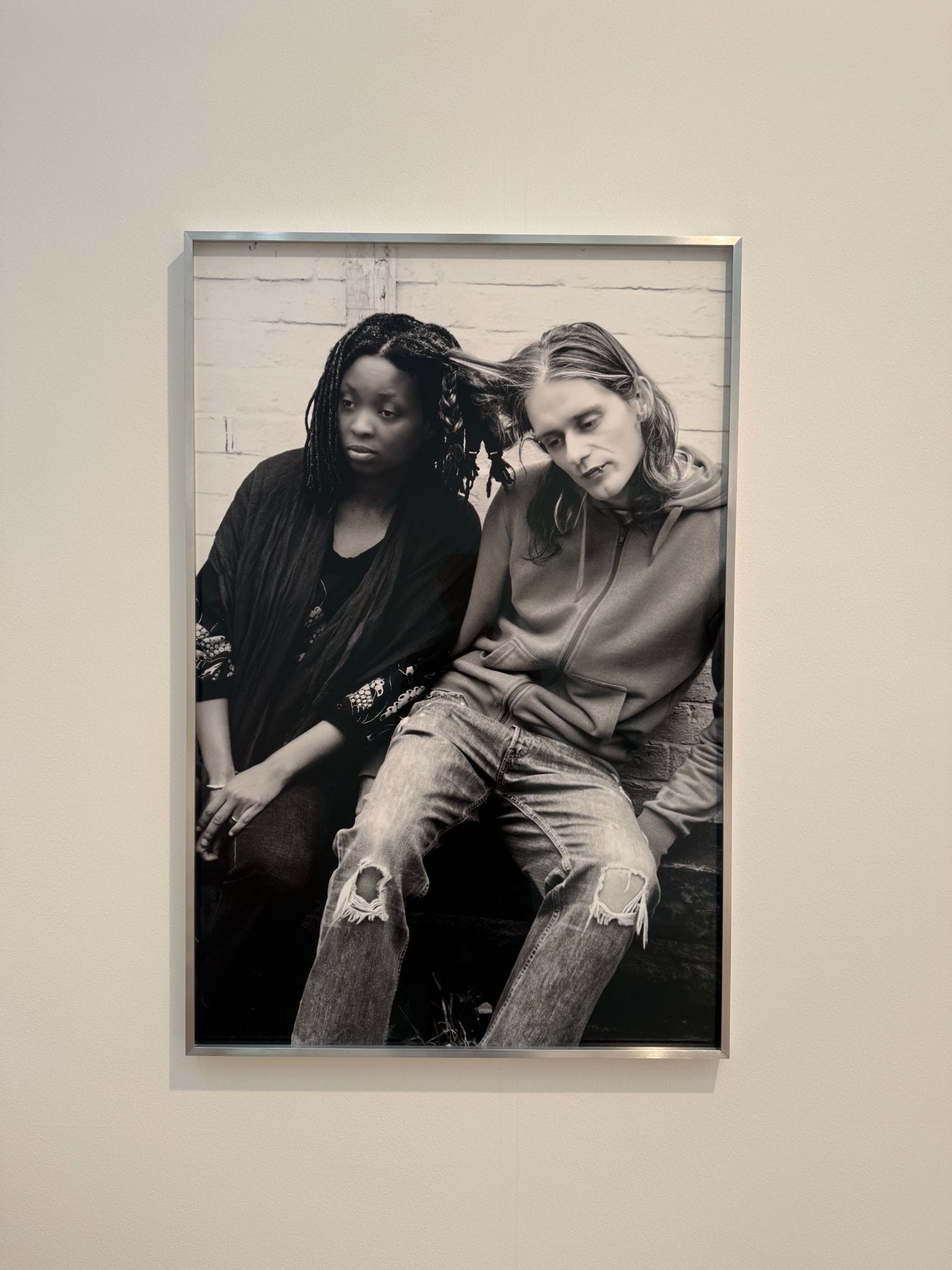
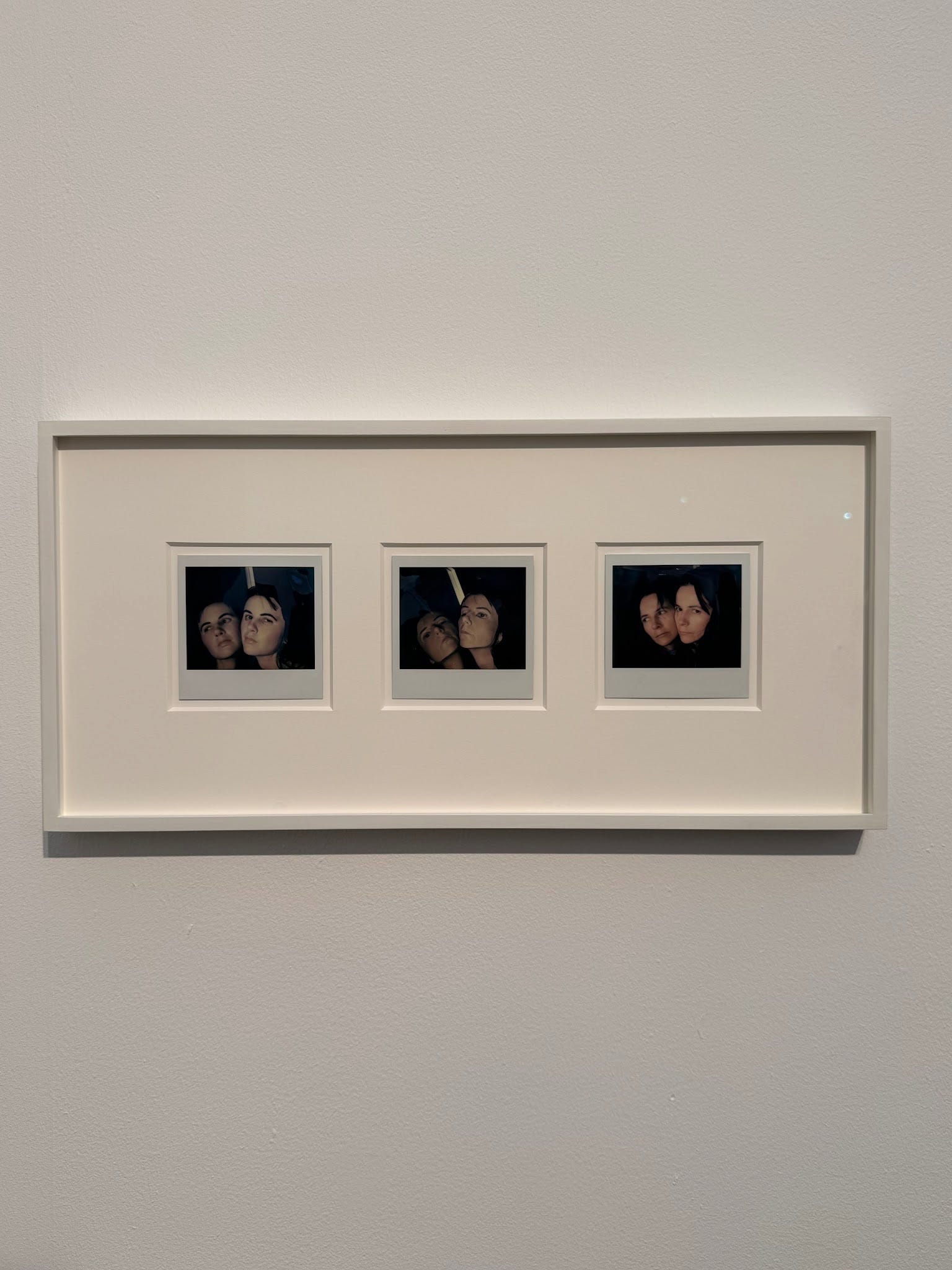
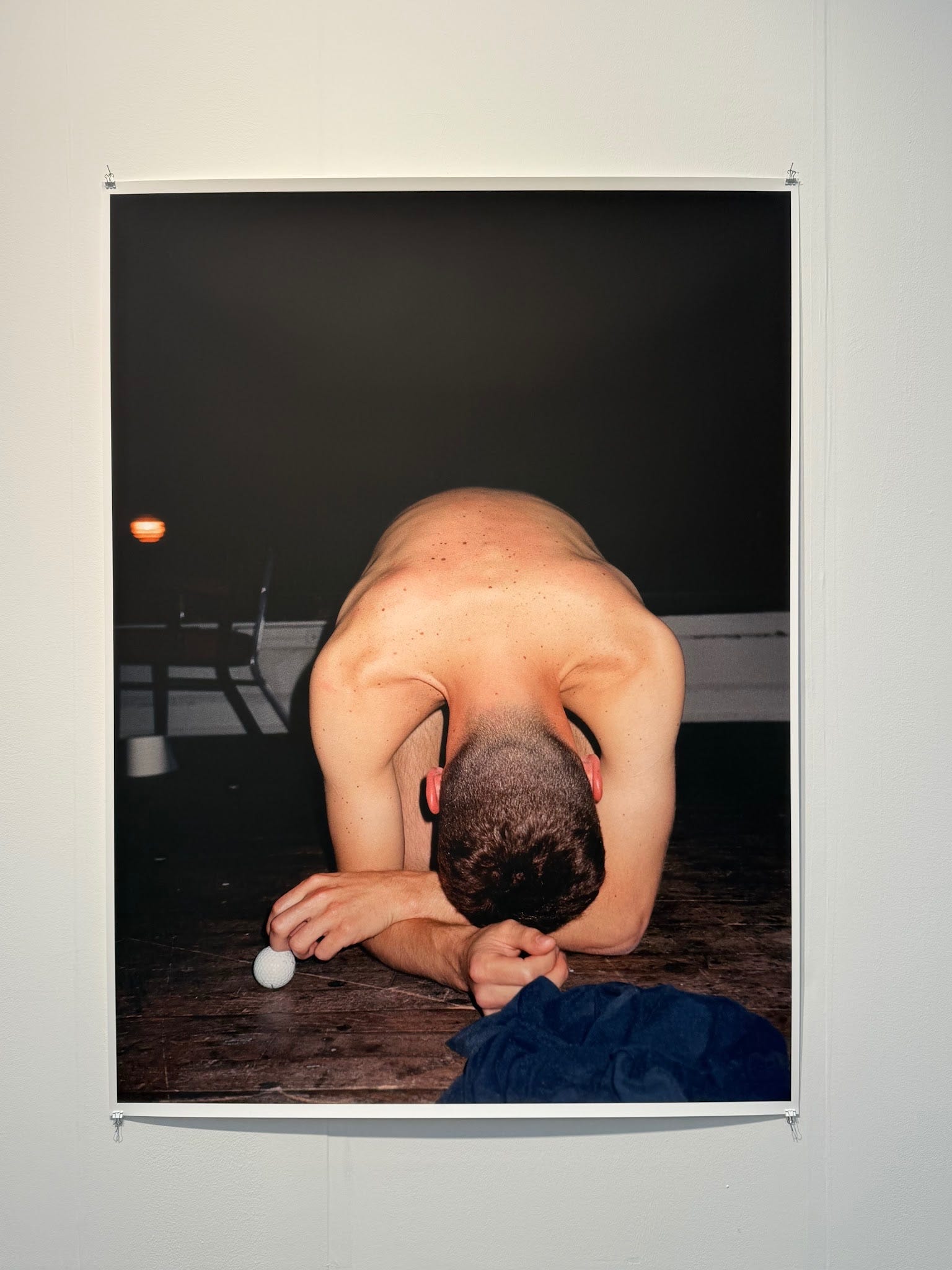
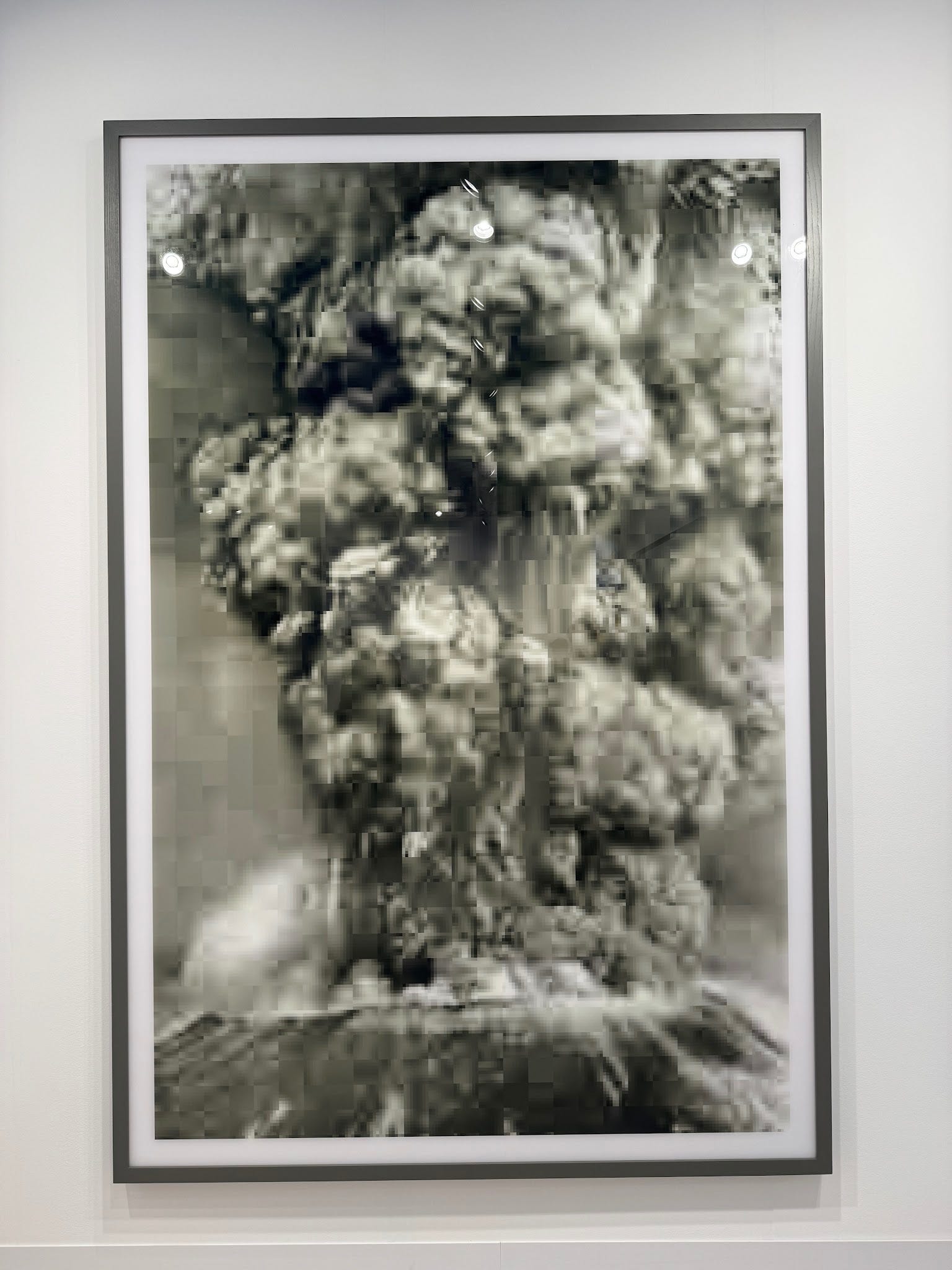
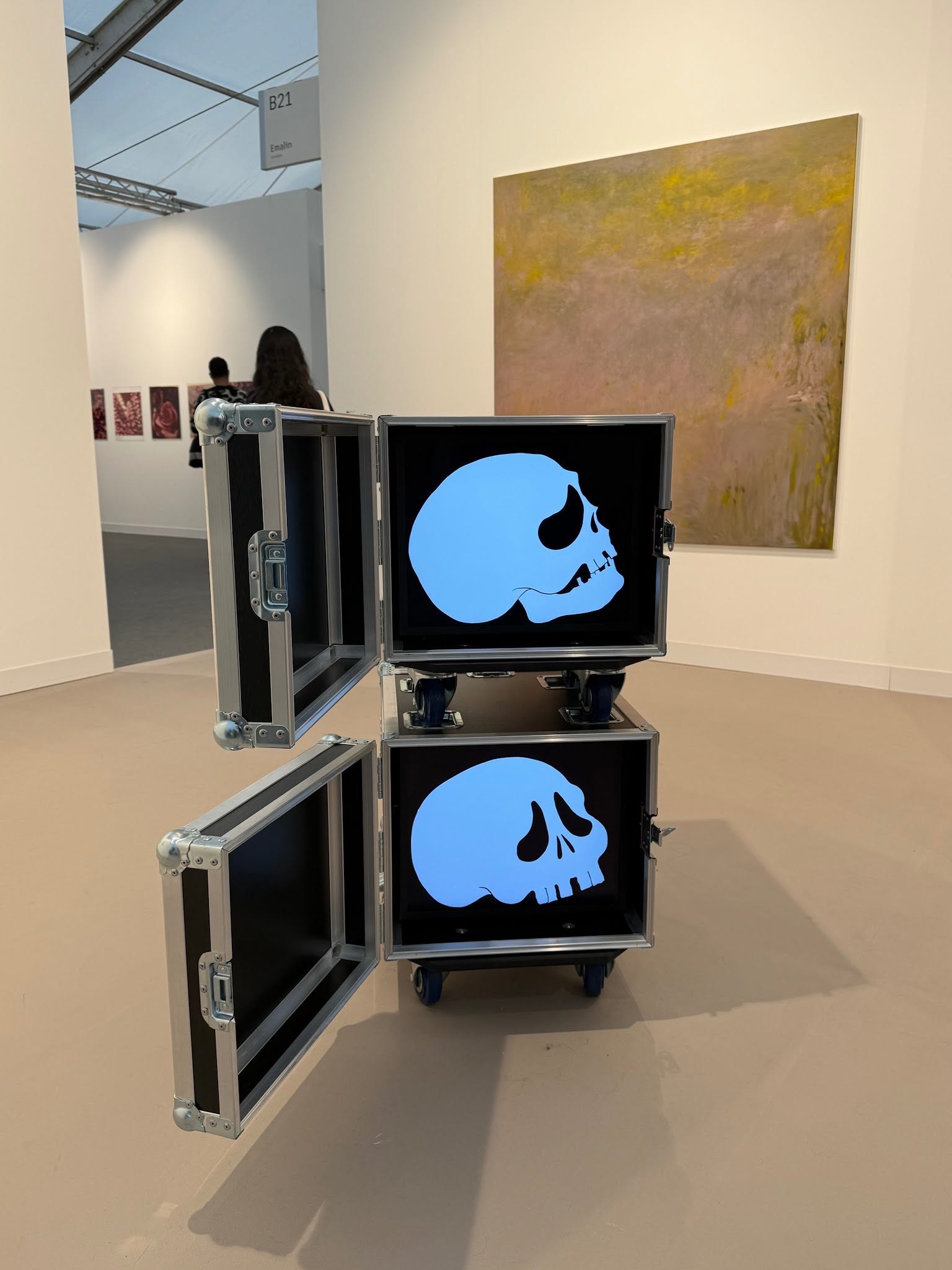
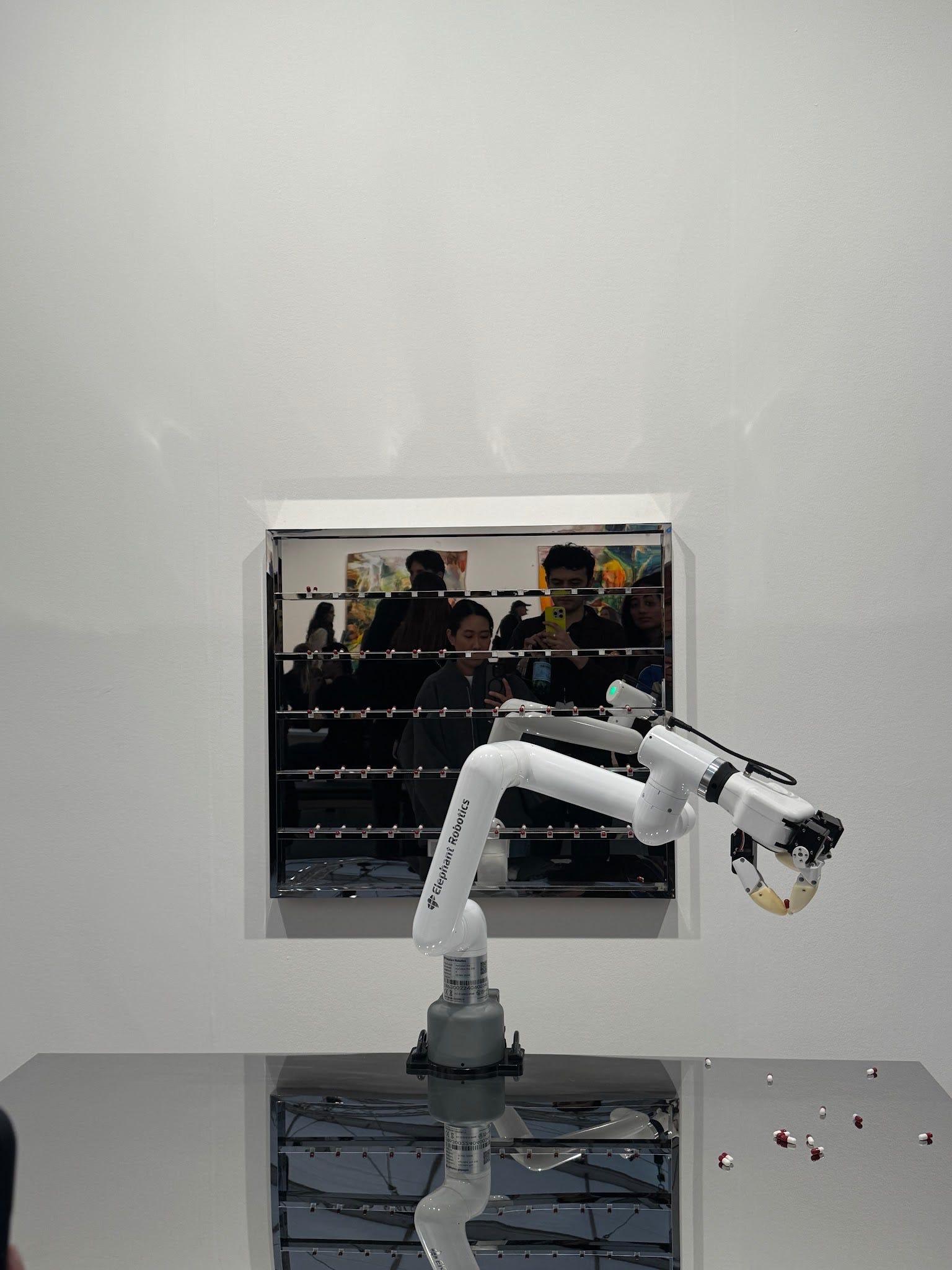
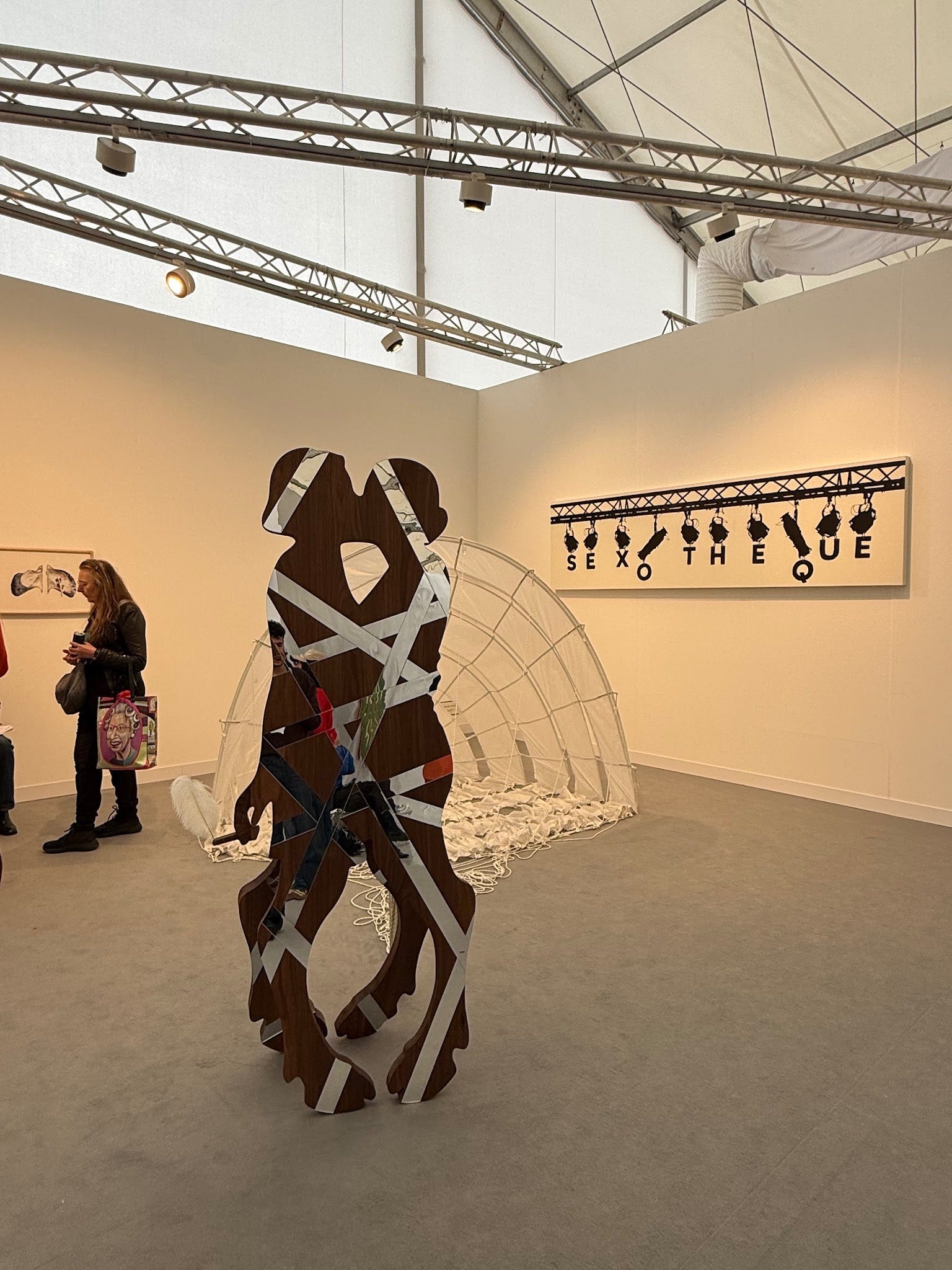
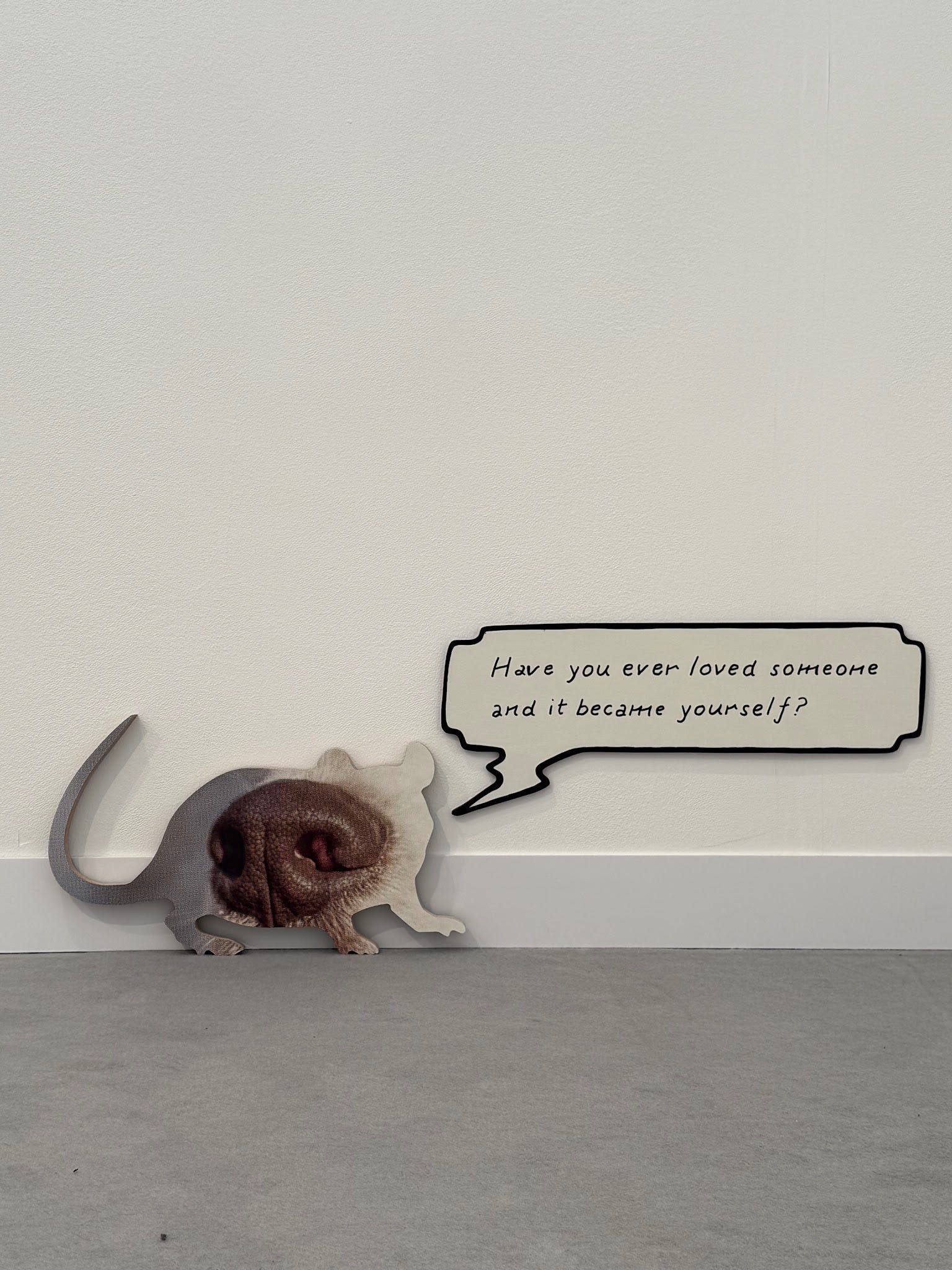
For Frieze London artworks that need no introduction.