


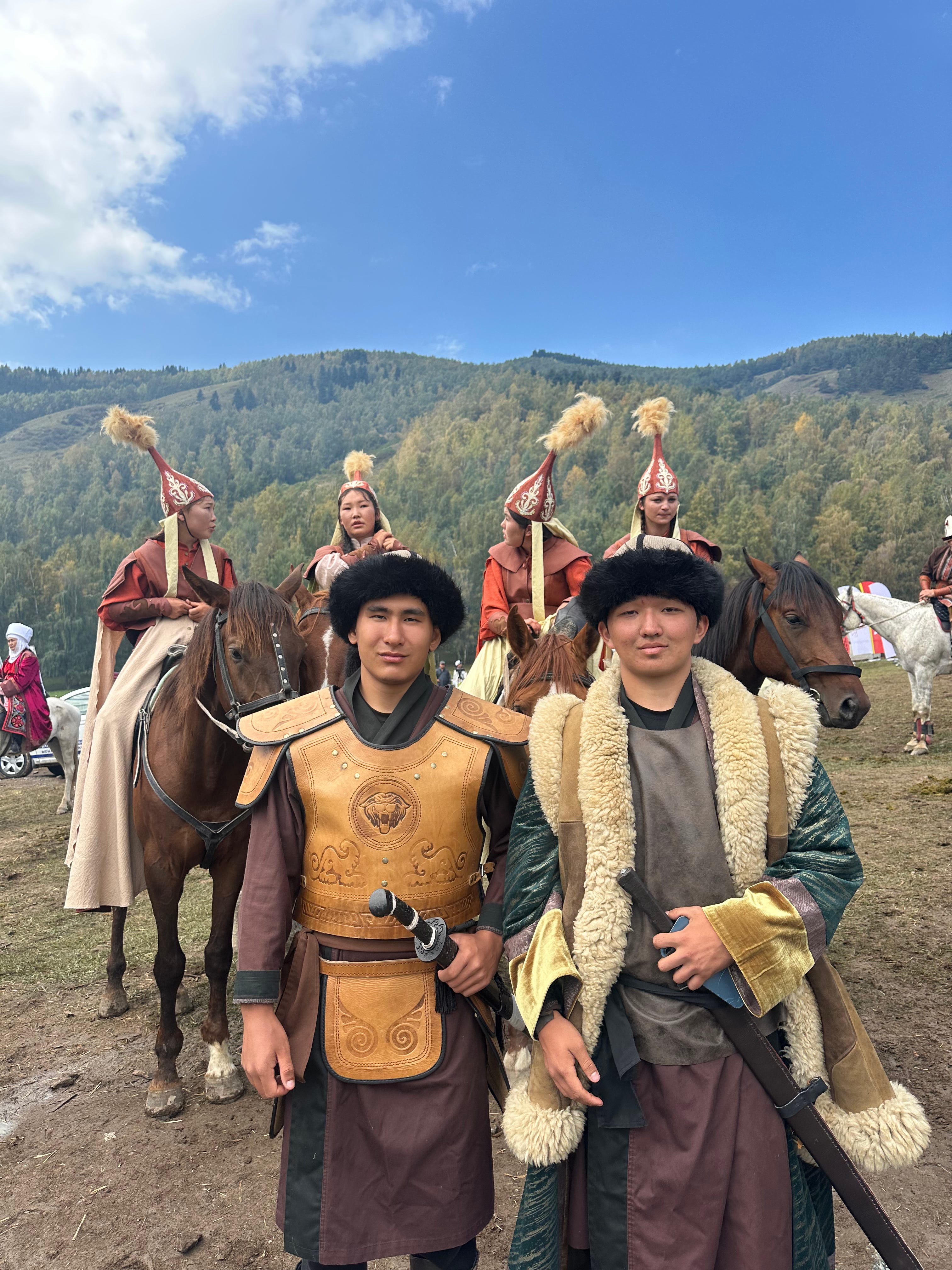
The Kok Boru teams walk out ahead of the day’s Kok Boru competition at the Cholpon-Ata Kok Boru Stadium.
Reporting and images by Jennifer Korn
For the last decade, competitive nomadic peoples from around Central Asia and the world have been gathering for the World Nomad Games, a biannual competition oft dubbed the “Olympics of the Nomadic World.”
The events are outlandish:
Kok boru, a twist on polo that uses a 70-pound goat carcass as a ball.
Er Enish, where two competitors wrestle…while both horseback.
Strong man, where large men lift and drag 1300-pound stuffed camels.
Arm wrestling, eagle hunting, tug of war.
In addition to these unique sport disciplines, there are also intellectual-based board game competitions, and over-the-top cultural showcases.
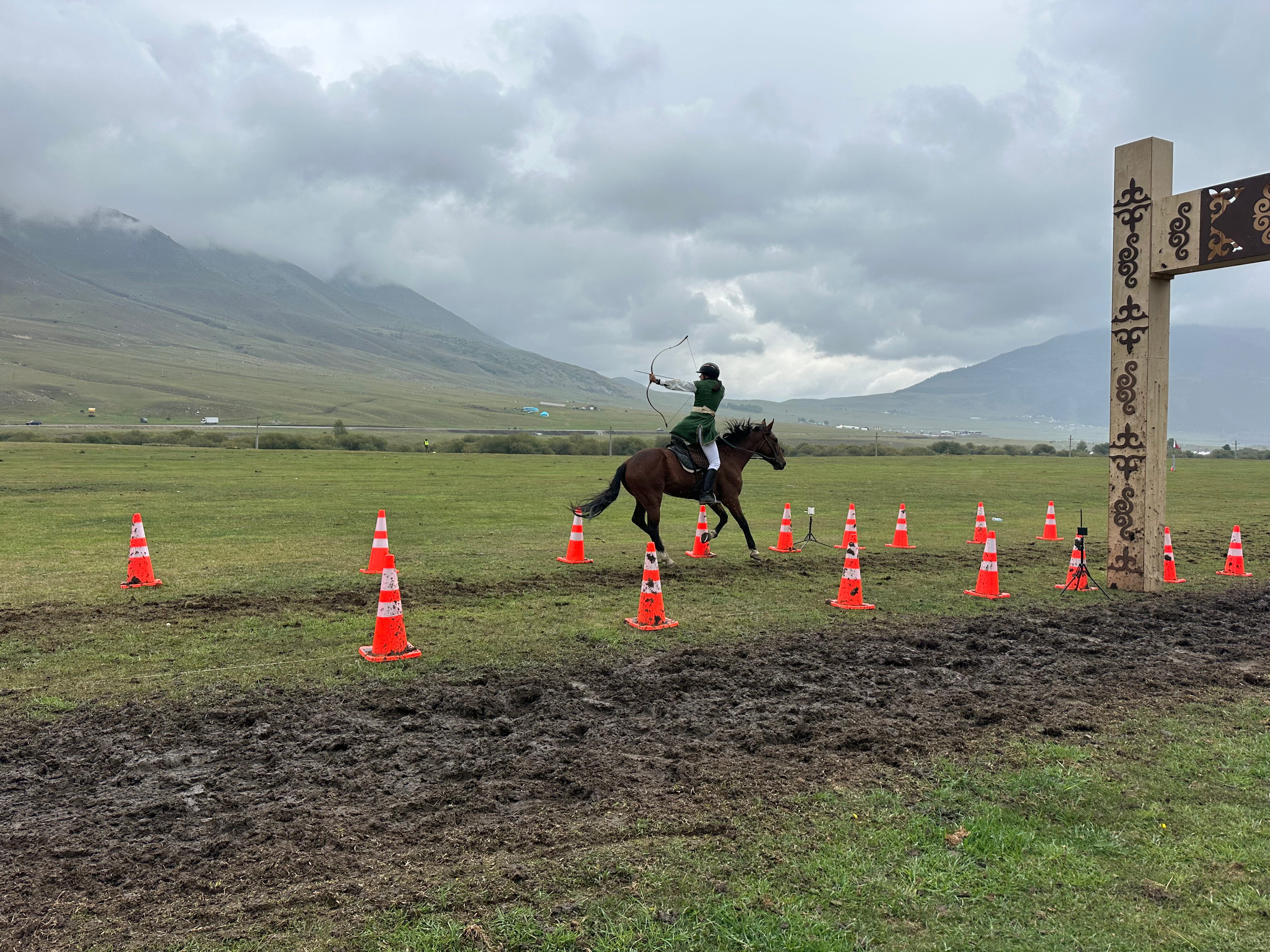
The latest iteration, held in Cholpon-Ata, Kyrgyzstan from August 31st to September 6th, brought together around 3000 athletes from 112 countries. I was there. This is what I saw.
The national and geopolitical context for the games is important. The Nomad Games have become a pillar of regional identity in Kyrgyzstan, a country that has struggled, in the 35 years since its independence from the USSR, to state build. The games help unite the population around a Central Asian nomadic heritage.
Archery. A Mongolian archer dressed in traditional national garb aims for the target at Kyrchyn Gorge.
“At first, [the Games] were primarily designed as an event to rebuild the country following the political turbulence in the 2000s, to create a positive image of the country as a safe destination for foreign investment and tourism,” said Kyrgyz independent researcher Arzuu Sheranova.
But the games themselves are far less serious than their historical context.
Each delegation is urged to dress in their own interpretation of traditional garb for the Opening Ceremonies. Many wear regionally-specific historical garments, but there are also cross-national interpretations: Colombians dressed as Andean highlanders, Iranians as Persian Immortals, Hungarians as Magyar warriors.
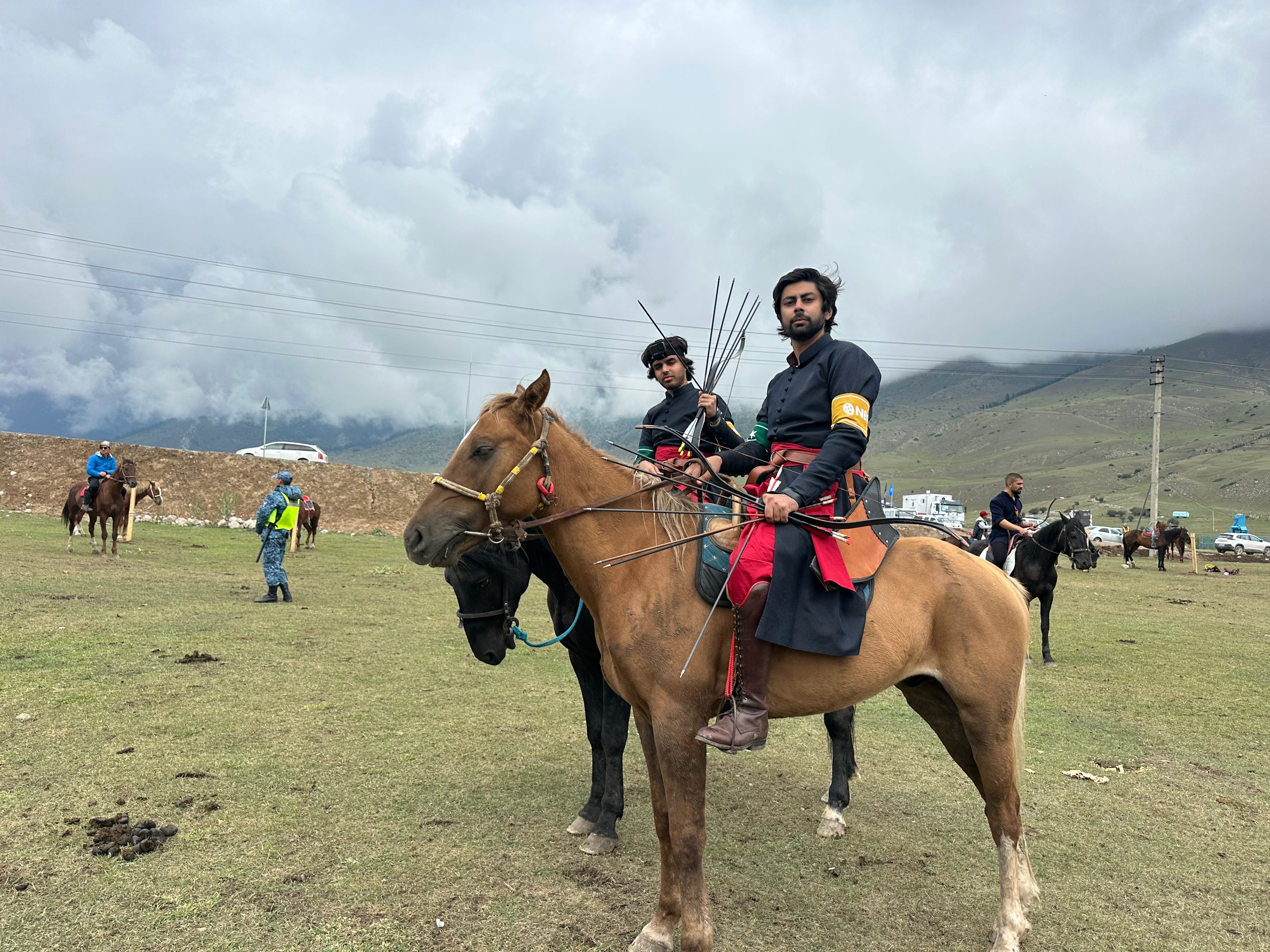
It’s a dizzying display of headdress, capes, leather boots, and knee buckling jewelry. These costumes are brought along into the field of play, with athletes competing while dressed in their full native outfit.
The Iranian team walks out to the Opening Ceremony in Bishkek Arena, dressed akin to the legendary Persian Immortals
The Opening Ceremony kicks off the week’s festivities, featuring over seven hours of programming (inarguably too long) that included an indoor waterfall, an extensive firework display, a theatric Mongol invasion with hundreds of horses galloping across the stage to the sounds of booming drums, and a surprise finale that featured Nicole Scherzinger from the Pussycat Dolls singing a few of her greatest hits (“Don’t Cha” hits different in Kyrgyzstan after 6 hours of local, traditional music).
A number of world leaders were present for the Ceremony, with Indian Prime Minister Narendra Modi, Russian leader Vladimir Putin, and China’s Xi Jinping in attendance for much of the show.
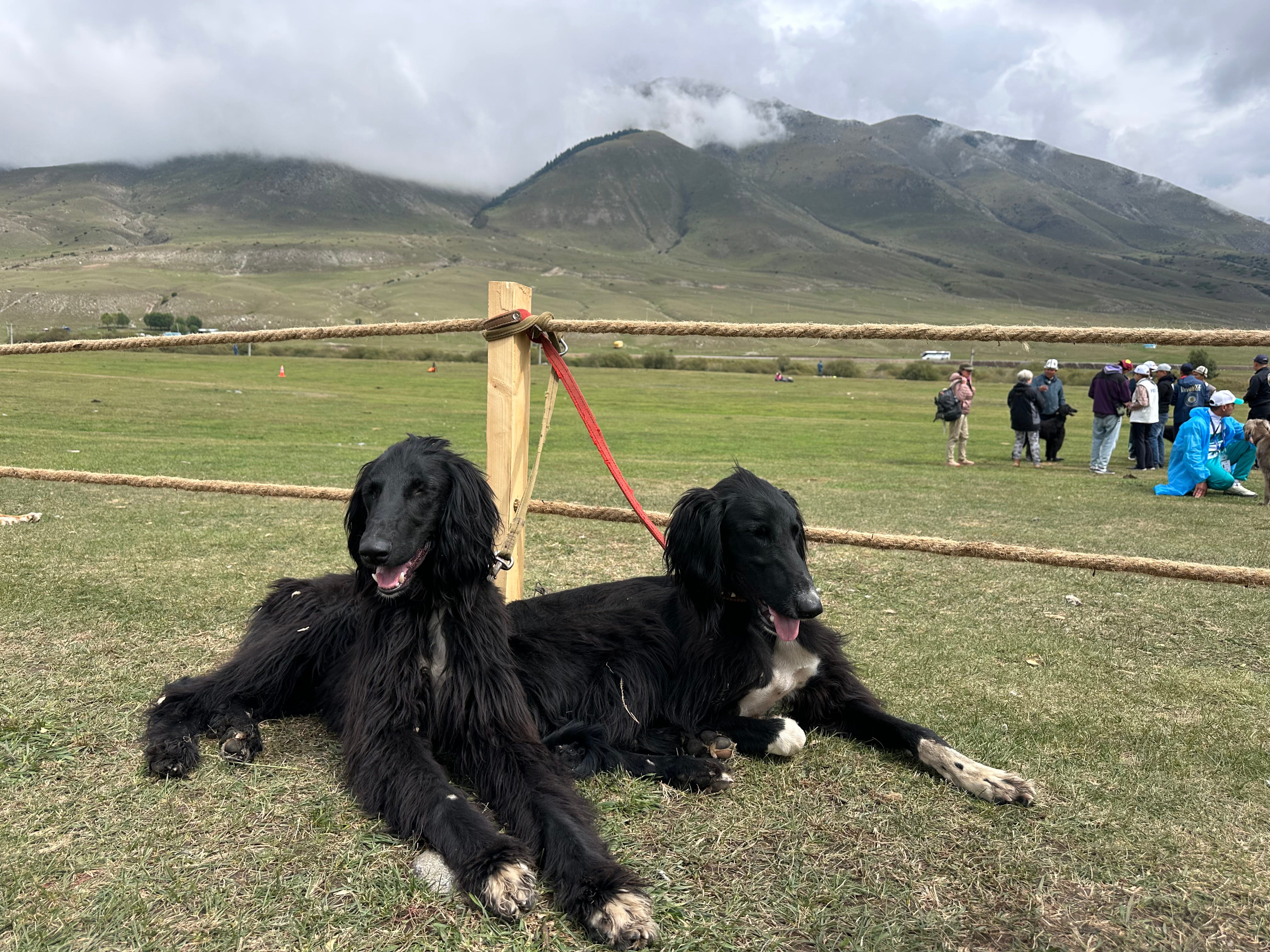
Taigan Zharysh. Taigans race after a motorbike dragging a fox carcass at Kyrchyn Gorge.
The grand and comically confusing beginning set the mood for a week of chaotic fun. These Games are about culture as much as sport, with over 600 non-athletic events peppered throughout the week.
The Brazilian Tug of War team prepares for their match, doing group stretches ahead of taking to the sand.
The Pakistani team struggles to beat the South Korean team in Tug of War. They went on to win bronze in the tournament.
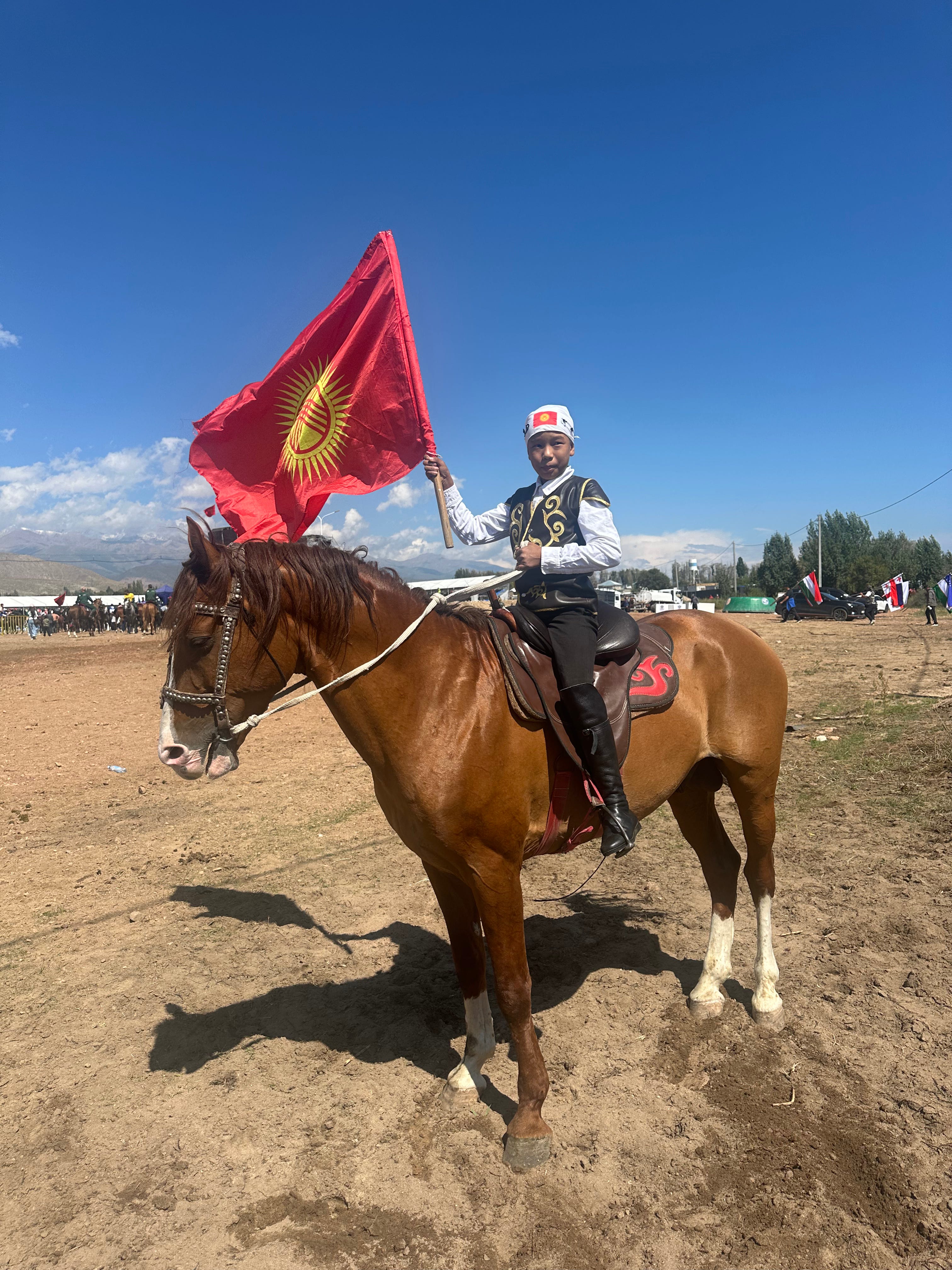
The competitors themselves range from elite professional athletes, to university students who heard about it while traveling a few months before, to 10-year-old equestrian riders trying to win the prize money before heading back to middle school class.
Numerous athletes I spoke to were pure amateurs who had found the Games randomly. Take Sam Pollard, a tug of war athlete from Great Britain.
“After university, I wanted to do a year traveling somewhere, go somewhere new, somewhere that not many people had really been,” a desire that took him to Central Asia.
He stumbled upon the Games while preparing for his backpacking trip. “It just so happened to perfectly align with when I wanted to go traveling,” said Pollard. “We all previously had a little bit of tug of war experience at university, and so we got other friends that had done it at Cambridge, King’s College, Bristol, et cetera.”
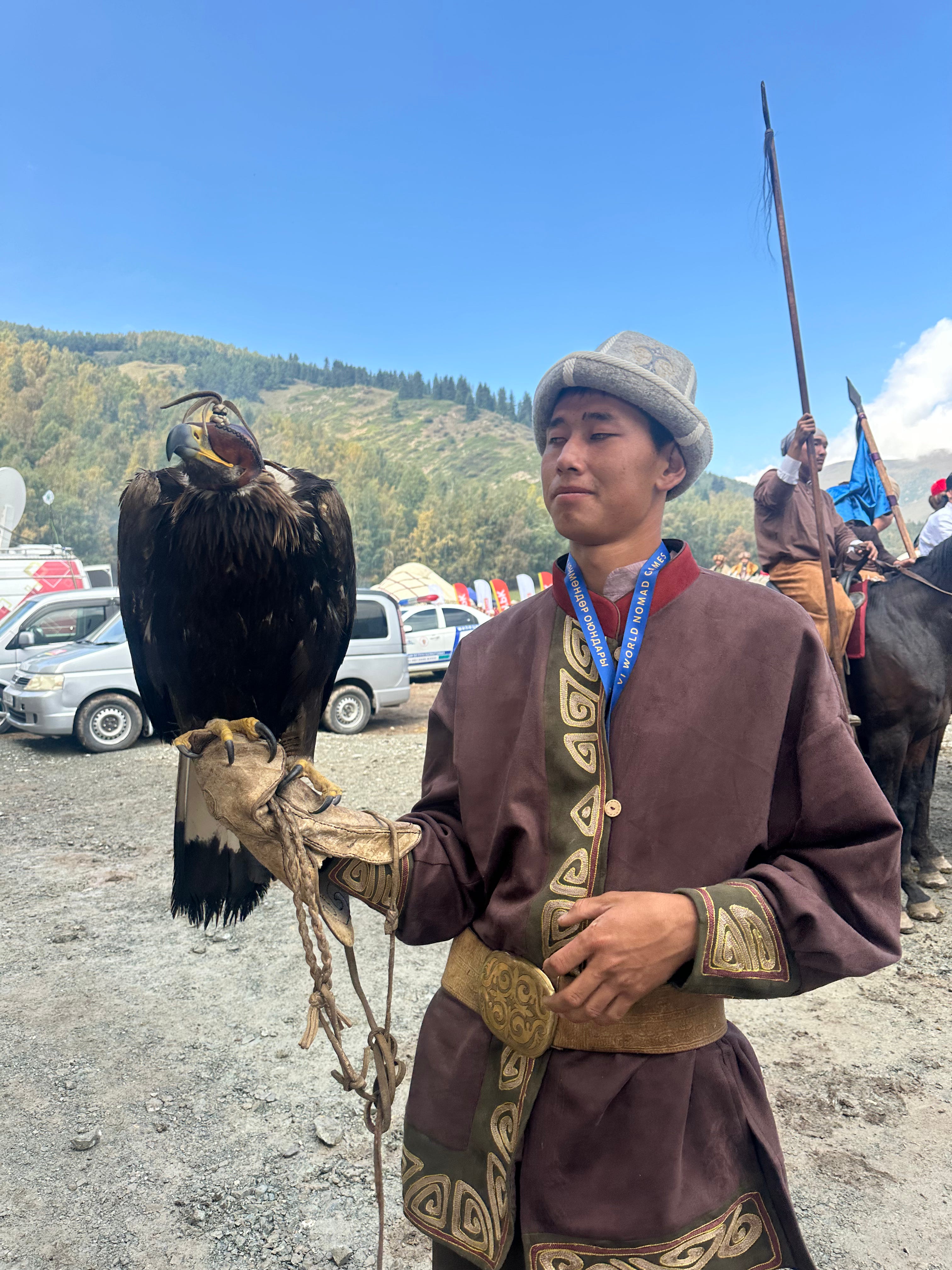
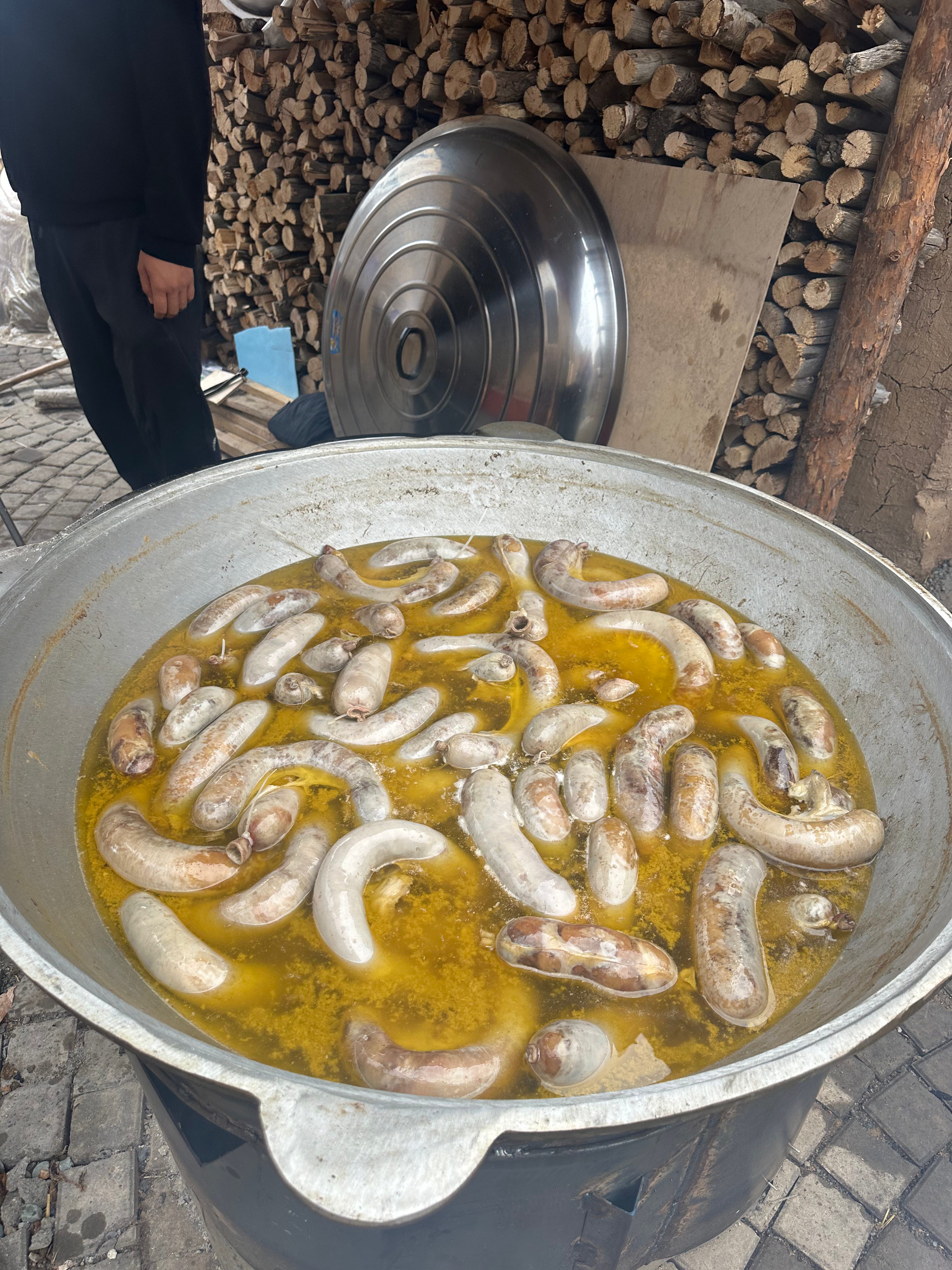
Many of the spectators I spoke to seemed to find their way here in the same serendipitous fashion. And upon arrival, the vibe lives up to expectations. As Andrea, a French fan living in China, put it: “There’s no real country here. It is just a bunch of people who want to have a good time, eat shashlik, watch people do crazy stuff.”
The whole thing is an odd balance of meticulously organized, serious events and incredibly informal, half-baked competitions. Nothing starts on time, there is no published list of competitors. Transport to and from venues is a logistical nightmare, there is mud everywhere. And yet, everyone has a massive smile plastered on.
“I have friends from all these countries. It’s awesome reuniting with old friends from Iran. We know a bunch of those guys. They’re awesome,” said USA Kok Boru player and horseback wrestler Nick Willert. “The Russians play rough. They play really rough, and they go for the jugular, but it’s part of the game.”
Despite hosting countries from all sides of the religious, political and social spectrum—many of whom are in the midst of active conflict—these Games curate an energy of astounding positivity that even the Olympics has been unable to achieve.
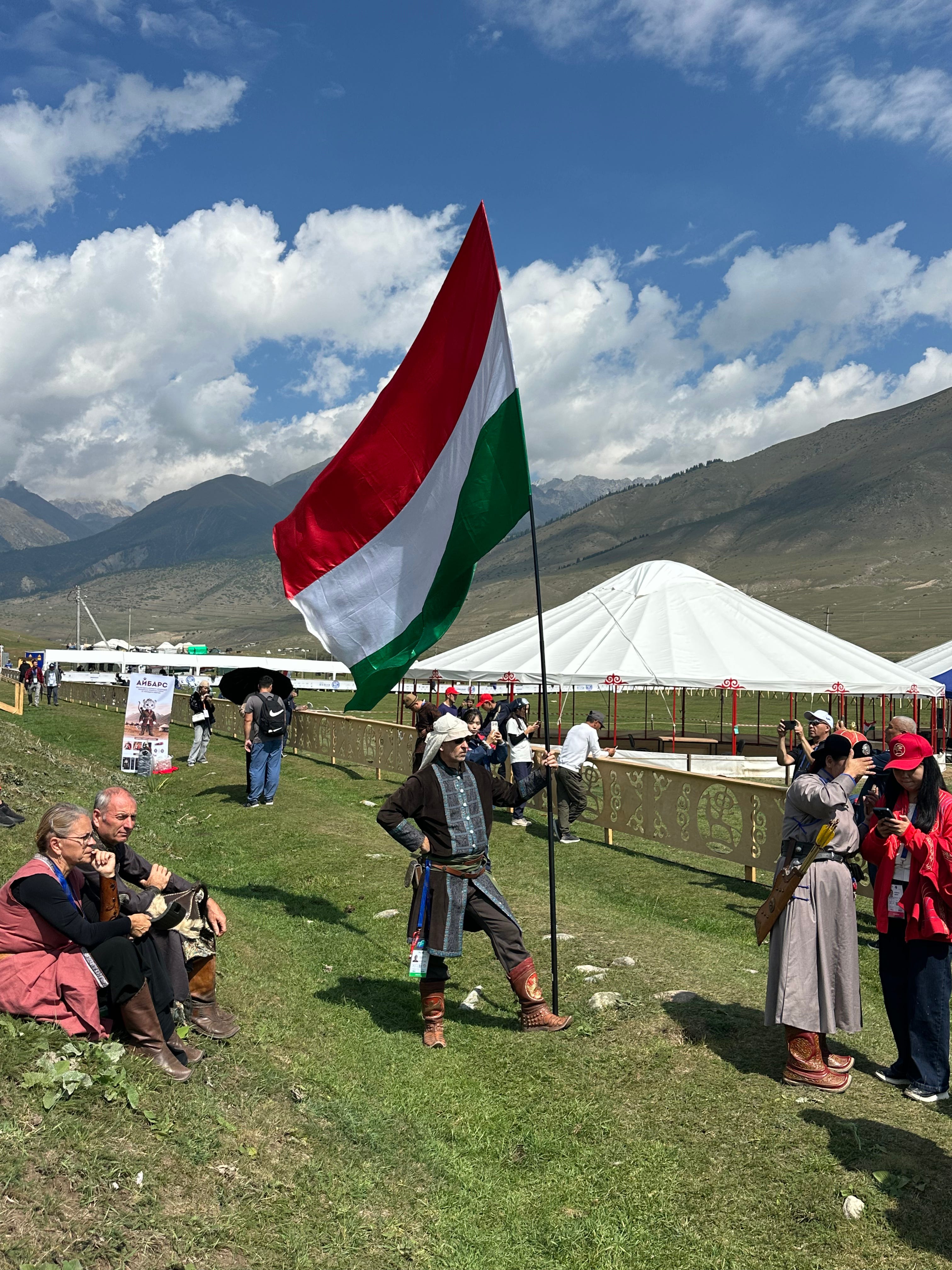
“During the Opening Ceremony, I was really impressed by how Iran got a huge chant in the stadium. They were really cheered for, but America got the same cheer,” remarked Andrea. “People are just happy to be here. They don’t care about what Putin or Trump or whoever says. Who cares?”


Yet America could not resist adding a sprinkle of soft power fairy dust. In one corner of the village, the US Embassy in Bishkek erected a group of yurts to celebrate America’s 250th anniversary. Complete with cardboard cut outs of George Washington, US history trivia and lacrosse sticks, the American yurt was a surprising hit for local tourists.
Strong Man. An athlete in the Strong Man competition hoists two 120 kilo weights before waddling down the track at Kyrchyn Gorge.
If you find yourself itching to see oversized men drag a 1300-pound stuffed camel, your next opportunity is a bit more complicated: the 2028 Games are set to be held in Kazan, Russia, a not-so-gentle reminder that for all the feel-good talk of global unity and shared heritage, nomadic identity is still somewhat of a geopolitical chess piece.
Jennifer Korn is a global affairs and travel journalist.