

Folk Art From The UK's Traveling Carnival
The painted rides of Hull Fair
Written By Keaton B McD
Fair ground art is one of the UK’s last remaining folk arts. Pioneered in the 19th century by showmen seeking to stand out from the competition, the form has evolved as rides have, and today stands as its own genre, with its own class of artisans.
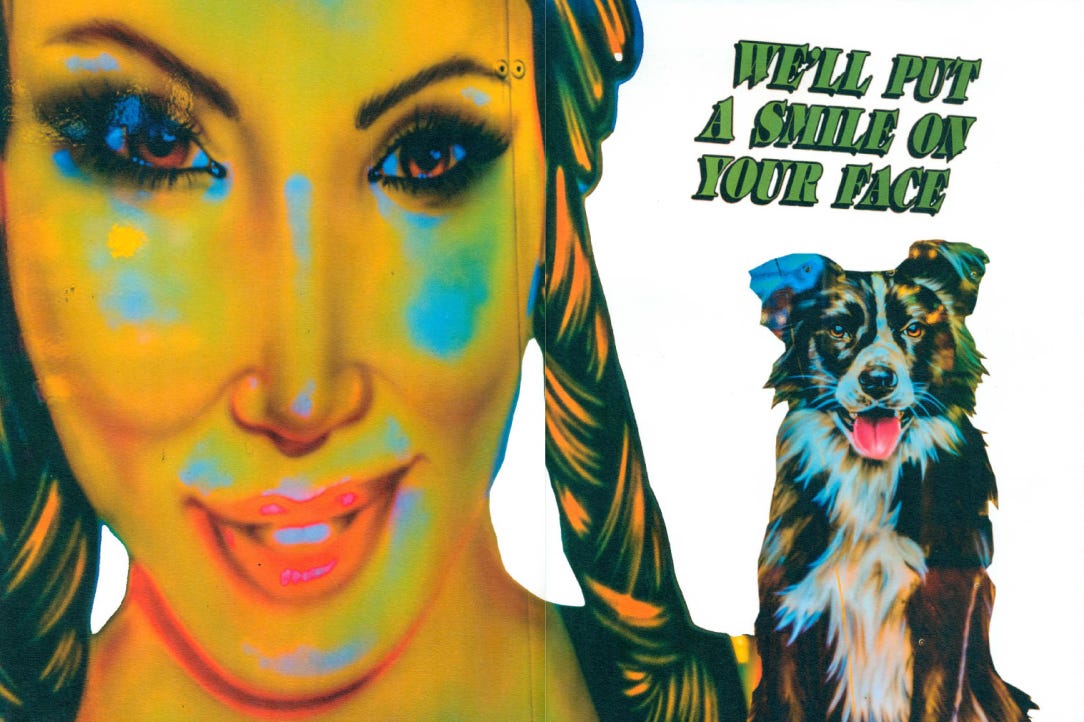
In the 1800s, the form was defined by handwritten signage and banners. As rides got bigger, showmen had their sides illustrated with immersive depictions exotic locations and animals. Today, the form is dominated by large-scale airbrushed symbols of pop culture.
Hull Fair, the oldest traveling fun fair in the world, is the perfect case study for this evolving folk art. It started in 1279, and still runs for 2 weeks on a 16 acre strip off Walton Street in Hull, East Yorkshire. It’s one of the most highly regarded fairs in the world. Showmen and visitors alike travel from all parts of the country to attend.
On the facade of each ride is a 4 meter by 3 meter sheet of metal which forms a perfect canvas. Each is painted with a dual purpose.
The first is commercial attraction. Something that will catch your eye. Cross-eyed Eminem, the cast of Tomorrow Never Dies, Britney Spears with red eyes. Their presence creates the allure of celebrity approval, hoping to pull on the wallets of the souls that wander past. Their accuracy (or lack thereof) makes you unsure whether the artist ever laid eyes on the person they are attempting to depict.
The second purpose of these artworks is to elicit an emotive response. Depictions of extreme fear or joy. Eyes bulging, mouths agape, expressions stretched across a face, looks that embody the feeling you’ll get on the ride itself.
Over the course of Hull Fair’s history, many stylistic eras have been showcased on the sides of its rides, from Rococo Revival, to Neo-classicism, Art Nouveau and Art Deco. Its art mirrored significant societal changes, including the Industrial Revolution, two world wars, the Great Depression, and the birth of pop culture. The style has also evolved through advances in artistic tools: first from the brush to the airbrush, and now to digital artwork and vinyl wraps.
Each ride is traditionally passed down through generations, but the artist behind them often becomes forgotten or lost as parts are added or removed throughout seasons, and tastes and trends change. Showmen generally consider the artists they hire to be commercial necessities. For this reason, little record has been kept of the craftspeople behind the folk art.
One contemporary exception is Paul Wright. He began working in 1980, and is one of the pioneers of 21st century fair ground art. He was a master of the airbrush and one of the first to begin pulling his references from modern pop culture. He was the most sought-after fair ground artist in the country up until his death in 2019.
My brother and I are grew up near Hull, and have a strange relationship with the fair. We don’t enjoy rides, but were lured in by the multi-sensory cinematic dreamscape of the fair. Every year we document different aspects of the fair, as research for a feature film we’re working on.
The first years research materialized in a 216 page book focusing specifically on the art work, featuring numerous rides and the available history on each of their art, though many of the artists remain unknown. The book is called Hull fair: art on the ride and is available via our production company ‘Iron Clown.’
We’re also working on a second study on Hull fair, based around the prize stalls, that will be released in early 2027. We would like to thank all the showmen and artists who have continued to allow us to document their life work and family legacies.


Credits: Photography: @keaton_b_mcd and @__cheeb__; Produced by: @ironclown; Design assistance: @lolaprdesign


Love this!