


The Viral Image Index is a Welcome Magazine interview series by Claire Koron Elat, which investigates virality through conversations with contemporary creatives who are pursuing it. This is the third installment. Catch up on the first & second.
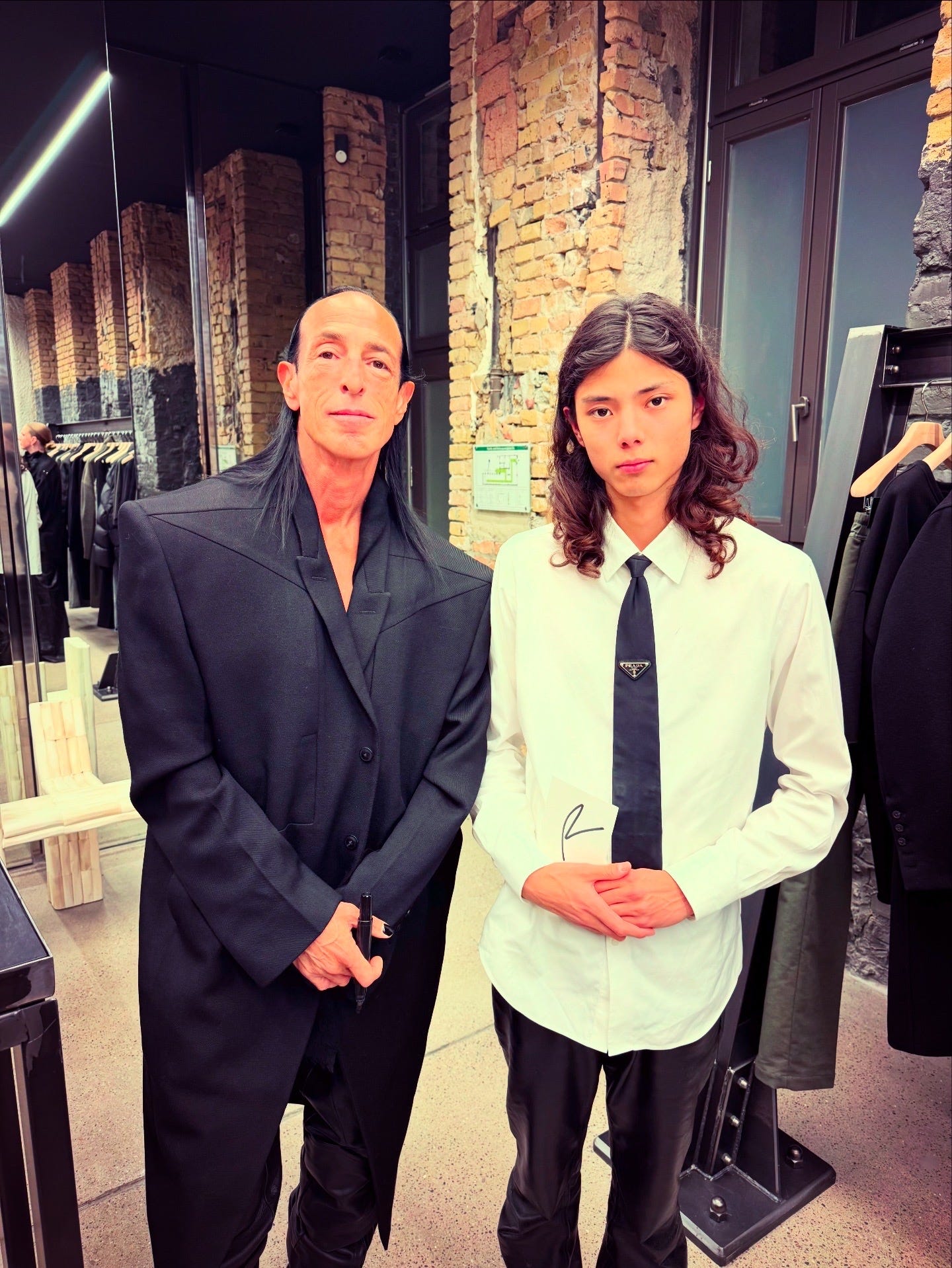
For 1248 days now, Lil London has worn the same outfit. Every day, no exception. A white shirt, a Prada tie, and black leather pants are what the New York-born and Berlin-based artist and musician Lil London calls his daily uniform.
“I’m the first hyperpop-er with a Prada contract. So please don’t ask me why I like Prada that much. Yes, I only have one outfit.” - Lil London on “fw24”
The Prada contract is not sonic fiction but reality for the former full-time model who debuted exclusively with Prada in 2022 and counts brands such as Louis Vuitton, Dior, and Maison Margiela among his clients. On the runway he wore a different outfit every time. Now he rejects the idea of re-imagining his look, thereby turning away from the very system that first gave him access.
What artist Hito Steyerl calls the “poor image,” London calls his uniform. In her renowned essay “In Defense of the Poor Image,” Steyerl describes how images lose their aura through mechanical reproduction. She defines a poor image as a compressed, low-resolution image that is continuously reposted, screenshotted, cropped, and memed, and ultimately becomes detached from authorship and context.
The poor image, though of low technical quality and status, is often effective at creating virality. They are easily shareable, fast, and optimized for digital platforms rather than preservation—reach over resolution.
Building on Walter Benjamin’s concept of artworks being deprived of their aura, Steyerl updates the art historian’s theory for the internet age: Online images don’t only lose aura; they mutate. And an image becomes powerful not because it’s good, but because it travels. In other words, because it goes viral. The loss of aura in the digital age does not mean that the image becomes meaningless, its aura is replaced by virality, its authority by visibility, and its originality by recognizability. The image’s value comes from circulation, not quality.
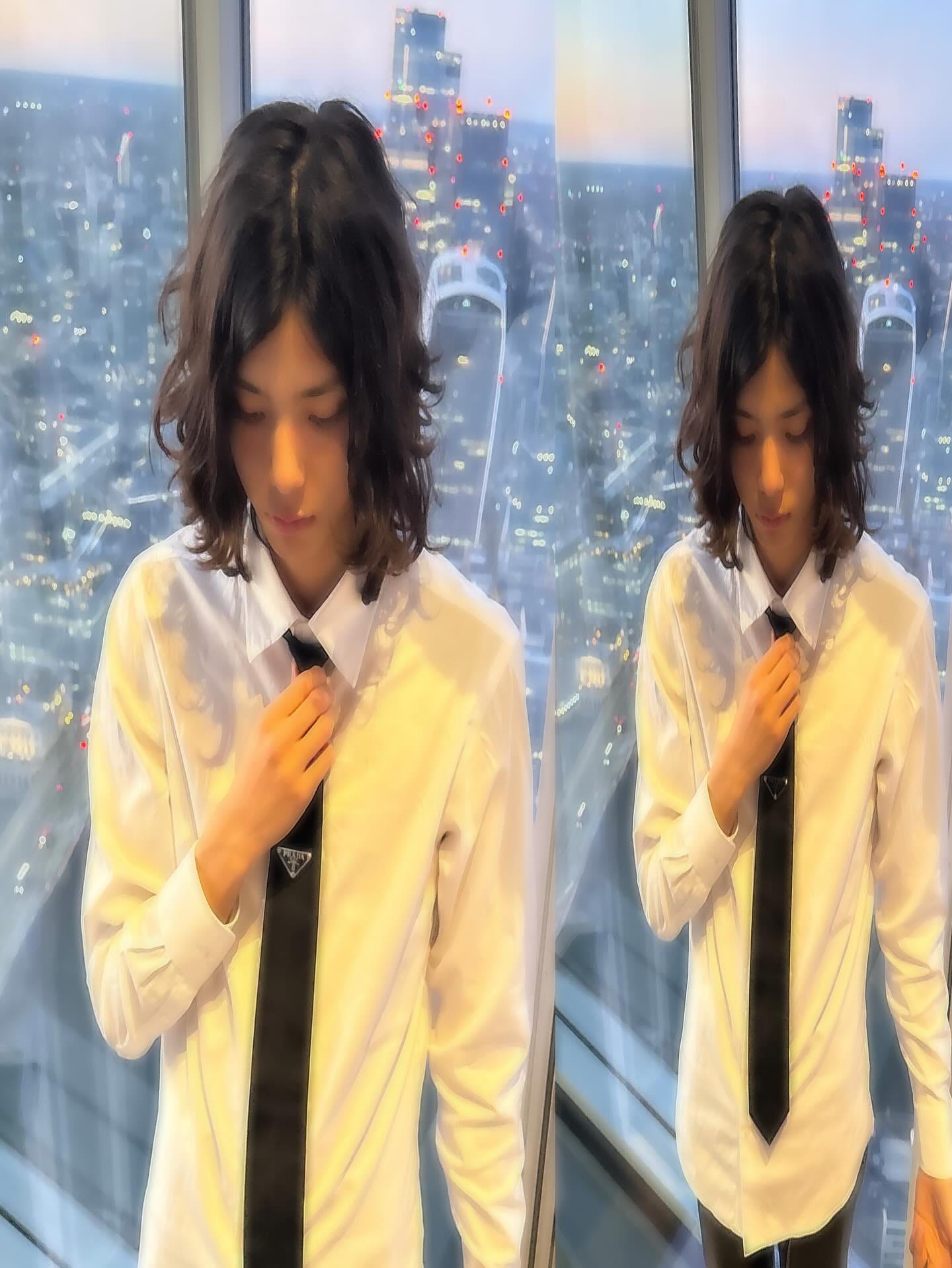
London’s concept of his uniform therefore behaves like a poor image, as he repeats the same instantly recognizable visual endlessly, which is entirely detached from context (he can wear his uniform on the runway, at a funeral, on the subway, or at a wedding). There is no inherent meaning within his uniform itself. Its value comes from the quantity of its circulation, where it appears, and its easy identification.
In the last installment of “The Viral Image Index” with photographer Brent McKeever, we examined viral images as moments of excess. Virality, to a large extent, appeared as something unruly, fast, and unstable. What makes London’s approach distinct is that he does not surrender to this volatility, but instead insists on stasis.

Where the viral image is typically defined by constant variation, London’s uniform does not chase novelty; it neutralizes it. In doing so, he inverts the usual logic of visibility. Rather than producing endless new images in the hope that one will circulate, he produces the same image until circulation becomes inevitable. Repetition, here, is not a byproduct of virality but its precondition. London’s uniform is not content but rather a framework. It allows him to move through fashion, music, and digital culture without recalibrating his visual identity. The image does not escalate; it accumulates.
In his first official interview, London talks about what led him to his outfit choice, his hate for the fashion industry, and being a product and brand simultaneously.
-
Claire Koron Elat: You’re known for essentially wearing only one outfit, which you’re also wearing now, a Prada tie and a white shirt. What made you decide to commit to this one single look?
Lil London: I started working in fashion at an early age, and that really sparked my hate for fashion and consumerism in general. That might seem hypocritical while working and benefitting from the industry but ask Alexander McQueen, I feel like he would understand. While my disdain for the fashion industry grew, paradoxically I was exposed to very intriguing people such as Raf Simons who inspired my uniform idea. I noticed that the people who actually created and profited from fashion did not concern themselves with what they themselves were wearing. I remember during the Margiela couture show, which we rehearsed for a whole week, Galliano would pull up in hot pants and a washed out sweater every day. If he and Raf don’t care about clothes in their personal life, then why should I?
I also noticed that my job as a model is to scam people into buying things they really don’t need in a cyclical timeframe. I got the strong feeling that I didn’t want to fall for that and no longer be a victim of the fashion industry. That’s when I decided that I didn’t want to partake in that in my everyday life anymore.
But it’s actually harder than you think, because you still want to look cool or feel good about yourself when you walk outside. With other art forms like music and film, you can simply not partake—you can go outside without listening to music. I can’t go outside without wearing clothes. So what can I really wear that I would never have to change? I landed on a white shirt and a tie since they’re the most widely accepted clothes a man can wear across continents, occasions and history. I could go to a funeral, I could go to my university, I could go to the studio, I could go to the next Prada show if I wanted to. I’d always be probably fine in 100% of situations.
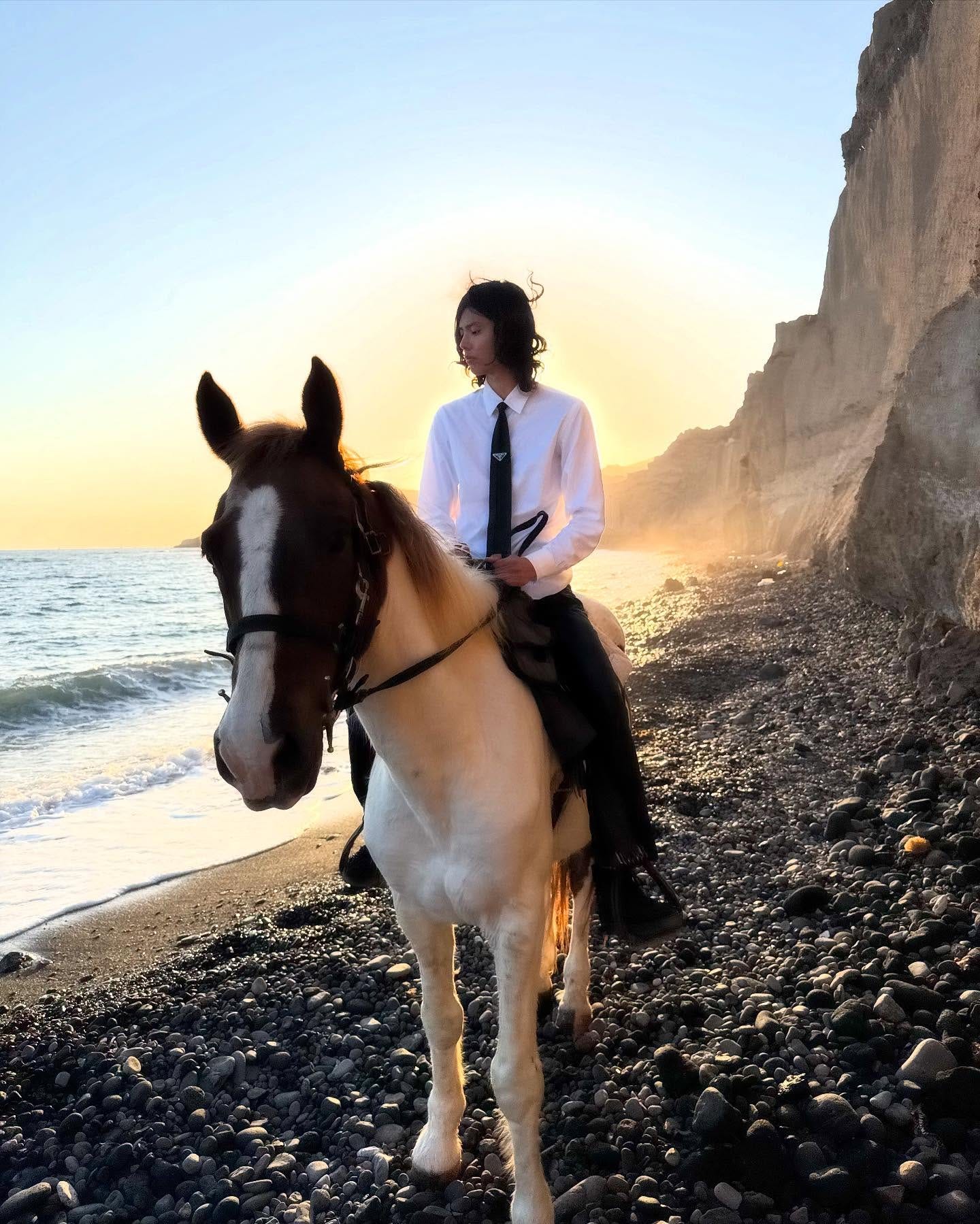
On Instagram you’re counting the days, how long you’ve been wearing this outfit. When was the actual day where you decided, “I’m only going to wear this from now on”?
It was after the Dior Resort show at the pyramids of Giza. I was figuring out what to pack and stuff like that, and at that point I was just so sick of it. I had gone from doing Prada e-comm, and as a model e-comm is the worst thing because you’re just standing there for ten hours wearing clothes. So then I just packed two shirts. After that I just kept going.
Do you actually wear it every day?
Yes. The whole decision-fatigue thing is very real. It’s hard to put away my phone and close Instagram, and escape all these decisions I have to make. So when I don’t have to decide what to wear when I step out, it really makes up for it. Even though sometimes it’s hard in the summer with leather pants or in winter to just wear a shirt.
In a culture obsessed with novelty, and there are of course different ways to define what actual novelty is, do you see this kind of uniform as a form of refusal, or is it essentially just a branding tool?
I don’t think people are really obsessed with novelty. When people think something is new, it’s usually a reference, an homage, or something that’s been around before. And fashion is the best example of that. Most people are either too ignorant or self-absorbed to notice that anything they see as a novelty isn’t actually new. People don’t even like new things. They hated Jesus, they hated Kanye West, they hated autotune, and they hated me. Everything that’s new has to go through this battle of proving itself. People crave familiarity. It’s evolutionary, so I can’t blame anyone for it but I refuse to act on my biological animal in a cave mindset. And yes I do think the uniform is both a refusal to partake in the fashion circus and, although I hate to say it, an effective branding tool.

Would you say that the tool of repetition you’re using for your image and the images you create ultimately flattens meaning? Or is it a way of turning the image into a symbol?
I think meaning is imbued by the result of the action. We will see what my impact will be on this planet when everything is said and done. I like the idea of being a symbol although I am not delusional to the point that I believe I already have become one. Repetition or exposure are certainly necessary ingredients for a symbol.
In today’s world exposure can be quite easily likened to virality. It is virality that shapes the global narrative. From genocide to shoes to racism everything we find important as a human collective is controlled by its respective virality. It is tragically dystopian and yet we need virality to shape the global narrative. So I think I would have to answer yes to your question, if virality is a given, then repetition would be the mechanism to turn oneself or oneself’s image into a symbol.
You not only create images, but are the image itself. You were talking about your modeling career earlier where you were basically just a body and an image. But now you’re able to re-appropriate that.
Being a model is the most surface-level job you can have. You either have the genetics or you don’t; there’s nothing you can really work harder at. I talk to other models, and people get lost in the sauce. They think they bring a certain vibe to a casting, or a je ne sais quoi. I think that’s mostly bullshit, with a few exceptions. Alex Consani, for example. But if she didn’t look the way she looks, all the personality in the world wouldn’t translate to jobs.
Having control of my image now is the only part of the internet I really love. You get to create your own narrative, your own little story. It’s bad in the sense that politicians can do that too and ruin the world, but it’s cool that I get to do it.
When did you first realize your body or presence had become a transmissible object in the digital space rather than just a form of self expression?
Sometimes when I get recognized on the street, people try to grab you or whatever. They don’t really register that you’re a real person, even though cognitively they know it. My body is half-Korean, a quarter English, and a quarter Trinidadian like Nicki Minaj. My body has been defined as Asian by the people in my life, and it therefore became a transmissible object that was bound to and measured against everything people believe Asian people and bodies to be and act like. I transmitted things about myself by being perceived as Asian before I had even met someone or said a single word. It has been quite freeing to choose and create my own image of myself in the global arena of the internet. I curate my outfit, my life, my music, my visuals and my form of communication. I can choose what to express and more importantly what not to.
I first noticed my body was a transmissible object when I first came into contact with racism, which would have been around the same time I became sentient. The second time I felt my body or presence was a transmissible object was at the Dior show in front of the pyramids of Giza when two girls from the valley wanted to fly me out in their private jet because of my body, even though they had never met me before. The third time is as described earlier. It is the one I enjoy the most so far.
You’re often described as the “first hyperpop artist with a Prada contract.” And this line is also what essentially made you known. You’ve said it’s more of a concept for you. What do you mean by that?
I won’t lie, I did say that because I knew it would land, especially in Germany where people despise people of color being openly successful. To be fair they also hate other white people being non-conformitive or successful. It’s one of the only drawbacks to not living in America where success is celebrated and rewarded. Of course that brings with it its own host of complications and unfortunate developments.
I say it’s more of a concept to me because although the line is 100% true, it got really big, especially in Germany. On the subway here, people would say, “You’re the first hyperpop artist with a Prada contract.” I still smile about it sometimes. So I had to reel it back and focus more on music and reframe it. Now it’s more of a concept—it stands for where I started, who I am, the outfit, the modeling. It ties everything together. But it’s not something I want to push further.
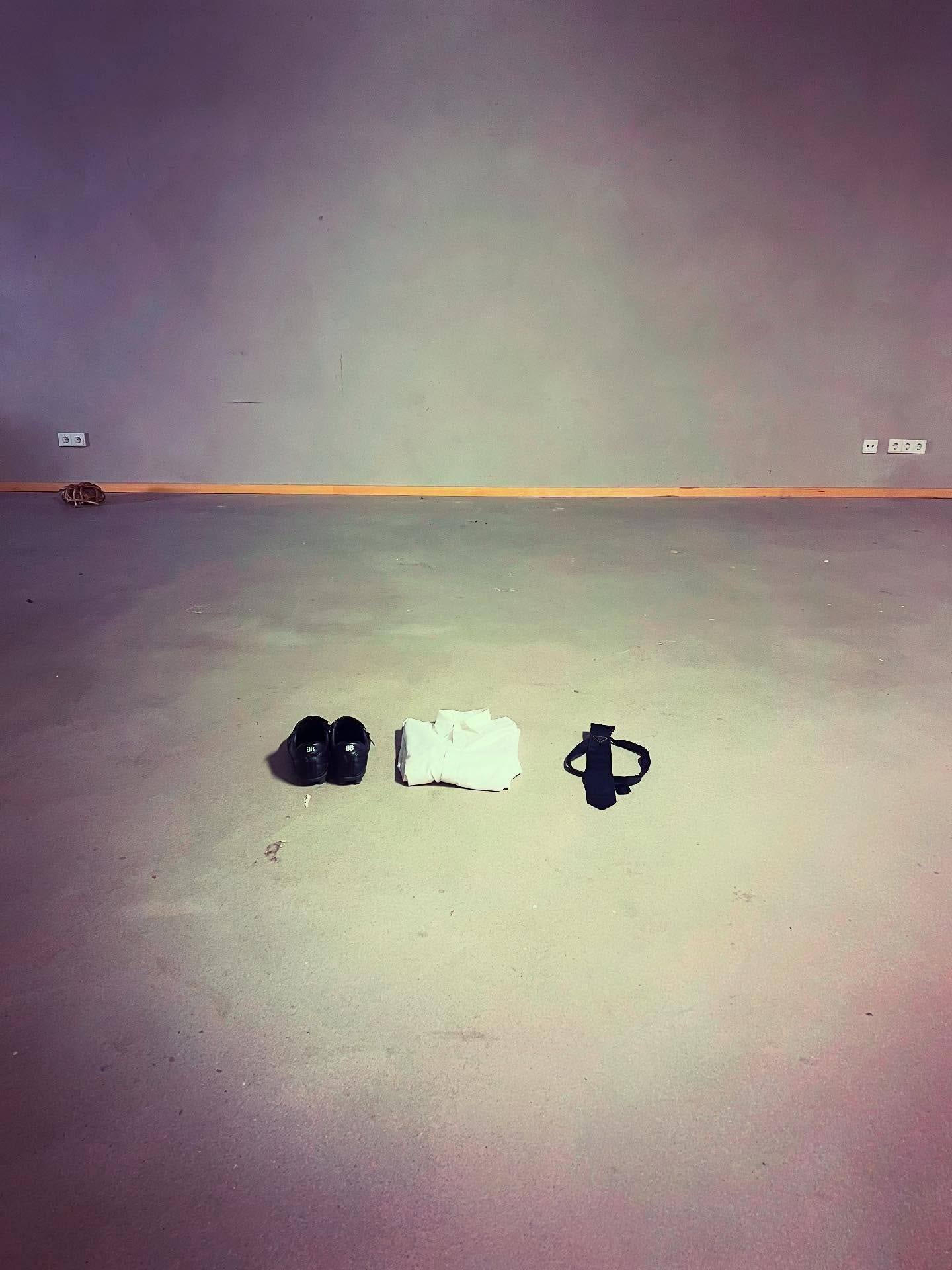
For musicians today, images function as marketing tools, almost as important as the music itself. Would you agree?
Definitely. You could even argue that images are more important than music now. Image isn’t just visuals, it’s also how you conduct yourself, how you treat people, how you exist in public. All of that makes up your image. I focus on that a lot, but not just physically. I perceive image as a community-driven concept.
Do you experience a split between the you who creates the image and the you who is consumed through it?
I feel the split only in very rare moments such as live shows or real life interactions with fans and haters. Only in these moments where I’m physically exposed to love and violence and expectations am I reminded that I do, to a certain inevitably small part, play a role. When you reach millions of people on the internet there is little to no physical reaction. You are consumed passively, and although you have a real barometer of how people feel about you, it’s nothing physical. So there is no split most of the time.
And how much of what you post on the internet is constructed versus strategic?
I have to admit I started with a rather strategic approach. The blessing and the curse of it all was that it worked really well. I signed a Sony deal after my second song. I remember being on stage with thousands of people screaming my song, but I was sharing the stage with an artist I found whole heartedly uninspiring. And I truly hated the song I was performing. I almost cried after that show. It was one of the lowest I have felt while being the most commercially successful.
Ever since then I have been on a journey to write, compose and direct things that I truly believe in because I was blessed to learn very quickly that chasing success alone, even if it works out, can’t bring you true happiness. I have since put out only what I believe in. And while this has been a more volatile experience, it has freed me in so many ways.
Do you think there will be a point where you don’t control your image as much anymore?
Maybe. I’m still at a stage where I have a lot to prove. As long as I feel like that, I still have to do my own work. I feel like curation is something you need to earn. I think Kanye, for example, earned that because he brought his own genius to his projects for so long that now, he can curate the creatives he works with. And that’s what keeps him alive creatively. I’m obviously not near that level yet, so I still need to do everything myself.
Have you ever seen an image of yourself take on a different meaning than originally intended? Because, of course, people project their own ideas onto you based on an image they see online.
They definitely do. And it’s interesting because it happens on such a micro scale now. You can have someone with 500 followers posting things, and people will form opinions about that. They’ll be in competition with their friends who also have 500 followers. It doesn’t really matter what scale you’re at, as soon as you present yourself to the world people tend to project whatever their values, opinions, fears, and insecurity they have onto you. The amount of comments I got that state that I just have a look that works for the algorithm while simultaneously people love to point out that I’m too chopped to be a model in the first place is ironic and also a little bit entertaining. They resent my beauty while also discrediting it. They’ve formed opinions about me although this is the first interview I ever gave.
You’re simultaneously audience, author, brand, and product. Do you feel like those roles ever conflict with each other?
Although I don’t have the personal experience of being an artist in the pre-social media era, I know that since the dawn of performance art itself artists have inhabited the roles of both author and audience. To be a good author, you have to know your audience, and then decide how much you want to appeal to, shock, engage with, anger or confront your audience.
It has always been a fine line for authors and artists which not too rarely ended in death, either through the audience itself or self-inflicted. Given my modeling career, I have the experience of being a product in every meaning of the word. My body can be requested and booked, and I can be bought. I know that this is a bit dramatic and that the same probably holds true for any regular office job, but I will say that there aren’t a lot of jobs that make you feel more like a product than modeling.
However, these different roles bear no internal conflict to me. Rather I find it a tragedy how necessary the intertwining of one’s own image or personal brand has become to be able to work in a creative field. To say it bluntly, ugly people don’t work in fashion, music, and film unless it’s explicitly required or overshadowed by powerful executive family members. Nepo babies I mean. I grow sad thinking of how much good and beautiful art we collectively miss out on because their creators are too chopped, too dark skinned, too fat or too socially inept for the algorithm. Not to mention that most will never have the resources to even partake in this attention-based, gladiator-like creator society.