


Do you or any of your friends watch live televised news? Of the last 100 headlines you’ve received, how many were directly communicated to you by major news networks? Do you trust those networks?
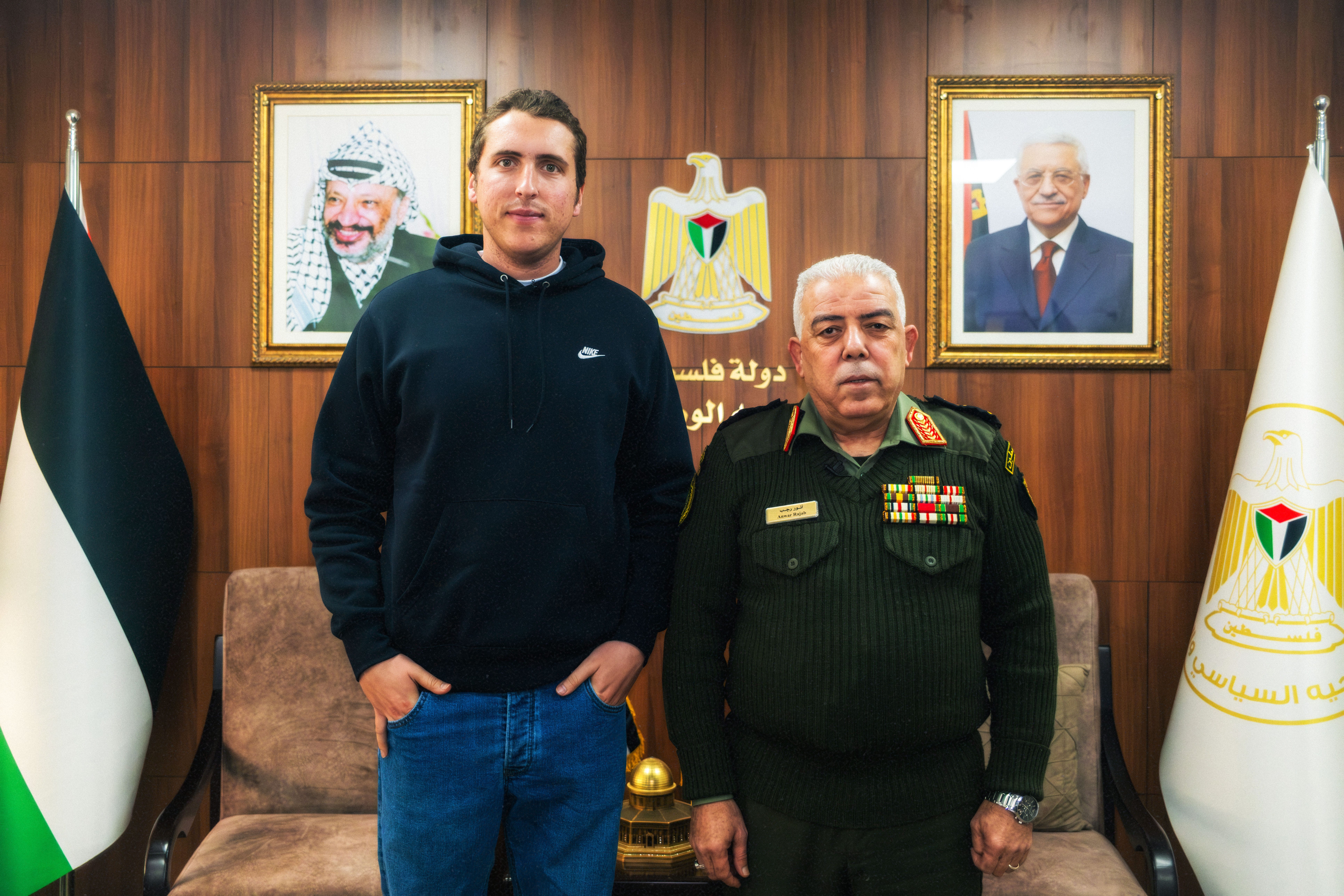
The answers to these questions suggest the importance of Andrew Callaghan, who is today a journalist of significant renown and the founder of the independent media company Channel 5. Callaghan, and the journalism format of which he is a field leader, will only become more prominent as our news-watching grandparents pass on and the notion of watching synchronous, poorly produced, sanctimonious major network punditry seems increasingly insane to an increasing proportion of the population.
Callaghan’s story is somewhat archetypical of the new category of media figure he represents. He began his career hitchhiking, started making videos of questionable seriousness, blew up, began to take himself more seriously, became embroiled in a contractual dispute, got a movie deal, got cancelled, founded a new media company, and only now seems to have figured out how exactly he wants to use his platform.
Callaghan has always been in tension with American journalistic ideals. Journalist as a detached observer thousands of miles from the conflict they’re covering; journalist as objective mouthpiece for hard facts; journalist as homeowner, or at least someone who doesn’t live in an RV park in the desert. Callaghan does not bear these characteristics (though at times he has flirted with their simulation), and typifies the journalist of the future as someone with a camera, lav mic, social channels, and transparent worldview.
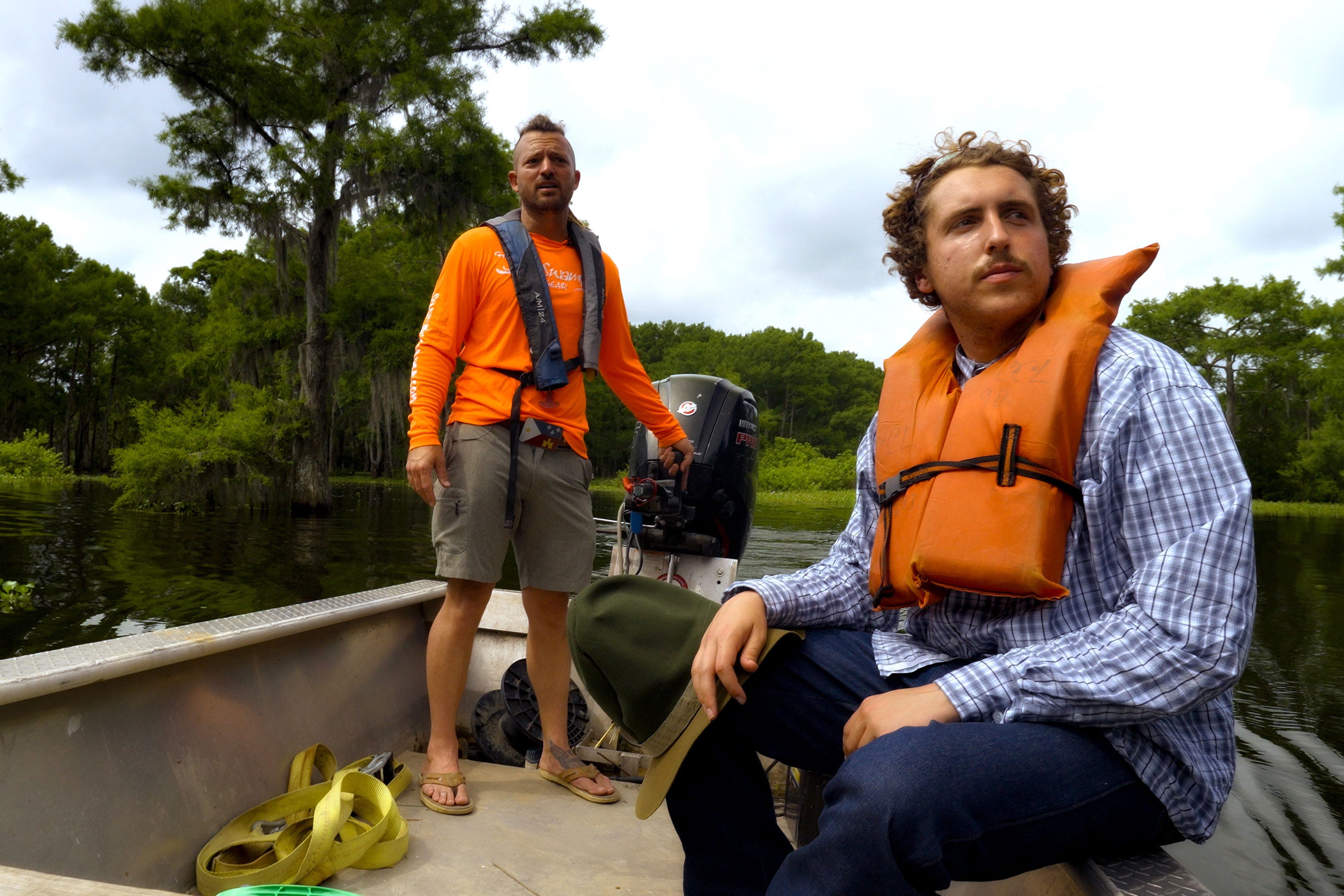
The battle for the hearts and minds of America is either very silly or very important. Certainly, the potency of storytelling is at a low ebb, and the idea that the tone of coverage will cut through the general mire of attention is laughable. It is indisputable, however, that this battleground is no longer defined just by network armies, but by lone mercenaries like Callaghan. One possible future is a media landscape almost entirely composed of these figures, their fragmented followings, and their content du jour.
Whatever the future of media holds, Andrew Callaghan will be one of its authors. We spoke to him about how he wants to write it, his worldview, the health of the American experiment, and much more.
-
Welcome: Who are you and what do you do?
Andrew Callaghan: My name is Andrew Callaghan. I’m a multimedia journalist. I’ve been living on the road for the better part of my 20s. I started off making zines about hitchhiking across the US when I was in my teens, and ultimately started a show called All Gas No Brakes that fell apart because of a contractual dispute, which led me to create Channel 5, which is an independent crowdfunded media company that I run with a few of my friends, and it’s what I’m doing now. Also working on a book, and a Spanish-language channel and streaming platform. Oh, and bought All Gas back. Will re-launch soon.
Welcome: Is Nick Shirley a CIA asset?
Andrew Callaghan: I don’t think you need a direct CIA incentive to have armies of dudes like Nick Shirley creating immigrant panic content. It’s one of the main talking points of the Trump administration, who have the loudest voice of all. Once they blast out a wild claim, such as Haitians eating pets in Ohio or Venezuelan gangs conquering Colorado, people like Nick will flock to these destinations in an effort to capitalize on the hysteria, validate GOP claims, and make their way onto reactionary algorithms. It’s extremely easy to do and a very lucrative hustle for anyone with an iPhone.
W: For those that might not know, Nick Shirley took public issue with the way he was portrayed in his Channel 5 interview, even though you seemed to be pretty generous to him as an interviewer. Has this experience, as well as that of the countless other interviews you’ve conducted, made you more or less optimistic about the state of discourse in this country?
AC: As far as him making it seem like I hosed him in the final edit, that is total bogus. If you peep the raw cut on his channel, he looks even worse. His fanboys ate it up though. They’re treating me like a Somali daycare owner. I think I’m gonna start putting out all of my mildly contentious interviews in raw form on a separate channel so that never happens again.
And no, I am not optimistic about the future of discourse in this country. Media literacy and overall kindness are at all-time lows. We are totally dissociated, desensitized and done for. And collectively, we deserve it as a country for not overthrowing the government and guillotining our elected officials after the Vietnam War. They sent our grandfathers to die over a lie and we’re still living in a modified version of the late Sixties. The country is rotten to the core. Some great people, though. Hopefully we’ll rebuild something sick from the ashes, but I’ll surely be gone by then. I have the most faith in the children of Gen Alpha. They’ll likely turn against modern technology as a reaction to their scroll-addicted parents and bring back big words.
There are varying perspectives on whether there is revolutionary potential in the West today. What do you think?
Leftist solidarity is basically impossible due to infighting, purity tests, cancel culture and washed identity-focused shit. Right wing solidarity is more possible because they’re so armed, but I’m not sure who exactly they’d be going to war with. After all, their man is in power and ICE thugs are essentially doing the work of a conservative citizen militia.
I suppose a revolution would entail a non-partisan, 99% mass awakening against people like Larry Fink and Peter Thiel. Oligarch billionaires, healthcare CEOs and people who keep us sick, pissed and stuck. That’s just not going to happen. Media hypnosis is in full effect. A solid fraction of the country will defend the rich until their dying breath and think that all inequality is related to skill and motivation issues. Unless maybe every Cracker Barrel and Waffle House in the country abruptly closes. Then chuds may crack skulls. In all seriousness though, we are totally fried as a nation. Which is fine. Great empires fall constantly and time marches on.
The role of the internet in shaping our sense of reality is a common theme in today’s media. As someone with a unique window into public perception, how have you noticed the internet skewing that perception?
Well the fundamental thing to grasp is that negativity dominates the internet. Content that deals in chaos, tragedy, death or disaster will eclipse anything positive or constructive. So to any aspiring journalists out there who want fast clicks without the legwork, just go freak people out. Find the worst part of a random city you have never been to and ask someone in the midst of a mental health crisis if they voted for Joe Biden. You will likely secure White House press credentials within 72 hours.
Social media’s negativity bias mixed with rising screen time and social isolation among Americans has created parallel realities. The San Francisco of X and the SF you see on a day’s walk are two completely different places. The same can be said for the hundreds of YouTubers who have traveled to Arkansas to interview the country’s ‘most racist man’ in Zinc or inquire about the klan. The great thing though is that you can still just turn your phone off and go outside. Don’t be scared of the world, go explore it. Remember as kids when Nickelodeon shut off programming for ‘go outside day’? They should have that, but forever.
Do you try to approach journalism differently with Channel 5?
Recently I’ve been trying to create feature documentaries about strong, tight-knit communities doing tangible things to better themselves. For example, in Baltimore, we just did a video showing that violence intervention programs reduced homicides by 55%. This piece of positive news was virtually uncovered by any major news platform, but is proof that communities ravaged by poverty can heal themselves without being under the cold boot of state authority.
Positive news sounds like cliché, but I think it’s a real gap in the media market that I’m looking to fill. I think people want it. I also want to show that thriving, in-person communities still exist in the face of modern America’s black plague, which is community collapse. In 2019, 76% of people said they found meaningful belonging in an in-person community. Today, it’s below 19%. We are engrossed in this crisis and its consequences.
There’s a rampant desire, which the internet has intensified dramatically, among people coming of age to move to a cultural hub. Do you think that fetishization has a role in the alienation from immediate community you’re talking about?
Yeah, it’s the worst thing ever. Most creative people leave their small towns the first chance they get, and I can’t blame them for that. Problem is, they all descend en masse to settler colonies built atop working-class neighborhoods. That causes landlords to raise rents, developers to lame-ify the area, and eventually forces the entire community to the boonies. As Spanto said, gentrification is genocide. It probably sounds dramatic, but I’ve seen entire cultural bloodlines erased by hipsters and yuppies. What makes it even funnier is that these people are often the most staunch and outspoken leftists. As a believer in honesty, I’d respect the he/him N95 guys more if they were at least honest about displacing poor families.
I’m not gonna lie though, I spent some time in the colonies as a youngster. At 21, I lived in Bushwick and at 22, in East Hollywood. But I made my first million bucks at 23, bought my way into a more lavish area and realized I didn’t like that either. Now I live in the middle of the Mojave Desert in a trailer park with 200 people, most of whom I know. It rules!
You’ve been exposed to so many ideologies. What has that done to your worldview?
It’s made me realize that almost everyone wants the same thing in life, which is material stability and the fulfillment of core emotional needs. It really comes down to community, the most essential need of all human beings. I think you can directly correlate the rise of fringe, reactionary political beliefs to the collapse of in-person communal engagement. Of course, there is true evil and hatred in the world but most people are good. What I mean is, most people would like suffering to end across the board. Politics are mostly different interpretations of how to get there.
And speaking of evil, I think most of it is committed in the name of financial self-interest. I’ve been financially exploited by almost everyone I ever trusted, as have most successful people who’ve built something lucrative from the ground up. The same went for when I was flat broke. You see the darkest sides of human nature when you’ve got either zero or a million bucks. The sweet spot is somewhere in between. In another life, I’d like to have been a small business owner in a self-sufficient little town somewhere.
What’s one thing too many people know?
I don’t think the world needs more journalists. It’s an indefensible occupation.
What’s one thing not enough people know?
I was inspired as a young person by Chief Keef, Lil B, Fallout, Space Ghost Purp, and walking the streets of Las Vegas alone at night. Not any sort of reportage.
What’s the best fit for on-the-ground reporting?
Royal Jordanian Airlines lost my luggage. So I have an Air Jordan sweater, a white tee, blue jeans, and black Nike Cortez. Really, I buy fits at whatever gift shop or gas station I come across first when I get to a shoot location. I travel light. Just socks and underwear.
Is the idea of utopia helpful or harmful?
Complete utopia is impossible. But having a positive view of where society could go is helpful. I was just in Denmark. Their tax revenue goes into healthcare and universities. Education is free, students get paid, and they have the same tax rate as us. Their depression rate is three times lower and standard of living is higher. Maybe it’s because basic services aren’t controlled by greedy private investors. There will always be problems, but there are more prosperous societies than the US that we should be looking at.
Who are some journalists you think are doing a good job right now?
Maya Tekeli does great coverage of Greenlandic affairs, Jake Hanrahan with Popular Front, always. Vice is still doing some cool stuff as well. Status Coup in Minnesota has done a good job covering the recent protests. Mariana Van Zeller. There’s still a ton of great journalism in the print space as well, but those people don’t become famous because it’s hard to do that without relentlessly spamming shortform video content.
What’s a recent piece of media that’s made an impression?
There’s this rap group called EBK from Stockton. I listen to a lot of rap and drill because it pumps me up. The lyrics are about violence, but the tempo of the song makes me want to talk to people and get edits done.
Are you happier now than you were five years ago?
Yeah.
What’s been important for you to get to this happier place?
Getting leeches, fake friends, and manipulators out of the way. Figuring out how to work with friends in a healthy manner. Pivoting my content toward topics I feel blessed to provide a spotlight on. Moving the content in a more serious and meaningful direction and not having to go to flat earth conferences to show how crazy people are.
What’s coming up?
Greenland content, Palestine documentaries. I just signed a book deal with a major New York publisher for a retrospective piece about the last five years that should be announced pretty soon. I’m launching an independent documentary platform with Memory Studios called C5.now, a curated documentary platform giving 100% of residuals back to creators. We’ll buy things Netflix and HBO won’t buy. Me and Shane from Vice are doing a collaborative series about international conflict zones like Venezuela, Cuba, Iran, Turkmenistan, North Korea. That’s basically it.
Andrew Callaghan should be talked about with more revery, truly one one the best people in our culture as of now. Speaking to the right audiences with good intentions and ethical outlooks. Love to see where he will be in 10 years.
"We are totally dissociated, desensitized and done for. And collectively, we deserve it as a country for not overthrowing the government and guillotining our elected officials after the Vietnam War. They sent our grandfathers to die over a lie and we’re still living in a modified version of the late Sixties." Is one of the most hardcore and raw truths I have ever heard. "I'll be long gone by then." Andrew truly understands the situation and can spit it with the best of them.